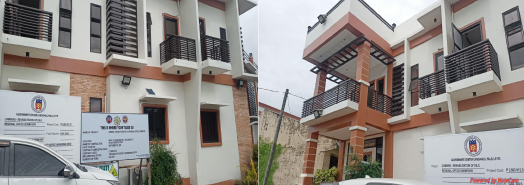
AWARDS: The Leyte II Electric Cooperative (Leyeco II) garnered multiple awards and recognitions at this year’s National Electrification Administration (NEA) Lumens Awards and the Philippine Rural Electric Cooperatives Association (PHILRECA) Awards from the Wires. Top officials of the cooperative proudly received the honors. (Leyeco II)
TACLOBAN CITY- The Leyte II Electric Cooperative (Leyeco II) was recognized with 20 awards for its exceptional performance for 2023 during the National Electrification Administration (NEA) Lumens Awards and the Philippine Rural Electric Cooperatives Association (PHILRECA) Awards from the Wires.
The awards ceremony took place at the Philippine International Convention Center (PICC) from August 29 to 31, 2024, as part of the three-day NEA-EC Convergence event.
The NEA Lumens Awards bestowed the following honors on Leyeco II include the EC with Fully Liquidated Subsidy Fund; Consistent Green EC Award; EC with Remarkable Corporate and Community Programs; Single Digit Feeder Loss Award; Special Citation for Innovative Enhancement of EC Communication; and Top Performing EC Award.
Meanwhile, the PHILRECA Awards from the Wires recognized Leyeco II with Bringing It Beyond Award Champion of the One EC Network Foundation Award; Limelight Award; MCO Champion Award; Occupational Safety and Health Excellence Award; Outstanding Performance Award; Outstanding Radio Program Excellence Award; The Iron Pillar Award; Highest Commendation for an Outstanding Performance; Information Empowerment Catalyst Award;MCO Prime Participation Award; Model Member-EC Award; Prompt Payor Award; and Silver Stellar Award.
Receiving the awards for Leyeco II were board of directors Librado Baysa (district II), Joy Osmeña (district I), and Ronnie Dayon (district IV), along with the management team led by Engr. Fernan Paul Tan.
The Leyeco II said that the awards underscore their unwavering commitment to excellence in delivering quality and efficient service to nearly 90,000 member-consumer-owners (MCOs) and over 300,000 consumers across Tacloban City, Palo, and Babatngon. (PR)
TACLOBAN CITY – 4Ps party-list Rep. and Minority Leader Marcelino “Nonoy” Libanan has challenged Sen. Ronald “Bato” de la Rosa to acknowledge his role in the tragic loss of over 27,000 lives during the Duterte administration’s war on drugs.
A long-time advocate for justice rooted in moral and ethical principles, Libanan emphasized the importance of honesty and accountability in light of the grave accusations of extrajudicial killings.
“Senator de la Rosa, what we’re asking for is quite simple – be honest to the people and to God. The truth has a way of coming out, no matter how much we try to hide it. It is better to face it now with honesty,” Libanan urged.
“As a former PNP chief, Sen. dela Rosa should be an example of honesty and justice. But now, it’s more important that he serves as an example of admission and repentance. Let us accept the fact that no one can escape divine justice and the law,” Libanan added.
He underscored that being truthful is a fundamental value, not just for public servants, but for all individuals who aim to serve with integrity.
Libanan also expressed deep concern over the serious allegations against de la Rosa and the Philippine National Police (PNP) as he commended those who have chosen to speak up, like PNP Lt. Col. Jovie Espenido, despite the risks involved.
“Espenido’s bravery is an example of one’s love for the truth and country,” the solon said as he urged other witnesses to come forward to ensure that justice is served for the families who lost loved ones during the drug war.
Libanan further questioned de la Rosa’s conscience and the long-term implications of his actions.
He also encouraged Dela Rosa to seek forgiveness and come clean about his role in the extrajudicial killings.
“Senator, it’s not yet too late to admit and repent. The path to redemption is always open for those willing to walk it,” Libanan concluded. (LIZBETH ANN A. ABELLA)
TACLOBAN CITY – An alleged member of the New People’s Army (NPA) surrendered to government forces in Sogod, Southern Leyte, on Monday, September 2.
Joey Calinawan, also known by the aliases “Reden” and “Gerald,” was said to be a full-time member of Squad 1, Platoon 1, Island Committee-LEVOX (IC-LEVOX) under the Eastern Visayas Regional Party Committee (EVRPC), turned himself in to the 14th Infantry Battalion (14IB) of the Philippine Army, which operates under the 802nd Infantry Brigade (802IB).
Upon surrendering, Calinawan provided valuable intelligence on the activities of his former comrades, including the locations of their hideouts and arms caches.
This information led to the recovery of several firearms, including a Colt Elisco 5.56 M16 rifle, a 9mm pistol, magazines, ammunition, and subversive materials.
Lt. Col. Edgar Gabia, commander of the 14IB, attributed the success of Calinawan’s surrender to intensified military operations and ongoing efforts to engage with the families of active NPA members.
He also credited the cooperation of local government units, the community, and former NPA members who have abandoned the armed struggle.
Brig. Gen. Noel Vestuir, commander of the 802IB, emphasized the growing isolation of the NPA and the toll the continued struggle has taken on its members.
“The NPA leadership refuses to acknowledge that their members are exhausted, hungry, and separated from their families. They are no longer welcome in the communities, as the issues they exploited have been addressed by local government and community efforts,” Vestuir said in a statement.
The Army general renewed his appeal to remaining active rebels to surrender and return to the fold of the law.
“You have suffered too much under the deceptions of the communist terrorist group. Your families and the future of your children are at stake,” he said.
“The government offers programs like the Enhanced Comprehensive Local Integration Program (E-CLIP), the Local Social Integration Program, and the newly proclaimed amnesty program to help you transition to a peaceful life. Our efforts will continue until every last one of you has chosen peace,” Vestuir added.(JOEY A. GABIETA)
As it goes, the country’s political landscape is marred by the pursuit of power and personal gain, overshadowing genuine efforts to address the nation’s pressing issues. This culture of excessive politicking, where leaders prioritize their interests over national welfare, has deeply disrupted governance and stunted progress. It is a systemic rot that affects every aspect of Filipino life, from economic development to social cohesion.
The never-ending power struggle among politicians, often marked by shifting alliances and betrayals, glaringly prevails. The recent chaos in the Philippine Congress, where leadership squabbles have delayed critical legislation, epitomizes this dysfunction. Instead of focusing on passing laws that could improve the lives of Filipinos, lawmakers are preoccupied with ousting rivals and securing positions. Similarly, local politics is rife with dynastic control, where families treat political offices as their personal property, perpetuating corruption and incompetence. The result? A government that is constantly distracted, failing to address urgent issues like poverty, unemployment, and disaster response.
The dire effects of this toxic political culture are evident in the country’s vulnerability to crises. Take, for instance, the inadequate response to Super Typhoon Yolanda in 2013, which revealed not just logistical challenges but also deep-seated political rivalries that hindered relief efforts. Instead of working together, local and national leaders were caught up in finger-pointing and blame games, leaving millions of Filipinos to suffer. The inability to transcend political differences during such critical moments demonstrates the dangerous consequences of prioritizing politics over people.
To end this destructive cycle, Filipino voters must take a stand. They hold the power to reshape the nation by electing leaders who are committed to public service rather than personal ambition. It is essential to move beyond personality politics and patronage, where votes are often swayed by temporary favors or empty promises. Voters must critically assess the track record, platforms, and integrity of candidates, rejecting those who perpetuate the status quo of self-serving leadership. This calls for a more informed electorate, willing to demand accountability and transparency from their leaders.
Our country’s stability and future depend on breaking free from this despicable culture of excessive politics. As the country approaches another election cycle, the Filipino people have a unique opportunity to steer the nation toward genuine progress. Reject the leaders who prioritize power over service; pave the way for a government that truly works for the people. It is time to rebuild trust, prioritize the common good, and put an end to the politicking that has long plagued the nation.
Influential figures, organizations, and think tanks that shape policies on a global scale are constantly scanning the horizon for threats that could upend the fragile systems keeping our world in balance. As I consider their concerns, I can’t help but feel a growing unease myself because these worries aren’t just abstract concepts—they affect my future, too.
At the top of their list is the looming climate crisis, a slow-burning catastrophe that seems to be accelerating despite our best efforts. Rising temperatures, extreme weather events, and shifting ecosystems are already reshaping lives across the globe, and the fallout won’t be contained within any single border. The thought of climate refugees disrupted food supplies. More frequent natural disasters are a sobering reminder that we are all connected, and what happens in one corner of the world can quickly spill over into the rest.
Economic instability is another major worry. The globalists are acutely aware that the world economy is more interconnected than ever, and a crisis in one major economy can trigger a domino effect. The aftershocks of financial crashes, like the 2008 recession, still reverberate today. With rising debt levels, the threat of inflation, and geopolitical tensions simmering, it feels like we’re all standing on a knife’s edge. We worry about what this means for our financial future, job prospects, and the stability of the world that I—and so many others—depend on. It’s unnerving to think that the security we strive for could be undermined by forces entirely beyond our control.
Another growing concern among globalists is the rapid pace of technological advancement, particularly artificial intelligence and automation. While these innovations promise efficiency and new opportunities, they also threaten to upend the job market and deepen societal divides. I can’t help but wonder what my role will be in a world where machines can outperform humans in an ever-expanding range of tasks. The potential for mass unemployment and the disruption of entire industries keep me on edge, especially when considering that many leaders are still grappling with how to regulate these technologies fairly and responsibly. The worry isn’t just about losing jobs but also about losing control—AI’s unintended consequences could be tremendous and irreversible.
Geopolitical tensions are another issue that keeps globalists up at night. The rise of nationalism, the erosion of international alliances, and the escalating competition between major powers like the U.S., China, and Russia create a volatile mix. The fear of conflict, whether it be trade wars, cyber-attacks, or even military confrontations, looms large. These tensions threaten global cooperation at a time when we need it most to tackle shared challenges like climate change and public health crises. I often think about how fragile peace can be and how quickly it can unravel, leaving ordinary people like me to bear the brunt of decisions made far above our heads.
Public health threats, particularly after experiencing the COVID-19 pandemic, remain a pressing concern for globalists. The pandemic exposed vulnerabilities in our global health systems, supply chains, and the fabric of everyday life. The idea that a new, potentially more dangerous pathogen could emerge at any time is not just a plot from a movie—it’s a real risk. I find myself alarmed not only about the immediate health implications but also about the broader social and economic fallout. A future where pandemics become more frequent would fundamentally alter how we live, work, and interact, and that uncertainty is deeply unsettling.
Social inequality is another issue that globalists are keenly aware of and that I find deeply troubling. The gap between the rich and poor continues to widen, fueling resentment, unrest, and political instability. I see this inequality in the disparities in access to education, healthcare, and opportunities, and it’s clear that the system is failing many. It’s hard not to feel a sense of injustice when the wealth of a few continues to grow while so many struggle to meet basic needs. This imbalance threatens social cohesion and the very notion of progress that we’ve come to expect.
Then there’s the erosion of trust in institutions, from governments to the media to big corporations. Globalists worry that this growing distrust could destabilize democracies and weaken the rule of law, as people become more susceptible to misinformation and populist rhetoric. I share this concern because it feels like we’re losing the ability to have rational, fact-based discussions about the most important issues of our time. When trust breaks down, it becomes nearly impossible to build consensus or take collective action, leaving us vulnerable to the forces that thrive in division and chaos.
As I look at the concerns of globalists, it’s hard not to feel a sense of shared anxiety about the future. The challenges we face are daunting and complex, often feeling far beyond my ability to influence. However, recognizing these concerns also strengthens my resolve to stay informed, engaged, and proactive in my way. Whether it’s advocating for sustainable practices, supporting equitable policies, or simply staying vigilant about the information I consume, I believe that my actions, alongside those of millions of others, can help steer us toward a better future. It’s a daunting task, but it’s also a reminder of the power of collective effort in a world that often feels beyond our control.
WE are reminded of this duty in the second reading of the Mass of the 23rd Sunday in Ordinary Time, Year B. It’s from the Letter of St. James (2,1-5) There, St. James talks about the discrimination one practices when he treats a rich man with a lot of favor and privilege while asking the poor man to sit by the footstool.
Of course, to fulfill this duty is not easy, given our wounded human condition. But we can always do something about it. And the first thing to remember is that irrespective of our differences and conflicts, we are all brothers and sisters, all children of God. We are meant to love and care for one another.
This does not mean that we have to treat everybody in the same way. That we are all equal in the eyes of God does not mean that we have to treat everyone in the same way. What is meant is that we should love everyone, but according to how one is.
Like, the way you deal with an elderly person would be different from the way we deal with a youngster, or a child, or a baby. But it is the same love that we should give them.
In this regard, it is important that as much as possible we learn to really know each one we deal with. Our dealings should always be personalized, not mechanical or generic. This will require of us a certain open-mindedness that would enable us to be adaptive to how others are and to be versatile in our dealings with them.
For this, we should be ready to deal with the unavoidable differences and conflicts that we can have with others. In fact, we should be welcoming to them for they can occasion further development of virtues and deepen our capacity to live charity as expected of us.
Our differences and conflicts can give rise to the development of patience and compassion, and the pursuit for the truth and justice is guaranteed to be more authentic even if it is also arduous.
They can actually expand our world of knowledge and understanding, and trigger the dynamics of a more meaningful unity among ourselves, not in spite of but rather because of our differences and conflicts. The unity we are speaking of here is not uniformity, but one that is richly nuanced and capable of accommodating everyone.
Most importantly, they can give a tremendous growth in our spiritual life, freeing us from being at the mercy of our personal, earthly and temporal conditions. They contribute greatly in our effort to make ourselves more and more like Christ who is the pattern of our humanity and the savior of our damaged humanity.
Our differences and conflicts are a fact of life. They can spring from all kinds of sources—temperament, culture, socio-economic and political status. There are racial and religious differences, etc.
These differences and conflicts must be part of our human condition and are an integral element in the providence of God over all of us. We just have to learn to live with them and try our best to use them according to God’s providence. The general pattern of how to live and make use of them is given to us by Christ himself who had to go through the most extreme kind of difficulty and conflict.
We may sort them out to simplify things a bit, but we should never think that there will come a time when there will be no differences and conflicts among ourselves. Instead, what we have to do is to refer them to Christ to have an idea of how to handle them.