24.9 C
Tacloban City
September 19, 2026 - Saturday | 12:52 AM
Home Blog Page 633

42 Catarman families to graduate from 4Ps Program

0

TACLOBAN CITY – A total of 42 families from Catarman, Northern Samar, will graduate from the Pantawid Pamilyang Pilipino Program (4Ps) this month, marking their transition to self-sufficiency.

The Pugay Tagumpay Graduation, discussed during the Municipal Advisory Council (MAC) meeting, is scheduled for February 27, with another batch set for March 20.

Families exit the program once their children age out (0-18 years old) or if they are assessed as self-sufficient after three evaluations.

Non-compliance with program conditions—such as school attendance, regular health check-ups, and participation in Family Development Sessions (FDS)—can also lead to removal from 4Ps.

Despite graduating from the program, beneficiaries will still receive government support through local interventions, including livelihood training from agencies like the Department of Trade and Industry(DTI), Department of Labor and Employment(DOLE),Department of Science and Technology(DOST), and the Technical Education, Skills and Development Authority or TESDA.

Currently, 5,248 families are enrolled in 4Ps in Catarman.

In October 2024, 119 families from the municipality successfully graduated from the program.
(ROEL T. AMAZONA)

DPWH-L2DEO report of near completion of flood control structure in Dulag town

0

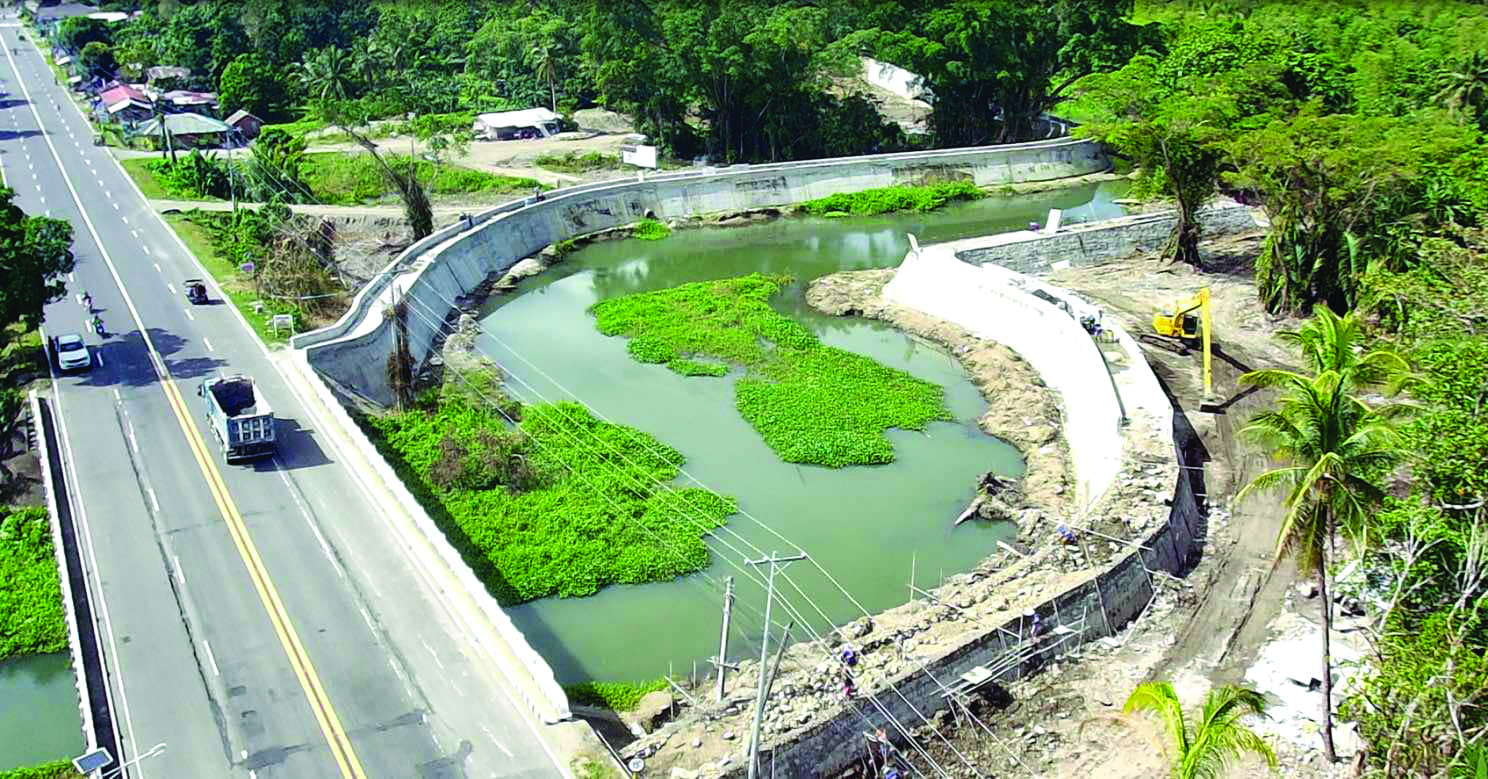
TACLOBAN CITY – The Department of Public Works and Highways (DPWH) Leyte 2nd District Engineering Office (L2DEO) is in the final stages of constructing a flood mitigation structure along the Calbasag River in Barangays Highway and San Rafael, Dulag, Leyte.
The project, now 96.38% complete, aims to reduce flood risks and protect local communities from recurring inundation.

The Calbasag Bridge, a vital passage along Maharlika Highway, is prone to damage due to the strong river currents, particularly during heavy rainfall, affecting the residents in the process.

District Engineer Leo Edward Oppura reported that the project has a total contract cost of P84.41 million and involves the construction of a 370-meter flood control structure consisting of two segments: 240 meters (Line 1) and 130 meters (Line 2).

The 5.8-meter-tall structure is reinforced with structural steel sheet piles, designed to prevent soil erosion and mitigate flooding during intense rainfall and high tide.

“Once completed, this project will significantly enhance the community’s resilience, protecting lives and properties,” Oppura said.

He added that the facility is expected to provide long-term relief to residents and neighboring areas that have long been vulnerable to flooding.

“The flood control structure will help minimize damage to homes, agricultural lands, and infrastructure, ultimately improving overall safety,” Oppura said.

Aside from its flood mitigation benefits, the project has also provided employment opportunities for local workers.

Antonio Macalinao, a resident of Brgy.Sansotero, Javier, also in Leyte, who is currently employed as a laborer on the project, shared how the initiative has positively impacted his livelihood.

“Before, I only had occasional construction work, which was not enough to support my family. Now, through this DPWH project, I can cover my child’s education expenses, electricity bills, and other household needs,” he said.

“Thanks to DPWH, I was given this job opportunity. This project is also a huge help to residents in mitigating the dangers of flooding during typhoons,” he added.

The project is funded under the DPWH FY 2024 General Appropriations Act (GAA) through its Flood Management Program, which supports the construction and maintenance of flood mitigation structures and drainage systems.

The construction works started on June 4, 2024 with a target completion of April 26, this year.
(LIZBETH ANN A. ABELLA)

Take the rains seriously

0

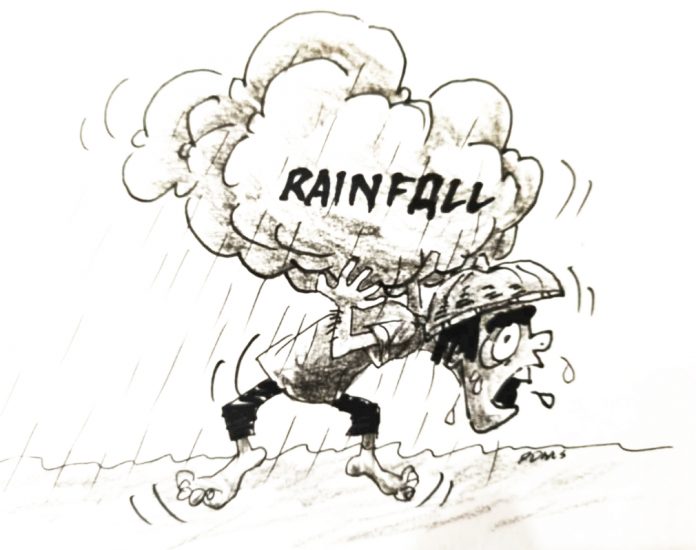
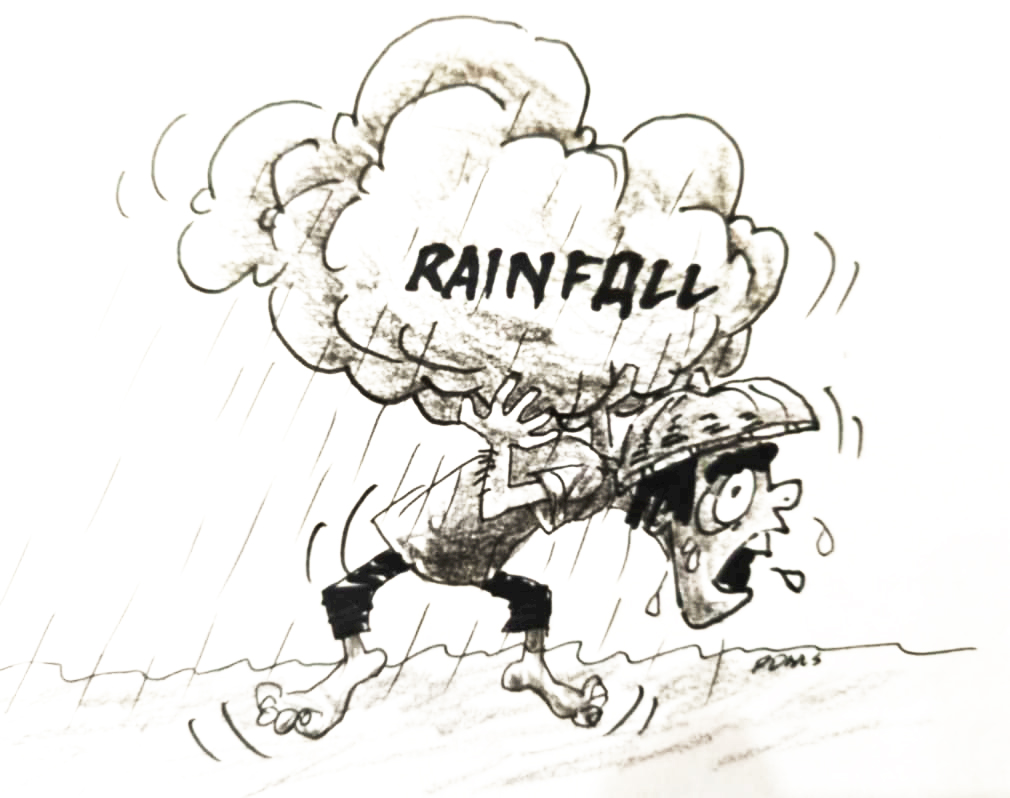
The incessant rains battering Eastern Visayas over the past few days are not only a nuisance; they are also a threat to public safety and daily life. The situation demands more attention, particularly from those who reside in low-lying areas and those who have to commute to offices, as overflowing floodwaters further make parts of main roads impassable. Without strong measures and prudence, the effects will only get worse.

Flooding has become an all-too-frequent threat in the area, yet many downplay its dangers. Water-soaked roads do not just get motorists late; they also carry threats of accidents, vehicle breakdowns, and even electrocution from dangling overhead power cables. More seriously, houses constructed along flood zones face risks of destruction, while residents are made to suffer the health risks of water stagnation and poor sanitation. The repeat occurrence of such conditions with each long rain ought by now to have witnessed stronger preventive actions from the authorities and members of the public.

Preparedness against disasters is still frustratingly reactive and not proactive. Local government offices announce warnings only after the floodwaters have already begun to rise, and response activities are short of delivering relief to the flooded communities immediately. Drainage facilities in some areas get clogged or are old, and they cannot contain the growing amount of rainwater. Without instant infrastructure development and regular implementation of flood control strategies, this cycle of flooding and disruption will never end.

The economic impacts are just as grim. Small enterprises incur massive losses as customers and suppliers alike try to drive through water-logged roads. Fields of crops, which are already climate-change susceptible, experience additional destruction as rain surplus sweeps through fields and disrupts harvesting schedules. paycheck-to-paycheck families, and drivers and informal workers especially, are hit hardest with income losses. If this trend is allowed to go unchecked, it will increase the economic exposure of the region and recovery will be tougher.

The state needs to enact stricter zoning regulations to deter more buildings in flood plains and invest in efficient drainage technology that can withstand harsh weather patterns. Citizens need to personally take charge by remaining aware, making contingency planning, and avoiding hasty travel when roads are already hazardous. The worsening climate necessitates individual and communal efforts towards lessening the risks, otherwise the Eastern Visayans would be forever trapped in suffering from the effects of complacency each time the rains persist in refusing to subside.

The beauty we crave

0

One morning, a woman passed a street mural, a burst of color erupting on an otherwise bare concrete wall. She scarcely took a second look, swatting it away as mere painted nonsense. Several paces forward, she hesitated, reversed direction, and looked again.

Something about it—perhaps the furious woman’s eyes in the painting, perhaps the dance of light and shadow over her painted skin—halted her. Art does that. It stops us, compels us to stand still, and takes us out of our habit to remind us that life is more than function and purpose. But the tragedy is this: so many still believe that art is an accessory, a luxury, even an indulgence when in reality, it is one of man’s most natural and basic appetites.

People buy what is beautiful. No one chooses an ugly plate if they can have a better one. No one goes into a store and asks for the least ugly shirt on the rack. We’re programmed to seek beauty, but we trivialize the very individuals who make it happen. Artists—painters, writers, sculptors, musicians—are frequently called dreamers, their efforts devalued as unrealistic, their lives questioned: “What’s the point?” The irony is that even the people ridiculing them inhabit a world created by artists. The things they read, the films they watch, the music they listen to, even the design of the buildings they enter—each one of these is imagined by artistic minds.

Artists only create fiction, something in the mind that has no value in life. But is not fiction another truth? A novel is fiction, but it is a true expression of human emotions. A picture can present to us something that never was, but it can make us experience something real. Art is not lying—it is reality as described from a different perspective, another vocabulary, another point of view. If anything, art portrays truths that are normally disregarded. It reminds us of beauty not only in the magnificent and the wonderful but in the mundane—a cracked sidewalk during sundown, the sound of children’s laughter reverberating off a courtyard, the path rain etches along the surface of a weathered windowpane.

And beauty—beauty born of the heart, deep-seated—has power. It heals. It consoles. It makes existence endurable. Folks attend concerts to shed the weight of their worries. They hang paintings on their walls because viewing them brings tranquility. They resort to poetry when their hearts are shattered, and to movies when they need to feel. And even when history was blackest, there was still art. War camp prisoners etched masterpieces out of tatters, beating hopelessness with beauty. Poems penned when there was tyranny became the voices of the era. A single photo ended the war. This is not a fantasy. This is survival.

But the world continues to retain artists as ornaments, rather than necessities. School boards eliminate art classes first when budgets suffer as if imagination is something to be cut back. Parents dissuade their children from the arts for fear they will never be able to earn a living as if passion should only be pursued if it is lucrative. Governments spend on roads, bridges, and factories but refuse to spend on artists, not knowing that culture—life’s blood—is within their grasp. A nation without artists is a nation without memory, without identity, without soul.

If we deleted all the work of all the artists in the world, what would remain? No paintings, no songs, no stories, no films. Cities would be gray, walls blank, bookshelves bare. Even commercials—those ubiquitous jingles and intrusive billboards—would vanish. How hollow, how sterile a world that would be. But for all the small worth that they possess, artists persevere. They compose, they paint, and they compose music, not because they have been told to do so, but because they have to. Because there is a flame inside them that will not be put out, a light that holds on even when everyone else drops the belief that beauty must be created.

As we celebrate Arts Month, keep this in mind: artists are not only owed our applause but respect. They’re not entertainers or decorators of life. They’re architects of emotion, guardians of history, warriors of beauty. And if we knew their value, we would not just survive their presence—we would fight to make them flourish. Because at the end of the day, a world without art is not one that we would want to live in.

“Love your enemies, do good to them that hate you”

0

WHY oh why did Christ command his disciples so? (cfr. Lk 6,27) The quick answer is that despite our unavoidable differences and conflicts, even the very serious ones, in the end we are all brothers and sisters, we are all children of God, and we just have to love one another irrespective of how we are with each other.

We need to prepare ourselves to follow this commandment expressly articulated by Christ. We have to have a strong faith to trust his words, so that we would not consider them as a mere bluff, an empty puffy rhetoric, but rather as what is true, proper and ideal for us.
We have to have a strong faith to trust his words, so that we would readily understand that they are meant for all of us, and not just for some, and that they are necessary and obligatory, and not merely optional, though they have to be taken up freely, and not coercively.

We just have to understand also that we can only manage to follow this commandment if we truly are with God through Christ in the Spirit. He, after all, is the source, the power and the pattern of how this kind of love can take place.

So, the challenge to face and the task to do is how to immerse ourselves in God, practically identifying ourselves with him, since we are meant to be his image and likeness. Our true and ultimate dignity and identity is that of being children of God.

In other words, the fullness and perfection of our humanity is when we finally become like God which can only take place in heaven. But while here on earth, we just have to do our best to pursue that ideal.

To be sure, on God’s part, all the means are already made available. We are already given the doctrine of our faith so we would know what right and wrong are in our earthly pilgrimage. We are given the sacraments, especially the Holy Eucharist, so we can truly be identified with Christ who is the pattern of our humanity. We have the Church and the accompaniment of angels, saints and holy people, etc.

If, indeed, we are God’s image and likeness, if we are his children through Christ in the Holy Spirit, and therefore meant to adopt his mind, his will and his ways, and ultimately to enter into the very life of God, then we have no other alternative but to make this explicit injunction second nature to us.

Obviously, we cannot follow this principle on our own, relying solely on our own powers. We need God himself to enable us to do so. And he has given us that power through his grace which he gives us in abundance through his living word, through his sacraments, through his Church, and in many other mysterious ways unknown to us.

In fact, God gives himself to us through Christ who makes himself the “bread of life” which he asks us to eat, otherwise we would not have “life in abundance.” It’s really just for us to believe, to make that leap of faith, going beyond but never neglecting what our senses and reason can capture, so we can enter into a far richer reality given to us by faith.

This is the challenge we have to face—how to free ourselves from the controlling grip of our senses and reasoning, of our own human consensus and estimations of things, and to let ourselves be guided by the mysterious ways of our faith, full of wisdom and charity albeit always accompanied by sacrifices.

Only then can we manage to love our enemies!

The value of experiential learning in business programs

0

The traditional model of business education, heavily reliant on lectures and textbooks, is increasingly being challenged by a growing emphasis on experiential learning. This shift reflects a recognition that the modern business world demands more than theoretical knowledge; it requires practical skills, adaptability, and the ability to apply concepts in real-world settings. Experiential learning, with its focus on hands-on experience and active engagement, is emerging as a crucial component of successful business programs.
Bridging the Gap Between Theory and Practice

One of the most significant benefits of experiential learning is its ability to bridge the gap between theoretical knowledge and practical application. Business concepts, while valuable, can often feel abstract and disconnected from the realities of the workplace. Experiential learning provides a platform for students to test these concepts, apply them to real-world scenarios, and gain a deeper understanding of their practical implications.

Developing Essential Skills

Experiential learning empowers students with the practical skills employers crave, exceeding the value of theoretical knowledge alone. Through internships, simulations, and other hands-on experiences, students gain practical experience in areas such as:
Communication: Presenting ideas, negotiating, and collaborating with diverse teams.
Problem-Solving: Analyzing complex situations, identifying solutions, and implementing strategies.

Decision-Making: Weighing options, evaluating risks, and making informed choices under pressure.

Leadership: Taking initiative, motivating others, and leading teams effectively.

Adaptability: Responding to change, embracing new technologies, and navigating dynamic environments.

Boosting Engagement and Retention

Experiential learning is inherently engaging, as it moves students beyond passive listening and encourages active participation. This active engagement leads to increased retention of knowledge and skills, as students are more likely to remember and apply what they’ve learned through hands-on experience.

Building Confidence and Self-Awareness

Experiential learning provides a safe space for students to experiment, make mistakes, and learn from their experiences. This process fosters self-awareness, allowing students to identify their strengths and weaknesses, develop strategies for improvement, and build confidence in their abilities.

Preparing for the Future of Work

The business landscape is in a perpetual state of transformation, driven by technological innovation, globalization, and the ever-changing desires of consumers. Experiential learning equips students with the adaptability and problem-solving skills needed to thrive in this dynamic environment. By immersing students in real-world scenarios, business programs can help them develop the skills and mindset necessary to navigate the future of work
Examples of Experiential Learning in Business Programs

There are numerous ways to integrate experiential learning into business programs:
Internships: Providing students with hands-on experience in real companies, allowing them to apply their knowledge and develop practical skills.

Simulations: Creating realistic business scenarios that challenge students to make decisions, analyze data, and manage resources.

Case Studies: Analyzing real-world business situations, developing solutions, and presenting recommendations.

Project-Based Learning: Working in teams on complex projects that require research, collaboration, and problem-solving.

Community Engagement: Participating in service-learning projects that address real-world business challenges.

The Future of Business Education

As the business world continues to evolve, the value of experiential learning will only grow. By embracing this approach, business programs can equip students with the skills, knowledge, and adaptability necessary to thrive in a dynamic and ever-changing landscape. Experiential learning is not just a trend; it is a fundamental shift in how we prepare the next generation of business leaders for success.
————–
If you have any questions or would like to share your thoughts on the column, feel free to send an email to jca.bblueprint@gmail.com. Looking forward to connecting with you!

Recent Posts

DALMACIO C. GRAFIL
PUBLISHER

ALMA GRAFIL
EDITOR-IN-CHIEF

ROMEO CEBREROS
OFFICE IN-CHARGE

OFFICE
BRGY. SONGCO, BORONGAN CITY

CONTACT NUMBERS
(055) 261 – 3319 | 0955 251 1533 | 0917 771 0320 | 0915 897 7439 | 0921 511 0010

DALMACIO C. GRAFIL
PUBLISHER

RICKY J. BAUTISTA
EDITOR

ALMA GRAFIL
BUS. MANAGER

OFFICE
RIZAL AVENUE, CATBALOGAN
(INFRONT OF FIRE DEPARTMENT, NEAR CITY HALL)

CONTACT NUMBERS
0917 771 0320 | 0915 897 7439 | 0921 511 0010

EMAIL
lsdaily2@yahoo.com

WEBSITE
www.issuu.com/samarweeklyexpress