24.5 C
Tacloban City
September 14, 2026 - Monday | 5:47 AM
Home Blog Page 553

Men in uniform could now avail free legal assistance

0
Rep. Jude Acidre

Sponsored by Tingog party-list group

Rep. Jude Acidre

TACLOBAN CITY– Tingog party-list, led by Rep. Yedda Romualdez and Rep. Jude Acidre, hailed the enactment of Republic Act No. 12177, or the Free Legal Assistance for Military and Uniformed Personnel Act, as a landmark measure that reinforces the government’s duty to support those who risk their lives in the service of the nation.

The newly signed law mandates the provision of free legal assistance to members of the military and uniformed services (MUPs) facing criminal, civil, or administrative charges arising from the lawful performance of their duties.

Legal support includes representation, legal advice, preparation of pleadings, and coverage of court fees and notarization costs.

“This law recognizes that the call to serve does not end when the mission does,” Rep. Acidre, who also serves as a member of the Multi-Sector Governance Council (MSGC) of the Armed Forces of the Philippines, said.

“For those who face legal consequences in the line of duty, RA 12177 ensures that their service is not met with silence, but with tangible support,” he added.

Acidre sponsored and defended the measure during plenary deliberations at the House of Representatives, underscoring its urgency and importance in protecting the rights and welfare of the country’s uniformed personnel.

Covered under the law are members of the Armed Forces of the Philippines (AFP), Philippine National Police (PNP), Philippine Coast Guard (PCG), Bureau of Fire Protection (BFP), Bureau of Jail Management and Penology (BJMP), Bureau of Corrections (BuCor), and the NAMRIA Hydrography Branch. Retired or honorably separated personnel are also eligible for assistance on service-related cases committed while still in active service.

To ensure swift implementation, agencies are required to respond to charges within 24 hours, mobilizing legal officers to assist qualified personnel. Government funding for this purpose will be included in the General Appropriations Act.

House Speaker Ferdinand Martin Romualdez, who co-authored the measure, described RA 12177 as “proof that the Marcos administration does not leave its defenders behind.” Tingog emphasized the law’s alignment with its broader legislative agenda of strengthening legal, fiscal, and institutional support for MUPs.

“Legislation must meet the realities on the ground,” said Tingog Representative Yedda Romualdez. “This is about more than legal representation—it’s about safeguarding the ability of our uniformed personnel to carry out their duties without fear that they’ll be left behind when challenges arise.”

(LIZBETH ANN A. ABELLA)
Toothless gun ban

0

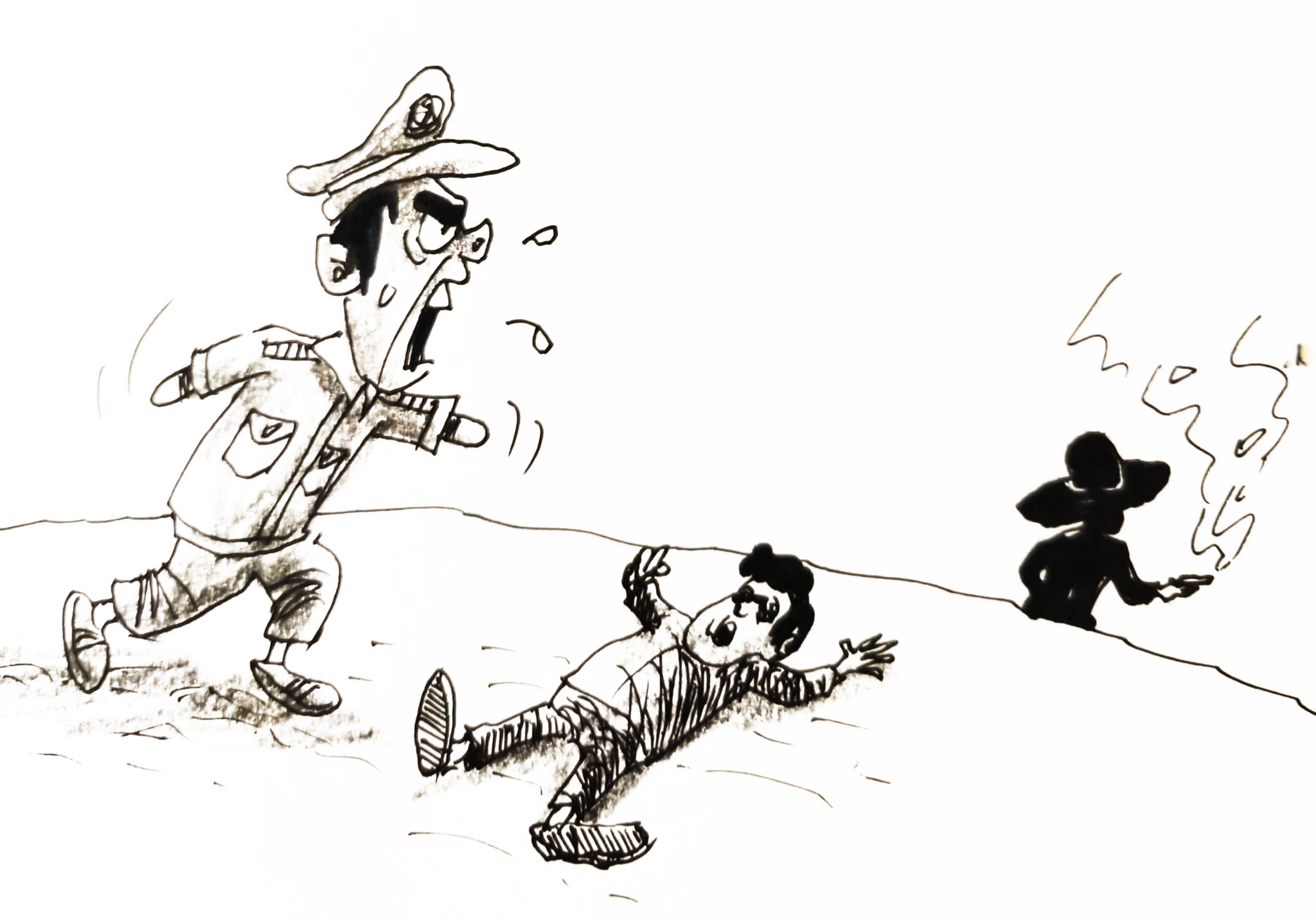
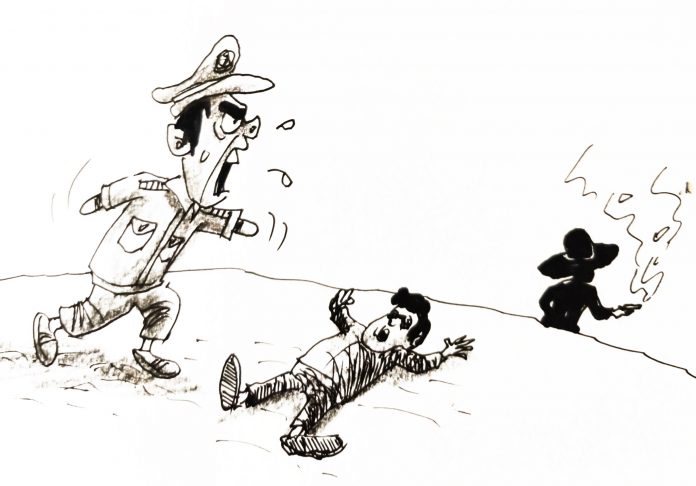
As the election season draws near, the surge of politically motivated killings paints a grim picture of the dangers that lie ahead. Now, more than ever, the strict enforcement of the gun ban must not only be declared but fully realized. Failure to do so invites a repeat of past bloodshed that continues to mock the sanctity of democratic exercise.

Elections are meant to be contests of vision, governance, and leadership, not a brutal race marred by violence and death. Yet history offers a cruel reminder: in the absence of stringent controls, firearms turn political rivalries into funeral processions. Candidates, supporters, and even innocent bystanders become casualties of unchecked aggression, fueled by a culture that too easily wields a gun for intimidation or revenge. A gun ban without teeth, without swift and unforgiving enforcement, only emboldens those who see violence as a legitimate tool to secure power.

The mere announcement of a gun ban is meaningless if not accompanied by aggressive implementation and a relentless crackdown on violators, regardless of status or affiliation. Arrests must be made without hesitation, and penalties must be harsh enough to serve as real deterrents. No exemptions, no blind eyes turned in favor of the influential or the well-connected. Without impartiality, enforcement becomes a mockery, and violence finds a way to flourish beneath the hollow echoes of official statements.

Politically related killings do not occur in a vacuum; they are symptoms of a deeper illness that thrives when there is a perceived collapse of law and order. Where the state’s presence is weak, warlords, private armies, and hired guns step in to fill the vacuum. The gun ban is not merely a legal formality but a critical assertion of the state’s authority to protect life, ensure peaceful elections, and uphold the rule of law. Every life lost to political violence is a direct indictment of a government that failed to act when it mattered most.

Authorities must dismantle private armed groups, tighten checkpoints, and impose uncompromising surveillance in election hotspots. Political aspirants must be held personally accountable for the violence traced to their camps. Communities must be made to understand that peaceful elections are not a request but a demand. Only through decisive, collective action can the nation hope to reclaim the dignity of its electoral process from the barrel of a gun.

It’s everywhere

0

During the search for a local university college dean, an exemplary candidate with an impeccable background was passed over in favor of one less able, simply because the latter had the right friends on the Board of Trustees. Politics, erstwhile taken as the exclusive domain of smoke-filled backrooms of power, has insidiously crept into all the corners of human activities, smudging not only institutions but even the very principle of justice, which erstwhile stood at its highest level.

In academe, where reason is supposed to hold sway, politics is practiced like a stealthy puppeteer pulling strings from behind the scenes. Professors compete for department chairmanship not so much on merit but on loyalty; research grants may not reach deserving hands but go to those connected. It is not uncommon to discover gifted young scholars wither away on the margins, victims of a culture that worships genius but rewards loyalty to the right camps even more. The currency that buys opportunity is not genius but support.

The world of sports is no different. Observing local sporting competitions, one would imagine that medals shine only because of the players’ sweat and ability, but behind the scenes, power brokers ghost around. National teams are selected not necessarily on merit but on patronage; funds are distributed based on who knows whom. The sport, once a sacred ground on which raw will could prevail, now has unpictured paths—smooth and tarmacked for some, craters and boulder-filled for others—dependent on who you are and whom you have rooting for you in the boardrooms. What once were supposed to be neat battles of will and muscle have since turned into politicized spectacles in which rulings at times smell of something other than simple sporting ability.

Business, that vaunted sanctuary of unfettered competition and innovation, forays as well into the waters of politics with a muddy tint. A company might have an innovative idea, but without suitable political favoring—the nod from regulatory bodies or the seal of city councils—it can wither and perish as inferior projects flourish with “influences.”. Licenses, permits, contracts: less to do with how firm your grip is at the golf outing or charity gala and more to do with how firm your offer is. Politics has less to do with public speeches and more to do with private nods and reciprocal manipulation of influence—a reminder of just how deeply the roots of backroom deals and favoritism have entwined what was originally a meritocratic earth.

Even religion, which is meant to feed souls and lift hearts, is politicized. I have watched churches divide, not over doctrine or profound theological issues, but because cliques within them battled like senators over a strip of contested territory. Leadership positions in religious organizations, meant to be callings of service and humility, sometimes become thrones contended for and defended. Here, spirituality is tainted by the fingerprints of power struggles, a tragic watering down of the spiritual into the worldly.

The arts, that final stubborn sanctuary for free spirit and dissent, fare no better. In state-funded cultural productions, the hand of politics frequently dictates which plays are produced, which artists are patronized, and which museums are restored. Art, if it is to be the mirror of society, can also become a billboard for politics. Brush work and lyrics in songs are no longer gauged by depth or by honesty, but by whether they are permissible or not, politically. When politics intrude into art, it does not censor, but it amputates the soul of creativity itself.

At its core lies a stern but uncomplicated truth: politics is not a solo endeavor; it is an intricate phenomenon that utilizes human desire, fear, and belonging to achieve things, sometimes clear, sometimes unobvious. It plays its way through institutions, distorts their purposes, and tends to leave people disillusioned in its path. We pretend these are just a few scattered instances, that the rot isn’t deep, but each phony vote, each unwarranted appointment, each unearned promotion makes a fissure in the thin glass of confidence beneath which we all live. If we’re to halt this silent, relentless landslide, we can start not by assuming politics can be wiped clean in its totality, but by insisting on better politics—ones based on merit, transparency, and genuine service.

Integrity must once more be greater than a cosmetic campaign slogan recycled for the duration of speeches; it must be the currency of rise in all fields. We work towards the restoration of the innocence of intent that government, education, sport, business, religion, and the arts were originally intended to represent.

The Foundation of Growth: Building character for business success

0

In the relentless pursuit of business growth, the focus often falls on strategies, tactics, and market trends. While these elements are crucial, a fundamental truth often gets overlooked: character is the bedrock upon which lasting success is built. A strong character imbued with integrity, resilience, and a commitment to ethical practices is the invisible force that propels businesses toward sustainable growth.

Integrity: The Cornerstone of Trust

Integrity is the bedrock of any successful business. It’s not just about doing the right thing, but about doing it consistently, even when no one is watching. It’s about being honest in dealings, transparent in communication, and upholding ethical standards in all business practices. This unwavering commitment to integrity builds trust, which is the cornerstone of any successful business relationship.

Customers, employees, investors, and partners all value businesses that operate with integrity. They are more likely to trust a company that is transparent about its practices, stands by its commitments, and prioritizes ethical behavior. This trust translates into loyalty, repeat business, and a strong reputation, all of which contribute to long-term growth.

Resilience: Weathering the Storms

The business world is inherently unpredictable. Challenges, setbacks, and unexpected disruptions are inevitable. It’s during these times that resilience becomes a crucial asset. A business with strong character possesses the inner strength to navigate adversity, adapt to change, and emerge stronger from difficult situations.

Resilience is not about avoiding failure, but about learning from it. It’s about embracing challenges as opportunities for growth, maintaining a positive outlook, and persevering in the face of setbacks. This unwavering spirit inspires confidence in employees, investors, and customers, fostering a sense of stability and security that is essential for long-term growth.

Commitment to Ethical Practices: Building a Sustainable Future

Ethical practices are not just a matter of compliance; they are a reflection of a company’s values and its commitment to creating a positive impact on the world. Businesses with strong character prioritize ethical sourcing, fair labor practices, environmental sustainability, and social responsibility. They understand that their actions have consequences that extend beyond their bottom line.

By embracing ethical practices, businesses gain a competitive advantage in an increasingly conscious marketplace. Customers are increasingly drawn to brands that align with their values, and employees are more likely to be engaged and motivated when they work for a company that is making a positive difference. This commitment to ethical practices fosters a sense of purpose and belonging, contributing to a sustainable and thriving business ecosystem.

Cultivating Character: A Continuous Journey

Building character is not a one-time event; it’s a continuous journey of self-reflection, learning, and growth. It requires a commitment to personal development, a willingness to embrace feedback, and a constant pursuit of ethical excellence.

Leaders play a pivotal role in fostering a culture of character within their organizations. By setting an example, promoting ethical behavior, and encouraging open communication, leaders can create a positive and supportive environment that nurtures character development.

The Tangible Benefits of Character

The benefits of building character extend far beyond intangible values. It translates into tangible results that drive business growth:

– Increased customer loyalty: Customers are more likely to trust and remain loyal to businesses that operate with integrity and ethical practices.

– Improved employee engagement: Employees are more motivated and engaged when they work for a company with strong character.

– Enhanced reputation: A strong reputation built on integrity and ethical practices attracts customers, investors, and talent.

– Increased investor confidence: Investors are more likely to invest in companies that demonstrate strong character and ethical practices.

– Sustainable growth: Businesses with strong character are better equipped to navigate challenges, adapt to change, and achieve long-term success.

Conclusion

In the competitive business landscape, character is not a luxury; it’s a necessity. It’s the foundation upon which trust, resilience, and ethical practices are built, leading to sustainable growth and lasting success. By prioritizing character development and fostering a culture of integrity, businesses can unlock their full potential and create a positive impact on the world.
————–
If you have any questions or would like to share your thoughts on the column, feel free to send an email to jca.bblueprint@gmail.com. Looking forward to connecting with you!

We need to be born again daily

0

ALTHOUGH we already are born again in Christ especially through the sacrament of baptism—and with that reality continually nourished by the other sacraments and other instrumentalities that Christ through the Church has made available to us—we should see to it that we know how to live up to that reality in our daily life.

We know that we tend to be inconsistent in our ways. We say one thing and yet do another. We profess, even very fervently, our Christian faith, and yet our actions often belie what we profess.

We have need to truly work out how our being born again in Christ is really lived. For this, I imagine that we should make as our own these words of St. Paul: “I have been crucified with Christ. It is no longer I who live, but Christ who lives in me. And the life I now live in the flesh I live by faith in the Son of God who loved me and gave himself for me.” (Gal 2,20)

It would indeed be helpful if everyday we set some concrete goals of how we can become more and more like Christ. This would help us to have a good sense of purpose in our daily life, and to be protected from the danger of the distractions we can meet along the way. This would also help us to be more resistant to the urges of our weaknesses and the many temptations around.

For example, we can have some ideas of these goals if we can ask ourselves: Are my thoughts and intentions those of Christ? Do I have a sense of mission and is that mission a sharing in the mission of Christ? Am I growing in the virtues like kindness, humility, fortitude, love for the cross and suffering in general, etc.? We should try to make these goals as concrete and as specific as possible.

And once these goals are clearly set, let us get down to make some practicable plans and strategies to achieve them. For this, we need to give due consideration to the different current conditions and circumstances of our life—personal, family, professional, social, etc.
It would be good if we can identify both the favorable and unfavorable elements involved in the pursuit of our goals, so we would know how to prepare ourselves accordingly for this daily endeavor. As much as possible, we should try to achieve that ideal condition when the pursuit of the goals is done in a smooth, active and lively way.

Obviously, we have to make some allowance for some unexpected things that can appear along the way. We should learn also to be flexible and adaptable to these surprises that may involve a radical revision of our plans.

And then, when these plans and strategies are made, let’s put all our efforts to put them into practice. Let’s remember that we should first of all ask for God’s grace and that our intentions are always pure and all for the glory of God. There should be zeal and ardor in carrying out these plans.

But we should also see to it that for all the zeal and ardor that we should try to attain, we should remember to be humble, meek, tender and even sweet. Far be it from us that we become bitter and rigid in our zeal, highly sensitive and irascible whenever we meet some negative things along the way.

Labor manacles

0

A cyclic event come first of May is the staging of rallies and demonstrations across the length and breadth of our archipelago by workers seeking just compensation for their sweat and labor. The demand for just wages that could support a decent living of a family had always been a contentious issue between capitalists and laborers.

Wails by labor groups seeking just wages are tactically met by capitalists with threats of closure of business and establishments if they are forced to give workers’ demands. In the confrontation of opposing forces, laborers are always the weaker hapless party as against the mighty and wealthy. After the fiery orations from the laborers, the issues are settled in the silence of a prevailing repetitious setup where workers succumb to the threat of losing their jobs if they insist on their demands.

The situation is prevalent among workers in the private sector and the bureaucracy. The setup where wages are legislated leads to laws that are often dictated by powerful lobby groups from the wealthy and mighty. The causes being raised by workers seldom find support in the halls of the legislature as champions of such demands are too nil to overcome the majority. With salary standards inked in statutes, the contention of business and management is anchored on the law notwithstanding its inequity against the helpless working class. Unseen repercussions of the prevailing setup had adverse effects on society.
This writer posits his view of the unjust wages as root of the social ills besetting this Filipino nation. The inadequacy of workers’ wages to support a decent living of the family had pushed couples to leave the home for gainful employment just to make both ends meet, though unfortunately still not. The joint earnings of both father and mother still fall short to provide for the basic needs of the family just to live decent lives.

With father and mother out of the home, children are deprived of the parental care that ought to be given by the mother. The pain of a mother leaving her children to care for other’s children just to earn something to help the husband feed the family is a deep wound suffered by the family which is just borne in silence. Children left astray or in the care of old folks in the family, parents of the parents or relatives or nearest kin, is a reality among poor families that comprise the great majority of the cross-section of our society.
An objective gaze at the nation’s landscape brings a grim picture of workers struggling to survive from their impoverished situation while the wealthy and mighty are living in luxury from huge profits out of the earnings that should have been given for workers’ just wages. Threats of businesses closing seldom happen as companies and establishments continue flourishing and expanding.

While workers, especially those overseas, are labelled as heroes, the sad reality is that workers are modern slaves in perennial debts. It boils down to the root cause, the unseen labor manacles.
comments to alellema@yahoo.com

Recent Posts

DALMACIO C. GRAFIL
PUBLISHER

ALMA GRAFIL
EDITOR-IN-CHIEF

ROMEO CEBREROS
OFFICE IN-CHARGE

OFFICE
BRGY. SONGCO, BORONGAN CITY

CONTACT NUMBERS
(055) 261 – 3319 | 0955 251 1533 | 0917 771 0320 | 0915 897 7439 | 0921 511 0010

DALMACIO C. GRAFIL
PUBLISHER

RICKY J. BAUTISTA
EDITOR

ALMA GRAFIL
BUS. MANAGER

OFFICE
RIZAL AVENUE, CATBALOGAN
(INFRONT OF FIRE DEPARTMENT, NEAR CITY HALL)

CONTACT NUMBERS
0917 771 0320 | 0915 897 7439 | 0921 511 0010

EMAIL
lsdaily2@yahoo.com

WEBSITE
www.issuu.com/samarweeklyexpress