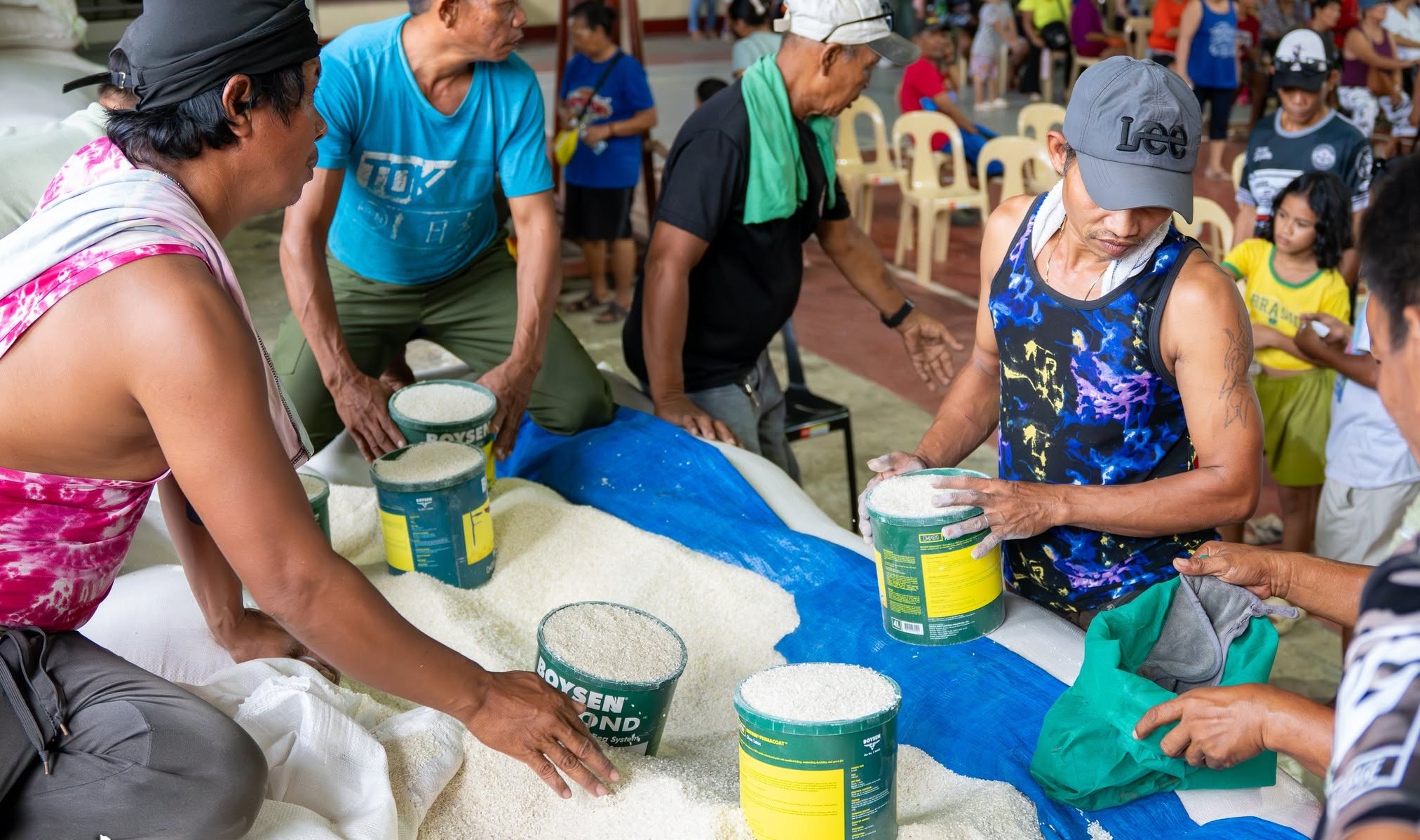
RICE ASSISTANCE. Beneficiary families in Bobon, Northern Samar receive rice assistance under the local government’s “Bawat Bayan Makikinabang Program,” which has distributed food aid to 4,351 families in six barangays as part of its second cycle.(LGU Bobon)
In Northern Samar
RICE ASSISTANCE. Beneficiary families in Bobon, Northern Samar receive rice assistance under the local government’s “Bawat Bayan Makikinabang Program,” which has distributed food aid to 4,351 families in six barangays as part of its second cycle.(LGU Bobon)
BOBON, Northern Samar — At least 4,351 indigent families in six barangays of this town have received rice assistance as the local government continues the second cycle of its food distribution program.
The distribution is being carried out under the municipal government’s “Bawat Bayan Makikinabang Program,” which seeks to provide food assistance to qualified low-income families across Bobon.
The first cycle of the Rice Distribution Project began on July 23, 2026, while the second cycle started in September as the municipal government works to reach beneficiaries in other barangays.
The six barangays that have received assistance so far are San Juan – 313 families; General Lucban – 616 families; Sta. Clara – 1,056 families; Salvacion – 1,039 families; Arellano – 428 families; and Magsaysay – 899 families.
The program is being implemented through the efforts of Mayor Reny Celespara, Vice Mayor Ligaya Uy, members of the Sangguniang Bayan and the respective barangay officials.
The municipal government said the distribution will continue until all qualified beneficiaries in the municipality are reached.
The rice assistance is intended to help ease the food expenses of indigent households amid rising living costs and provide immediate support to families in need.
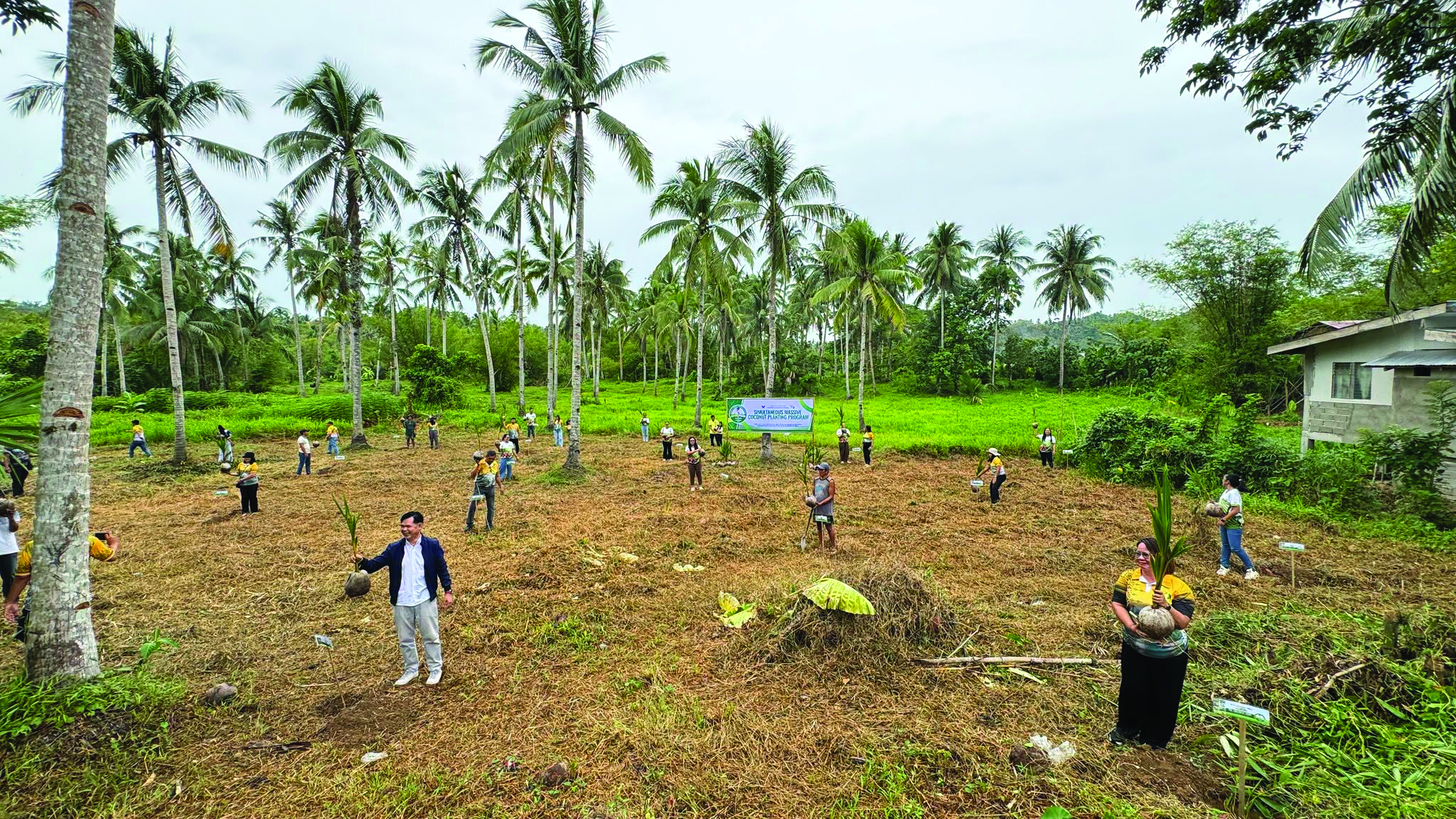
COCONUT REPLANTING. Government personnel, students and farmers plant hybrid coconut seedlings in Barangay Buri, Burauen, Leyte, as part of the Philippine Coconut Authority’s Simultaneous Massive Coconut Planting Program aimed at replacing aging and unproductive coconut trees. (PCA-EASTERN VISAYAS)
COCONUT REPLANTING. Government personnel, students and farmers plant hybrid coconut seedlings in Barangay Buri, Burauen, Leyte, as part of the Philippine Coconut Authority’s Simultaneous Massive Coconut Planting Program aimed at replacing aging and unproductive coconut trees. (PCA-EASTERN VISAYAS)
TACLOBAN CITY — The Philippine Coconut Authority (PCA) is targeting the planting of 128,000 hybrid coconut seedlings across Eastern Visayas over a three-month period as part of a massive replanting drive aimed at replacing aging and unproductive trees.
The planting campaign, which began in July and will run until September, is being carried out under the PCA’s Simultaneous Massive Coconut Planting Program, with coconut farmers and government agencies participating in activities across the region.
In Leyte, the PCA led the planting of 286 hybrid coconut seedlings in Barangay Buri, Burauen, where representatives of various government agencies, farmer organizations and academic institutions joined the activity.
Among those who participated were personnel from the Philippine Navy, Philippine Army, Philippine Air Force, Philippine National Police and Bureau of Fire Protection, as well as students of the Eastern Visayas State University-Burauen Campus and officials and personnel from the provincial and local governments.
The PCA said thousands of coconut seedlings were planted in different parts of Eastern Visayas during the simultaneous planting activity.
Nationwide, the agency and its partner organizations are targeting more than seven million coconut seedlings as part of the massive replanting program.
The initiative is also being implemented through the Participatory Coconut Planting Project (PCPP), an incentive-based program that encourages farmers and communities to take part in the planting and replanting of coconut trees.
Endalicia Quilloy, business manager of the Barangay Esperanza Organic Farmers Agriculture Cooperative in Burauen, said the government’s assistance has helped farmers cope with the high cost of farm inputs.
“The assistance is a big help to us because we are given free fertilizer and coconut seedlings, especially now that there is the Participatory Coconut Planting Project,” Quilloy said.
Quilloy said her farm’s coconut production declined after a destructive typhoon hit the area last year.
“Before the destructive typhoon last year, we used to harvest 6,000 nuts every quarter. The number dropped to only 3,000 this year. With the replanting, we are positive of seeing full recovery in two years,” she said.
She has planted nearly 300 coconut trees on her 2.6-hectare farm.
While waiting for the newly planted coconut trees to become productive, Quilloy said her family is also growing root crops and bananas between the coconut trees to provide additional income.
She said continued government support remains important for coconut farmers, particularly because of the rising cost of fertilizers and other farm inputs.
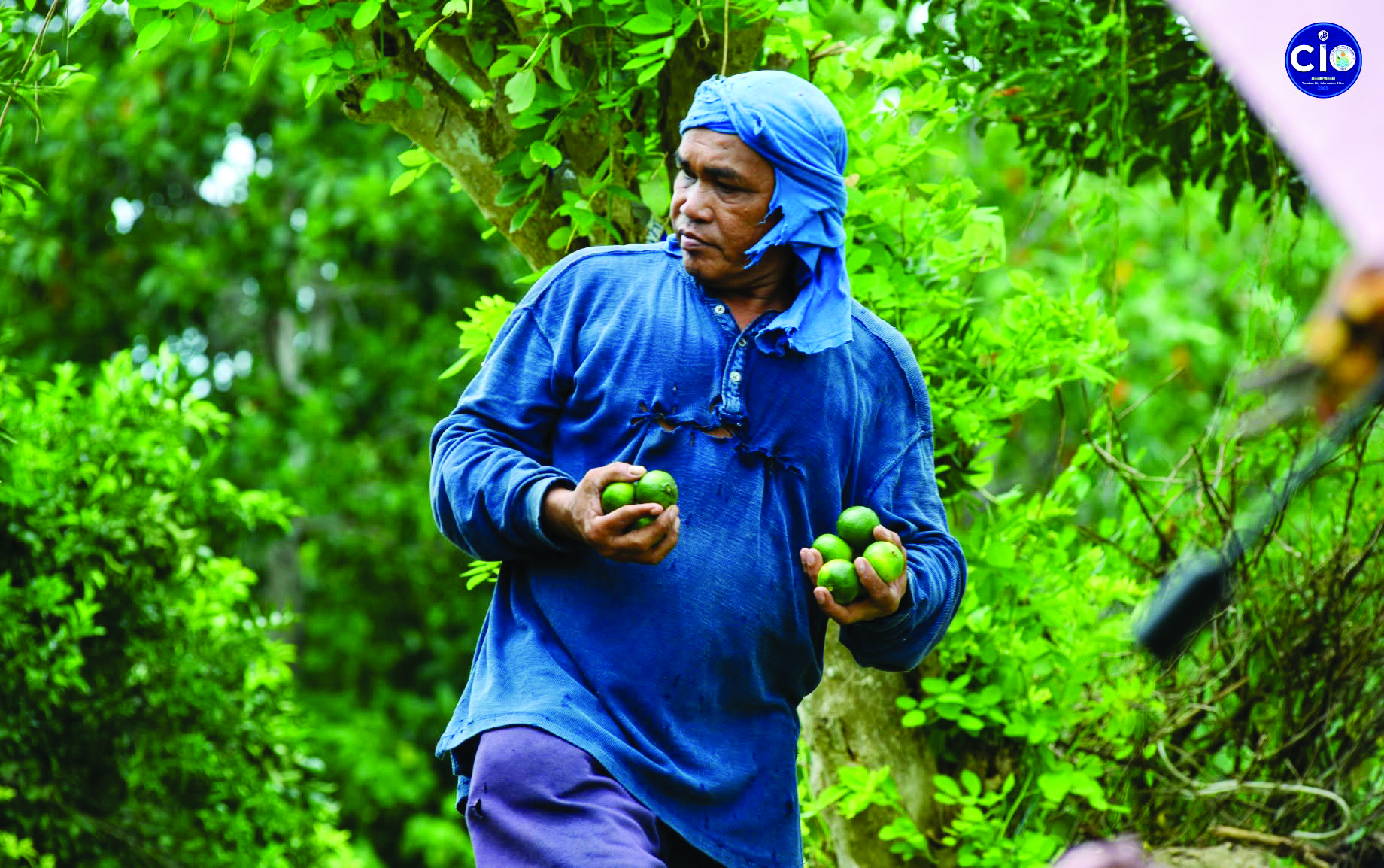
ORGANIC FARMING. The Tacloban City Agriculture Office (CAO), in partnership with the Technical Education and Skills Development Authority (TESDA), is promoting organic farming through a 29-day training program in Barangay New Kawayan. The program, which runs until Sept. 7, involves 26 beneficiaries who are receiving hands-on training in vegetable production, organic fertilizer making, livestock care, and other sustainable farming practices.
(Tacloban City Information Office)
ORGANIC FARMING. The Tacloban City Agriculture Office (CAO), in partnership with the Technical Education and Skills Development Authority (TESDA), is promoting organic farming through a 29-day training program in Barangay New Kawayan. The program, which runs until Sept. 7, involves 26 beneficiaries who are receiving hands-on training in vegetable production, organic fertilizer making, livestock care, and other sustainable farming practices. (Tacloban City Information Office)
TACLOBAN CITY — The Philippine Drug Enforcement Agency (PDEA) in Eastern Visayas is intensifying its campaign against illegal drugs as it works to address more than 100 barangays in the region that have yet to be classified as either drug-cleared or drug-free.
PDEA Eastern Visayas regional director Levi Ortiz said the agency continues to pursue illegal drug personalities and activities in barangays that remain outside the region’s drug-cleared or drug-free classifications.
Of the region’s 4,365 barangays, 2,835 have been declared drug-cleared, while 1,427 have been classified as drug-free, according to PDEA data.
Under the government’s Barangay Drug Clearing Program, a drug-cleared barangay is one that was previously classified as drug-affected but subsequently underwent the required clearing process and was declared cleared by the Regional Oversight Committee on Barangay Drug Clearing.
A drug-free barangay, on the other hand, is one classified as drug-unaffected and subsequently vetted and confirmed by the committee. This generally means there has been no validated or recorded presence of illegal drug personalities or activities in the barangay.
The distinction is significant because a drug-cleared barangay is one that has addressed a previously identified drug problem, while a drug-free barangay had not been classified as drug-affected in the first place.
Despite the high number of barangays already classified under either category, Ortiz acknowledged that illegal drug activity remains a concern in parts of Eastern Visayas.
He said there are two barangays in the region considered “hot spots” because of the high intensity of illegal drug activities. Ortiz declined to identify the barangays.
“Our mandate is to go against barangays which still have presence of illegal drugs,” Ortiz said in an interview.
PDEA has continued its law enforcement operations alongside the barangay drug-clearing program. Since the beginning of the year, the agency has conducted 104 anti-illegal drug operations, resulting in the arrest of 177 individuals, Ortiz said.
The operations also led to the seizure of shabu and marijuana with a combined estimated market value of more than P65 million.
Ortiz said none of the operations conducted by the regional office during the period resulted in the death of any of the suspects.
“No, no, walang patayan,” he said.
Of the 2,835 drug-cleared barangays in Eastern Visayas, 999 are in Leyte, 463 in Southern Leyte, 405 in Eastern Samar, 375 in Samar, 277 in Northern Samar, 127 in Tacloban City, 108 in Biliran, and 81 in Ormoc City.
The figures underscore the scale of the government’s barangay-level drug-clearing campaign in a region where thousands of communities have already undergone classification and validation.
However, Ortiz declined to give a specific timeline for when Eastern Visayas could have all its barangays classified as drug-cleared or drug-free.
He said PDEA will continue to focus on areas where illegal drugs, drug personalities, or drug-related activities are still being detected.
The government’s barangay drug-clearing program has been a key component of the country’s continuing anti-illegal drug campaign, shifting part of the focus from national-level enforcement operations to identifying, monitoring, and addressing drug-related concerns at the community level.
The campaign has also remained politically and socially sensitive because of the controversies surrounding the Duterte administration’s war on drugs, which drew widespread criticism over alleged extrajudicial killings and prompted international scrutiny.
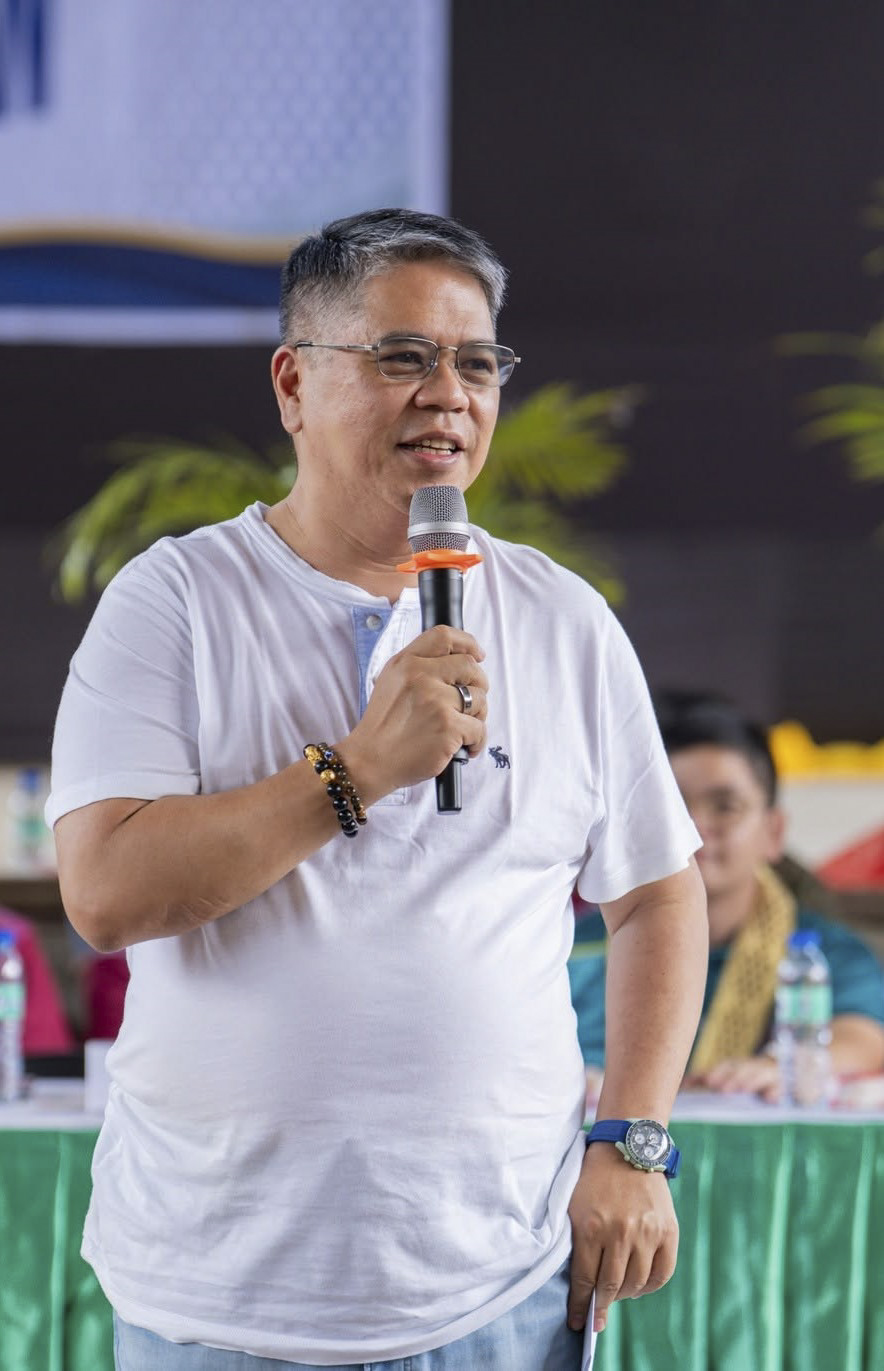
POVERTY DECLINES. Northern Samar 2nd District Rep. Edwin Ongchuan welcomes the latest Philippine Statistics Authority data showing the province’s family poverty incidence falling to 12.5% in 2025 from 21.8% in 2023. The figure represents about 11,770 fewer poor families compared with two years earlier.(File Photo)
POVERTY DECLINES. Northern Samar 2nd District Rep. Edwin Ongchuan welcomes the latest Philippine Statistics Authority data showing the province’s family poverty incidence falling to 12.5% in 2025 from 21.8% in 2023. The figure represents about 11,770 fewer poor families compared with two years earlier.(File Photo)
TACLOBAN CITY — Nearly 12,000 families in Northern Samar moved above the poverty threshold over the past two years as the province’s family poverty incidence fell sharply to 12.5% in 2025, according to the latest data from the Philippine Statistics Authority (PSA).
The PSA’s 2025 Full Year Official Poverty Statistics, released on Aug. 26, showed that the proportion of poor families in Northern Samar declined from 21.8% in 2023 and 19.3% in 2021 to 12.5% in 2025.
The latest figure translates to an estimated 19,760 poor families in 2025, down from 31,530 in 2023 — a reduction of about 11,770 families.
Northern Samar 2nd District Rep. Edwin Ongchuan welcomed the figures, saying the improvement reflected the collective efforts of local communities, government agencies and development partners.
“Almost 12,000 families in Northern Samar have crossed the threshold out of poverty,” Ongchuan said.
He said the achievement should be credited primarily to the people of Northern Samar, particularly farmers and fisherfolk, as well as local officials, national government agencies and development partners.
“This milestone belongs to our farmers, fisherfolk, local officials, national line agencies, our development partners, and every Norte-samarnon who kept working even when progress felt slow,” Ongchuan said.
Ongchuan also congratulated the Provincial Government of Northern Samar under Gov. Harris Ongchuan for sustaining programs that he said contributed to improvements in the lives of residents.
The lawmaker, however, cautioned against complacency, saying poverty-reduction efforts should continue until more families benefit from the province’s economic gains.
“I say to all of them: let’s not slow down until every remaining family shares in this progress,” Ongchuan said.
Despite the improvement, Northern Samar’s 12.5% family poverty incidence ranked fourth among the six provinces in Eastern Visayas.
Leyte recorded a slightly lower rate at 12.4%, while Biliran posted 7.8%. Southern Leyte had the region’s lowest family poverty incidence at 3.4%. Samar and Eastern Samar recorded 15.7% and 20.0%, respectively.
For 2025, the PSA set Northern Samar’s annual per capita poverty threshold at P36,450.64, or about P3,038 per person per month.
The latest figures indicate significant progress but also highlight the need to sustain poverty-reduction measures, particularly livelihood and employment programs, access to basic services and targeted assistance for communities where poverty remains prevalent.
The provincial government now faces the challenge of maintaining the momentum, preventing families who have moved above the poverty threshold from slipping back into poverty, and extending the gains to households that continue to struggle economically.
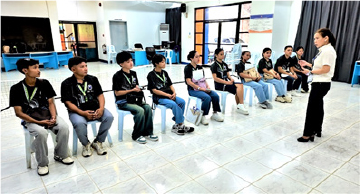
Brgy. Burabud, Laoang N. Samar -The Department of Public Works and Highways – Northern Samar Second District Engineering Office (DPWH‑NSSDEO) conducted an orientation on August 24, 2026, for ten (10) fourth‑year Bachelor of Science in Computer Science students from Collegio De Las Navas, marking the commencement of their 45‑day on‑the‑job training (OJT) or practicum at the District Office.
The activity familiarized the students with DPWH’s mandate, office policies, operational workflow, safety protocols, and ethical standards. It also outlined their learning objectives, assigned work areas, and the scope of technical and administrative support they will provide across the office’s units.
According to Human Resource Management Officer (HRMO) Rhea B. Maghanoy, the practicum aims to bridge classroom learning with real‑world public service operations. “We are pleased to welcome these aspiring IT and computing professionals. This 45‑day immersion will give them valuable exposure to government systems, data management, digital documentation, and technical processes in a public work setting,” she stated.
The students will assist in specific sections or units, where they will perform duties and responsibilities as designated by the Office. The practicum is a requirement for their degree completion and runs for a continuous period of 45 working days under the supervision of DPWH‑NSSDEO technical and administrative staff. This practicum is an opportunity that will enable these students to gain practical experience in a government environment and understand public service values and discipline.
Both parties affirmed their commitment to a productive and meaningful training period, ensuring that students acquire relevant skills and insights to prepare them for future careers in the computing and information technology industry. This reaffirms DPWH’s commitment to upholding accountability, professionalism, and integrity in public service.
WASTE RECOVERY. Workers process recyclable materials at the Ormoc City Eco-Waste Center in Barangay Green Valley, where the city is expanding waste diversion, composting and resource recovery operations while preparing for a second landfill cell. (DENR-Eastern Visayas)
WASTE RECOVERY. Workers process recyclable materials at the Ormoc City Eco-Waste Center in Barangay Green Valley, where the city is expanding waste diversion, composting and resource recovery operations while preparing for a second landfill cell. (DENR-Eastern Visayas)
TACLOBAN CITY — The city government of Ormoc is expanding its waste recovery and disposal infrastructure as it moves to manage rising garbage volumes and reduce the amount of waste ending up in landfills.
The city is strengthening operations at its 32-hectare Eco-Waste Center in Barangay Green Valley, about 18 kilometers from the city proper, which serves as the centralized facility for waste processing, resource recovery and final disposal for all 63 barangays.
The Eco-Waste Center includes a 1.8-hectare sanitary landfill for residual waste, a central materials recovery facility (MRF), a composting facility, a septage treatment plant and a healthcare waste treatment facility.
The facility is part of Ormoc’s six-pillar solid waste management framework covering waste collection, segregation, resource recovery, processing and final disposal.
Mandatory household waste segregation and local regulations on single-use plastics are intended to divert recyclable and biodegradable materials to appropriate recovery facilities, while residual waste is transported to the sanitary landfill.
With the existing Landfill Cell 1 nearing capacity, the city is preparing for the development of Landfill Cell 2, including site development, drainage and access infrastructure.
The city also plans to expand its government-owned collection fleet and heavy equipment to improve waste transport, compaction, soil covering and landfill maintenance.
Centralized composting operations are likewise being expanded to handle more biodegradable waste collected from barangays and commercial establishments and to further reduce the volume of waste sent to the landfill.
The Eco-Waste Center also works with community-based social enterprises such as the Mas-Green Eco-Waste Pickers Association (MEPA), which recovers plastic and glass materials for the production of eco-bricks used in local infrastructure projects.
Meanwhile, city officials are drafting localized circular economy policies and studying the possible introduction of nighttime waste collection schedules to improve the transport of waste from urban barangays to the Green Valley facility.
The Department of Environment and Natural Resources (DENR) said sustained investments in waste diversion, resource recovery and proper residual waste disposal are essential to reducing the volume of waste brought to landfills and advancing sustainable solid waste management in local communities.
The initiatives form part of Ormoc’s continuing efforts to improve waste diversion and resource recovery while ensuring the safe and proper disposal of residual waste.