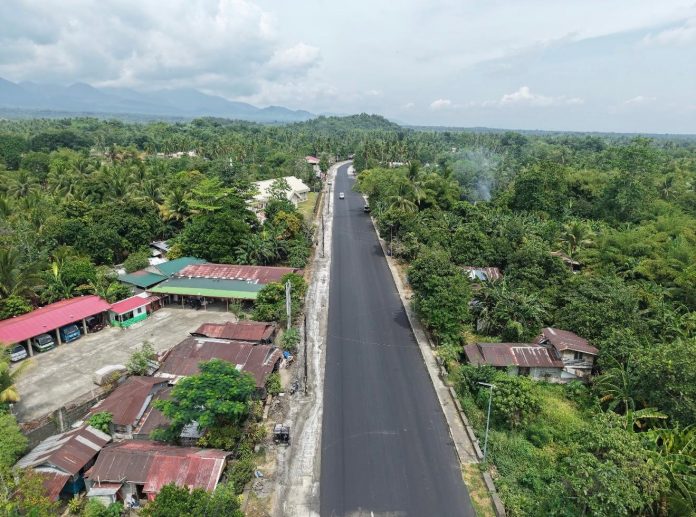
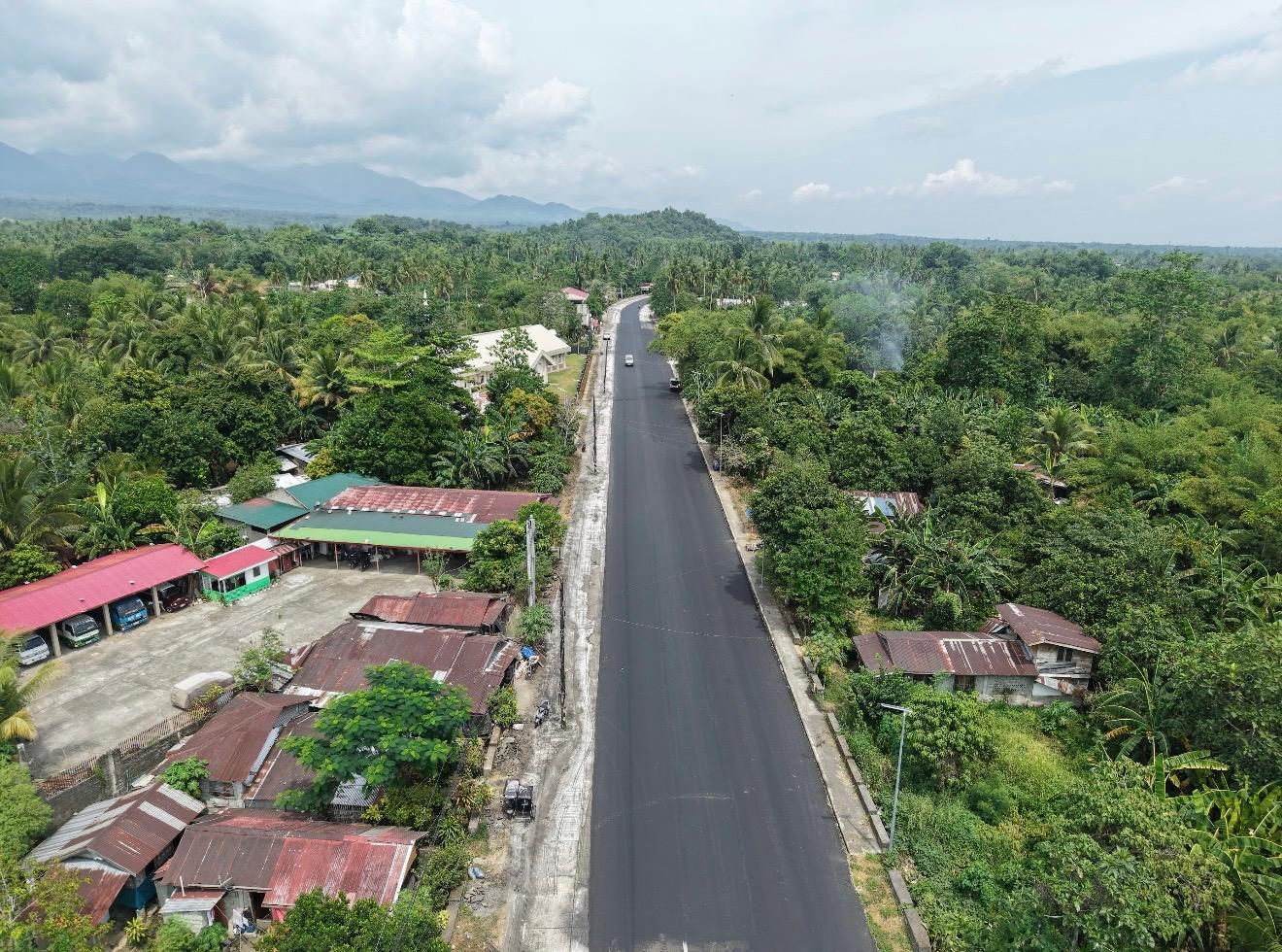
ROAD IMPROVEMENT. The P30.29-million project of the DPWH Leyte 2nd District Engineering Office in Barangay Kaglawaan, Jaro town is already 70.80% complete and is expected to improve road safety and mobility in the area.(L2DEO)
ROAD IMPROVEMENT. The P30.29-million project of the DPWH Leyte 2nd District Engineering Office in Barangay Kaglawaan, Jaro town is already 70.80% complete and is expected to improve road safety and mobility in the area.(L2DEO)
TACLOBAN CITY — A P30.29-million road improvement project being implemented by the Department of Public Works and Highways (DPWH) Leyte 2nd District Engineering Office (LDEO) in Jaro, Leyte has reached 70.80% physical accomplishment, with the project expected to improve road safety and mobility in the area.
The project involves the installation of a 50-millimeter-thick asphalt overlay over the existing Portland Cement Concrete Pavement (PCCP) along a road section in Barangay Kaglawaan.
Damaged portions of the existing concrete pavement are also being repaired as part of the project to ensure a more durable and smoother road surface.
The DPWH will likewise install reflectorized thermoplastic pavement markings to improve road visibility and safety, particularly for motorists traveling at night.
Funded under the 2026 General Appropriations Act (GAA), the project has an allocation of PHP30,291,000 and is being undertaken by Socor Construction Corp.
Once completed, the project is expected to provide motorists, commuters and residents with a smoother and safer roadway, improve traffic flow, and facilitate the movement of people and goods.
The undertaking forms part of the DPWH Leyte 2nd District Engineering Office’s continuing efforts to improve road infrastructure and provide safer and more reliable transportation routes for communities in the district.
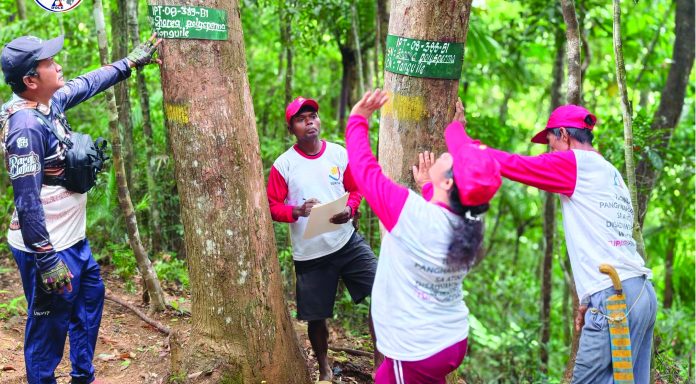
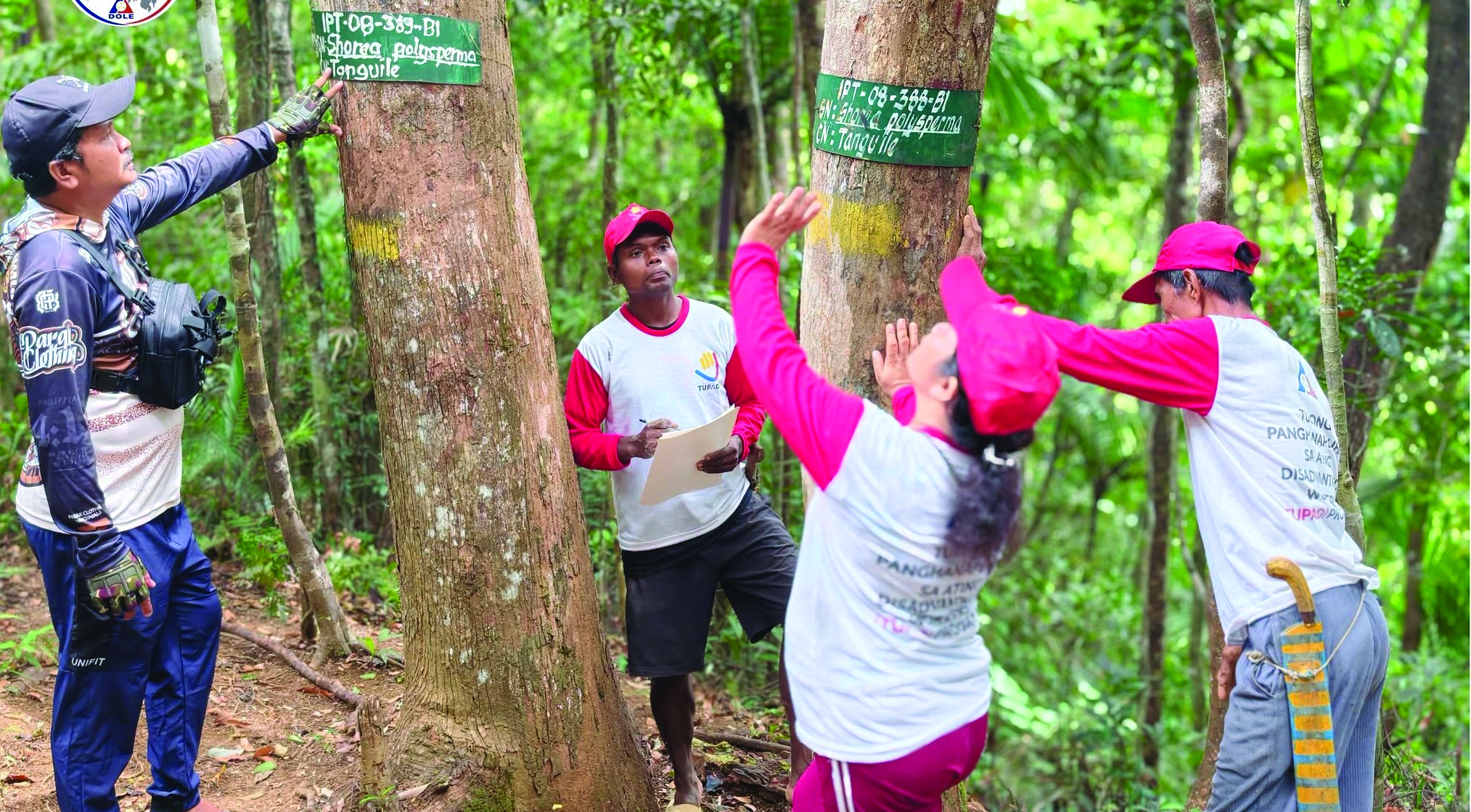
WORKING FOR THE FOREST. Members of the Mamanwa Tribe Association and Caucab Forest Savers Association Inc. participate in forest management and bamboo planting activities in the Tres Marias Mountain Range in Almeria, Biliran, under the 31-day TUPAD program of DOLE and DENR. The initiative provided temporary employment to 50 residents while supporting forest conservation efforts. (PHOTO COURTESY OF DOLE-8)
WORKING FOR THE FOREST. Members of the Mamanwa Tribe Association and Caucab Forest Savers Association Inc. participate in forest management and bamboo planting activities in the Tres Marias Mountain Range in Almeria, Biliran, under the 31-day TUPAD program of DOLE and DENR. The initiative provided temporary employment to 50 residents while supporting forest conservation efforts. (PHOTO COURTESY OF DOLE-8)
TACLOBAN CITY — Fifty members of the Mamanwa community in Almeria, Biliran earned temporary income while helping protect forest resources under a joint employment and conservation program of the Department of Labor and Employment (DOLE) and Department of Environment and Natural Resources (DENR).
The 31-day Tulong Panghanapbuhay sa Ating Disadvantaged Workers (TUPAD) program mobilized members of the Mamanwa Tribe Association (MTA) and Caucab Forest Savers Association Inc. (CFSAI) for community-based forest management and bamboo planting activities in Barangay Caucab.
The workers carried out maintenance and protection activities involving Individual Plus Trees (IPTs) within the Tres Marias Mountain Range, particularly along the road leading to Sitio Palayan.
The activities were conducted from July 20 to August 31, 2026.
The DENR identifies IPTs as superior and healthy trees that serve as sources of seeds and planting materials for reforestation and future tree-breeding activities.
The joint initiative seeks to address threats to forest resources and improve tree survival while providing temporary employment to residents of upland communities.
Dondon Calinawan, one of the beneficiaries, said the program helped the community meet immediate needs while allowing residents to take part in protecting the environment.
“Malaki po talaga ang naitutulong ng TUPAD sa amin. Maliban sa nakatulong ito para sa aming mga pangangailangan, nagbigay-daan din ito upang makatulong kami sa pag-protekta ng ating kalikasan,” Calinawan said.
The program was implemented by the DOLE Regional Office VIII through its Biliran Field Office in partnership with the DENR Biliran Provincial Environment and Natural Resources Office.
The agencies said the collaboration demonstrates how livelihood assistance can be combined with environmental protection, particularly in upland communities whose residents depend on natural resources for their livelihood.
Through the program, beneficiaries received temporary employment while contributing to forest maintenance, protection and rehabilitation efforts in one of Biliran’s important mountain areas.
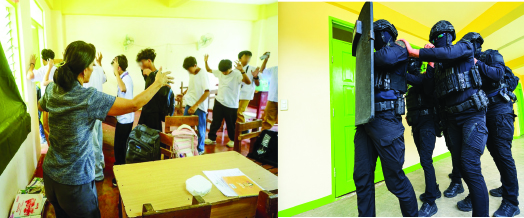
SECURITY DRILL.Students, school personnel and security forces participate in an active-shooter safety drill at Scandinavian National High School in Tacloban City on Thursday, Sept. 3, 2026, as part of the nationwide simultaneous school safety exercise led by the Department of Education. The drill aimed to test the school’s preparedness and emergency response to potential active-attack incidents.
(Tacloban City Information Office)
SECURITY DRILL.Students, school personnel and security forces participate in an active-shooter safety drill at Scandinavian National High School in Tacloban City on Thursday, Sept. 3, 2026, as part of the nationwide simultaneous school safety exercise led by the Department of Education. The drill aimed to test the school’s preparedness and emergency response to potential active-attack incidents. (Tacloban City Information Office)
TACLOBAN CITY — The proposed Sorsogon–Northern Samar Link Bridge has moved a step closer to reality after the Department of Public Works and Highways (DPWH) confirmed the project’s feasibility and secured a proposed P130 million allocation for a new feasibility study in the 2027 national budget.
DPWH Secretary Vince Dizon made the disclosure during the House of Representatives budget hearing on August 26, in response to questions from House Minority Leader and 4Ps Party-list Rep. Marcelino Libanan on the proposed Matnog–Allen Bridge.
Dizon said the funding would allow the feasibility study to be completed within 2027, bringing the long-proposed project closer to the engineering and financing stages.
The DPWH chief also said the agency has started discussions with major international financing institutions, including the Asian Development Bank (ADB), Japan International Cooperation Agency (JICA), and Korea International Cooperation Agency (KOICA), for possible funding of the project.
“They have expressed very, very high interest in funding this simply because of the very, very high economic return, which is about 42 percent,” Dizon said during the hearing.
Dizon described the proposed bridge as a “critical link” of the Maharlika Highway that would connect Luzon and the Visayas through a permanent crossing between Matnog, Sorsogon, and Allen, Northern Samar.
Libanan, a former congressman of Eastern Samar, has been pushing for the project for the past four years. The proposed bridge is also supported by the Regional Development Council-Eastern Visayas (RDC-8), which has identified it as a strategic infrastructure project for improving connectivity between Eastern Visayas and Luzon.
“For four years, we have been pursuing the construction of the Sorsogon–Northern Samar Link Bridge, or the Matnog–Allen Bridge,” Libanan said in a statement following the hearing.
He said the project could provide a faster, safer and more efficient route for passengers, businesses and the movement of goods between Luzon and the Visayas.
The proposed crossing would serve as an alternative to the existing roll-on/roll-off ferry connection across the San Bernardino Strait, potentially reducing the region’s dependence on sea transport and minimizing travel disruptions during unfavorable weather conditions.
The bridge is envisioned to span about 20 kilometers, although its final length, design and construction cost will depend on the results of the feasibility and engineering studies.
Dizon said construction could take about six years once the project proceeds to implementation, meaning work could extend beyond the end of the current administration in 2028.
The project could become one of the longest bridges in the country. However, its scale presents significant engineering challenges, including deep-water construction, seismic risks, strong currents, typhoons and other environmental considerations.
The project’s construction cost was not discussed in detail during the August 26 hearing. Previous estimates have ranged from about P257 billion to P766 billion, depending on the proposed design and scope.
For Libanan, the DPWH’s confirmation that the project is feasible marks an important milestone, although he stressed that efforts must continue until the bridge is eventually constructed.
“This is a very important development for the project that we have long been pursuing,” Libanan said, adding that the confirmation strengthens the basis for moving the proposal to the next stage and eventually toward implementation.
“Four years we have fought for this. Now, we are closer to making it a reality,” he said.
Once completed, the Matnog–Allen link is expected to strengthen the country’s road network by providing a permanent connection between Luzon and the Visayas.
For Northern Samar and other parts of Eastern Visayas, the project could improve access to markets in Luzon while potentially reducing travel time and transportation costs for passengers and cargo.
SECURITY DRILL.Students, school personnel and security forces participate in an active-shooter safety drill at Scandinavian National High School in Tacloban City on Thursday, Sept. 3, 2026, as part of the nationwide simultaneous school safety exercise led by the Department of Education. The drill aimed to test the school’s preparedness and emergency response to potential active-attack incidents.
(Tacloban City Information Office)
SECURITY DRILL.Students, school personnel and security forces participate in an active-shooter safety drill at Scandinavian National High School in Tacloban City on Thursday, Sept. 3, 2026, as part of the nationwide simultaneous school safety exercise led by the Department of Education. The drill aimed to test the school’s preparedness and emergency response to potential active-attack incidents. (Tacloban City Information Office)
TACLOBAN CITY — The proposed Sorsogon–Northern Samar Link Bridge has moved a step closer to reality after the Department of Public Works and Highways (DPWH) confirmed the project’s feasibility and secured a proposed P130 million allocation for a new feasibility study in the 2027 national budget.
DPWH Secretary Vince Dizon made the disclosure during the House of Representatives budget hearing on August 26, in response to questions from House Minority Leader and 4Ps Party-list Rep. Marcelino Libanan on the proposed Matnog–Allen Bridge.
Dizon said the funding would allow the feasibility study to be completed within 2027, bringing the long-proposed project closer to the engineering and financing stages.
The DPWH chief also said the agency has started discussions with major international financing institutions, including the Asian Development Bank (ADB), Japan International Cooperation Agency (JICA), and Korea International Cooperation Agency (KOICA), for possible funding of the project.
“They have expressed very, very high interest in funding this simply because of the very, very high economic return, which is about 42 percent,” Dizon said during the hearing.
Dizon described the proposed bridge as a “critical link” of the Maharlika Highway that would connect Luzon and the Visayas through a permanent crossing between Matnog, Sorsogon, and Allen, Northern Samar.
Libanan, a former congressman of Eastern Samar, has been pushing for the project for the past four years. The proposed bridge is also supported by the Regional Development Council-Eastern Visayas (RDC-8), which has identified it as a strategic infrastructure project for improving connectivity between Eastern Visayas and Luzon.
“For four years, we have been pursuing the construction of the Sorsogon–Northern Samar Link Bridge, or the Matnog–Allen Bridge,” Libanan said in a statement following the hearing.
He said the project could provide a faster, safer and more efficient route for passengers, businesses and the movement of goods between Luzon and the Visayas.
The proposed crossing would serve as an alternative to the existing roll-on/roll-off ferry connection across the San Bernardino Strait, potentially reducing the region’s dependence on sea transport and minimizing travel disruptions during unfavorable weather conditions.
The bridge is envisioned to span about 20 kilometers, although its final length, design and construction cost will depend on the results of the feasibility and engineering studies.
Dizon said construction could take about six years once the project proceeds to implementation, meaning work could extend beyond the end of the current administration in 2028.
The project could become one of the longest bridges in the country. However, its scale presents significant engineering challenges, including deep-water construction, seismic risks, strong currents, typhoons and other environmental considerations.
The project’s construction cost was not discussed in detail during the August 26 hearing. Previous estimates have ranged from about P257 billion to P766 billion, depending on the proposed design and scope.
For Libanan, the DPWH’s confirmation that the project is feasible marks an important milestone, although he stressed that efforts must continue until the bridge is eventually constructed.
“This is a very important development for the project that we have long been pursuing,” Libanan said, adding that the confirmation strengthens the basis for moving the proposal to the next stage and eventually toward implementation.
“Four years we have fought for this. Now, we are closer to making it a reality,” he said.
Once completed, the Matnog–Allen link is expected to strengthen the country’s road network by providing a permanent connection between Luzon and the Visayas.
For Northern Samar and other parts of Eastern Visayas, the project could improve access to markets in Luzon while potentially reducing travel time and transportation costs for passengers and cargo.
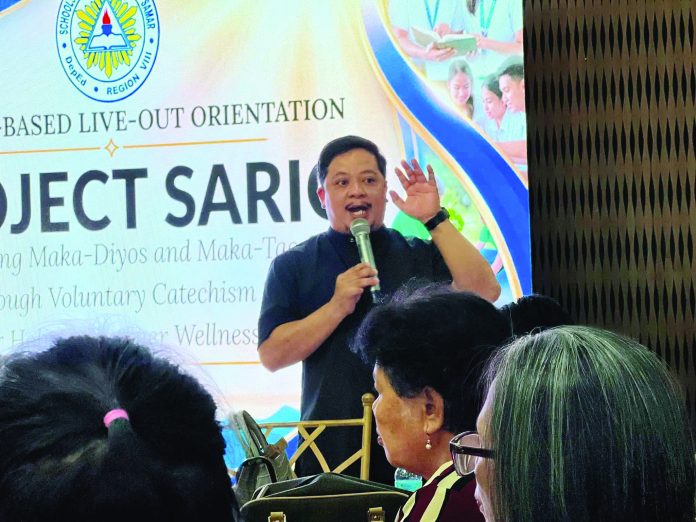
VALUES FORMATION. DepEd Eastern Samar officials and leaders of the Diocese of Borongan sign a memorandum of agreement formalizing their partnership for the implementation of Project SARIG, which provides voluntary catechism sessions in public schools to complement the values education curriculum. The project was launched during a two-day orientation in Borongan City on Aug. 25-26. (DIOCESE OF BORONGAN FACEBOOK)
VALUES FORMATION. DepEd Eastern Samar officials and leaders of the Diocese of Borongan sign a memorandum of agreement formalizing their partnership for the implementation of Project SARIG, which provides voluntary catechism sessions in public schools to complement the values education curriculum. The project was launched during a two-day orientation in Borongan City on Aug. 25-26. (DIOCESE OF BORONGAN FACEBOOK)
TACLOBAN CITY — The Department of Education (DepEd) Eastern Samar Division and the Diocese of Borongan have forged a partnership to strengthen values formation among public school learners through voluntary catechism sessions under Project SARIG.
Project SARIG, or Strengthening Maka-Diyos and Maka-Tao Core Values Through Voluntary Catechism Sessions for Holistic Learner Wellness, was formally launched during a two-day division-based orientation held Aug. 25-26 at Wheeler’s Events Hall in Borongan City.
The activity brought together district and school heads, diocesan catechetical leaders, and more than 100 volunteer catechists from parishes across Eastern Samar.
The project aims to provide voluntary catechism sessions in public schools to complement the Good Manners and Right Conduct (GMRC) and Values Education curriculum and help promote the spiritual, moral, emotional and social well-being of learners.
A major highlight of the launch was the signing of a memorandum of agreement (MOA) between DepEd Eastern Samar and the Diocese of Borongan, formalizing their cooperation in implementing the project.
Representing DepEd during the ceremonial signing were Assistant Schools Division Superintendent Raymund Capacite and Schools Governance and Operations Division Chief Marixel Evardone.
The Diocese of Borongan was represented by Bishop Most Rev. Crispin Varquez, and Rev. Fr. Michael Kay Rebamontan.
Under the agreement, volunteer catechists will conduct voluntary sessions in public schools in coordination with school officials. The sessions are intended to reinforce core values while complementing existing DepEd programs.
DepEd emphasized that Project SARIG is designed to support holistic learner development and that catechetical activities will not replace the regular school curriculum.
The agency and the Diocese of Borongan said they are committed to sustaining the partnership and promoting values-driven education that supports the overall development of learners in Eastern Samar.
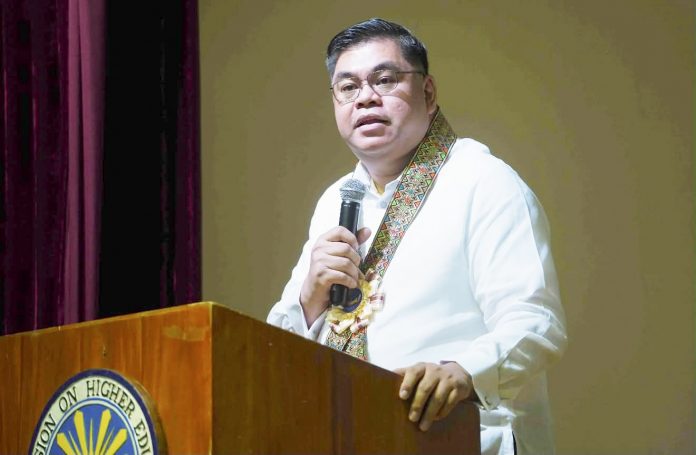
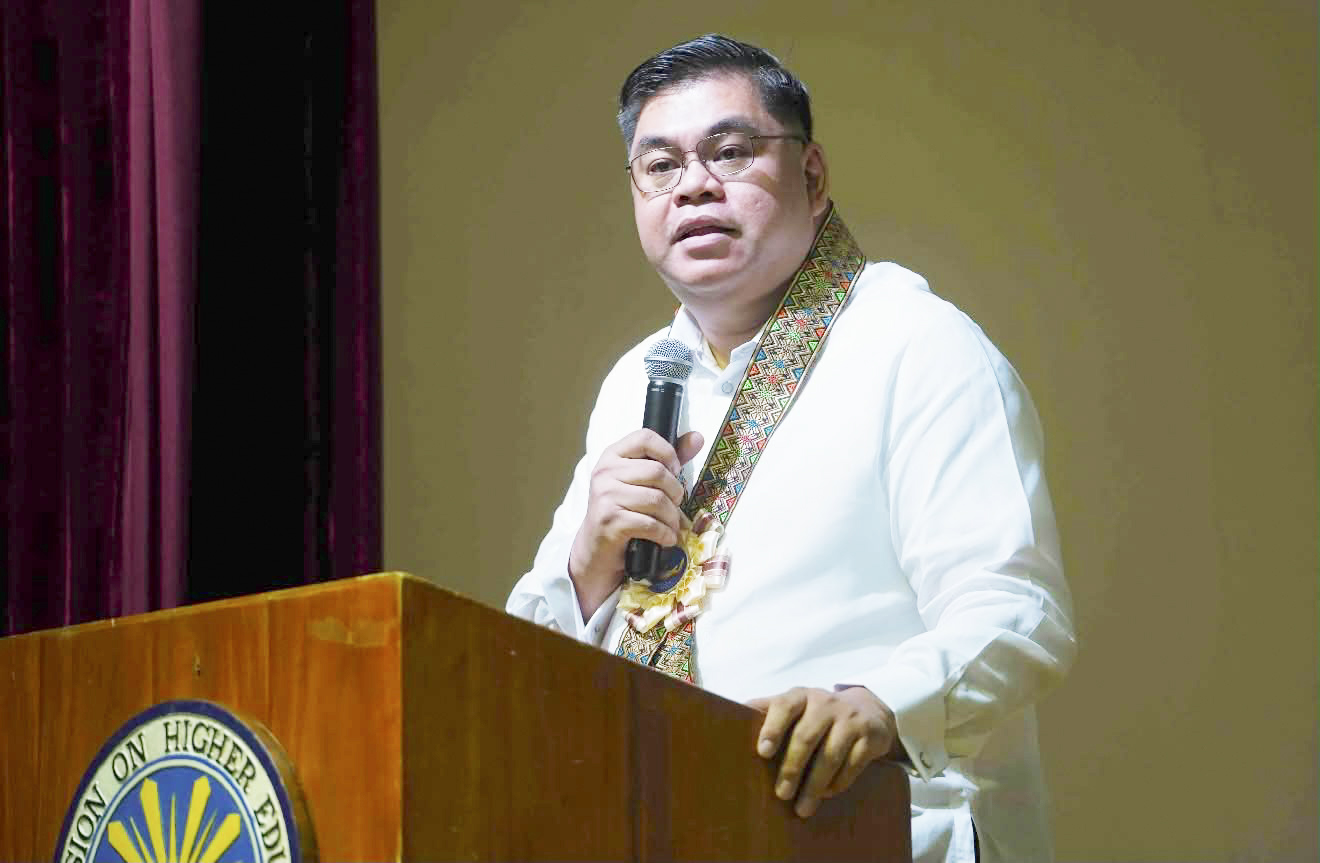
TINGOG Party-list Rep. Jude Acidre, chairperson of the House Committee on Higher and Technical Education, urges state universities and colleges to take a more active role in the country’s learning recovery efforts during the “Strategic Alignment on the Role of SUCs and AACCUP in National Learning Recovery” at the Commission on Higher Education Auditorium. (Photo courtesy)
TINGOG Party-list Rep. Jude Acidre, chairperson of the House Committee on Higher and Technical Education, urges state universities and colleges to take a more active role in the country’s learning recovery efforts during the “Strategic Alignment on the Role of SUCs and AACCUP in National Learning Recovery” at the Commission on Higher Education Auditorium. (Photo courtesy)
TACLOBAN CITY — State universities and colleges must take a more active role in addressing the country’s learning crisis before its effects reach their classrooms, House Committee on Higher and Technical Education Chairperson and Tingog party-list Rep. Jude Acidre said.
Acidre issued the call during the “Strategic Alignment on the Role of SUCs and AACCUP in National Learning Recovery” held at the Commission on Higher Education Auditorium, citing data that showed a significant number of Filipino learners are failing to acquire basic reading and other competencies.
Department of Education data showed that 48.76 percent of learners were not reading at grade level by Grade 3, Acidre said.
He also cited findings of the Second Congressional Commission on Education (EDCOM II) showing what it described as a “proficiency collapse,” with about 30 percent of Grade 3 learners meeting proficiency standards but less than 1 percent reaching the same level by Grade 12.
“The nine-year-old who cannot read today will be sitting in one of your classrooms in eight years. She is not a basic education problem that will stay inside basic education. She is your incoming freshman,” Acidre said.
He urged SUCs to look beyond conventional measures of institutional performance, such as the number of academic programs, graduates and research outputs, and assess whether their programs are contributing to improved learning outcomes and stronger communities.
Acidre also underscored the importance of quality assurance and accreditation, saying these processes should translate into better education and measurable institutional improvement rather than simply compliance with requirements.
Teacher education, he said, is another area requiring urgent attention.