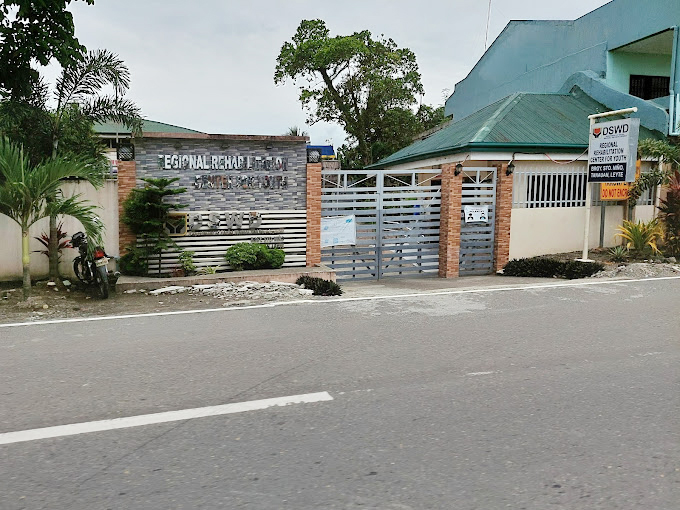
TACLOBAN CITY — The Department of Social Welfare and Development (DSWD) has stepped up security at its Regional Rehabilitation Center for Youth (RRCY) in Tanauan, Leyte, where the two minors accused in the deadly San Jose National High School shooting are being held, assuring the public that stringent measures are in place to prevent escape while ensuring the children’s rehabilitation.
The enhanced security comes weeks after the June 22 attack at San Jose National High School in Tacloban City, one of the deadliest school shootings in the country’s recent history. The attack left three students dead and 20 others injured, sending shockwaves across Eastern Visayas and the rest of the country and prompting renewed calls for stronger school security and juvenile intervention programs.
The two suspects, identified by police only through the aliases “Rod,” 15, and “Nash,” 14, are currently under the custody of the DSWD at the RRCY.
Authorities have filed criminal complaints against the 15-year-old suspect, who investigators said acted with discernment during the commission of the crime. He is facing three counts of murder, three counts of frustrated murder, and multiple counts of serious physical injuries under the Juvenile Justice and Welfare Act.
The 14-year-old suspect, meanwhile, is exempt from criminal liability because of his age but remains under mandatory intervention and rehabilitation as provided by law.
DSWD Eastern Visayas Regional Director Grace Subong said the agency has reinforced security at the rehabilitation center by deploying additional security personnel, coordinating closely with the Philippine National Police (PNP), and upgrading the facility’s physical security features.
“We have security guards assigned both outside and inside the facility, and we also have personnel conducting regular roving patrols,” Subong said.
To further strengthen security, the DSWD coordinated with the Leyte Police Provincial Office (LPPO), which has stationed police officers at the facility.
A coordination meeting between the DSWD Field Office VIII and the LPPO was held on July 3, led by Leyte police officer-in-charge Police Colonel Celerino Sacro Jr. and Subong. The meeting focused on enhancing security protocols, emergency response procedures, and inter-agency coordination to ensure the safety of the rehabilitation center, its personnel, and the children under its care.
“We wanted to ensure the safety of the children at the RRCY and give the public peace of mind, so we coordinated with the provincial police,” Subong said.
She said one police officer has been assigned to monitor each of the two minors, while another has been posted at the entrance of the facility.
The DSWD has also upgraded the center’s security infrastructure by raising the height of its perimeter walls and installing steel grills on rooftop areas to prevent escape attempts.
Despite the tighter security, Subong stressed that the RRCY remains a rehabilitation facility designed to provide a child-friendly environment for children in conflict with the law.
“These are children in conflict with the law who are under suspended sentence. While security is important, we also have to ensure that they stay in a child-appropriate facility where rehabilitation and healing can continue,” she said.
The RRCY currently houses around 30 children, well below its 80-bed capacity. Additional house parents and social workers have also been assigned to provide closer supervision and psychosocial interventions.
Subong acknowledged that while isolated escape incidents had occurred at the facility in previous years, the DSWD has established protocols requiring immediate coordination with barangay officials, local government units, the Municipal Social Welfare and Development Office, and the police. Such incidents are also reported to the courts, which may issue warrants of arrest when warranted.
The two Tacloban shooting suspects remain under strict restrictions while undergoing medical, psychological, and social assessments.
According to Subong, the minors are housed separately from other residents and are prohibited from receiving visitors, including family members.
“There is a no-contact and no-interview policy for the two minors at this time, except with our house parents and social workers,” she said.
She added that while other RRCY residents may eventually receive family visits after complying with the center’s protocols, the restrictions imposed on the two suspects are necessary to preserve the integrity of the ongoing intervention process.
Subong also appealed to barangay officials, local government units, and the public to continue supporting the government’s rehabilitation efforts.
“We are doing everything possible to ensure the safety of the children under our custody. We welcome the support and cooperation of our barangay officials and local government units because this responsibility is shared by everyone, not just the DSWD,” she said.
(ROEL T. AMAZONA)