24.6 C
Tacloban City
February 24, 2026 - Tuesday | 5:28 AM
Home Blog Page 28

Menaced reality

0

I pause on a video mid-scroll because the face looks familiar, the voice steady, the gestures convincing. Only later does the small label appear: AI-generated. That moment—brief, ordinary, unsettling—captures why these hyper-real photos and videos worry me more than they amuse me.

I admit the technology can be entertaining. Seeing historical figures “speak,” watching playful face swaps, or restoring old photos with eerie clarity can feel like harmless fun. I’ve laughed at some of them myself. But entertainment stops being innocent when it trains the eye to accept anything polished as real and anything real as suspect.

What troubles me most is how realism has become the selling point. These images and clips are no longer obviously fake; they are smooth, well-lit, and emotionally accurate. Skin has pores, voices carry pauses, and eyes blink at the right time. When imitation becomes better than the original, truth loses its visual advantage.

This is where lies find fertile ground. A fake video does not need to convince everyone; it only needs to confuse enough people long enough. In politics, a few seconds of fabricated speech can ruin reputations before corrections arrive. In daily life, altered images can shame, threaten, or mislead, causing real damage even after exposure.

I feel this shift in my own habits. I hesitate before believing footage that would have shocked me a few years ago. I double-check clips that confirm my views, then triple-check those that challenge them. That constant suspicion is exhausting. A world where every image demands interrogation is not a healthy one.

There is also a quieter loss happening—the loss of shared reality. Photos and videos once served as common ground, proof that something happened. Now they are arguments waiting to happen. Conversations begin not with “Did you see this?” but with “Is this even real?”

I do not blame the tool alone. Technology has always raced ahead; people decide how recklessly it is used. Platforms profit from speed, not verification. Creators chase clicks, not consequences. Meanwhile, viewers like me are left to sift through a flood where truth and trick wear the same face.

The way forward, I think, is slower and less glamorous. Stronger labeling, real penalties for malicious fakery, and better public education matter. So does personal restraint: pausing before sharing, questioning before reacting, valuing credibility over thrill. In an age that can manufacture reality, choosing patience may be the last honest act left to us.

“Circular economy: Your path to zero-waste production”

0

In a world grappling with resource depletion and environmental degradation, the concept of a circular economy is gaining traction as a viable solution. The circular economy is a smart alternative to the traditional linear model. Forget “take-make-dispose”—it’s about minimizing waste and getting the most out of our resources by keeping products and materials in circulation. For businesses, embracing a circular economy offers a path to zero-waste production, not only reducing their environmental impact but also unlocking new economic opportunities.

Understanding the Circular Economy

The heart of the circular economy is reimagining how we create and use products. It’s a system that cherishes resources, hates waste, and makes sure everything is built to last, be reused, and easily recycled – system where waste is minimized, resources are valued, and products are designed for durability, reuse, and recyclability. This involves shifting away from a linear model to a closed-loop system where materials are continuously cycled back into the production process.

The principles of a circular economy can be summarized as follows:

Design for durability and recyclability: Products should be designed to last longer and be easily disassembled and recycled at the end of their life.

Resource efficiency: Businesses should minimize their use of raw materials and energy, and explore alternative, sustainable resources.

Waste reduction: Waste should be minimized at every stage of the production process, from design to manufacturing to distribution.

Reuse and repair: Products should be designed for reuse and repair, extending their lifespan and reducing the need for new production.

Recycling and recovery: Materials that cannot be reused or repaired should be recycled and recovered, closing the loop and minimizing waste.

Steps to Achieving Zero-Waste Production

Achieving zero-waste production is a journey, not a destination. It requires a commitment from all levels of the organization and a willingness to embrace new ways of thinking and operating. Here are some practical steps that businesses can take to embark on this journey:

Conduct a Waste Audit: The first step is to understand where waste is being generated in your operations. Conduct a thorough waste audit to identify the types and quantities of waste produced, and the sources of that waste. This will provide a baseline for measuring progress and identifying areas for improvement.

Redesign Products and Processes: Based on the waste audit, redesign your products and processes to minimize waste. This may involve using different materials, simplifying designs, or implementing new manufacturing techniques. Consider designing products for disassembly and recyclability, making it easier to recover valuable materials at the end of their life.

Implement Waste Reduction Strategies: Implement strategies to reduce waste at every stage of the production process. This may involve optimizing material usage, improving inventory management, and implementing closed-loop systems where waste materials are recycled back into the production process.

Embrace Reuse and Repair: Design products for reuse and repair, extending their lifespan and reducing the need for new production. This may involve offering repair services, providing spare parts, or designing products that can be easily upgraded or refurbished.
Partner with Suppliers and Customers: Collaboration is key to achieving zero-waste production. Work with your suppliers to source sustainable materials and reduce packaging waste. Engage with your customers to encourage them to return products for reuse or recycling.

Invest in Recycling and Recovery Technologies: Invest in technologies that enable you to recycle and recover valuable materials from waste streams. This may involve setting up your own recycling facilities or partnering with specialized recycling companies.

Track and Measure Progress: Regularly track and measure your progress towards zero-waste production. This will help you identify areas where you are making progress and areas where you need to improve. Set targets and monitor your performance against those targets.

Benefits of Zero-Waste Production

Embracing a circular economy and striving for zero-waste production offers numerous benefits for businesses:

Reduced Costs: By minimizing waste and maximizing resource efficiency, businesses can significantly reduce their operating costs.

Improved Brand Reputation: Consumers are increasingly demanding sustainable products and practices. Embracing a circular economy can enhance your brand reputation and attract environmentally conscious customers.

Increased Innovation: The pursuit of zero-waste production can drive innovation and lead to the development of new products, processes, and business models.

Reduced Environmental Impact: By minimizing waste and conserving resources, businesses can significantly reduce their environmental impact and contribute to a more sustainable future.

Enhanced Resource Security: By relying on recycled and recovered materials, businesses can reduce their dependence on virgin resources and enhance their resource security.
Overcoming Challenges

While the benefits of a circular economy are clear, there are also challenges to overcome.

These may include:

Lack of Infrastructure: In some regions, the infrastructure for recycling and recovery may be limited.

Technological Barriers: Some materials and products may be difficult to recycle or recover with existing technologies.

Consumer Behavior: Changing consumer behavior and encouraging them to embrace reuse and recycling can be challenging.

Regulatory Barriers: Regulations may not always support circular economy initiatives.

Conclusion

We can build a more sustainable and prosperous world by embracing the circular economy. By embracing the principles of a circular economy and striving for zero-waste production, businesses can reduce their environmental impact, unlock new economic opportunities, and build a more resilient and sustainable future. While the journey may not be easy, the rewards are well worth the effort. It’s time for businesses to step up and embrace their role in creating a circular economy that benefits both people and the planet.
————–
If you have any questions or would like to share your thoughts on the column, feel free to send an email to jca.bblueprint@gmail.com. Looking forward to connecting with you!

Paving the way (Via pavimentum)

0

The Philippines is in a precarious political moment, with corruption scandals and factional rivalries destabilizing governance. Whether Marcos’ election was divine intervention or political maneuvering depends on one’s perspective, but it has undeniably forced corruption into the spotlight.

The Philippines is undoubtedly on a crossroad towards the road to perdition or to the place of redemption. The road to perdition and place of redemption are euphemisms or the substitution of an agreeable word or expression for one that is harsh, indelicate, or otherwise unpleasant or taboo.

Hell and heaven can be a choice for Filipinos. The Philippines is currently facing a turbulent political climate, marked by corruption scandals, power struggles, and deep divisions between President Ferdinand Marcos Jr. and the Duterte camp. And really, the choice of a new leader is between the one that leads us to heaven or to hell.

It may be prophetic that the two highest leaders of the land were elected on a campaign on Unity but was broken by interest groups actions and reprisals that paved the way for the Corruption Exposition that open the eyes of the Filipinos. The ensuing events allowed the uncovering of the embedded social cancer and have seen the vampires exposed including the main conduit the DPWH and bag men for billions of kickbacks.

Sadly, the next generations will shoulder the effects of the same, yet they have not made the cause for the pain. It is us, the present generation that allowed the “system” to suck the treasury of the country and paved the way for institutionalized corruption to persists.
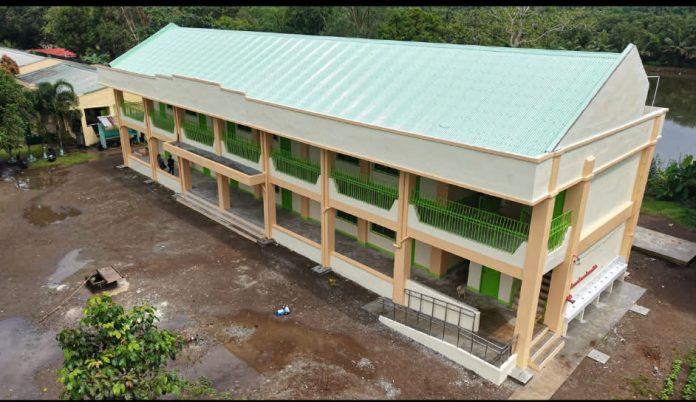
Via Pavenmtum or paving the way for the harsh and bleak future of floods, drying up funds and yes, uncertain future.

The voters, the real culprit paved the way for the road to perdition.

We share in the kingly function of Christ

0

CHRIST, being the pattern of our humanity, should be the focus of our whole life with the view of becoming more and more like him to such an extent that we can be rightly called as “alter Christus” (another Christ), if not “ipse Christus” (Christ himself).

This is no gratuitous presumption. A proof of this can be found in his priestly prayer before his passion and death when he said: “That they (we) may all be one, just as you, Father, are in me, and I in you, that they also may be in us…” (Jn 17,21)

St. Paul in his Letter to the Galatians also alluded to this truth when he said: “There is neither Jew or Greek, there is neither slave nor free, there is no male and female, for you all are one in Christ Jesus.” (3,28)

Now, since Christ is our ultimate King in the sense that he is our Redeemer who reigns over all creation, we should also understand that for us to be like Christ and to be one with him, we should also share in his kingly function.

This can only mean that we participate in Christ’s kingly authority and rule over sin and everything that is evil. This can only be made possible when we strive to live a life of obedience to God’s will, following his commandments and, as a consequence, living a life of holiness. This sharing of Christ’s kingly authority and rule is also exercised with we strive to serve others, using our gifts and talents to build up the body of Christ.

Some key aspects especially of the laity’s kingly function are, first, that of servant leadership. This means that the we should serve others, especially the poor and marginalized, in a way that would reflect Christ’s servant leadership.

Second, we should be in the forefront of transforming the temporal affairs, bringing Christian values into our work, family, social and political life, etc., always promoting justice and virtue.

Lastly but not the least, we should always be giving witness to Christ in all our words and deeds in such a way that we in effect would be proclaiming the Gospel and inviting others to follow Christ.

This can only mean that we really should make Christ our King, first of all. We can do this by making little conquests in our spiritual life everyday. We need to understand that our life will always involve some struggle. In fact, it is and should be a daily affair. Failing in that struggle does not only mean getting stuck at a certain point. It certainly means we have retrogressed. In this business of struggle, if we don’t advance, we retreat.

We should therefore be reminded of our duty to hone up our skills in spiritual warfare. Christ already hinted this much when he said: “from the days of John the Baptist until now, the kingdom of heaven suffers violence, and the violent bear it away.” (Mt 11,12)
Our life here on earth cannot but be in some form of struggle. Aside from our innate urge to grow and develop that requires some effort, we also have to contend with enemies whose sole intent is precisely to bring us down, to divert us from our proper path toward holiness. This is not to mention that our ultimate goal is to reach heaven, which definitely will require effort and struggle, and of course God’s grace.

This is how we can make Christ truly our king, and in the process make ourselves share also in his kingship.

Fish vendor arrested for theft in Biliran

0

ORMOC CITY— A local fish vendor was arrested on Thursday evening after a Municipal Trial Court issued a warrant for his arrest in connection with a theft case.

The suspect, identified as alias “Bobby”, single and a resident of Brgy. Burabod, Biliran, Biliran was apprehended at around 6:50 p.m. in his barangay.

The arrest was made under a Warrant of Arrest dated January 21, 2026, issued by Judge Anabelle Donasco-Balledo, acting presiding judge of the 2nd Municipal Circuit Trial Court, Biliran–Cabucgayan. The warrant charges the suspect with violation of Article 308, or simple theft, with bail recommended at P10,000.

Authorities said the suspect was informed of the nature of his arrest and read his constitutional rights in a language he understood.

He was immediately brought to the Biliran Municipal Police Station for booking and proper disposition before being presented to the court that issued the warrant.

(ROBERT DEJON)

DPWH NSSDEO signs work immersion MOA with SRPV High School

0

The DPWH-NSSDEO formalized a Work Immersion Memorandum of Agreement (MOA) with San Roque-Pambujan Vocational High School (SPRVS) on January 13, 2026, aimed at bridging the gap between classroom learning and real-world work application for Senior High School (SHS) students.

The MOA was signed by the NSSDEO District Engineer, Atty. Arthur Eric L. Sabong, with witnesses from both institutions: Ms. Ma. Amparo Mariam T. Dapug, Chief, Administrative Section (DPWH NSSDEO) and Mr. Nestor S. Cubay, SHS Coordinator.

Under the partnership, DPWH-NSSDEO will accommodate 15 students from SPRVHS for school year 2025-2026, assigning them to various sections and units in the district office.
This program aligns with the Senior High School curriculum under Republic Act 10533 (Enhanced Basic Education Act of 2013) of DepEd. The agreement is effective for the 2025-2026 academic year and is renewable annually, with both parties committed to reviewing and strengthening the partnership to better serve the work immersion students.

This partnership underscores the DPWH NSSDEO’s aim of nurturing a skilled, industry-ready workforce that intends to contribute to the Philippines’ infrastructure development agenda. Additionally, this collaboration reflects the Department’s commitment to supporting national education priorities, fostering innovation through fresh perspectives, and building a sustainable pipeline of talent to drive the country’s long term infrastructure growth.

(Jamaica I. Acebuche, PIO Staff Writer/PR)

Recent Posts

DALMACIO C. GRAFIL
PUBLISHER

ALMA GRAFIL
EDITOR-IN-CHIEF

ROMEO CEBREROS
OFFICE IN-CHARGE

OFFICE
BRGY. SONGCO, BORONGAN CITY

CONTACT NUMBERS
(055) 261 – 3319 | 0955 251 1533 | 0917 771 0320 | 0915 897 7439 | 0921 511 0010

DALMACIO C. GRAFIL
PUBLISHER

RICKY J. BAUTISTA
EDITOR

ALMA GRAFIL
BUS. MANAGER

OFFICE
RIZAL AVENUE, CATBALOGAN
(INFRONT OF FIRE DEPARTMENT, NEAR CITY HALL)

CONTACT NUMBERS
0917 771 0320 | 0915 897 7439 | 0921 511 0010

EMAIL
lsdaily2@yahoo.com

WEBSITE
www.issuu.com/samarweeklyexpress