
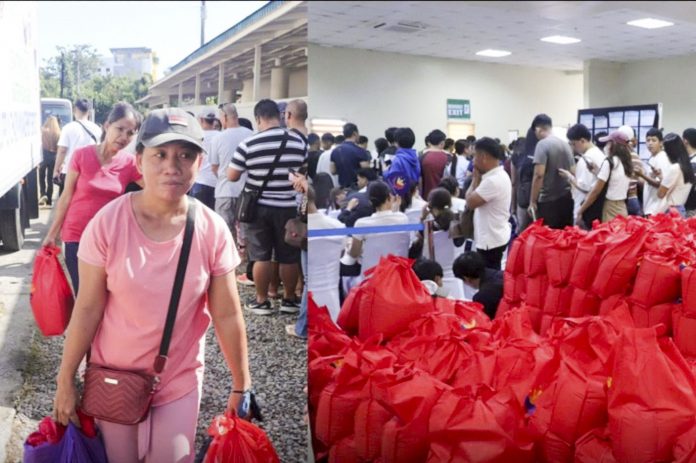
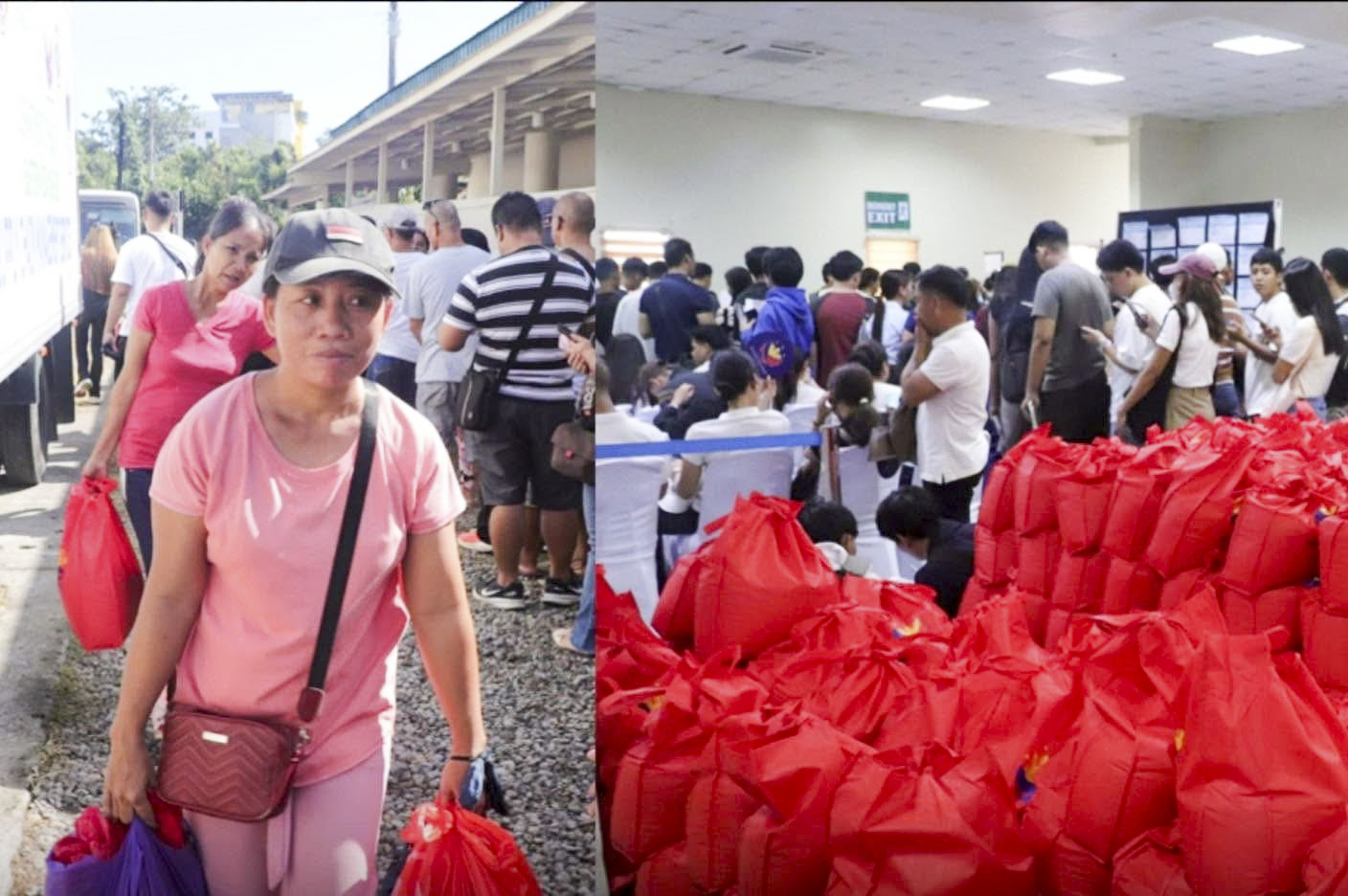
TACLOBAN CITY — Leyte farmers received about P277 million worth of agricultural assistance covering farm machinery, production inputs, livestock support, insurance and livelihood programs during a government service caravan held in the province.
The assistance was delivered by the regional office of Department of Agriculture(DA- 8) during the “Handog ng Pangulo: Serbisyong Sapat para sa Lahat” at the Leyte Academic Center on Sept. 14.
The interventions were intended to help farmer-beneficiaries sustain agricultural production, improve farm operations and livestock raising, and provide additional support for their livelihood needs.
Representing President Ferdinand Marcos Jr., Bureau of Internal Revenue Commissioner Charlito Martin Mendoza highlighted the administration’s efforts to bring government assistance closer to farming communities.
“Para sa Pangulo ang pinakamahalaga ay ang pagkakataong makatulong sa bawat Pilipino. Patuloy tayong magtulungan. Mabuhay ang Bagong Pilipinas!” Mendoza said.
The assistance included veterinary drugs, dewormers and biologics under the National Livestock Program (NLP), as well as support through the NLP Livestock-based Opportunities and Value Enhancement (LOVE) Project.
Farm beneficiaries also received farm tools, rice tillers with feeds, weighing scales and egg trays.
DA-8 distributed assistance under the Benteng Bigas Meron Na! Program to 5,000 beneficiaries, while vegetable seeds were provided to another 500 recipients.
The package also included 65- and 90-horsepower tractors, hybrid rice seeds and inorganic fertilizers for irrigated areas, rain shelters, nurseries and interventions under the Coconut Farmers and Industry Development Plan (CFIDP).
Other assistance included indemnity checks, insurance enrollment and anti-rabies vaccines.
A total of 305 farmers and fisherfolk also benefited from the Presidential Assistance for Farmers and Fisherfolk Program (PAFFP).
During the ceremonial turnover, DA-RFO 8 Regional Executive Director Rodel Macapanas handed certificates to farmer-beneficiaries representing the various agricultural interventions.
The DA said the assistance forms part of its continuing efforts to provide farmers with production inputs, machinery, livestock support, insurance coverage and other resources aimed at sustaining and improving their livelihoods.
The “Handog ng Pangulo: Serbisyong Sapat para sa Lahat” is a nationwide government initiative that brings together different agencies to deliver assistance, programs and frontline services directly to communities.
(ROEL T. AMAZONA)
Contentment begins where comparisons end
ONE of the quickest ways to lose our peace is to compare ourselves with others. Someone earns more. Someone gets promoted faster. Someone seems more gifted, more successful, more appreciated. Before long, gratitude disappears, and resentment quietly takes its place.
That is precisely the lesson Jesus drives home in Matthew 20:1-16a, the Parable of the Workers in the Vineyard.
The workers hired at dawn expected more because they had labored longer than those who came at the last hour. But when everyone received the same wage, they grumbled. They were no longer looking at what they had received. Their eyes were fixed on what others had received. How familiar that sounds.
Many blessings lose their sweetness the moment we begin measuring them against somebody else’s. A decent job suddenly seems inadequate because a colleague earns more. A happy family appears ordinary because another family seems more successful. Even our service to God can become poisoned by jealousy when someone else receives greater recognition.
The problem is not the blessing. The problem is comparison.
The landowner’s reply is simple and penetrating: “Friend, I am not being unjust to you. Did you not agree with me for the usual daily wage?” In other words, you have received exactly what was promised. Why complain?
God never cheats anyone.
His generosity toward another person never reduces his goodness toward us. God’s blessings are not a limited resource that must be divided into smaller portions. He is infinitely generous and knows exactly what each person needs for his or her journey to holiness.
We often forget that God does not deal with us as a payroll manager but as a loving Father. He gives according to his wisdom, not according to our calculations. His ways are governed by love, not by human notions of fairness.
This calls for a change in perspective.
Instead of asking, “Why does that person have more?” we should ask, “What is God asking of me with what he has already given me?”
Every person receives different gifts, opportunities, crosses, and missions. Comparing them makes little sense because our vocations are not identical. God is not producing copies. He is forming saints, each in a unique way.
Contentment is not settling for mediocrity. It is gratefully accepting God’s will while giving our very best. It is recognizing that our worth is not determined by our income, achievements, or popularity. Our dignity comes from being beloved children of God.
This does not mean we stop striving to improve ourselves. We should work hard, develop our talents, and pursue excellence. But we do so out of love for God, not out of envy of others. Ambition inspired by charity builds character. Ambition fueled by comparison breeds anxiety and bitterness.
The devil delights in comparisons because they distract us from God’s personal plan for our lives. While we keep looking sideways, we fail to look upward. We become experts in counting other people’s blessings while overlooking our own.
The antidote is gratitude.
A grateful heart sees every blessing as an undeserved gift. It rejoices not only in what God has given personally but also in the good he accomplishes in others. Instead of asking why another received more, gratitude thanks God that his generosity has no limits.
The vineyard of the Lord is large enough for everyone. There is work for all, grace for all, and salvation offered to all. Our task is not to compare rewards but to respond faithfully to the Master’s call. In the end, the greatest reward is not what we receive but that we have been invited to work in God’s vineyard at all. That privilege alone should fill our hearts with joy, gratitude, and lasting contentment.