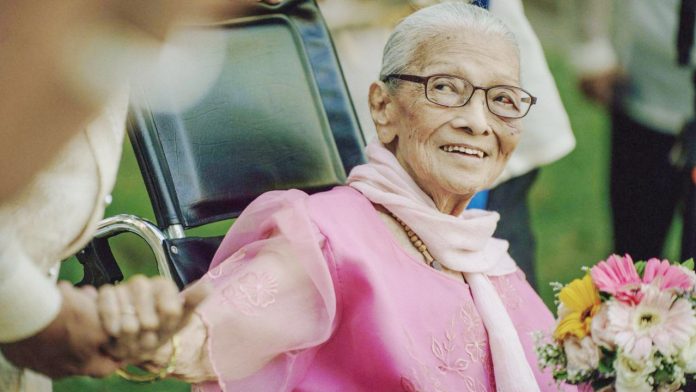
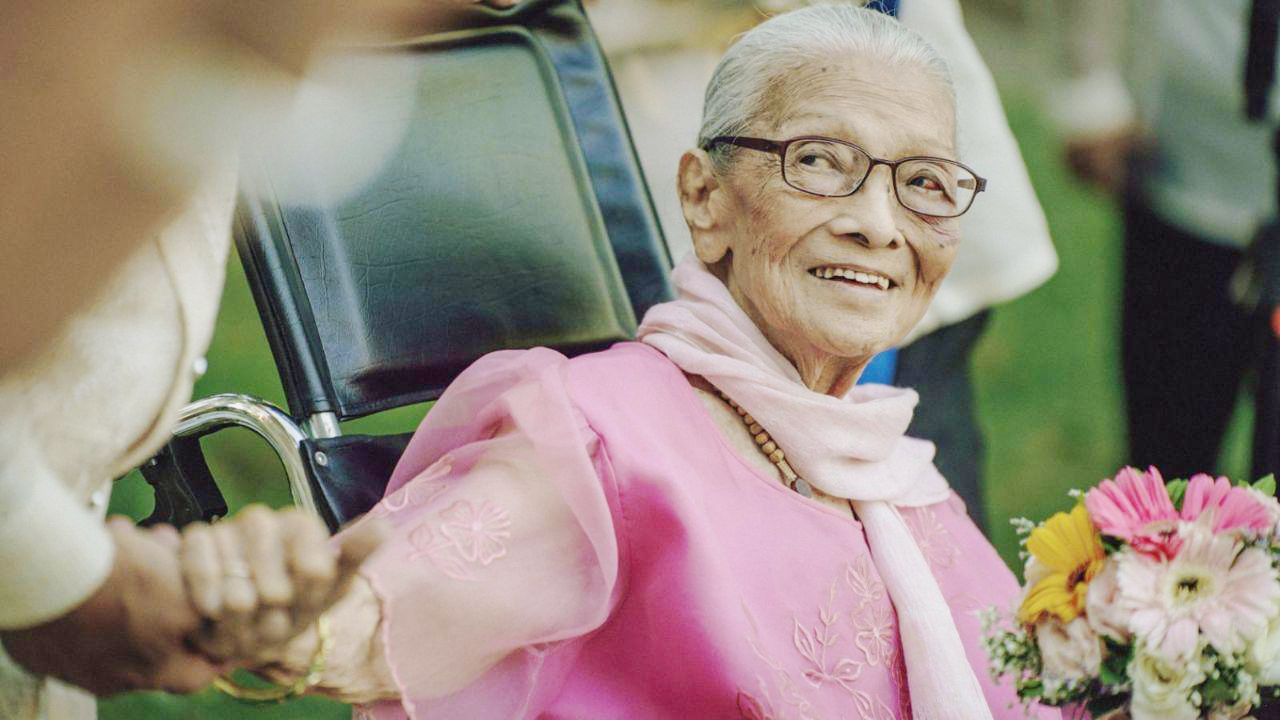
When we went home to Tacloban on January 22, you were still full of wit and life. You bantered with us, asked for chicharon, and slipped easily into our Sagkahan home. You didn’t question why we weren’t staying at your house in El Reposo. Those days felt ordinary in the best way. We didn’t know we were already counting down.
Unexpectedly, we spent the rest of January and most of February in the hospital. By the time you were discharged, I had to leave town. The afternoon I returned to Tacloban was the afternoon you passed, just eleven minutes after I arrived at the hospital. I made it in time to hold your hand and say goodbye. In the days when you could no longer speak, holding your hand had become how your children and grandchildren said everything.
I grieved all that I could the night you left—in the way I clung to your hand as they pronounced you gone, in the slow walk beside your body to the morgue, in the long hours waiting for the funeral home to arrive. I put my favorite daytime lipstick on you, what felt like my last act of love for you—and an enduring one for Papa and Tita Beh.
In the days that followed, as we signed papers and arranged your funeral and cremation, I carried my grief as lightly as I could. I needed to function—to be logical, pragmatic, attentive to detail. But grief slips out in quiet moments. It surfaced in the stillness of early mornings beside your casket. It lingered as I wiped water stains from the glass so guests could see you clearly.
When we received your urn, I expected my grief to fall heavy and final. But grief is not a boulder; it seeps in like water through hairline cracks. It lives in what you left behind, in the way your urn stayed for a few days at the altar in El Reposo and now at our altar in Sagkahan, in the slow goodbyes as family members return, one by one, to lives they knew before you passed.
I still cannot fully comprehend that the same person who came home with us in January now rests in an urn outside my room. Out of habit, I say good morning and good night. I tell you, I won’t be long when I leave the house. Love does not know, after all, how to stop speaking.
It was heavy to witness what you endured in that last month, to watch your body decide it had done all it could. Yet alongside that heaviness is gratitude. For years, we came home to you in Manila. In the final season of your life, you came home to us.
In losing you, there is grief, but also relief that you are no longer lonely or in pain. Grief, I am learning, is the trouble of the living. People say it is love with nowhere to land. Perhaps that is why it settles into memory and ritual, into the quiet corners of our homes that still hold you. Loving someone who lived until 95 means grief searches longer before learning where to land.
Grief may be sneaky, but so is love. It endures. It reshapes itself. And in learning how to carry my grief, I am also learning how to carry you—with tenderness, with gratitude, and with a love that does not end. (Note: The author is the granddaughter of Estrella Añover Montilla who passed on February 19, 2026 at age 95)
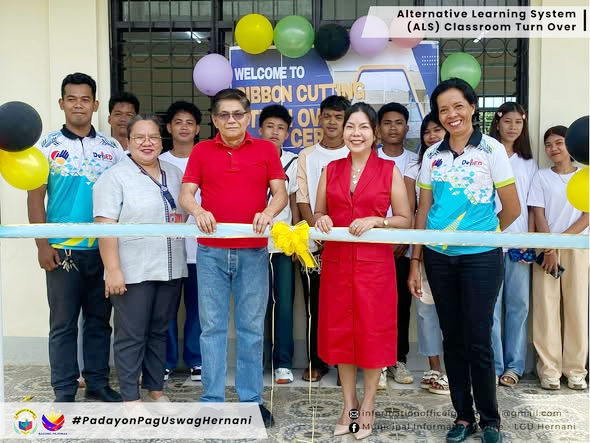
ALS CLASSROOM. A classroom intended for students under the alternative learning system (ALS) funded by the local government of Hernani, Eastern Samar was turned over to the Department of Education. The event was led by town officials led by Mayor Amado Candido and Vice Mayor Socorro Ponferrada. The facility is seen to provide ALS learners with a more comfortable and conducive environment for holistic learning.(PHOTO COURTESY)
ALS CLASSROOM. A classroom intended for students under the alternative learning system (ALS) funded by the local government of Hernani, Eastern Samar was turned over to the Department of Education. The event was led by town officials led by Mayor Amado Candido and Vice Mayor Socorro Ponferrada. The facility is seen to provide ALS learners with a more comfortable and conducive environment for holistic learning.(PHOTO COURTESY)
HERNANI, Eastern Samar— The local government unit (LGU) of Hernani formally turned over a newly renovated Alternative Learning System (ALS) classroom building to the Department of Education during a ceremony held at the New Government Compound in Barangay Canciledes.
The turnover was led by Mayor Amado De Lira Candido, together with Vice Mayor Socorro D. Ponferrada. The facility was received on behalf of ALS Hernani District by ALS Teachers Feddie Tyson B. Contado and Euphrosyne G. Tiu.
Also present during the ceremony were Hernani Central Elementary School Acting Principal Marianne C. Abolencia, two provincial-paid teachers, and ALS learners.
Funded through the LGU’s 20% Community Development Fund, the renovated classroom is expected to provide ALS learners with a more comfortable and conducive environment for holistic learning.
The project underscores the municipality’s continuing support for inclusive education initiatives, particularly for learners enrolled in the Alternative Learning System program.
TACLOBAN CITY — The Borongan City government is intensifying efforts to strengthen tsunami awareness and disaster preparedness through closer collaboration with the Department of Science and Technology–Philippine Institute of Volcanology and Seismology (DOST–Phivolcs).
City officials recently met with Phivolcs representatives to plan activities related to World Tsunami Awareness Day and to enhance the city’s strategies for earthquake and tsunami preparedness. The meeting was organized by the city government through its City Disaster Risk Reduction and Management Office (CDRRMO).
During the meeting, Phivolcs representatives presented proposed programs aimed at strengthening public information campaigns, improving scientific awareness, and boosting community readiness in Borongan.
Among those present were Senior Science Research Specialist Charmaine Villamil and Science Research Specialist Rygin Joy Matias, both involved in the World Tsunami Awareness Day campaign.
Representatives from the capacity development for monitoring and information dissemination of earthquake, tsunami, and volcano project also attended, including deputy team leader Yoko Ota and project staff member Tin Derafera.
The initiative is supported by the Japan International Cooperation Agency (JICA).
Officials from the DOST in Eastern Samar, led by Provincial Science and Technology Director Arnaldo Amosco, also joined the meeting, along with representatives from Eastern Samar State University in Borongan, local government offices, barangay leaders, and partner agencies.
Representatives from the Philippine National Police, Philippine Red Cross, Bureau of Fire Protection, the Philippine Army’s 63rd Infantry Battalion, CoPE Inc., and the Workers Association of Borongan City also participated in the discussions.
As part of the initiative, DOST–Phivolcs proposed holding an earthquake and tsunami hazards and community preparedness seminar in the city from July 28 to 30, 2026.
The three-day seminar aims to equip local officials, emergency responders, and community leaders with updated scientific knowledge, hazard assessment tools, and practical response strategies to improve disaster readiness.
Borongan Mayor Jose Ivan Dayan Agda expressed full support for the program, stressing that tsunami threats should be treated as real and recurring risks based on historical records and scientific data.
Agda said the city government is ready to host the proposed activity and encouraged wider participation, particularly from barangay officials, to strengthen disaster preparedness at the grassroots level.
The mayor also thanked DOST–PHIVOLCS and JICA for their continued support, noting that sustained collaboration among national agencies, international partners, and local stakeholders remains vital in strengthening Borongan’s disaster risk reduction and management efforts.
PASIG CITY– The Philippine Rural Electric Cooperatives Association, Inc. (PHILRECA) is one with the Energy Regulatory Commission (ERC) and other energy stakeholders in seeking immediate relief on the persisting high line rental charges.
Held on 02 March, 2026, PHILRECA, in partnership with the Commission, along with the Federation of Rural Electric Cooperatives in Region 8 (Frecor 8 Association, Inc.), Independent Electricity Market Operator of the Philippines (IEMOP) , and the National Grid Corporation of the Philippines (NGCP), collectively discussed approaches and initiatives to mitigate the effects of high line rental charges under the pricing mechanism of the Wholesale Electricity Spot Market (WESM).
FRECOR 8 Representative and Samar I Electric Cooperative, Inc. – Samelco I General Manager, Atty. Edson G. Piczon emphasized the urgency to review and evaluate the WESM pricing mechanism, which affects consumers in the island of Visayas, particularly Regions VI and VIII.
“Since 2023, there have been approximately five unusual spikes in line rental costs—now referred to as Line Loss and Congestion Costs (LLCC). Three of these incidents exceeded P300 million each, all of which were shouldered by the MCOs of Region VIII,” Atty. Piczon remarked.
Likewise, FRECOR 8 extends its gratitude to the Commission for organizing the consultative meeting and discussion, which creates a collaborative environment aimed at safeguarding the welfare and interests of the MCOs.
“FRECOR VIII expresses its appreciation to the Commission and to Chairman Juan that the proposed measures are already under deliberation and are expected to be issued soon,” he added.
During the discussion, IEMOP proposed the further disaggregation of the Total Net Settlement Amount into three distinct components, namely: (1) Net Settlement Surplus (NSS) attributable to losses, (2) NSS attributable to congestion, and (3) NSS attributable to the System Marginal Price (SMP).
Under the proposal, each NSS component shall be allocated using its own dedicated allocation methodology, consistent with established settlement principles, and calibrated according to the corresponding Locational Marginal Price (LMP) elements.
Such an approach ensures that the allocation of surplus is causally aligned with specific market drivers, losses, congestion, and energy price formation, resulting in enhanced transparency, cost reflectivity, and settlement accuracy within the WESM framework.
For its part, PHILRECA welcomes the ERC’s decisive action in reviewing the proposal, applicable regulatory mechanisms, and streamlining measures to cushion the burden of elevated line rental charges. This initiative proactively demonstrates the Commission’s responsiveness to the long-standing concerns raised by ECs and their respective MCOs about cost pressures that directly affect the affordability and sustainability of electric service.
“The Commission’s pursuit of providing relief to affected MCOs is a welcome development for the rural electrification sector. Reducing the adverse effects of high line rental charges will not only ease operational strain on ECs but will ultimately benefit concerned MCOs in the countryside,” PHILRECA affirmed.
The Association expresses its readiness to continue constructive engagement with the ERC and other stakeholders to ensure that reforms are implemented efficiently and transparently. As the voice of ECs nationwide, PHILRECA remains steadfast in advocating policies that uphold the affordability, reliability, and sustainability of electric service in rural communities. (PR)
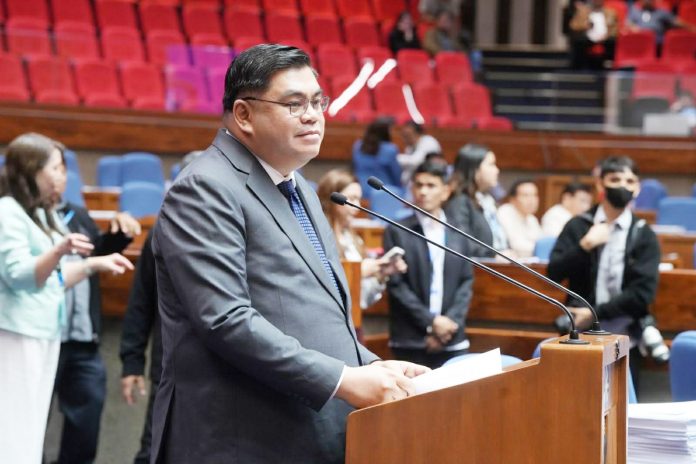
TACLOBAN CITY — As global oil prices climb due to renewed tensions in the Middle East, Tingog party-list has thrown its support behind President Ferdinand Marcos Jr.’s proposal to seek congressional authority to temporarily suspend the excise tax on fuel.
Tingog Representative Jude Acidre said the move could help shield Filipino families and vital sectors from the ripple effects of rising fuel costs triggered by geopolitical instability abroad.
“At a time when Filipino families, transport workers, farmers, and small businesses are already struggling with rising costs, government must act decisively to provide immediate relief and protect our people from external shocks beyond our control,” he said.
Acidre stressed that with oil prices continuing to spike, swift and concrete measures are needed. If suspending the excise tax would ease the financial burden on consumers, he said, the proposal deserves serious consideration in Congress.
Tingog reiterated its commitment to push for responsive fiscal policies to help maintain economic stability during periods of global uncertainty.
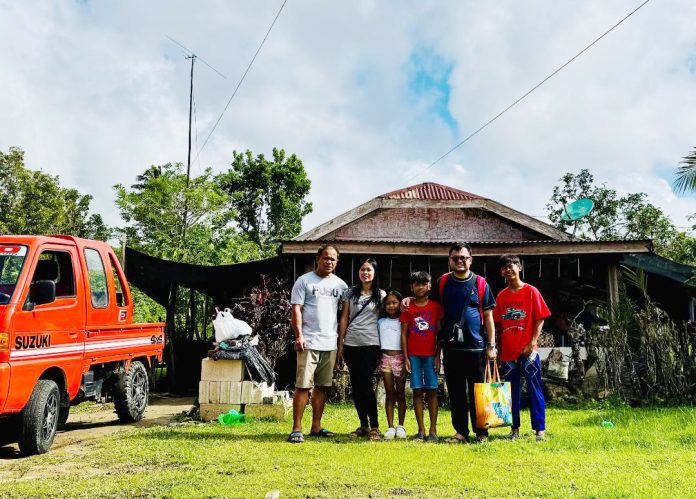
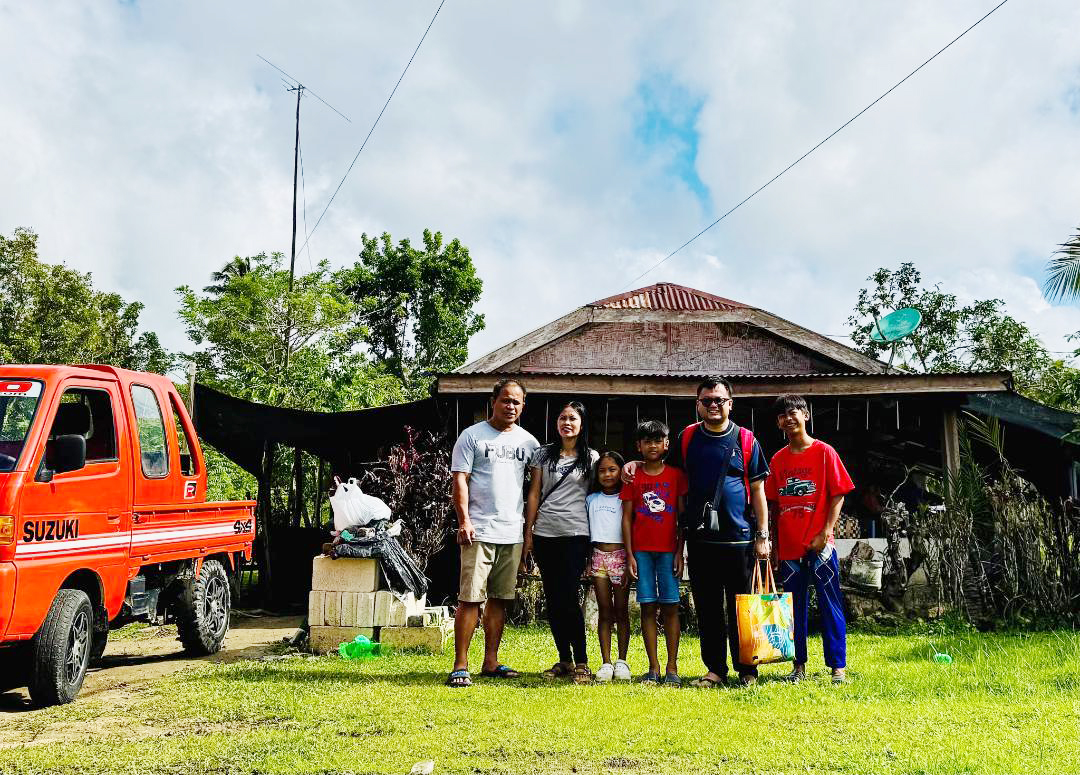
FROM AKIN TO ATIN. The author(2nd from right) joins his foster family in Bohol who live “sakto lang, may konting sobra”—just enough for themselves, with a little extra to help others—proving that true abundance is measured not by wealth, but by the willingness to share.
FROM AKIN TO ATIN. The author(2nd from right) joins his foster family in Bohol who live “sakto lang, may konting sobra”—just enough for themselves, with a little extra to help others—proving that true abundance is measured not by wealth, but by the willingness to share.
Among the classes that completed SALDiWA, including our very own SALDiWA 59, tales of struggle and hardship are all too common.
Career officers often recount the absence of food, the toll of sleepless nights, the indignities of inadequate facilities, and the myriad challenges of poverty—all underscoring the humbling experiences and profound realizations they encountered along the way.
Yet, my SALDiWA story unfolds differently. It is not one of immense wealth or abject scarcity, but rather a narrative of “sakto lang, at may konting sobra”—a life that is just enough, with a little to spare.
I found myself embraced by a household of five. Giovanni, a 40-year-old entrepreneur, and his 36-year-old wife, Aisa, are the proud parents of three children: EJ, a 16-year-old in Senior High School; Ivan, a 14-year-old in Grade 8; and Vanessa, a bright 9-year-old in Grade 3. The couple runs a small event styling business, securing contracts almost daily across various municipalities in Bohol.
For the past five years, they have transformed ordinary venues into enchanting, themed environments through their artistry—using creative décor, captivating lighting, stylish furniture, and exquisite floral designs to craft immersive, Instagram-worthy experiences. In my eyes, they are no longer merely poor; rather, they hover at the threshold of the “near-poor,” precariously balanced with little to no safety net against economic shocks. For now, they live sufficiently, but when calamity strikes or economic downturns loom, their stability falters.
When I inquired Aisa about their earnings amounted to, she smiled and replied, “Kuya, sakto lang po, at may konting sobra.”
SAKTO LANG: Enough to Maintain a Family
Aisa, the driving force and creative soul behind their business, confided that they both hail from deeply impoverished backgrounds. She completed high school, while Giovanni did not finish elementary education. Their family circumstances denied them the opportunity for a tertiary education.
Their entrepreneurial journey began in Manila, where they toiled tirelessly. Giovanni labored in a glass supply chain while Aisa worked in the textile industry. For more than five years, they saved diligently and when the COVID-19 pandemic struck, they returned home to Bohol.
It was their innate talent that propelled them to their current standing.Aisa began with simple balloon arrangements, progressed to floral design, and eventually mastered full-scale event styling.
In this household, modesty reigns. While 48% of households in Brgy. Poblacion Weste live below the poverty line, according to PSA data, my foster family stands as a hopeful exception. They have WiFi, a smart TV, a refrigerator, and a gas stove. They enjoy running water and, most importantly, they send their children to school without the kids needing to worry about daily meals and essential needs.
In my few days with them, I observed the children diligently completing their assignments, researching through their parents’ smartphone, and watching educational YouTube videos about chemistry experiments.
Thus, they embody a life that is enough for a contemporary family.
MERONG KONTING SOBRA: Enough to Share with Others
One incident that deeply moved me occurred when a neighbor approached Aisa asking if her daughter could print a two-page paper for an assignment. Without hesitation, Aisa gladly obliged.
I also learned that their vehicle—a Rusco Pick Multicab—serves the community by transporting harvested rice and root crops. They never charge for this service; instead, neighbors often repay them in kind—with a cavan of rice, or a bunch of bananas or sweet potatoes.
Moreover, I learned also that during village gatherings and inter-barangay competitions, Aisa generously lends out equipment and materials from their styling business to support community activities.
When I teased her about their apparent prosperity, playfully suggesting that their income allowed them to share with others, she simply replied, “Hindi naman, kuya. Sakto lang po talaga. May konti lang talagang sobra.”
KAILANGAN SOBRA PARA MERONG PARA SA IBA: From akin to atin
The story of Giovanni and Aisa is ultimately one of “Kailangan Sobra para Merong para sa Iba.”
During my stay, our family interactions were limited to dinner table. One evening, I playfully urged them to take a day off so I could spend more time with them, as their schedules were overwhelmingly busy. I joked, “Huwag naman kayo maghangad ng sobra-sobrang pera kasi importante din ang pahinga.”
Much to my surprise, Giovanni responded with a heartfelt smile: “Kailangan sobra para merong para sa iba.”
At that moment, a profound realization washed over me—they were undeniably correct. As the saying goes, “Nemo dat quod non habet.” We cannot give what we do not have.
Some people do not seek greater wealth or achievements for themselves but instead for the benefit of others.
I see the goodness in Giovanni and Aisa, the authenticity of their compassion, their understanding of what it means to possess little. Although they may not yet be categorized as non-poor or wealthy, they extend a helping hand, for they know the depths of struggle.
As a leader-manager tasked with promoting local economic development in my province, I now recognize the invaluable impact of our work within the community.
Our office is dedicated to nurturing livelihood training and skills development, and through this encounter, I have come to understand that from a single success story, a powerful domino effect can unfold.
What Aisa calls “sakto lang” should never be the ceiling of our aspirations; instead, it should be a stepping stone toward a more profound goal- “may konting sobra.” This surplus transforms homes into veritable channels of blessings for others.
While its true that not everyone will ascend to the heights of success- such is life’s reality- we, as stewards of governance, must uphold sacred the concept Kapwa. This foundational tenet of Filipino psychology is rooted in empathy, dignity, and respect that nurture our personal relationships and bolster our community ties. Ultimately, when families possess not only enough for themselves but also that ‘konting sobra,’ they can extend their blessings, enriching the Kapwa.
When families achieve “sakto lang na may konting sobra,” they embody Pakikiramdam—that shared inner sensitivity allowing us to understand others without words.
In this state of abundance, the value of Kaganda ang-loob shines bright. Humanity and kindness flow naturally, a testament to our shared existence and the wealth of love we can offer one another.
And in such homes, Pakikiramdam thrives—a willingness to sacrifice personal comfort for communal harmony.
My own time with my foster family in Poblacion Weste was a poignant reminder: in a world where we share our “konting sobra,” the spirit of community thrives. As I learned there, kung merong konting sobra, ang para lang sana sa akin ay magiging para sa atin!
As duty-bearers, let us not settle for “sakto lang.” Let us strive for that glorious surplus—“konting sobra”—igniting a chain reaction of generosity. After all, a society that thrives shares its bounty- not just for survival, but for the beautiful tapestry of life!