
 “Proud akong Pinoy ngunit kinahihiya ko ang gobyerno ko.”
I did not impulsively react when I first heard these lines from the song “Bayang Di Magiliw” by Hari ng Sagpro. In fact, I was amused and I even nodded the blunt message.
Nothing good has diffused from the government ever since I can remember. Belligerent governmental families, deadly public elections, immortal graft and corruption cases; it had always been this way. Yes, there had been a couple of pleasant activities and schemes, but they pale out in comparison to things that had aggravated sick Juan. Unquestionably, the root cause of Filipino suffering is the Filipino government.
It is probably primitive to say that our government is bad, and is not effective as should be, but one can only lament and protest time after time. A stronger people power revolution may have to be scheduled on a day-to-day basis in order to force a full governmental shift. This is close to impossible, thus, a legislative change of heart is close to impossible as well.
The government is not bad per se; politics is intoxicating it. Filipino politics is so despicable, that it had been openly poisoning the society. The word connotes negativism and iniquity and it is our Pandora’s Box.
During our pre-civilization age, the Spaniards reshaped politics by sword. Ever since, it had brought bridges and limited the potential of our race and natural resources. And since it had been carved in history and passed on to generations time and again, it may have luridly become part of the Filipino culture. The clamor for a better political system may never cease because bad politics had already been knotted to our societal DNA. The more demoralizing derivative of this is that the world may slowly be labeling the Filipinos as racially corrupt. In the future, this will become the shameful lessons in textbooks. This will become the foundation and manifestation of our children’s values. This will become the Filipino trademark.
Evidently, we have not failed to stage, in the global arena, the reasons why we can be the most corrupt people. After typhoon Yolanda battered the country, the survivors have proven the aphorism: the end of one agony is the start of a new one. Media men say that billions of pesos had been doled out by the world, yet, being a survivor, I had only personally felt a slight drizzle of the monsoon-like help they had been telling. This primes up the saying that anything delayed is denied. Justice delayed is justice denied. Aide delayed is aide denied. The Marcos-Aquino political battle seemed to have been revived only with a new character played by Mar Roxas. We saw it. We saw how they demonstrated malignant capabilities. We saw how help was corruptly served.
A whole different beast is causing a myriad of ‘whens’ and ‘hows’ and has escalated a lot of blood pressures: The pork barrel scam. Now, the senate is tiptoeing towards the much-needed answers to where our hard-earned taxes had been channeled to. I am on pins and needles on this one and I know that making the purported culprits admit is like extracting blood from turnips, but in the end, after the period of this chapter, the outcome shall always be painful. Black will never take another hue. The corrupt will always be corrupt and will never die away because corruption is hereditary and willed.
I am not ending this article on an affirmative note. It may be a bitter pill to swallow, but we might have extracted the last glimmer to not spell the Filipino trademark as corruption.
‘Hari ng Sagpro’ in the future might decide to flip his lyrics into: “Dahil sa gobyerno ko, ikinahihiya ko ang pagka-Pilipino ko.”
The Filipino Trademark
Cruising the digital world

 WE have to learn how to cruise the digital world. It’s practically part of everyone’s life now, offering a lot of good but also a lot of dangers. We should know how to make use of it without compromising our dignity as persons and children of God.
This highly technological world introduces us to a virtual environment that is like a super-superhighway with much heavier and more complicated traffic than what we experience in our busiest thoroughfares. Its range and scope is not local but global, and it touches on practically all aspects of our life.
If in our transport systems, we need regulations like registration of vehicles, licensing of drivers with their respective periodic renewals, and other things like traffic road signs and traffic aides, etc., we have to realize that we need more or less the same set of regulations in our digital world.
Obviously, the regulations here would be more extensive and comprehensive than what we have in our transport systems. They should cover not only considerations of practicality and convenience in our needs of knowledge and communication, but also and more importantly, considerations of appropriateness, morality and spirituality.
Everyone knows that the digital world can have two effects. It is good to those who are good, and in fact, it will improve them. But it is bad also to those who are bad or weak, and it tends to worsen them.
Digital citizens and users should therefore be clear about their identity and dignity as persons and children of God who are supposed to be ruled by truth and love, and all their consequences of justice, mercy, compassion, and of concern for one another and for strengthening our relation with God, etc.
The ideal would be that every time they are in the digital environment, they should learn to see God there and to be motivated only by love for God and for others. They should ask themselves after using the Internet, “Am I now a better person and child of God with what I have seen and done in the Internet?”
Unless this basic requirement is met, one would enter into a highway that is a slippery slope toward all forms of self-seeking with their usual company of greed, envy, vanity, lust, gluttony, sloth, etc. Conflict and contention would not be remote in this arena. Unrestrained competition and rivalry would surge.
That is why, this identity of the digital citizens as persons and children of God who are necessarily connected with everybody else and governed by truth and love should always be protected, maintained and strengthened.
Toward this end, it stands to reason that digital citizens and users should be men and women of prayer, of virtues, of clear criteria based on sound human and Christian moral principles. They should know the true nature and meaning of freedom, avoiding using freedom as “a cloak for malice,” as St. Peter said in his first letter. (2,16)
Otherwise, they would be confused and lost, and an easy prey to the many subtle conditionings all of us are exposed to—physical, emotional, psychological, social, cultural, historical, economic, political, etc.
And since many young people are very much involved in the digital world, the elders and others of authority and influence should do everything to inculcate in them very deeply this proper identity and dignity of being persons and children of God, brothers and sisters with one another, ruled by truth and love.
These youngsters are typically highly driven by their curiosities, but with curiosities that spring and are maintained usually by unpurified impulses and peer pressure. They really need to be taken care of, but in an appropriate way, since they also do not like to be treated like babies.
If before a youngster is allowed to drive a car in our public road system, he has to have the proper age requirement, the appropriate physical and health condition, and has to be trained and tested, then it stands to reason that this youngster all the more would need a similar kind of requirements before he is allowed to cruise in the more dangerous digital thoroughfares.
This attitude toward the digital world should be developed first of all in the family, then in churches and schools, and then in other public places like offices, hospitals, etc.
We should understand that the digital world is not a free-for-all world. It would be a deadly understanding of freedom if that is how we understand the freedom we enjoy in our digital world.
It has to be properly regulated so we can cruise it safely and fruitfully.
Alfred bares “new city” plan for Tacloban
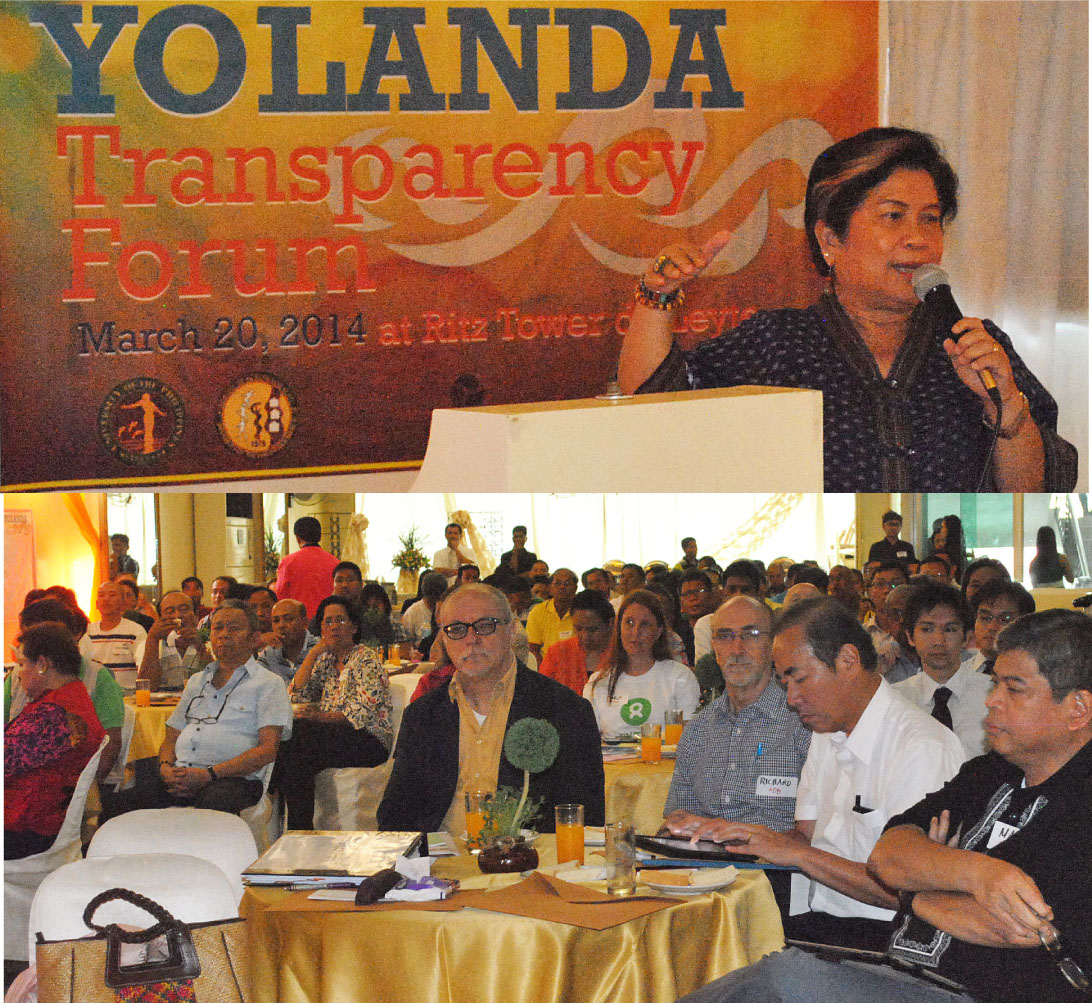
TACLOBAN CITY- Mayor Alfred Romualdez of this city presented to the public his plan converting Tacloban into a “resilient, vibrant and livable city” after being pummeled by supertyphoon Yolanda last year.
Speaking to about 2,000 plus stakeholders comprising business sector, academe, people’s organizations and other national and international relief groups on March 21 at the Tacloban Convention Center, Romualdez maintained the city is focus now on “bringing people to safer area, with planned urban expansion.”
“We’re working on a plan for a new Tacloban in the northern part. The working figure is being worked out now because we have to determine also the pledges that will be realized. We will see how we will come up also,” he said.
Romualdez projected that it would need P3 billion or more to realize the program contain under the master rehabilitation plan with the bulk of the needed funds would come from the private sectors as donors.
He added the new housing project in the northern part of Tacloban would result into a “township.”
Asked if the plan will be realized until 2016 (the term limit of Romualdez), he answered, “I hope so.”
After the presentation of the city’s mechanism for a new city, the plan will be presented again to the various government agencies and private groups and individuals for possible financing.
“Even in the beginning, this is what the donors are asking. This is just a mechanism, but what we have now are areas being approved and determined already to be a hazard area and safe,” Romualdez stressed on the importance of the plan.
Ma. Adelaida Cea of the United Nations Human Settlements Programme, who helped presenting the over strategic framework of the plan, maintained that the city can “bounce back” given its many opportunities and potentials.
The short-term plan includes construction, trading and agri-diversification; while in medium term, covers industrial development, tourism, business outsourcing, economic infrastructure and development.
The proponent has divided its development districts to north covering satellite urban center; mid-coast is for urban expansion and trading area; south coast is for redevelopment with urban expansion in risk inland areas; and upland for conservation and protected area.
The city government owns 86 hectares lot ready for shelter needs in the northern part.
For its shelter projects, the city is targeting about 10,000 permanent housing (now with total donor housing commitments of 6,661); target of about 3,000 for Community Mortgage Program in Diit, Bagacay and Cabalawan; and acquisition of additional land (30 to 50 hectares) for new housing.
The Eastern Visayas Regional Medical Center (EVRMC) would also be relocated in the northern part as well as the University of the Philippines-Tacloban. (RONALD O. REYES)
DILG supports tourism recovery in Leyte
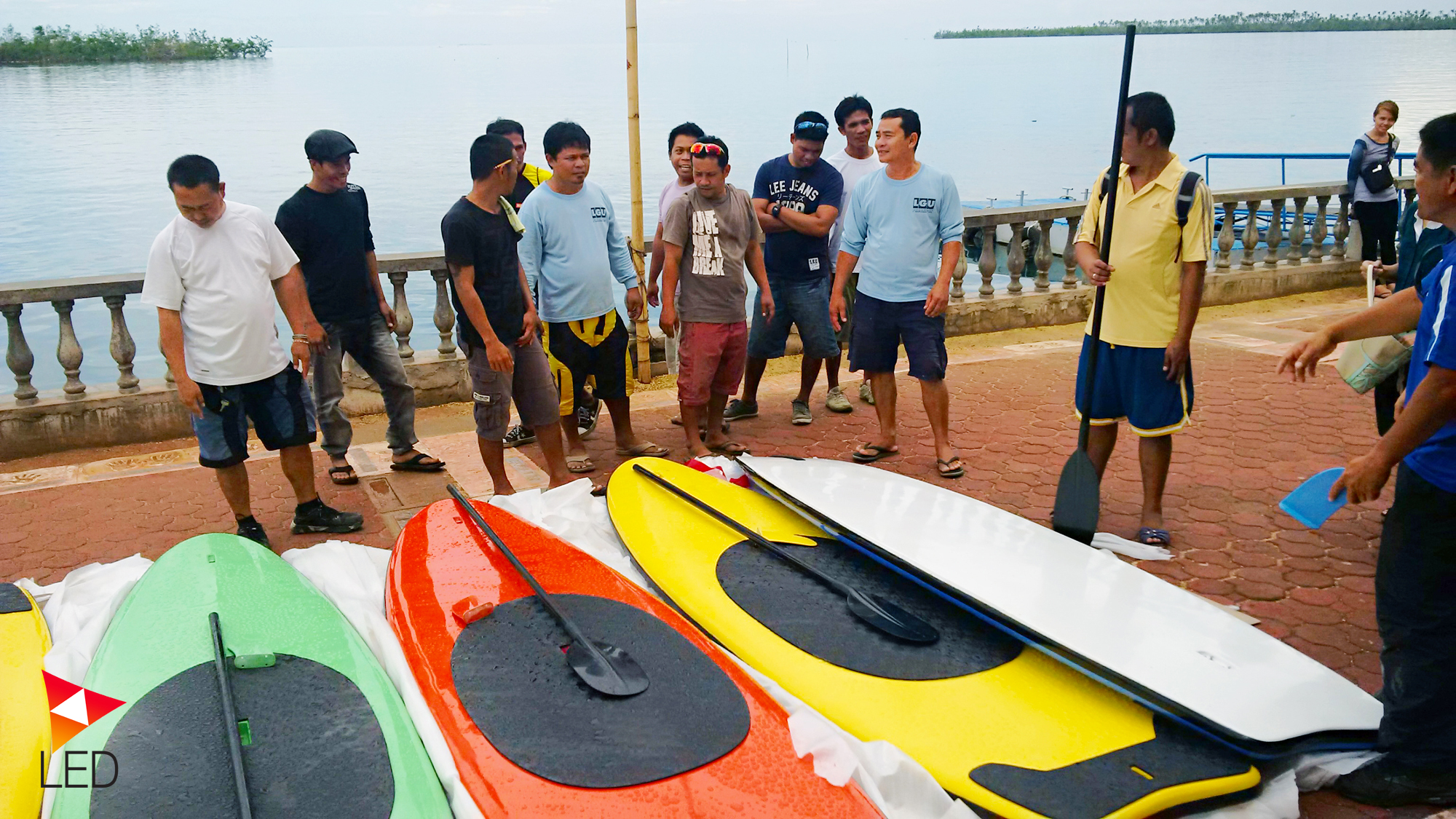
PALOMPON, Leyte- The Department of Interior and Local Government (DILG) launches its economic recovery plans, efforts supporting Leyte ’s tourism industry which was among the key sectors that was affected by supertyphoon Yolanda.
The DILG regional office turned over 10 stand-up paddle boats and glamping tents funded by the Canadian government through the Local Governance Support Program for Local Economic Development (LGSP-LED).
The LGSP-LED is a DILG program funded by the Government of Canada. It seeks to reduce poverty by creating business-friendly LGUs and competitive tourism industries.
The LGSP-LED is working with the provincial government of Leyte to revitalize key attraction sites along the North West (NW) Leyte Tourism Circuit in order to invite tourists to go back to the destination and also encourage more tourist arrivals.
The equipment are scheduled to be turned over in Ormoc City on March 25, 2014. The Barangay Organization to Guide, Serve and Accommodate You (BOGSAY), a people’s organization protecting and co-managing the Lake Danao Natural Park , will receive the said equipment.
The Palompon Municipal Ecotourism Council (PMETC), Inc. received the equipment through a turnover ceremony held at the town’s Tourism Building. The PMETC is a private sector partner of the municipal government in managing the tourism activities in Kalanggaman Island.
The provision of equipment (including training and business enterprise management) provides for more visitor activities and add to the destination’s attractiveness to tourists.
The enhanced site will be able to cater to more tourists, particularly for the upcoming third visit of the cruise ship MS Europa 2 on March 17, 2014 to Kalanggaman Island.
The MS Europa 2’s last visit brought over 300 foreign tourists who participate in ‘voluntourism’ activities, boosting the tourism economic recovery in the area. DOT Secretary Jimenez previously expressed plans to put Kalanggaman Island on the cruise ship tourism map of the world in his last visit in Palompon.(PR)
Philhealth launches campaign to boost its healthcare services
JAVIER, Leyte – The Philippine Health Insurance Corporation (Philhealth) launched on March 24 its advocacy campaign, “Alaga Ka para sa Maayos na Buhay” (Alaga Ka) in this town, in a bid to raise awareness on how to avail healthcare services.
About 500 residents gathered at the municipal gymnasium participated the information drive, or just a fraction of the 5,700 families in this town listed in the National Household Targeting System whose health insurance premium are shouldered by the government
“This program is very informative. Poor families don’t exercise the right to avail of health benefits because they are not aware. If we can address health concerns, it can solve everything,” Mayor Leonardo Javier said.
Rixon Requioma, 25 and a balut vendor in this town and expecting the birth of his first child two months from now was among those who actively participated in the occasion.
“Now I know what are the benefits of our Philhealth membership, especially that my wife will give birth May,” he said.
Under PhilHealth’s maternity care package, Requioma’s wife is entitled of services such as prenatal and postnatal checkups, medicines, and supplies.
The “Alaga Ka” campaign, according to Renato Limsiaco, chief of Philhealth regional field operations, will add more value to government investments on health insurance premium subsidies.
“The utilization is still low because indigents are not aware of Philhealth benefits. In fact, 60% of Filipinos died without seeing a doctor. We need to address that one through massive information drive,” Limsiaco said.
“Alaga Ka” is a collaboration between Philhealth, Department of Health, local government units and other stakeholders in the health sector to make sure that indigent members and those from the near poor segment of the population are properly instructed on how to avail of these basic health services at the rural health units and health centers.
Aside from the conducting information drive, government and private health service providers also extends services through its TSeKaP or Tamang Serbisyo para sa Kalusugan ng Pamilya.
TSeKaP services include regular blood pressure monitoring; counseling on breastfeeding, smoking cessation and lifestyle modification; screening services to detect breast and cervical cancers; and digital rectal exam. (SARWELL Q.MENIANO with LIZBETH ANN ABELLA)

Senior citizen fires gun to a child, young men
ORMOC CITY- A 65-year old man fired his gun during his fits of anger, hitting in the process a young girl and two young men, this city.
Police probers identified the suspect as Herman Tubali, a native of General Santos City but residing in a boarding house owned by the victims’ mother located at Batuan Village, Ormoc, said case investigator PO3 Roel Yanuario.
The suspect used a .45 caliber pistol in shooting the victims identified as Carmelito Gonzaga, Jr.,22, his brother, Gilbert and niece, Precious Jennica,4.
The suspects sustained bullet wounds at the lower parts of the bodies but pronounced by the attending doctors not to be fatal.
The two boys are confined at the OSPA-Farmers Medical Center while the young girl, is recuperating at the Gatchalian Hospital.
Based on initial report by the city police investigators, on March 19 in the morning, the suspect looked after Helen Odanggo, mother of the two boys, but failed to do so.
In his frustration, he reportedly cracked open one of the window blades of the room where the victims were sleeping at the time and fired his gun.
The two boys were awaken and tried to grab the gun from the suspect but managed to try to get another gun from his bag.
It was learned that the suspect and Odanggo had an ongoing dispute as the former demanded for the reimbursement on the money he used in repairing the boarding house which he claimed was just ignored by Odanggo.
Odanggo said that the suspect got irate after she transferred his belongings to other rooms of the boarding house as rewiring works were undergoing at that time.
The police filed charges against Tubali for violation of Republic Act 10591, an act providing for a comprehensive law on firearms and ammunition while the victims family is readying charges against the suspect for two counts of frustrated murder and another frustrated murder in relation to RA 9262 for the child. (ELVIE ROMAN ROA)