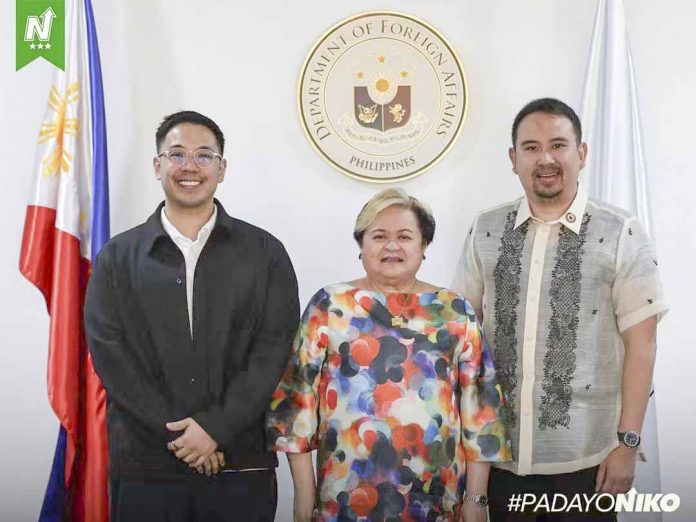
Northern Samar 1st District Rep. Niko Daza meets with Department of Foreign Affairs Secretary Theresa “Tess” Lazaro as they work toward bringing DFA consular services closer to residents of Northern Samar through the establishment of the agency’s 43rd Consular Office in Catarman. The new office is expected to make passport and other consular services more accessible to Nortehanons.
(Photo Courtesy)
Northern Samar 1st District Rep. Niko Daza meets with Department of Foreign Affairs Secretary Theresa “Tess” Lazaro as they work toward bringing DFA consular services closer to residents of Northern Samar through the establishment of the agency’s 43rd Consular Office in Catarman. The new office is expected to make passport and other consular services more accessible to Nortehanons. (Photo Courtesy)
TACLOBAN CITY – Residents of Northern Samar will no longer have to travel as far for passport and other consular services with the impending establishment of the Department of Foreign Affairs’ (DFA) 43rd Consular Office in Catarman.
The establishment of the DFA- Northern Samar was made possible through the efforts of Northern Samar 1st District Rep. Niko Daza, who co-sponsored the DFA budget and worked with DFA Secretary Theresa “Tess” Lazaro to support the establishment of the consular office.
Daza said the facility will bring essential government services closer to residents, particularly those who previously had to travel outside the province to process passports and avail themselves of other DFA services.
“Every Nortehanon deserves easier access to the services they need, closer to home,” Daza said during his sponsorship remarks at the House Committee on Appropriations budget deliberations.
Daza also expressed appreciation for his collaboration with Lazaro in advancing the initiative, which is expected to make consular services more convenient and accessible to thousands of Northern Samar residents.
The Catarman office, if realized, will become the 43rd DFA consular office in the country, expanding the agency’s reach outside major urban centers.
The establishment of the office is expected to reduce travel time and expenses for residents seeking passports and other consular documents and services.
Daza said the initiative reflects the government’s effort to make basic public services more accessible to communities outside major cities.
There is no information as to when the proposed provincial DFA office will operate.
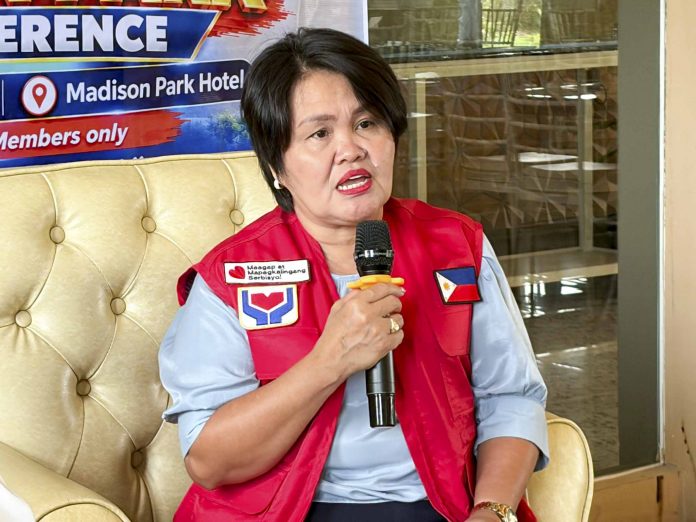
STILL UNDER THEIR CUSTODY. DSWD Eastern Visayas Regional Director Grace Subong answers questions from reporters during a media interview in Tacloban City, clarifying that the 14-year-old boy linked to the June 22 shooting at San Jose National High School remains under DSWD custody at a rehabilitation facility in Tanauan, Leyte. Subong said the minor, along with a 15-year-old involved in the case, continues to undergo assessment and intervention.(ImNET)
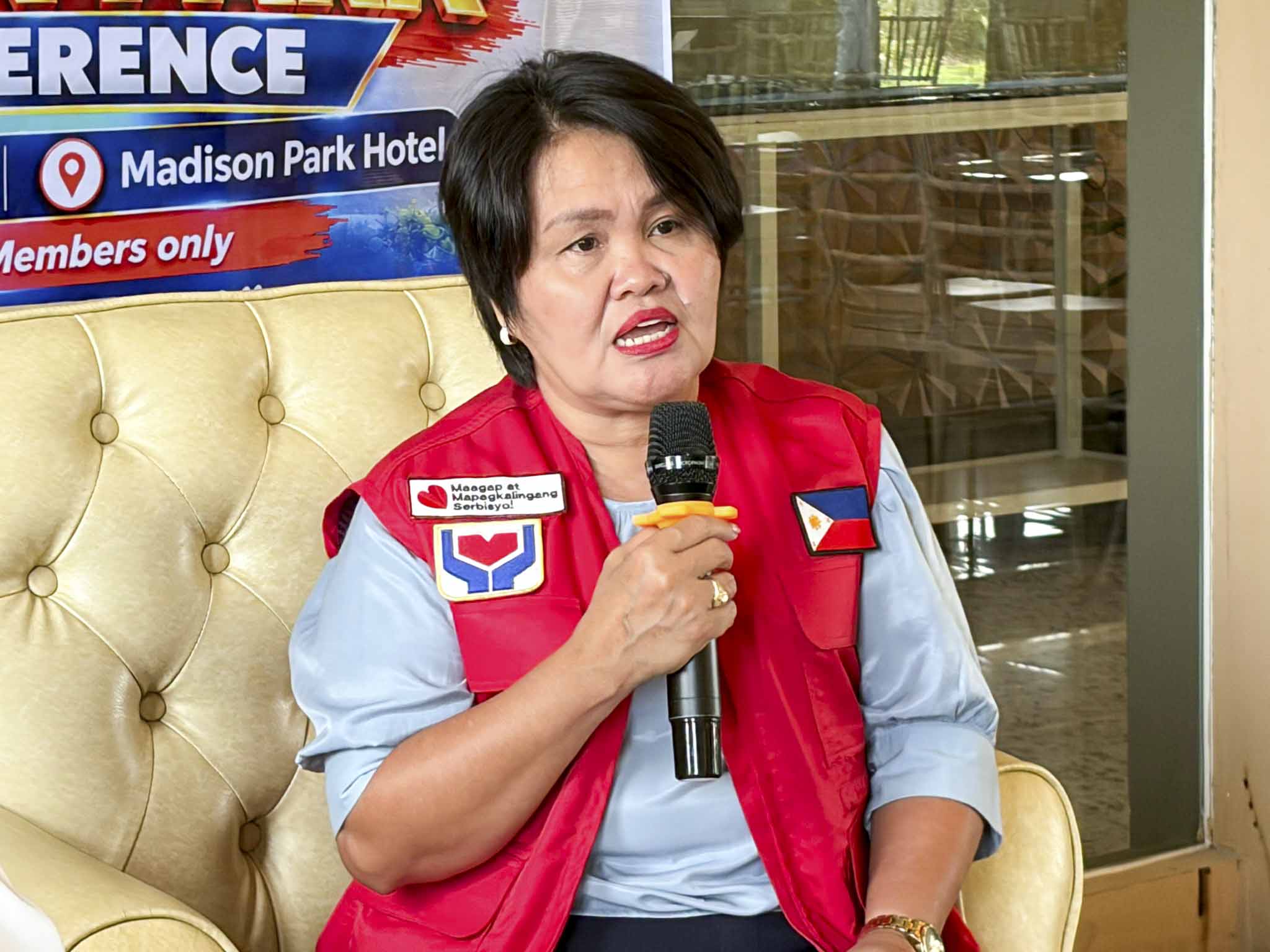
STILL UNDER THEIR CUSTODY. DSWD Eastern Visayas Regional Director Grace Subong answers questions from reporters during a media interview in Tacloban City, clarifying that the 14-year-old boy linked to the June 22 shooting at San Jose National High School remains under DSWD custody at a rehabilitation facility in Tanauan, Leyte. Subong said the minor, along with a 15-year-old involved in the case, continues to undergo assessment and intervention.(ImNET)
TACLOBAN CITY – The 14-year-old boy linked to the June 22 shooting at San Jose National High School (SJNHS) here remains under the custody of the Department of Social Welfare and Development (DSWD) at a rehabilitation facility in Tanauan, Leyte, a regional official said.
DSWD Eastern Visayas Regional Director Grace Subong made the clarification following reports that the minor, identified only by the alias “Nash,” had already left the facility.
“As far as we are concerned, the 14-year-old is still with DSWD at the rehabilitation facility, including the 15-year-old, and both continue to undergo assessment and interventions,” Subong said in a ImNET media forum held at the Madison Hotel and Resort, this city.
Her statement came after the parents of the three students killed in the shooting sought assurance on the whereabouts and status of the younger minor.
The parents reportedly also requested access to the 14-year-old, but the DSWD declined the request, citing the need to protect the privacy, welfare and security of children staying at the facility.
“We have to protect others, not just them. Rest assured that we will provide updates on the status of the two minors,” Subong said.
She emphasized that the facility is intended for rehabilitation and intervention rather than punishment.
According to Subong, children under DSWD care are given opportunities to continue their education and rebuild their lives. Some, she said, have eventually completed their studies, including college.
The two minors were placed under government custody following the shooting at SJNHS that left three students dead and others injured.
The incident prompted coordinated intervention by the DSWD, Juvenile Justice and Welfare Council (JJWC), law enforcement agencies and other government offices.
The DSWD earlier said a multidisciplinary assessment was conducted to determine the appropriate interventions for the two minors. The agency also convened a case conference with the JJWC and the Eastern Visayas regional multidisciplinary team to discuss the case and possible interventions.
The shooting also resulted in the filing of criminal charges against the 15-year-old minor. The Police Regional Office in Eastern Visayas earlier said charges were filed in connection with the deaths and injuries resulting from the incident.
The legal treatment of the two minors is governed by the country’s juvenile justice system.
Under Republic Act No. 9344, or the Juvenile Justice and Welfare Act of 2006, as amended by RA 10630, a child who is 15 years old or below at the time of the commission of an offense is exempt from criminal liability but must undergo an appropriate intervention program.
For children above 15 but below 18, the law likewise provides exemption from criminal liability unless they acted with discernment, in which case appropriate proceedings may be undertaken under the juvenile justice system.
Exemption from criminal liability does not automatically mean that a child is released without intervention. Depending on the circumstances and assessment, a child may undergo community-based intervention or be referred to a youth care facility when necessary and in the child’s best interest.
Following the shooting, the DSWD also provided psychological first aid and psychosocial support to affected students, parents, witnesses and bereaved families.
Face-to-face classes at SJNHS resumed on July 6, about two weeks after the incident, as authorities worked to help the school community recover from the shooting.
The DSWD has continued providing psychosocial support and related interventions to frontline personnel involved in responding to the incident, as well as rehabilitation and intervention for children in conflict with the law.
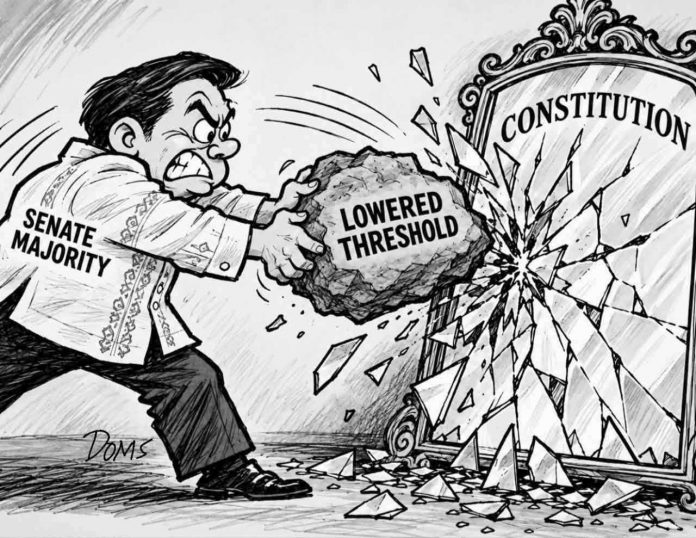
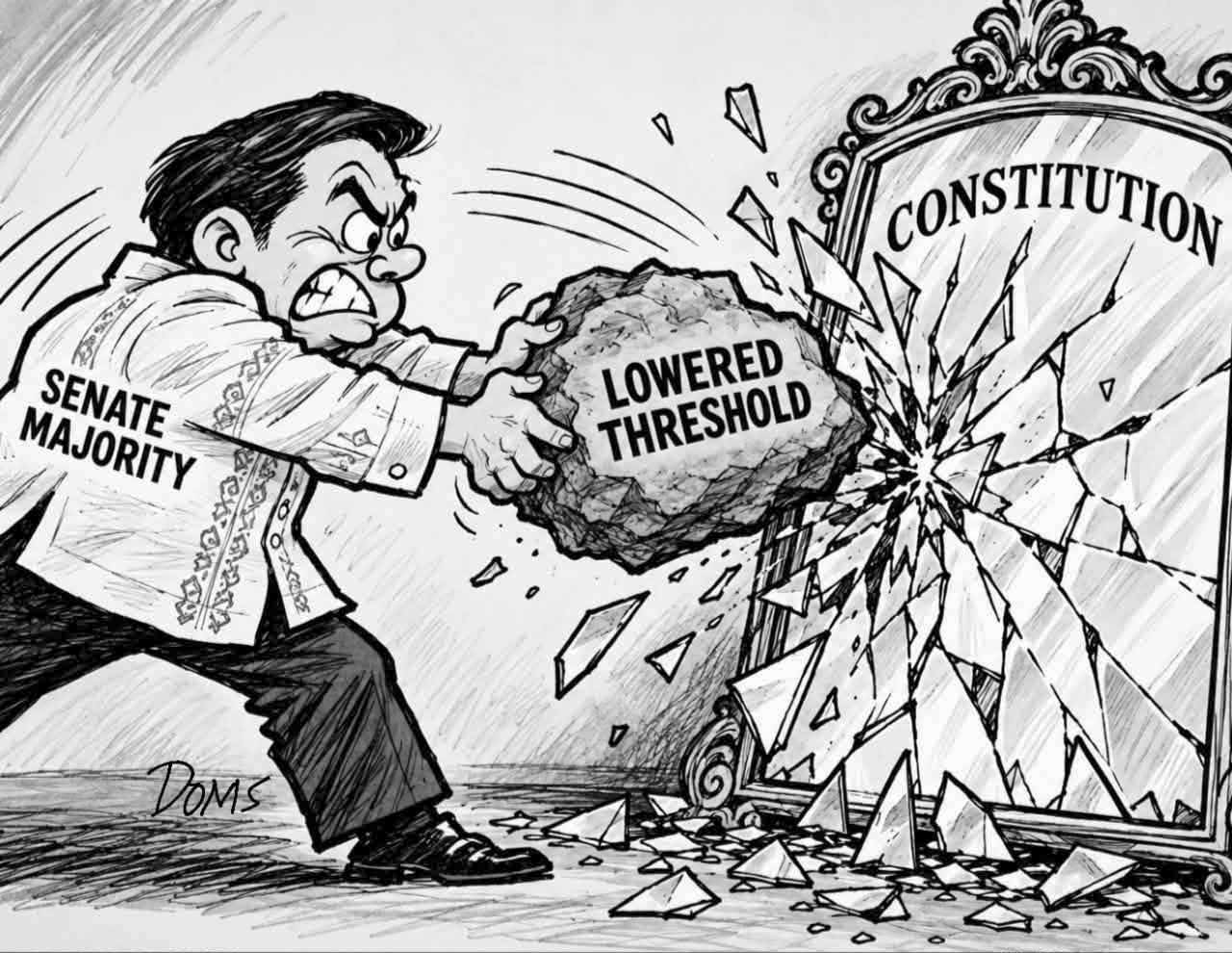
The Senate impeachment court’s decision to lower the votes needed to convict Vice President Sara Duterte is alarming. The constitutional threshold must not be adjusted to suit the political circumstances of one trial. Lawmakers who serve as judges owe the public a decision governed by law, free of partisan interest.
The Constitution requires the concurrence of two-thirds of all the Members of the Senate for conviction. Yet the impeachment court has decided to count only senators able to participate when it calculates that fraction. With four of the 24 senators currently unable to take part, the required votes fall from 16 to 14. That change deserves the strictest scrutiny: a senator’s inability to vote does not, by itself, settle whether that senator has ceased to be a member.
Those who supported the ruling argue that the two-thirds requirement remains and that unavailable senators should not prevent the court from reaching a verdict. Their concern warrants an answer, but so does the constitutional choice of the words “all the Members.” If membership can be narrowed during a trial because some senators cannot participate, the public is entitled to a clear legal explanation of where that authority comes from and what prevents the same reasoning from being used whenever the votes are inconvenient.
Duterte must answer the charges against her, and senator-judges must decide them on the evidence. But a conviction that leads to disqualification would also remove her from the choices available to voters in 2028. She could return to private life; citizens who wanted to vote for her would lose that option. This is why even those who oppose her should insist on a process whose rules can withstand examination.
Power may secure a vote, but it cannot make a doubtful interpretation command public confidence. The Senate should publish a full justification for its ruling and allow the constitutional question to be tested through available legal remedies. Whatever verdict follows must rest on proved charges and a defensible reading of the Constitution. The people deserve both accountability and the assurance that lawmakers have not changed the measure of conviction to decide who may appear on their ballot.
This will go down in history. On September 23, the Senate impeachment court changed the voting rule in Sara Duterte’s trial. I had supported pursuing that trial before. I can no longer support the way it is being conducted now.
Before the proceedings began, I wanted the Vice President to have her day in court. Serious accusations should be examined, and I thought a trial would give her a fair chance to answer them. If the evidence proved the charges, the senator-judges should convict her. If it did not, they should acquit her. That seemed a sounder course than leaving the country to argue over allegations without ever hearing a verdict.
I have not changed my mind about the need to answer accusations. I changed my mind about whether this trial can still command my confidence. I have watched the fight over its rules grow as consequential as the evidence itself. When the people judging a case change the number of votes needed to convict, I cannot shrug and call it routine.
The Constitution says conviction requires the concurrence of two-thirds of all the Members of the Senate. The impeachment court has now ruled that only senators legally and factually able to participate at the time of judgment will count toward that total. With four senators currently unable to take part, the votes needed for conviction would fall from 16 to 14. I read “all the Members” and see a serious question that arithmetic cannot brush aside.
I know the senators who favored the change have an argument: they say the two-thirds rule remains and that senators unable to participate should not keep the court from deciding the case. They deserve to be heard. But I also expect them to explain why those senators cannot vote, and why those who cannot vote should cease to count as members for this purpose. Until that question is answered convincingly, the decision looks to me like a rule fitted to the moment.
That is why I now see a political hand in these proceedings. It is my judgment, not a fact I can prove about every senator’s private motive. I dislike having to say it, because I wanted a verdict that even disappointed supporters could recognize as fair. Instead, I find myself wondering whether the people with the power to judge Duterte are also too eager to decide whether she can run in 2028.
None of this makes the allegations disappear. Duterte still has to answer them, and her accusers still have to prove them. My objection is to making conviction easier through a disputed reading of the rules while asking the public to trust the result. A trial can hold an official accountable only if its own conduct can bear the same close inspection it gives the accused.
I once believed this impeachment trial could settle a painful question. I would still welcome an honest answer to the charges, whichever way the evidence leads. For now, the Senate could begin to recover my trust by giving a full, persuasive account of its ruling and by letting any legal challenge run its course before treating the new threshold as beyond question.
That is the sharp edge of Christ’s parable in Matthew 21:28-32. A father asks two sons to work in the vineyard. The first bluntly refuses but later changes his mind and goes. The second politely agrees but never shows up. The verdict is obvious. The first son, despite his rough beginning, did the father’s will.
The story is not really about two brothers. It is about two kinds of believers. One resists God at first but eventually surrenders. The other speaks the language of faith, projects the image of holiness, yet quietly refuses to obey when sacrifice is demanded.
Words can impress people. Actions convince God.
The parallel Gospel accounts repeatedly stress that discipleship is measured not by profession but by fidelity. The Lord consistently exposes the danger of external religiosity detached from an obedient heart. He is never fooled by appearances. He looks beyond polished speeches, pious gestures and religious credentials. He searches for a will that is ready to do the Father’s commands.
This is why the parable startled the religious leaders. They considered themselves the faithful son because they knew the Law, defended tradition and occupied positions of authority. Yet when God called them to repentance through John the Baptist and later through Christ Himself, they resisted. Their “yes” to God remained only on their lips.
Meanwhile, tax collectors and prostitutes—people dismissed as hopeless sinners—accepted the call to conversion. Their lives had begun with a loud “no,” but repentance transformed that refusal into obedience. Heaven rejoices more over one repentant sinner than over a hundred respectable appearances that never mature into genuine conversion.
The early Christian tradition saw in these two sons a mirror of every human soul. Every day we answer God’s invitations. Sometimes our pride answers first. We delay, complain or negotiate. Yet grace keeps knocking. Blessed is the person who finally says yes through action. A late obedience is still obedience.
But there is another warning. It is possible to become comfortable with religious routines while quietly resisting God’s deeper invitations. We attend worship but refuse forgiveness. We pray but cling to dishonesty. We speak about charity but ignore those in need. We defend truth but fail to practice justice. The vineyard remains unattended while we congratulate ourselves for promising to work.
Let’s be clear about this. God does not need impressive promises. He seeks faithful laborers. Real conversion is wonderfully practical. It changes schedules, priorities, relationships and habits. It reaches the workplace, the family table, the classroom and the marketplace. Faith is not completed by saying, “Lord, I will.” Faith is completed by actually going into the vineyard.
Every day offers countless opportunities to reverse our earlier refusals. Yesterday’s failures need not define today’s response. God’s patience allows us to rewrite our answer through repentance and action. The tragedy is not that we once said no. The tragedy is refusing to change after hearing His voice.
The Father is still asking. The vineyard still needs workers. The invitation has not expired. When the final account is made, heaven will not measure the elegance of our promises but the sincerity of our obedience. Better a reluctant beginning that ends in faithful action than a beautiful profession that never leaves the comfort of words.
The Gospel leaves us with one unavoidable question. Which son am I today?
The title is Latin for The Rise of power Costs , and it hits home now more than ever . By August our Power Bill was Php. 9,960 now its Php. 16, 000. Gasoline prices in the Philippines have surged by more than P5 per liter and household electricity bills climbed nearly 17% this year, driven not only by global fuel shocks but also by volatile domestic politics that magnify currency weakness, regulatory uncertainty, and energy supply instability.
Gasoline & Diesel: As of September 2026, pump prices rose by P5.68/liter for gasoline and P4.31/liter for diesel, reflecting global oil spikes and peso depreciation.
Electricity Bills: Meralco raised household rates by P0.3428/kWh in July, translating to an extra P69/month for a 200 kWh household. Spot market prices also spiked due to record demand and plant outages.
Inflationary Impact: Headline inflation hit 7.2% in April 2026, largely energy-driven, before easing slightly but remaining above the BSP’s 2–4% target band.
The rise in gas prices and electric bills is not merely economic—it is political. Global oil shocks are inevitable, but the Philippines’ vulnerability is magnified by domestic governance failures. A weak peso reflects not just external markets but also investor distrust in political stability. Regulatory bodies like the Energy Regulatory Commission and Bureau of Internal Revenue issue piecemeal rulings (e.g., VAT exemptions on system-loss charges), but these are band-aids on a deeper wound: the absence of a coherent energy strategy.
Volatile politics—whether in foreign relations, tax policy, or energy regulation—turns every global tremor into a local earthquake. Households in Tacloban and across the nation pay the price: higher fares, steeper bills, and diminished purchasing power.