
TACLOBAN CITY-The local government of Tacloban, under Mayor Alfred Romualdez, through its Public Employment Service Office (PESO) will start receiving applications for the Special Program for the Employment of Students (SPES) this February 22, 2022, on a first-come, first-served basis.
According to PESO, for this year, there are only 161 slots for summer employment, although they will accept up to 200 registrants for validation and screening. However, applicants to be registered from numbers 162-200 will be considered as waitlisted, the office clarified.
Qualifications for the summer job program are as follows:
• must be 15 to 30 years old
• a resident of Tacloban City
• Enrolled; with outstanding/passing grades
• Combined net income after tax of parents does not exceed the latest annual poverty threshold level for a family of six (6) which is P 149, 874.00
• Non-4P’s beneficiary
Registration will start at 8:30 A.M at the City Engineer’s Gymnasium. Applicants are advised to bring their own pen, follow strict health protocols, wear proper facemask and practice social distancing.
SPES is a youth employment-bridging program which aims to provide temporary employment to poor but deserving students during summer and/or Christmas vacation or any time of the year to augment the family’s income to help ensure that beneficiaries are able to pursue their education.
(TACLOBAN CITY INFORMATION OFFICE)
acloban PESO to open SPES application on Feb. 22
407 schools in EV start in-person classes
As DOH reports declining COVID-19 cases
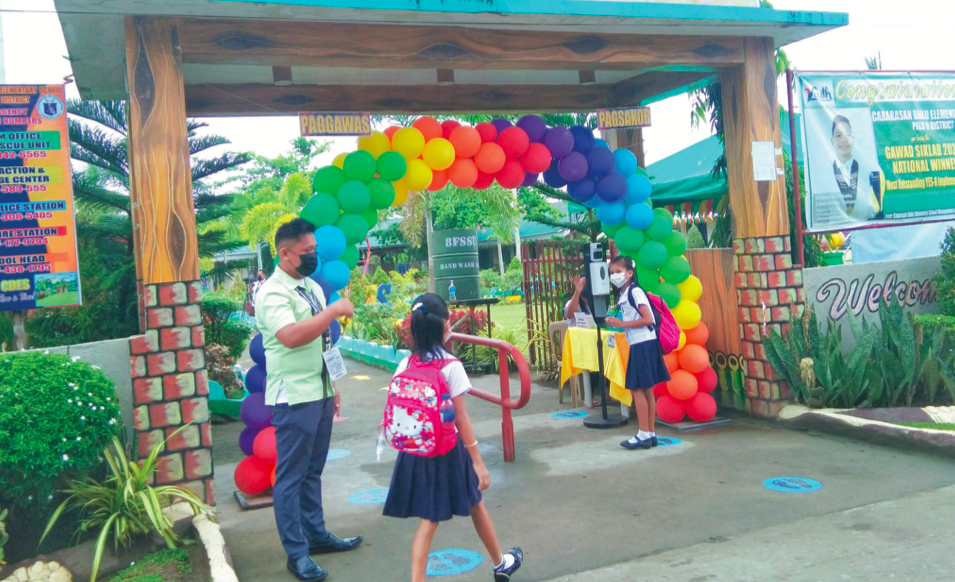
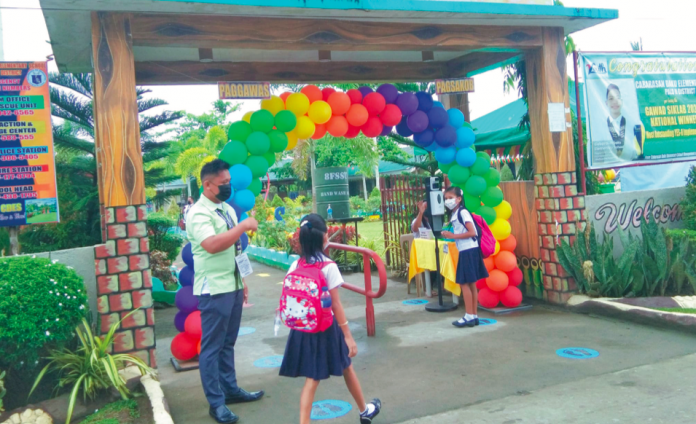
TACLOBAN CITY- Students from 407 public schools here in Eastern Visayas trooped back on Monday(Feb.21) to their respective schools to attend the resumption of the face-to-face classes, albeit limited.
Jasmin Calzita, regional information officer of the Department of Education (DepEd), said of the 407 schools participating in the limited in-person classes, 157 of them are in Samar, including the cities of Catbalogan and Calbayog; 155 in Eastern Samar including Borongan City; 77 are in Leyte which include the cities of Baybay, Ormoc and Tacloban; Southern Leyte with 13; and Northern Samar, with five schools.
The conduct of the in-person classes came at a time as Eastern Visayas’ was categorized by Malacanang as under Alert Level 2 for the rest of the month due to decreasing number of its coronavirus disease (COVID-19).
Eastern Visayas’ active COVID-19 cases are now at 207 with only 13 new cases as reported by the Department of Health (DOH) on Monday (Feb. 21).
Gary Mosquito, principal of the Cabarasan Daku Elementary School in Palo, Leyte, said that both parents and the students were excited for the resumption of face-to-face classes in their school.
He said that out of the school’s 215 enrolled students,60 are participating who are enrolled at Kindergarten up to Grade 3.
“We are very happy that our opening of this expanded limited face-to-face classes was very successful. We don’t have any issues and concerns nor challenges experienced. It was very organized and health protocols were observed upon entry from the school gate,” Mosquito said.
He said that a nurse, assisted by a member of the barangay health emergency response team (BHERT), mans the school gate, adding that all of the school’s teachers are already fully vaccinated.
The same excitement was also observed among students of the Cabacungan National High School in Allen town, Northern Samar as all of its around 80 students enrolled at Grades 11 and 12 are to attend the in-person classes for at least two months period.
Gary Vacunawa, the school principal, said that these students are to attend their classes only in the morning for four hours and 30 minutes.
He also said that 40 students are to attend the first week of the resumption of in-person classes with the other half to attend their classes in school next week.
All the participating students and the school’s 20 teachers are already fully vaccinated, Vacunawa said.
3 of 10 families in Eastern Visayas poor in 2021: report
TACLOBAN CITY – At least three out of every 10 families in Eastern Visayas are poor based on the result of the first semester 2021 survey, the Philippine Statistics Authority (PSA) said.
In a report released by PSA on Feb.3, the poverty incidence among families in the region in the first half of 2021 was estimated at 28.9 percent, slightly lower than the 30.4 percent level recorded in the same period in 2018.
“These families have income that were below (of) amount needed to buy their basic food and non-food needs,” Wilma Perante, PSA Eastern Visayas regional director, said in a phone interview.
A family of five in Eastern Visayas needs at least P11,292 monthly to sustain their basic needs last year. The amount is higher than the P10,163 monthly income requirement in 2018.
“The first semester 2021 data is a reflection of income and spending experiences of families in the region in the past three years. This is also affected by what people have gone through during the pandemic early last year,” Perante added.
The National Economic and Development Authority has yet to come up with an analysis of the latest poverty statistics.
Meanwhile, poverty incidence among families in Eastern Samar was estimated at 36 percent, the highest in the region.
However, the province has shown improvements after it recorded a 43 percent poverty incidence in 2018.
Leyte province maintained its poverty incidence in three years at 31.3 percent.
Samar’s figure dropped to 30 percent from 32.2 percent while Southern Leyte registered a higher incidence from 22.9 percent to 25.5 percent.
Northern Samar province is one of the most improved provinces as poverty incidence dropped to 23.1 percent from 30 percent three years earlier.
On the other hand, poverty incidence among families in Biliran increased to 22.4 percent from 18 percent.
Poverty incidence among families for Tacloban City, the lone highly urbanized city in the region, was recorded at 14.7 percent in the first semester of 2021, higher than the 13.1 percent recorded three years ago.
PSA came up with these figures from the Family Income and Expenditure Survey held every three years.
The study examines the family’s income and capacity to buy basic food requirements based on the 100 percent adequacy for the Recommended Energy and Nutrient Intake, and 80 percent adequacy for other nutrients.
It also looks into the ability of families’ income to provide basic non-food requirements such as clothing and footwear, housing, fuel, light, water, maintenance and minor repairs, healthcare, education, transportation and communication, furniture, household operations, and personal care.(SARWELL Q.MENIANO/PNA)
Cheers, hugs, and bouquets welcome bar takers at DVOREF
TACLOBAN CITY – Cheers and applause and warm hugs.
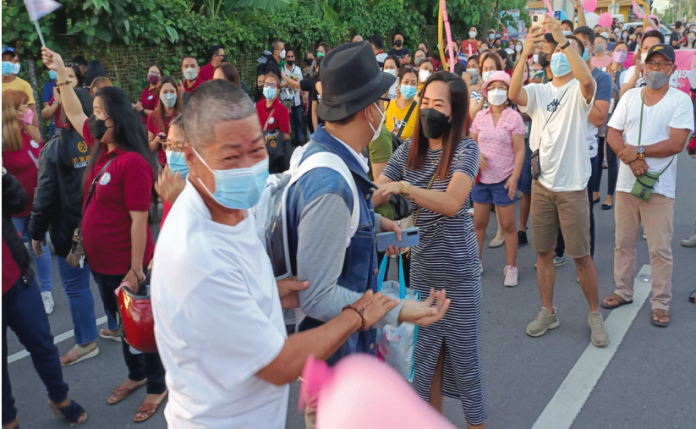
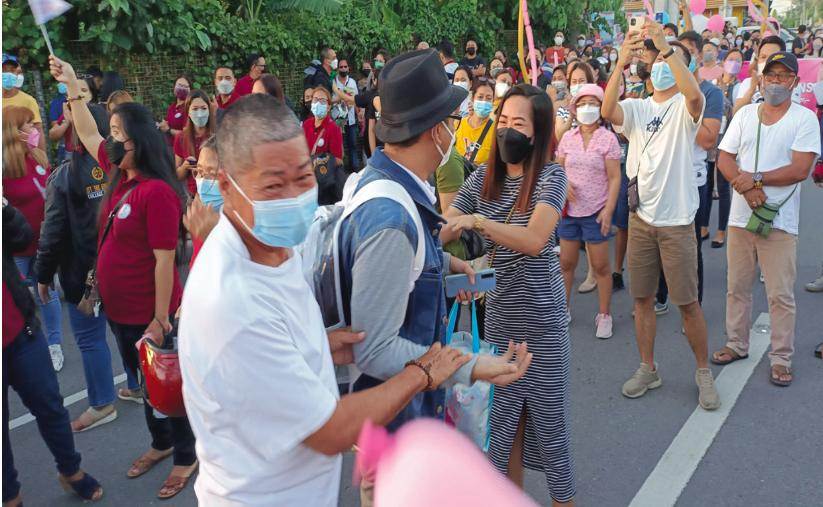
These were the scenes after the more than 300 bar takers finished the grueling examinations on Sunday (Feb.6) held at the Dr. Vicente Orestes Romualdez Educational Foundation (DVOREF), this city.
Hundreds of family members, relatives, friends, and classmates of the bar examinee waited for them for hours just to give their loving support, some even giving bouquets of flowers.
As part of the protocols set by the Supreme Court, the waiting crowd was not allowed to get near the examination venue.
A fire truck was also sent near a barricade that was put up.
More than 300 examinees took the first regionalized bar examination in the country, where DVOREF is one of the 28 venues identified by the Supreme Court.
It is also the first to use digitalized examination program.
The 2020/2021 bar examinations that were held last February 4 and 6 were postponed for three times due to the surge of coronavirus disease (COVID-19) cases in the country.
Angela Cabidog, whose son was one of the bar takers, said that she is thankful that finally, the bar examination took place.
“After he passed the CPA board, he told me that he wanted to become a lawyer so I let him, and supported him,” the proud mother said.
“What we did was to pray and update him every time and make sure that he won’t be disturbed so that he can focus for the bar exam,” Cabidog added.
A bar examinee who graduated from San Beda, who asked not to be named, said that she find the questions difficult.
“But it is fulfilling because it is over now,” she quipped.
Conduct of in-person classes in selected schools in Leyte halted as province still under Alert Level 3
TACLOBAN CITY – With Leyte still under Alert Level 3, the conduct of limited face-to-face will be suspended until the alert level is lifted.
This was confirmed by Manuel Albaño, provincial schools superintendent who identified 18 public and private schools across the province that are to conduct the face-to-face classes.
However, with the declaration of the Inter-Agency Task Force placing the entire province under Alert Level 3 until Feb 15, this will need to be temporarily suspended and must wait for it to be lifted.
Leyte was earlier placed by Malacanang under Alert Level 3 beginning Feb.1 and is to end on Feb.15.
The in-person classes among these identified schools are to start once the alert level of Leyte will be downgraded to just Alert Level 2.
Among the public elementary schools that are to implement the limited in-person classes as recommended by the provincial office of the Department of Education (DepED) are Caloogan Elementary School (ES) and Cabarasan Daku ES in Palo; Granja Kalinawan National High School in Jaro; Yapad ES and Manaybanay NHS in Pastrana; Sta. Fe ES; Sogod NHS and Jugaban NHS in Carigara; Victory ES and Cabacungan NHS in Dulag; Danus ES in Leyte town, and Isabel Central School in Isabel town.
Some private schools are also expected to be part of the expanded face-to-face classes.
Albaño added that aside from the mentioned schools, they also visited far-flung schools if they are ready to implement the in-school learning like the public schools in Babatngon and Capoocan towns.
“We tried to visit them, and they are actually ready. As far as we are concerned, these schools are prepared and qualified, but because (our) central office always instructs us not to implement without their go signal, we have to abide,” he said.
For a school to be selected for face-to-face classes, they must belong to a community that has had no active coronavirus disease (COVID-19) cases for the last 28 days.
They must also be supported by their respective local government units for the offering of limited face-to-face classes and certified by their rural health units of zero COVID-19 cases.
Ventilation of classrooms must also be improved and with a better lighting.
Classes will also last for only four and a half hours a day.
Prior to the 18 schools, three public elementary schools were selected to pilot the face-to-face classes in Leyte.
These are Dolho ES and Bato Central School in Bato town, and Palo Central School in Palo.
Meantime, of the 17,032 teaching and non-teaching staff at DepEd Leyte, more than 14,000 had already received at least one dose of COVID-19 vaccines.
Also, only 35,509 learners from age 12 to 17 out of 397,000 had been administered with the vaccine. (ROEL T. AMAZONA)