In Northern Samar
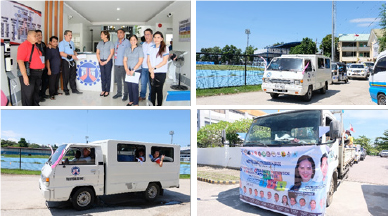
CATARMAN, Northern Samar-Residents in eight clustered barangays of San Roque town recently received an array of basic services and programs delivered by different public and private agencies participating in the Kauswagan Caravan, the 17th outing so far, and counting.
Beneficiaries were the local folks of barangays Balnasan, Balud, Bantayan, Coroconog, Genagdaan, Malobago, Lawaan, and Pagsang-an, and they converged at barangay Malobago, the venue of the June 30 event.
The move, initiated by the provincial government and formed part of the provincial task force on ending local communist armed conflict (PTF ELCAC), was the government’s way of bringing services and programs closest to the people at the grassroots, letting them feel that the government cares and feels about their plight.
The activity was also aimed at uplifting the lives of individuals living in the recipient communities not necessarily for a one-time, temporary relief but by means of sustained livelihood support through the distribution of tilapia fingerlings, coconut saplings, vegetable seeds, fruit bearing trees, and abaca suckers.
Farmers, backyard gardeners, and livestock breeders, among others, were the recipients of the agri-related materials mentioned, as well as the provision of health services such as medical check-up, dental services, free medical consultation, with matching free vitamins and medicines, and circumcision for boys.
Northern Samar Gov. Edwin Ongchuan expressed his gratitude to all stakeholders and partners as he affirmed the success of the program with the increasing number of private organizations which volunteered to join, contribute, and work with the provincial government in extending invaluable services to the disadvantaged Nortehanons.
T-shirts, slippers, bread, burgers, noodles, chorizo, and umbrellas, bowls of porridge, ice cream, slippers, school supplies, food packs, and used clothing were also provided.
The 803rd Infantry Brigade, and the local government unit of San Roque distributed soaps, used clothes, assorted groceries, hygiene kits, food packs, school supplies, rice, and biscuits.
Private transport groups provided free transportation for the participants while the Maharlikan Tigers International Fraternity and Sorority, Inc. brought clowns and performed magic tricks for the crowd.
Overall, 3,156 families from the eight barangays were served, including haircut and manicure, according to the provincial social welfare and development office (PSWDO) which pitched in food packs and hygiene kits, while the Provincial Veterinary Office rendered vaccination and deworming of pets and domestic animals.
The conduct of Kauswagan Caravan started during the time of former President Rodrigo Roa Duterte as a convergence of local, national agencies, LGUs, together with the private sector, the outreach program being an integrated part of the whole-of-nation approach in ending the decades-old problem of insurgency in the country.
(MMP/ADiaz/Northern Samar)

Getting ready for El Nino in the Rainy Season
ASSOCIATE PROFESSOR III
Walk in the manner of the ant, O slacker;
observe its ways and become wise.-Proverbs
Ironic as it may seem, we must anticipate the reality of El Nino or long dry spell, even if its raining and Typhoon is at the door. In fact, the predictions of the drought would be wise to heed as leading scientists are on it. The weather bureau expects the country to have fewer typhoons this year because of El Niño. The Philippine Atmospheric, Geophysical and Astronomical Services Administration predicted that El Niño, the warming of the Pacific Ocean, will most likely prevail in July. This story was bannered by Manila Times early this year. Philippine Daily Inquirer in the April issue of the paper interviewed the Philippine Atmospheric Geophysical Astronomical Services Administration and predicted that: The occurrence of an El Niño phenomenon this year has become more likely, with now a probability of at least 80 percent, the Philippine Atmospheric, Geophysical, and Astronomical Services Administration (Pagasa) said on Tuesday.
The weather bureau, however, clarified that before the looming onset of an El Niño, the Philippines would first experience a rainy season.
PAG ASA warned that heavy rainfalls might occur before the onset of the phenomenon.
“From previous experience natin, pwede tayong makaexperience ng extreme rainfall event like Ondoy noong 2009 wherein nagkaroon ng El Niño noong 2009 to 2010. Bago maramdaman ‘yung kakulangan sa tubig, nakaexperience tayo ng extreme rainfall events,” she said.
Meanwhile, what can we do to prepare;
Here are the measures that LGUs can take:
1. Conserve water. Conserving water is one of the key actions needed to be taken to mitigate the effects of El Niño1. LGUs can enact ordinances curbing illegal connections and encouraging prudent water usage1.
2. Fix water leaks. LGUs can allow water concessionaires and water utilities to conduct emergency leak repairs1.
3. Maximize rainwater usage. LGUs can implement measures to maximize rainwater usage for harvesting and storage1.
4. Implement contingency plans. LGUs can implement and update existing contingency plans related to El Niño1.
5. Stockpile relief goods. LGUs can stockpile relief goods for immediate relief assistance1.
6. Coordinate with other agencies.
What can individual homes do to prepare :
El Niño is a climate pattern that occurs when sea surface temperatures over the Central and Eastern Pacific Oceans warm up and affect air and sea currents. It increases the likelihood of below-normal rainfall conditions, potentially causing dry spells, droughts, and other adverse environmental effects1. Here are some tips to help you prepare for and cope with El Niño at the household level in the Philippines:
• Monitor weather forecasts and advisories: Stay updated on the latest weather news and advisories from reliable sources such as PAGASA1.
• Conserve water: During El Niño, water supply may be limited. It’s important to conserve water by fixing leaks, taking shorter showers, and using a bucket to wash your car instead of a hose1.
• Prepare for power outages: El Niño can affect the electricity supply since some power plants depend on dams. Make sure to have emergency supplies such as flashlights, batteries, and candles on hand1.
• Protect your health: Hot weather can increase the risk of heatstroke and other heat-related illnesses. Stay hydrated by drinking plenty of water, wear light-colored clothing, and avoid strenuous activities during the hottest part of the day1.
This may be trivial for now but it may be helpful soon.