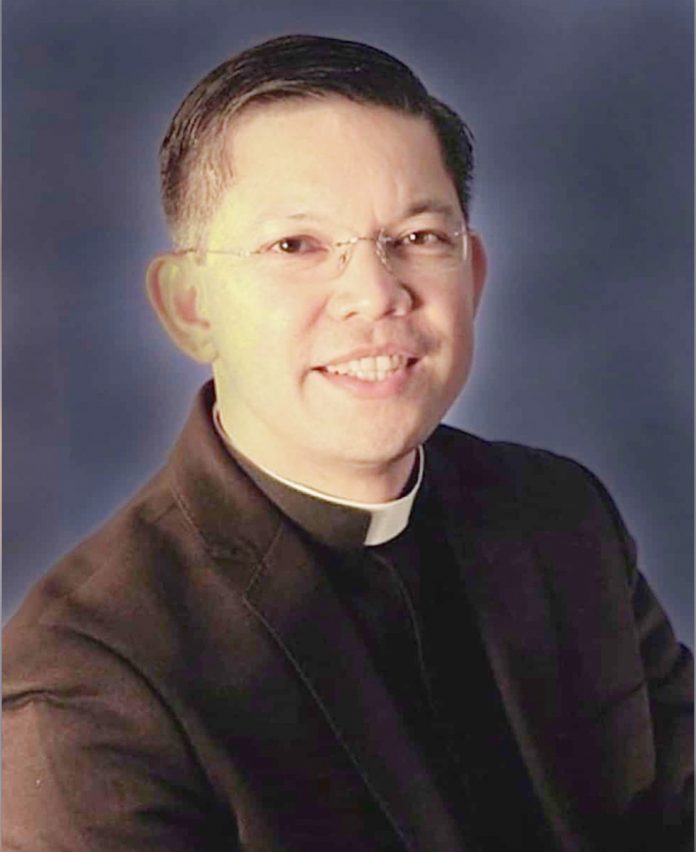
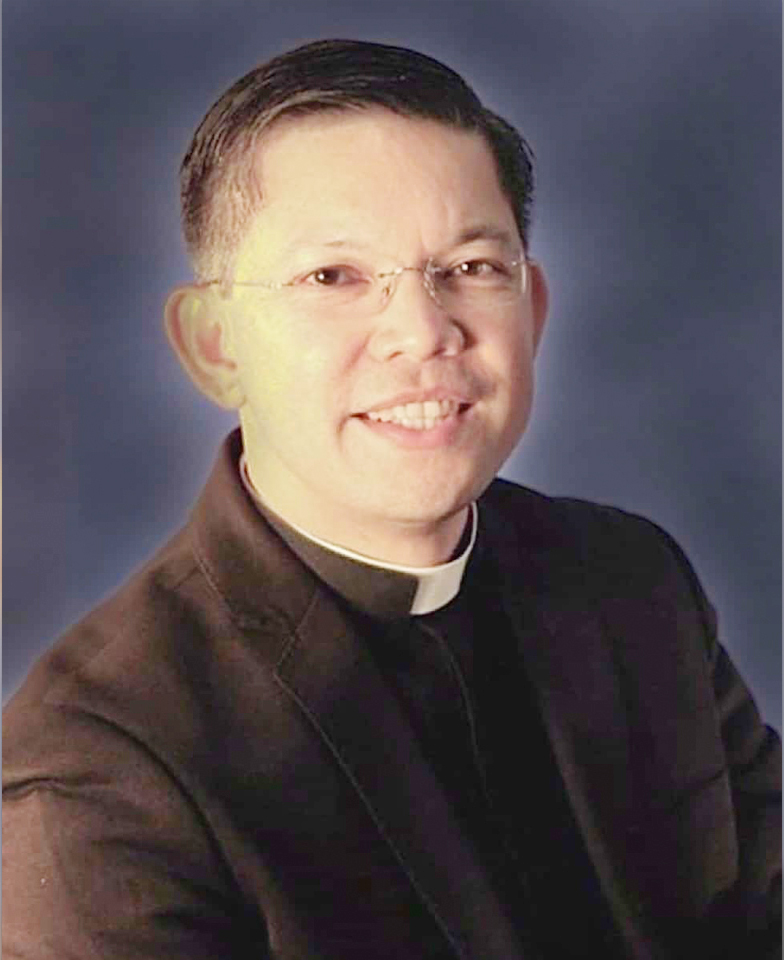
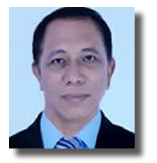
TACLOBAN CITY– Pope Francis on Tuesday appointed a Filipino priest among the two new officials of the Dicastery for Evangelization, the Vatican’s missionary arm.
Msgr. Erwin Jose Balagapo of the Archdiocese of Palo and Korean Msgr. Han Hyun-taek will serve their new roles in the dicastery for a period of five years.
Both priests have been working in the dicastery before their promotion.
Their tasks involve leading the office under the Section for the First Evangelization and New Particular Churches, which is overseen by Cardinal Luis Antonio Tagle as pro-prefect.
Born in Tacloban City, Balagapo was ordained priest in 1996.
As a canon lawyer, the priest has been working at the dicastery since 2015 after completing his further studies in Rome.
As part of the Curia’s reform, the dicastery merges the former Congregation for the Evangelization of Peoples and the Pontifical Council for the Promotion of the New Evangelization.
Under the leadership of Pope Francis, the dicastery consists of two sections: one that addresses fundamental questions of evangelization in the world, and another dedicated to first evangelization and the establishment of new particular Churches within its jurisdictional territories. (CBCP News)
ORMOC CITY-A man was killed after the truck he was on board tumbled which also resulted in the injury of two persons in Lavezares, Northern Samar on Monday (July 17) at about 4:30 pm.
Killed was Reynaldo Torcido, a resident of San Roque, also in Northern Samar, while the injured were identified as Oscar Ligid-ligid, Jr.43 and from Catarman, and Ruben Mansanilla, 30, who is from Victoria, in the same province.
In an interview, Police Corporal Andre Banez said that the truck that Torcido was on board fell to the side of the road due to a mechanical problem.
However, he jumped off the vehicle and landed on the pavement which resulted in his death.
His companion, Mansanilla, and Ligid-Ligid, a lending collector whose motorcycle was hit by the rampaging truck, sustained injuries.
About 24 motorcycles, which were parked in the streets where the incident happened, were damaged. The truck was loaded with about 300 bags of cement which was on its way to Catarman from Allen town.
All three were brought to the Allen District Hospital where Torcido was declared dead on arrival by his attending physician. (ROBERT DEJON)
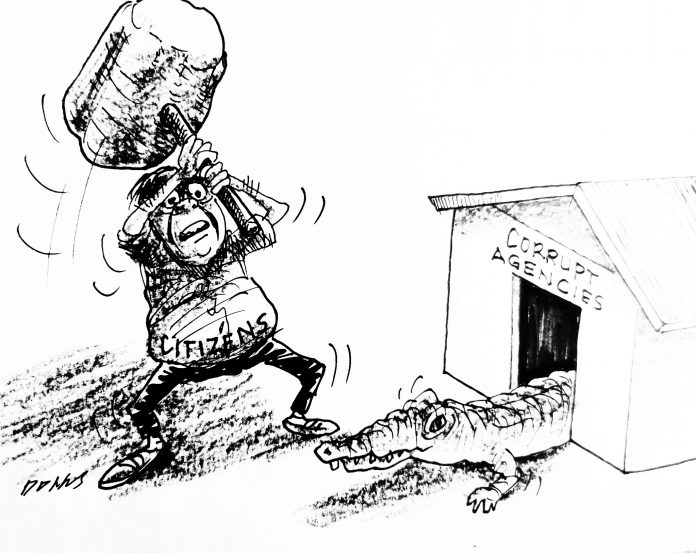
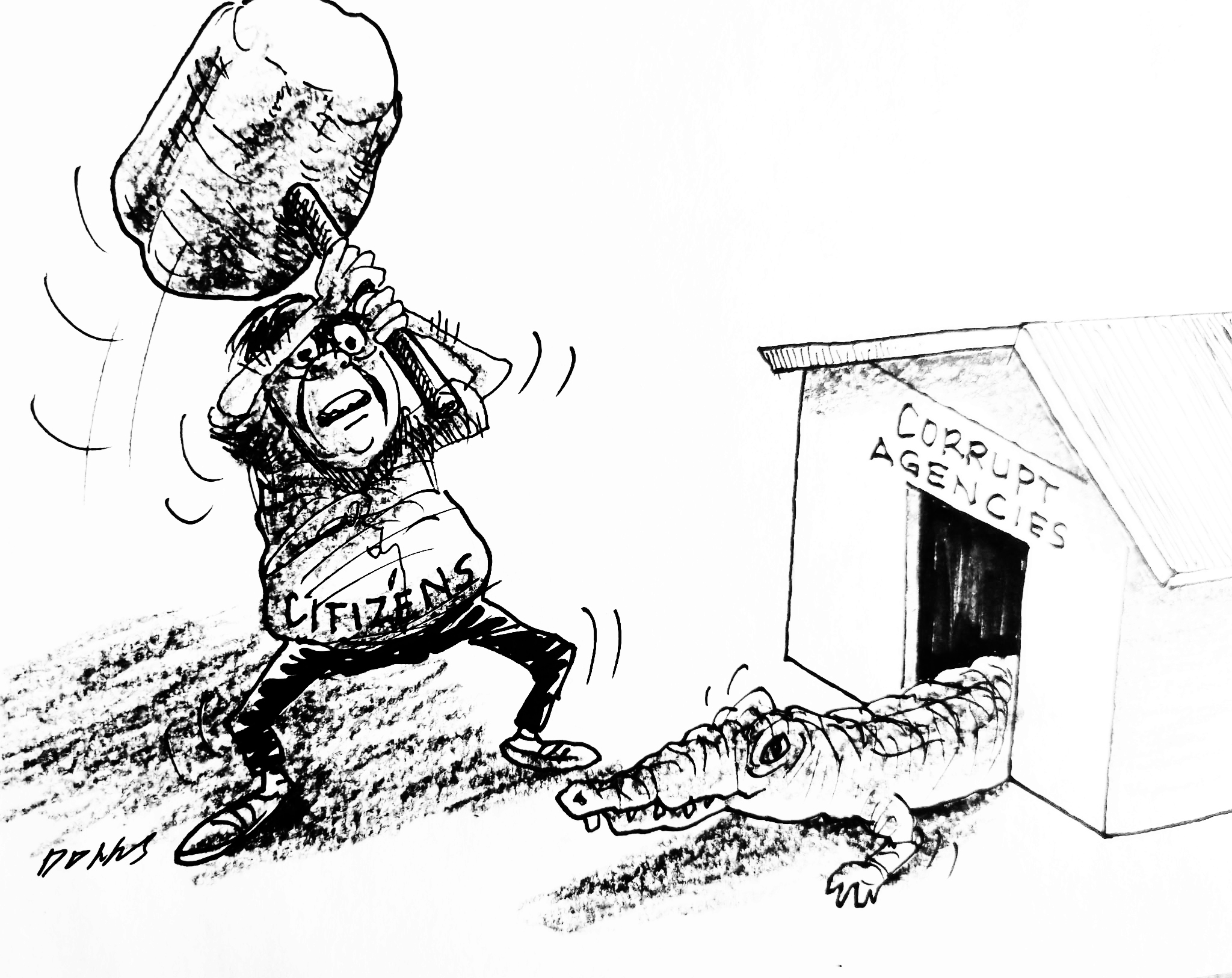
Our country has historically grappled with the pervasive issue of corruption within its government institutions. But our citizens, known for their vigilant stance against corruption, have emerged as a formidable force in combatting this societal ill. Through their unwavering dedication, collective action, and the employment of various tools and approaches, Filipinos are actively working towards eradicating corruption and ensuring a more transparent and accountable government.
One of the core attributes that define the Filipino society’s character is their innate intelligence and comprehension. This enables them to grasp the systemic intricacies of corruption, dissect its root causes, and identify feasible solutions. These individuals have acquired the intellectual prowess necessary to analyze the workings of the Philippine government, identify patterns of corruption, and suggest effective countermeasures. With this knowledge, they play a crucial role in fostering public awareness, mobilizing communities, and engaging in informed discussions that lead to tangible actions against corruption.
The comprehension of Filipinos further extends beyond the realm of academia. Through an informed understanding of their rights as citizens, Filipinos are equipped with the necessary tools to hold their leaders accountable. Transparency and accountability are foundational principles emphasized not only in educational institutions but also by civil society organizations and media outlets. With increasing access to information through social media platforms, the dissemination of news regarding corrupt practices has become more widespread. Filipinos, thus, remain vigilant in their efforts to expose corruption and ensure that public officials are held accountable for their actions.
Collective action acts as a unifying force among Filipinos in their fight against corruption. The shared belief that corruption must not be tolerated fosters a strong sense of community engagement and involvement. This collective action takes various forms, including peaceful protests, grassroots campaigns, and active participation in anti-corruption initiatives. Collaborative efforts between civil society organizations, non-governmental organizations, and advocacy groups provide a platform for Filipinos to voice their concerns, demand transparency, and maintain pressure on the government to enact reforms. By lending their collective voice to the cause, Filipinos continue to push for change and challenge the status quo.
The Filipinos’ intelligence and comprehension, coupled with their unyielding dedication, have positioned them as key players in the fight against corruption within the Philippine government. While challenges persist, the vigilance exhibited by Filipinos serves as a beacon of hope, driving the country towards a future marked by accountability, transparency, and good governance.
The United Nations (UN) currently finds itself at a crucial juncture in its history, as it confronts the challenging task of adapting to an increasingly interconnected world that demands global governance. As globalization continues to shape the political, economic, and environmental landscape, the need for effective global coordination becomes ever more imperative.
The UN’s intelligence in preparing for a global government is evident through its emphasis on sustainable development goals (SDGs) and climate change mitigation. Understanding the interconnectedness of global challenges, the organization has developed a comprehensive agenda focusing on economic growth, social welfare, and environmental protection. Through initiatives such as the Paris Agreement and the 2030 Agenda for Sustainable Development, the UN exhibits a profound comprehension of the need for coordinated global efforts to tackle pressing issues such as poverty, inequality, and climate change.
Moreover, the UN’s resolve is reflected in its ability to foster multilateralism as a key driver of global governance. The organization serves as a platform for nations to come together and negotiate shared values, norms, and policies, furthering the understanding that collective action is necessary to address global challenges effectively. By facilitating dialogue and promoting international cooperation, the UN strengthens its position as a global authority capable of providing guidance on matters of global concern, substantiating its preparedness for a potential global government.
The need for inclusivity and equity underpins its progressive stance on global governance. Acknowledging that true global governance requires representation from all nations, the UN strives to give each member state an equal voice in decision-making processes, regardless of their economic, political, or social standing. This approach ensures that the potential global government doesn’t marginalize any nation, fostering a more equitable and just world order.
However, challenges persist in the UN’s journey towards a global government. The intelligence of the organization is tested by increasing disputes and conflicts among member states, which hinder effective global governance. Addressing these challenges requires the UN to enhance its conflict resolution mechanisms, strengthen diplomatic efforts, and ensure that its decision-making processes are fair, transparent, and supported by all member states. By continually evolving and adapting to such challenges, the UN displays its blueprint in its pursuit of a global government.
Thus, the UN stands poised to address the growing demand for global governance as the world becomes increasingly interconnected. The organization demonstrates a profound understanding of the need for sustainable development, multilateralism, inclusivity, and equity in shaping global governance. While challenges persist, the UN’s commitment to overcoming obstacles and fostering international collaboration paves the way for a more effective and inclusive global government, enabling the world community to tackle pressing issues collectively and shape a supposedly more prosperous future for all.
The majority decision of the International Criminal Court authorizing the investigation of the brutal drug war by the Duterte administration would open unhealed wounds of the victims. It will also expose the extent of the mayhem that the drug war was carried out by the police under the command of now senator Ronald Marapon dela Rosa, purported other person subject of the investigation. It would be recalled that the administration of then president Rodrigo Roa Duterte made the drug war as its primary program.
The strategy started with knocking on doors dubbed as “tokhang” which stands for the combined local dialects “katok” (knock) and “hangyo” (request) on houses where suspected drug users and sellers reside. The houses and the purported drug users and pushers were taken from a list made by barangay officials who were forced to submit a list to the police under pain of being tagged as supporters of drug users and sellers in the community.
But the knocks were reportedly carried out at night while people in the community are asleep. The tagged persons would the be brought to police stations were they were made to admit as drug users or pushers. Often, the admissions were under duress and the purported suspected drug users and sellers would be made to list names of their drug suppliers.
In the worse case that the revelations extracted would point to the very same police officers who nabbed them, the drug user or seller becomes a candidate for silencing to “serve and protect” the police officers who were labelled by their then police director and now senator Ronald Marapon dela Rosa as “ninja cops” which he explained as police officers in the practice of recycling confiscated drugs as repacked commodity for sale.
The helpless drug suspects who are under police custody would become an asset in detention in exchange of cooperation, otherwise, a candidate for elimination to silence the squeeler forever.
In the horrible days that the drug war was in full implementation, the streets and communities became dangerous places splattered with blood of suspected drug users and pushers. The knocks were reportedly turned into shooting sprees carried out by police officers who blindly follow the unwavering instruction by the then president Rodrigo Roa Duterte and his loyal policebgeneral Ronald Marapon dela Rosa, to shoot on the incredible nse of “nanlaban” meaning “fought back”.
Thus far, the families of the victims are united and wailing in pain as they fight for justice of their murdered kin. The evidence are splattered with blood stains.
comments to alellema@yahoo.com
IT’S obvious that we need laws. We should respect and follow them as faithfully as possible as long as they are just laws. But we have to understand that laws, which in the end come from God, are formulated and articulated by us and therefore are subject to varying human conditions, such as the prevailing culture at the time the laws were made, etc. It’s for this reason why some exceptions can be made in obeying these laws.
We are reminded of this fact of life in that gospel episode where some leading Jews complained to Christ about his disciples doing something unlawful during the Sabbath. That unlawful thing was nothing other than that these disciples picked grains in the field to eat because they were hungry. (cfr. Mt 12,1-8)
That was when Christ clarified to them what the real intent of the Sabbath law was. He explained that exceptions can be made. “Have you not read what David did when he and his companions were hungry,” he said, “when he and his companions were hungry, how he went into the house of God and ate the bread of offering, which neither he nor his companions but only the priests could lawfully eat?”
Still more: “Or have you not read in the law that on the Sabbath the priests serving in the temple violate the Sabbath and are innocent?”
Then he explained why such exceptions can be made. “I say to you, something greater than the temple is here. If you knew what this meant, ‘I desire mercy, not sacrifice,’ you would not have condemned these innocent men. For the Son of Man is Lord of the Sabbath.”
It is quite clear that laws are made to serve our ultimate end, and that can only be that we be led to God, our original source and ultimate end. Our laws should be such that they should not negate nor even undermine the achievement of this fundamental purpose of the laws. Even our traffic laws, so insignificant if impacted with our ultimate end, should respect this fundamental purpose.
But what do we have? We sometimes absolutize our laws as if they are the ultimate purpose in our life. They can be so rigidly and indiscriminatingly applied to all cases when there can be exceptions or even exemptions that can be made. We fall into some kind of legalism.
And nowadays, there are even laws that undermine the ultimate purpose of our life, that is, our proper relation with God. Christ himself complained about this. “You have let go of the commands of God and are holding on to human traditions.” (Mk 7,8) We are now making ourselves as the ultimate lawgiver, as if we are the creator of the universe.
We have to be careful with our tendency to fall into what is called as legalism, which is a way of making our human laws so absolute as to regulate even matters of conscience that they become the end in themselves. Legalism is when we make our human laws so absolute that they cannot stand any more improvement, enrichment, or even revision and revocation.
Legalism is when we get too obsessed with following the letter of the law at the expense of recognizing the true spirit of the law. It is usually characterized by rigidity and heartless treatment of people, especially those disadvantaged by a given law.
This is not to say that our laws are useless. No. Laws are always necessary and very useful. But they should be treated as means only, not as ends. As such, they cannot be treated as if these laws are the only laws that have to be followed. In a given situation or case, other laws may be followed.