32.3 C
Tacloban City
October 04, 2026 - Sunday | 1:44 PM
Home Blog Page 124

Rep. Ongchuan’s MSME ‘green lane’ bill gains strong support in House panel

0
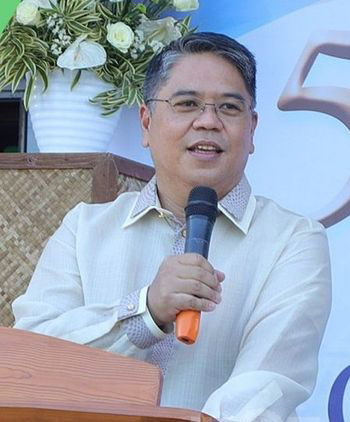
GREEN LANE FOR MSMEs. Northern Rep. Edwin Ongchuan proposal measure House Bill No. 601, or the proposed “Micro Business Enterprise Green Lane Act,” gained approval at the House of Representatives committee level. The measure seeks to establish dedicated green lanes in government offices to fast-track permits, licenses, and other regulatory requirements for micro enterprises, aiming to reduce red tape and improve the ease of doing business for small entrepreneurs nationwide.(FILE PHOTO)

TACLOBAN CITY — A measure seeking to fast-track government transactions for micro businesses and reduce regulatory bottlenecks has gained strong backing from lawmakers and government agencies during deliberations in the House of Representatives.

House Bill No. 601, authored by Northern Samar 2nd District Representative Edwin Ongchuan, was endorsed by members of the House Committee on Micro, Small and Medium Enterprise Development during discussions held on May 26.

The proposed legislation, known as the “Micro Business Enterprise Green Lane Act,” aims to establish dedicated “green lanes” in government offices to expedite the processing of permits, licenses, registrations, and compliance requirements for micro enterprises.

Under the measure, qualified micro businesses would be provided with a streamlined pathway for government transactions, reducing waiting times, minimizing documentary requirements, and facilitating coordination among agencies involved in business registration and regulation.

The concept of a “green lane” is similar to priority processing systems used in airports and government service centers, where applications are handled through a simplified and accelerated process.

Advocates of the bill say such a mechanism would help small entrepreneurs navigate government procedures more efficiently and lower the cost of doing business.

The proposal comes as many MSMEs continue to face challenges in securing permits and complying with various national and local government requirements. Business owners often have to deal with multiple agencies, lengthy processing periods, and repetitive documentary submissions before they can start or expand operations.

According to government data, MSMEs account for more than 99 percent of business establishments in the country and generate a significant share of employment. Despite their contribution to the economy, many small enterprises struggle with regulatory compliance due to limited financial and administrative resources.

Among those who expressed support to the measures was Representative Anna Marlesa Hofer-Hasim of the second district of Zamboanga Sibugay emphasized the importance of easing bureaucratic burdens on entrepreneurs.

She noted that the measure could help stimulate entrepreneurship, create jobs, and strengthen local economies, particularly in rural communities where small businesses serve as important sources of livelihood.

For his part, Ongchuan said the bill is intended to remove unnecessary red tape that often discourages entrepreneurship and limits business growth.

He said that by simplifying government transactions, entrepreneurs would be able to devote more time and resources to expanding their operations, creating employment opportunities, and contributing to local economic development.

If enacted into law, House Bill No. 601 is expected to complement the government’s broader ease-of-doing-business initiatives by providing a more efficient regulatory environment specifically tailored to the needs of micro enterprises.

Supporters of the measure believe the proposed green lane system could improve business productivity, encourage the formalization of small enterprises, and generate greater economic opportunities in communities across the country.

(JOEY A. GABIETA)

PRO-8 shifts to solar power, eyes up to P150,000 monthly savings

0
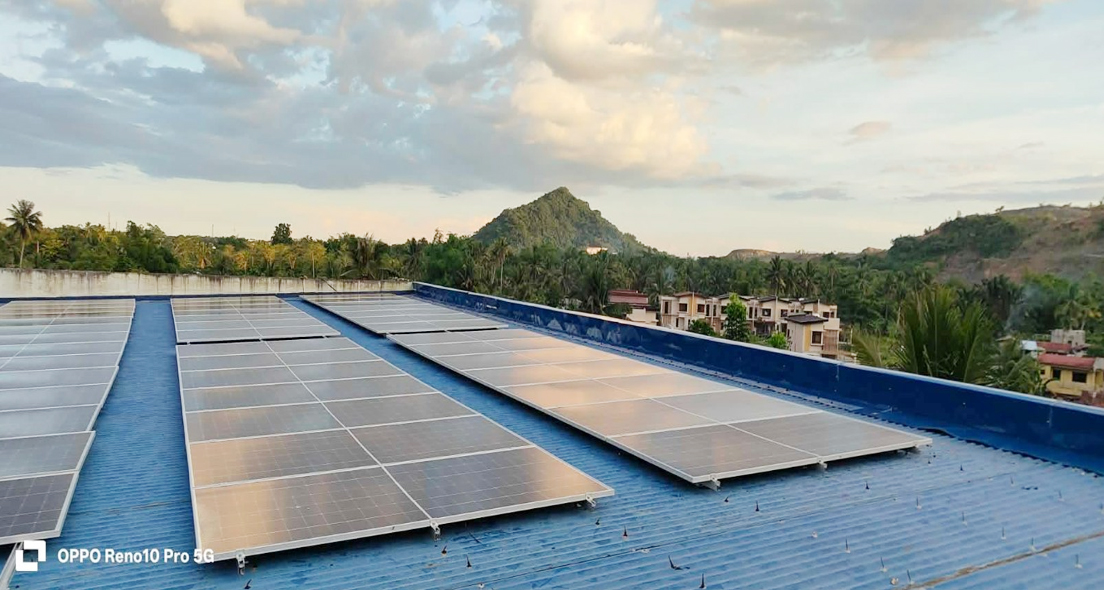
SOLAR ENERGY. Police Brigadier General Jason Capoy, regional director of PRO-8, leads the inauguration of the first phase of the Solar Power Energization Project at Camp Ruperto Kangleon in Palo, Leyte. The newly installed 48-kilowatt solar photovoltaic system is expected to reduce electricity costs and enhance the police force’s operational readiness during emergencies and power outages. (PRO-8)

CAMP RUPERTO KANGLEON, PALO, Leyte– The Police Regional Office 8 (PRO-8) has taken a major step toward energy independence and disaster resilience with the launch of the first phase of its Solar Power Energization Project at Camp Ruperto Kangleon on Tuesday, June 2, a move expected to significantly reduce electricity costs and ensure uninterrupted operations during emergencies.

The project comes amid the government’s continuing push for renewable energy adoption across public institutions as a means of lowering operational expenses and reducing dependence on conventional power sources.

PRO-8 officially inaugurated a 48-kilowatt (kW) solar photovoltaic (PV) system installed at its regional headquarters.

The P2.4-million facility serves as the initial phase of a three-stage renewable energy program aimed at supplying a substantial portion of the camp’s power requirements.
Police Brigadier General Jason Capoy, regional director of PRO-8, said the initiative demonstrates the police organization’s commitment to sustainability and efficient resource management.

Capoy expressed hope that provincial police offices, city and municipal police stations, and other police units across Eastern Visayas would adopt similar renewable energy projects to help cut electricity expenses and promote environmental stewardship.

Once all three phases of the solar power project are completed, PRO-8 estimates savings of between P120,000 and P150,000 on its monthly electricity bill. The entire project is expected to cost between P8 million and P9 million.

Beyond financial savings, officials said the solar power system will strengthen the operational readiness of the police force, particularly during natural disasters and power interruptions that frequently affect the region.

Atty. Risty Sibay, regional director of the National Police Commission (Napolcom) in Eastern Visayas, lauded the initiative, noting that renewable energy systems can provide critical backup power during emergencies when government services are most needed.
He said energy-resilient facilities are essential in ensuring that law enforcement and public safety operations continue even during prolonged power outages caused by typhoons and other calamities.

Eastern Visayas is among the regions most vulnerable to severe weather disturbances, making reliable and alternative power sources increasingly important for government agencies tasked with emergency response and public safety.

The Solar Power Energization Project forms part of PRO-8’s broader efforts to improve operational efficiency, reduce energy costs, and contribute to environmental sustainability while enhancing the region’s disaster preparedness capabilities.

(LIZBETH ANN A. ABELLA)

Exhausted nation

0

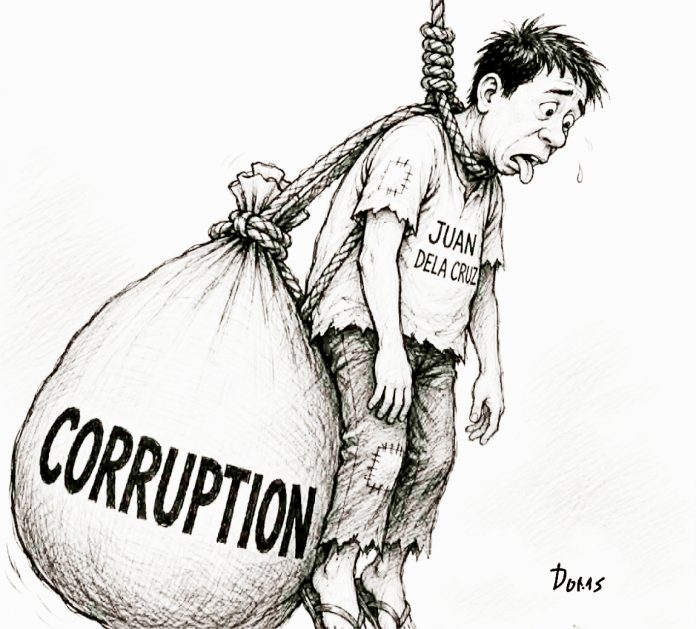
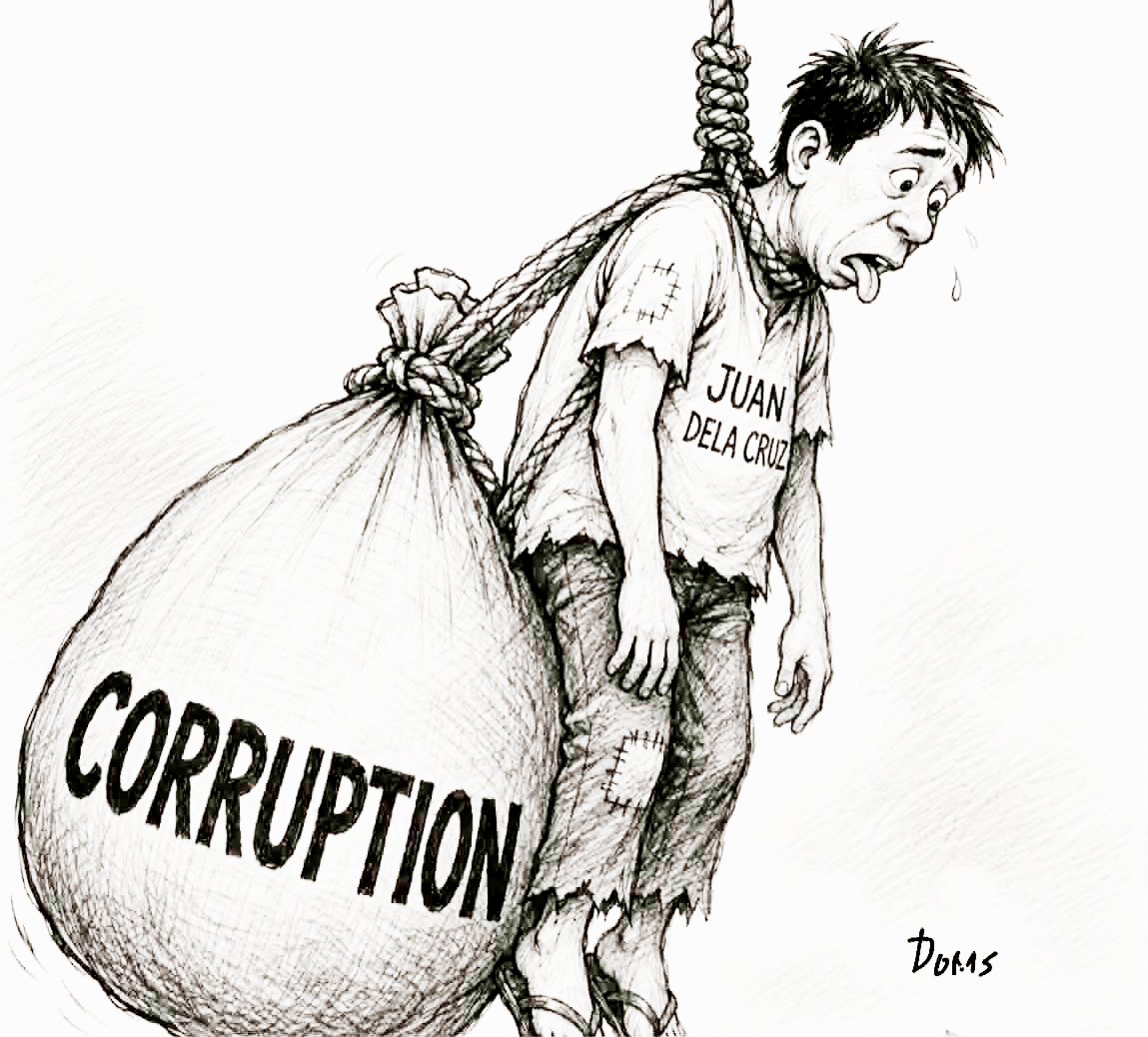
Filipinos today are gripped by a deep sense of hopelessness over the state of local and national affairs. Corruption appears so widespread that public office is increasingly viewed not as a platform for service but as a pathway to personal enrichment. This situation continues to rob the nation of progress, dignity, and opportunity.

The despair stems not merely from the existence of corrupt officials but from the apparent collapse of public trust across many sectors of government. Citizens have witnessed elected leaders, appointed officials, and influential bureaucrats repeatedly implicated in scandals involving public funds, questionable contracts, and abuse of authority. What makes the problem even more discouraging is that corruption often survives changes in administrations. New faces replace old ones, but the system remains largely unchanged. Many who once criticized wrongdoing eventually become participants in the very practices they previously denounced.

The pattern has become painfully familiar. Journalists who once exposed corruption sometimes enter politics only to become indistinguishable from the officials they once scrutinized. Young and idealistic leaders begin their careers speaking of reform, accountability, and public service, yet many eventually conform to the habits of the institutions they join. Even individuals who publicly project strong religious convictions have not been immune from accusations of dishonesty and misuse of public resources. These realities have convinced many Filipinos that corruption is no longer simply a problem of individuals but a deeply rooted culture.

The consequences extend far beyond stolen money. It is one of the principal reasons why the country struggles to keep pace with neighbors that have achieved stronger economic growth and more efficient public services. The situation becomes even more alarming when those who hold power use government machinery to obstruct investigations, silence critics, intimidate whistleblowers, or shield allies from accountability. In such circumstances, corruption ceases to be an isolated crime and begins to resemble a governing principle.
The nation cannot surrender to despair, but neither can it ignore reality. Genuine reform requires fearless law enforcement, independent institutions, transparent governance, vigilant journalism, and citizens who refuse to normalize dishonesty in public life.

Accountability must apply equally to allies and opponents, to the powerful and the ordinary alike. Many Filipinos continue to place their hope in moral renewal and divine guidance, yet faith must be accompanied by collective action and courage. The fight against corruption will remain difficult, but the alternative is a future in which poverty, injustice, and public frustration become permanent features of national life.

How I view technology

0

I once watched somebody use artificial intelligence to summarize an entire research article in seconds. Just a few years ago, that same task would have taken hours of reading, highlighting, and note-taking. Watching it, I could not help but feel that humanity has quietly crossed a threshold, and there is no turning back. The future of technology excites many, but it also demands caution, wisdom, and a clearer understanding of what it means to remain human in an age increasingly shaped by machines.

When I look at current trends, I see a world moving toward greater automation, greater connectivity, and greater dependence on intelligent systems. Artificial intelligence is no longer a laboratory curiosity. It is already writing reports, diagnosing illnesses, translating languages, driving vehicles, generating images, and assisting in scientific discovery. The devices in our pockets now possess computing power that would have astonished governments and universities a few decades ago. If present trends continue, technology will not merely be a tool sitting on our desks; it will become an invisible companion woven into nearly every decision we make.

I suspect that one of the biggest changes people will face is the transformation of work itself. Many routine tasks are likely to be handled by software, robots, and automated systems. Factories may require fewer workers. Offices may need fewer clerks. Even professions once considered immune to automation will feel its influence. Yet history offers an important lesson. New technologies often eliminate certain jobs while creating entirely new ones. The challenge is not that work will disappear altogether, but that workers must constantly learn, adapt, and reinvent themselves. In the future, a diploma may matter less than the ability to keep learning.

The effects on daily life will be impossible to miss. Homes are becoming smarter. Medical devices can monitor health in real time. Transportation systems are becoming more efficient. Education is increasingly available through digital platforms. For people living in remote communities, these developments could open doors that geography once kept shut. A farmer checking weather forecasts on a smartphone, a student attending an online class, or a patient consulting a doctor through telemedicine are no longer scenes from the future. They are realities unfolding before our eyes. Technology, at its best, shortens distances and expands opportunities.

But every gift arrives carrying a shadow. The more connected we become, the more vulnerable we become as well. Personal information has become a valuable commodity. Cybercrime grows more sophisticated each year. False information spreads at lightning speed. Deepfake videos can imitate faces and voices with unsettling accuracy. Sometimes I worry that society is developing powerful tools faster than it is developing the wisdom to use them. A chainsaw can build a house or destroy one; technology obeys the character of the hand that holds it.

Another concern that weighs heavily on my mind is the gradual weakening of certain human skills. Why memorize when a search engine remembers everything? Why calculate when software does it instantly? Why converse with neighbors when entertainment and companionship are available on a screen? Convenience is a wonderful servant but a dangerous master. I fear that people may someday possess more information than ever before while lacking the patience, discipline, and reflection needed to understand it. A society overflowing with data is not automatically a society rich in wisdom.

Yet I am not among those who dogmatically believe technology is leading humanity toward doom. Throughout history, people have adapted to printing presses, steam engines, electricity, telephones, computers, and the internet. Human beings possess a remarkable ability to adjust when circumstances change. Future generations will likely develop new habits, new skills, and new forms of literacy suited to their age. The most successful individuals may not be the most technologically gifted, but those who combine technical competence with creativity, ethical judgment, emotional intelligence, and genuine concern for others. Machines may process information faster than humans, but compassion, conscience, and moral responsibility remain distinctly human strengths.

As I imagine the decades ahead, I do not see technology as a monster to fear or a savior to worship. I see it as a powerful river that continues to gather speed. No one can stop its flow, but people can choose how they travel upon it. The future belongs neither to those who reject technology nor to those who surrender completely to it. It belongs to those who embrace its benefits while keeping a firm grip on the values, relationships, and common sense that make life worth living in the first place.

Exploration of effective time management techniques in business

0

Time is a precious commodity. Effective time management is not just about doing more; it’s about doing the right things and doing them efficiently. For businesses to thrive, employees at all levels must master time management. This article explores several proven techniques that can significantly enhance productivity and efficiency in the workplace.

Prioritization: The Cornerstone of Time Management

At its core, time management is about making choices. The Eisenhower Matrix, also known as the Urgent-Important Matrix, is a powerful tool for prioritizing tasks. The system categorizes tasks by urgency and importance, facilitating a clearer understanding of what requires immediate attention.

Urgent and Important: These tasks require immediate attention and should be tackled first. Examples include crises, deadlines, and pressing problems.

• Important but Not Urgent: These are long-term goals and strategic planning activities. They should be scheduled and given adequate time.
• Urgent but Not Important: These tasks often involve interruptions and distractions. They should be delegated or minimized.
• Neither Urgent nor Important: Tasks lacking both urgency and importance represent time inefficiencies and should be expunged.

By consistently using the Eisenhower Matrix, employees can avoid getting bogged down in trivial tasks and focus on activities that drive business growth.

Time Blocking: Structuring Your Day for Success

Time blocking involves scheduling specific time blocks for particular tasks. This technique helps create structure and focus, preventing time from slipping away on unproductive activities. To implement time blocking effectively:

1. Identify Key Tasks: Determine the most important tasks for the day or week.
2. Allocate Time Blocks: Assign specific time slots to each task, considering the time required and your peak productivity periods.
3. Minimize Distractions: During each time block, focus solely on the assigned task and avoid interruptions.
4. Review and Adjust: Regularly review your time blocks and make adjustments as needed to optimize your schedule.

Time blocking can be particularly useful for project management, allowing teams to allocate dedicated time for different project phases and milestones.

The Pomodoro Technique: Boosting Focus and Productivity

The Pomodoro Technique is a time management method that breaks work into focused intervals, separated by short breaks. Typically, a Pomodoro consists of 25 minutes of focused work followed by a 5-minute break. After four Pomodoros, a longer break of 20-30 minutes is taken.

This technique helps maintain concentration and prevents burnout. The short breaks provide opportunities to recharge and refocus, which leads to increased productivity. The Pomodoro Technique can be readily incorporated into existing frameworks and is particularly effective for tasks that require sustained concentration.

Delegation: Leveraging Team Strengths

Effective delegation is a critical time management skill for managers and team leaders. By delegating tasks to capable team members, managers can free up their time for higher-level responsibilities. Delegation not only improves efficiency but also empowers employees and fosters professional growth.

When delegating tasks, it’s important to:

• Choose the Right Person: Select someone with the skills and experience to handle the task effectively.
• Provide Clear Instructions: Clearly communicate the objectives, expectations, and deadlines.
• Offer Support: Provide guidance and resources as needed, but avoid micromanaging.
• Give Feedback: Provide constructive feedback to help the employee improve their performance.

Technology and Tools: Enhancing Time Management

Numerous technology tools can aid in time management. Project management software like Asana and Trello helps teams organize tasks, track progress, and collaborate effectively. Calendar apps like Google Calendar and Outlook Calendar allow individuals to schedule appointments, set reminders, and manage their time efficiently.

Additionally, note-taking apps like Evernote and OneNote can help capture ideas, organize information, and in prioritizing important details. By leveraging these tools, businesses can streamline their operations and improve overall productivity.

Combating Procrastination: Overcoming the Time Management Enemy

Many individuals struggle with procrastination, which interferes with their ability to manage time effectively. To combat procrastination, it’s important to understand its underlying causes and develop strategies for overcoming it. Some effective strategies include:

• Breaking Tasks into Smaller Steps: Large, daunting tasks can be overwhelming. Breaking them into smaller, more manageable steps can make them less intimidating.
• Setting Realistic Goals: Setting achievable goals can boost motivation and prevent feelings of being overwhelmed.
• Eliminating Distractions: Creating a distraction-free environment can help maintain focus and prevent procrastination.
• Rewarding Progress: Rewarding yourself for completing tasks can provide positive reinforcement and encourage continued productivity.

Effective time management is essential for success in today’s competitive business environment. By implementing techniques such as prioritization, time blocking, the Pomodoro Technique, and delegation, businesses can significantly enhance productivity and efficiency. Embracing technology and developing strategies to combat procrastination are also crucial for maximizing time-management effectiveness. Ultimately, mastering time management is an investment that pays dividends in terms of increased productivity, improved employee morale, and enhanced business performance.
————–
If you have any questions or would like to share your thoughts on the column, feel free to send an email to jca.bblueprint@gmail.com. Looking forward to connecting with you!

The Solemnity of the Body and Blood of Christ

0

THE Solemnity of the Body and Blood of Christ, or Corpus Christi, should spur us to sharpen our understanding and appreciation of the sacrament of the Holy Eucharist where Christ himself, both God and man, gives himself completely to us—body, soul, his humanity and divinity—so we can be one with him. This is what is meant to be a Eucharistic life and for us to be Eucharistic souls.

Through the liturgy, the real Christ comes to us, remains here on earth and makes himself intimately available to us. With the sacrament of the Holy Eucharist, Christ and us are not held hostage by the limitations of space and time. We manage to be together—in fact, in so direct and personal a way as to be properly termed as communion, a union of life and love.
With this sacrament, time and eternity merge, and so do heaven and earth. United to it, even our smallest and most insignificant detail in our life, including our sufferings and things we don’t like, acquire eternal and redemptive value.

This is the supreme treasure of a truth that we all need to be more aware of. Hopefully, we can then start to earnestly conform our whole life to this reality—our thoughts and desires, our feelings, outlook and attitudes, etc.

In fact, this is the ideal that we should pursue always. This is because the Eucharist, the real Christ in the sacrament, is the ultimate and constant food for our life. We don’t depend only on food, water and air. We depend wholly on Christ.

And neither do we depend only on our intellectual progress and technological and scientific advancement. These things can be very impressive. But they don’t completely satisfy our soul. We long for more. It’s Christ that does that.

Our usual problem is that we don’t go all the way in our Eucharistic faith. Our devotion to it often appears simply posed, scripted and staged, and not really issuing vitally from our heart and life. Thus, it is also not abiding, but rather intermittent. It’s on and off depending on conditions.

It should be no surprise if we are often dominated by our weaknesses, not to mention, the continuing temptations around us.

Our catechesis on this truth of our faith should never stop. Parents in their respective families should talk ceaselessly about this. Priests, of course, should preach about it in homilies and in other occasions.

Everyone should do something to help one another live an authentic Eucharistic life. We have to foster going to Mass often, making visits to the Blessed Sacrament, spending time adoring our Lord in the Blessed Sacrament chapels, making frequent spiritual communions, etc.

We have to understand that our life should not be any other than Eucharistic! That is how we can be truly human, because the sacrament of the Holy Eucharist is where we have our most precious treasure, our everything, our light, our purification, our salvation.

That’s where we have Christ not only in real presence, as in the Blessed Sacrament, nor as spiritual food, as in the Holy Communion, but primarily as our savior who continues to offer his life on the cross for us, as in the Holy Mass.

For this, we need to be theological in our thinking to capture this reality and live in accordance to it not only from time to time, but rather all the time and everywhere, whatever our situation is.

Recent Posts

DALMACIO C. GRAFIL
PUBLISHER

ALMA GRAFIL
EDITOR-IN-CHIEF

ROMEO CEBREROS
OFFICE IN-CHARGE

OFFICE
BRGY. SONGCO, BORONGAN CITY

CONTACT NUMBERS
(055) 261 – 3319 | 0955 251 1533 | 0917 771 0320 | 0915 897 7439 | 0921 511 0010

DALMACIO C. GRAFIL
PUBLISHER

RICKY J. BAUTISTA
EDITOR

ALMA GRAFIL
BUS. MANAGER

OFFICE
RIZAL AVENUE, CATBALOGAN
(INFRONT OF FIRE DEPARTMENT, NEAR CITY HALL)

CONTACT NUMBERS
0917 771 0320 | 0915 897 7439 | 0921 511 0010

EMAIL
lsdaily2@yahoo.com

WEBSITE
www.issuu.com/samarweeklyexpress