
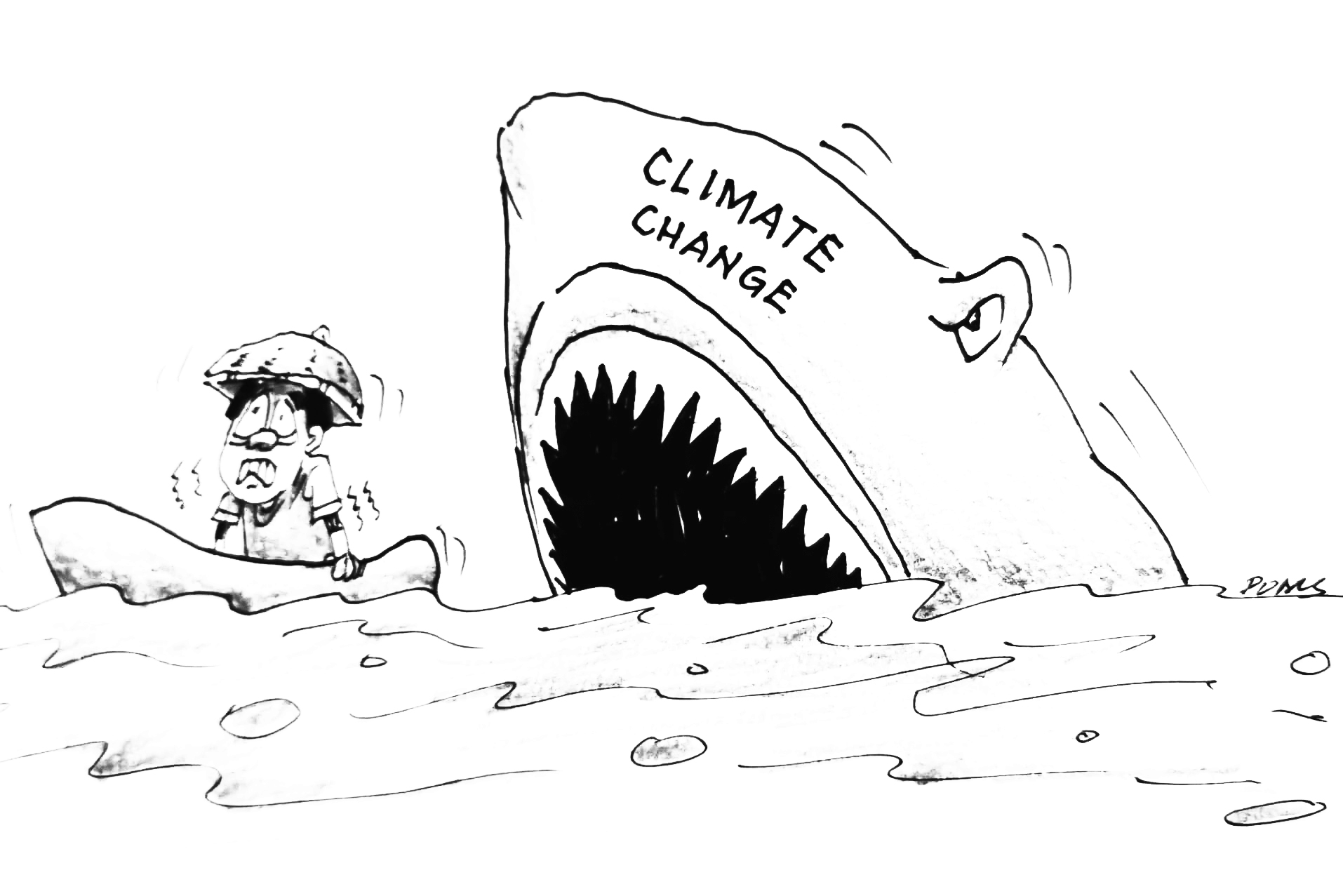
Based on the latest assessment from the Department of Science and Technology (DoST), the Philippines, of all the countries in the world, is most at risk from climate change hazards, and we should take it seriously.
During a forum organized by Impact Hub Manila and Advantage Austria, Dr. Sancho Mabborang, DoST undersecretary for regional operations bared that climate change impacts the Philippines with massive repercussions, as clearly seen with stronger typhoons lashing the country and causing destructive effects to lives and property.
This calls for collective and immediate actions, not just from Filipinos, but from other countries as well, knowing that climate change is a global problem that requires international cooperation and support. Left alone, our country cannot handle the problem effectively. There should be worldwide commitment and resolve in addressing such a massive menace.
Fortunately, antidotes have been identified as to how the effects of climate change may be mitigated. Rainforests, for one, play a key role in curbing the said negative effects since they produce oxygen, remove carbon dioxide from the atmosphere, absorb rainwater that causes floods and landslides, and help recycle and clean water, among others.
Since the global food system is also heavily affected by climate change, more ways should be explored so that aquaculture and agriculture will not be over-exploited and depleted. Greener technologies must be pursued, and governments should partner with pro-environment groups for a sustainable drive against climate change, both locally and globally.


Komiks addiction
If nowadays, children and young people are addicted to modern gadgetry such as cellphones, tablets, and laptops, I in my boyhood and early teens was also addicted. But it was to a different thing–they called it‘komiks’.
Not just me, of course; I simply represented the generation of komiks addicts, then. In fact, children and adults alike were then glued to these illustrated magazines—browsing and reading the stories that they liked the most. Sometimes, they were so engrossed in reading that they no longer knew what was going on around them.
Some parents whose children could no longer help with household chores kept scolding their kids, critical of this komiks thing. “I will let you eat this stuff,” they would say. “What good will it give you?” our mother, I remember, once asked me.
But it did me good, in fairness. Among others, these komiks magazines improved my Tagalog, as they were written in it. They enhanced my reading comprehension, reading speed, eye movements, vocabulary, grammar, etc., including my Tagalog speaking ability. This language used to be my handicap. I preferred English to it. But with my exposure to komiks magazines, my Tagalog improved.
Not only that but my love for literature was also developed. Why, Komiks magazines contain stories, primarily fictional, that have been illustrated. In literature, these stories belong to the narratives, one of the major classifications of literature, the other ones being poetry, drama, and essay. As stories, they develop the elements of fiction such as characters, setting, conflict, point of view, theme, and plot.
Aside from boosting my passion for literature, Komiks magazines also reinforced my inclination toward visual arts, particularly drawing and painting. Before I entered Grade 1, I was already doing caricatures of various objects, people, places, and animals. When komiks came my way, all the more that my instinctive urge to sketch things intensified.
How I appreciated the beauty and elegance of komiks illustrations. I still remember the names of my favorite illustrators: Mar Santana, Hal Santiago, Nar Castro, Ben Maniklang, Rod Santiago, Karl Comendador, Vic Celerio, and many more. In fact, I have memorized their styles so that, at a glance, I could already identify who the illustrator is even without seeing his name. I learned a lot from their sketching techniques.
Unfortunately, the komiks magazines that used to ornament sari-sari stores, to abound in homes and offices, to entertain people from all walks of life had died down, replaced with technological gadgets that had addicted people next. Today, those magazines no longer see print or distributed throughout the archipelago. They had sadly become extinct, gone from bookshelves, homes, and offices.