ORMOC CITY– Two grams of suspected shabu with an estimated value of P13,600 was recovered by the personnel of the drugs enforcement team of the Biliran, Biliran police office in a buy-bust operation on Friday (August 25)in Barangay San Roque in Biliran town.
Town police chief Capt. Hilario Rambano III identified the suspect as Christian Corpin, 41 who resides in Brgy. San Isidro.
Recovered from the possession of the suspect was one sachet containing a white crystalline substance suspected to be shabu and procured by an operative in the amount of P1,000.
Charges for violations of sections 5 or for selling illegal drugs, and 11 for possession of illegal drugs of Article II of RA 9165, or the Comprehensive Law against Illegal Drugs of 2002, were filed by the arresting unit at the Provincial Prosecutors Office against the suspect who is temporarily detained at the locked-up cell of Biliran municipal police station. (ROBERT DEJON)
LEAD BY EXAMPLE. Vice President Sara Duterte who is also the Education Secretary removes her photo inside a school in Davao City. Duterte has issued an order for all schools in the country to remove all ‘destructions’ inside school rooms to ensure that students can focus on their lessons.
(INDAY SARA DUTERTE FACEBOOK)
No punishment for non-compliant though
LEAD BY EXAMPLE. Vice President Sara Duterte who is also the Education Secretary removes her photo inside a school in Davao City. Duterte has issued an order for all schools in the country to remove all ‘destructions’ inside school rooms to ensure that students can focus on their lessons. (INDAY SARA DUTERTE FACEBOOK)
TACLOBAN CITY– All schools in the region will comply with the directive of Education Secretary and Vice President Sara Duterte to remove decorations inside the classrooms.
But those who will not follow on this directive of Duterte will not be punished, thus said Eden Dadap, project development officer IV of the Department of Education (DepEd) in Eastern Visayas.
Earlier, Duterte has issued a directive to all school officials to remove all decorations saying they were just ‘destructions’ to students and this would ensure ‘cleanliness’ in inside the classrooms.
Dadap said that a team from their regional office will conduct their monitoring to check if all schools across the region will follow on the directive of Duterte.
“All destructions are to be removed (even the photos) of the President and the Vice President. Only the (photos) of heroes and other learning materials will be allowed,” she said on Friday.
“This is mandatory because this is a marching order from the Secretary,” she added.
But those who will not comply will not be punished as the directive does not impose any penalty, Dadap stressed.
“Every time we institute reforms, there is always resistance especially if they are not informed. But generally, it received approval from the public,” she said.
“(But) it is not a penal law. There is no violation but as much as possible, we work hard and we encourage all our divisions to monitor on this,” Dadap said.
Dadap also clarified that the directive of Duterte does not cover private schools saying they have their own rules.
“Private schools have even their autonomy as to when they would like to start their classes. But they know the DepEd mandate and if they will follow, that is their prerogative,” she said.
Meantime, Dadap said that during the conduct of the national school maintenance or Brigada Eskwela in the region, they were so far able to generate over P53 million out of the materials or kinds donated such as paints and cleaning materials.
She said that the amount only involved the more than 1,000 public schools that reported to their regional office. The region has 4,189 elementary and secondary schools.
Dadap said that if all schools would submit their report, they expect over P200 million of donations during the conduct of Brigada Eskwela which was held from August 14 to 19.
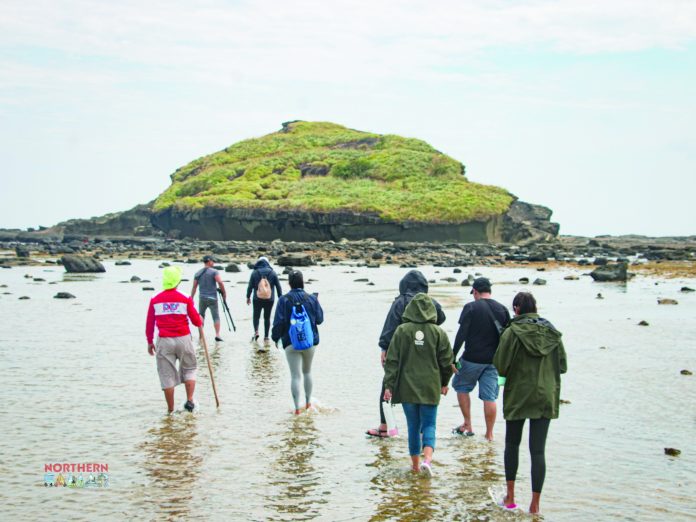
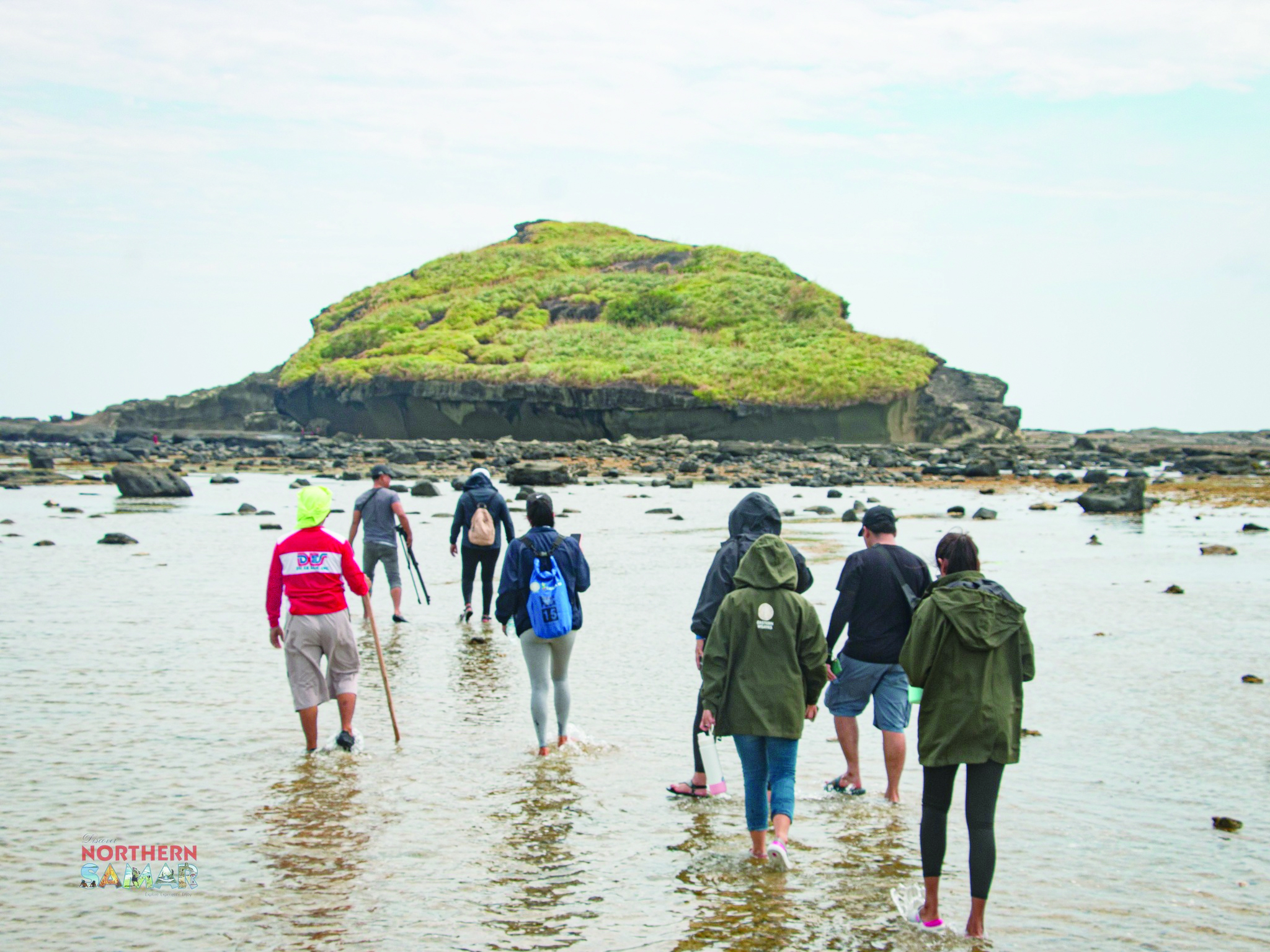
INTERNATIONAL CRUISE. An international cruise ship, Coral Adventurer, will visit Biri, an island town Northern Samar famous for its rock formations, on November with over 200 guests on board which is seen to further boost its tourism industry. (Photo Courtesy)
TACLOBAN CITY – Personnel from the provincial tourism office of Northern Samar and tour operators recently conducted a site inspection in Biri town where an international cruise ship is set to visit in November.
INTERNATIONAL CRUISE. An international cruise ship, Coral Adventurer, will visit Biri, an island town Northern Samar famous for its rock formations, on November with over 200 guests on board which is seen to further boost its tourism industry. (Photo Courtesy)
Coral Adventurer, an Australian cruise ship that carries around 120 foreign guests, is set to dock Biri, an island town known for its centuries-old rock formations.
The town, which faces San Bernardino Strait and Pacific Ocean, has seven rock formations, namely; Magasang, Bel-at, Magsapad, Caranas, Macadlaw, Puhunan and Pinanahawan, but only six of these are easily accessible.
The visit of the Coral Adventurer will run from November 1 until 9, so far the longest stay of an expedition cruise ship that visited the region since 2013.
Biri is one of the additional sites for international cruises in Eastern Visayas, and the second town in Northern Samar that is included in the port call of expedition cruises.
The first town that was visited by the cruise ship was Capul Island in 2018.
During the site inspection in Biri, the team assessed the docking facilities available and the various sites to be visited by the cruise visitors.
“By evaluating the logistical requirements and considering other essential factors, they were able to finalize the activities and tour itinerary, ensuring a well-planned and enjoyable experience for the visitors,” Maria Josette Doctor, Northern Samar provincial tourism officer said.
“By assessing the docking facilities and selecting the sites to be visited, the team ensured that the necessary arrangements are in place to accommodate the cruise ship and provide a seamless and memorable shore excursion,” she added.
Doctor added that the upcoming cruise call in Biri Island not only marks a milestone for the destination but also presents an opportunity to showcase the natural beauty and attractions of the island to international tourists.
“It is an exciting development for the local tourism industry, as it highlights Biri’s potential as a sought-after cruise destination in Northern Samar,” she said, adding their appreciation to Governor Edwin Ongchuan and the provincial government for giving their full support to the cruise ship visit.
Coral Adventurer, the last expedition cruise ship to visit Eastern Visayas this year, will be staying in the region for nine days. After Biri, the foreign visitors will also be visiting Capul Island, also in Northern Samar; Tacloban City, Babatngon town in Leyte and Maripipi and Sambawan Island, Biliran; Kalanggaman Island Cuatro Islas, both in Leyte; then Padre Burgos, Southern Leyte. (ROEL T. AMAZONA)
Globe announces it has been included in the FTSE4Good Index Series, reflecting the organization’s continued dedication to implementing Environmental, Social, and Governance (ESG) practices across its operations.
Created by global index and data provider FTSE Russell, the FTSE4Good Index Series is designed to measure the performance of companies demonstrating strong Environmental, Social and Governance (ESG) practices. The FTSE4Good indexes are used by a wide variety of market participants to create and assess responsible investment funds and other products.
FTSE Russell evaluations are based on performance in areas such as Corporate Governance, Health and Safety, Anti-Corruption, and Climate Change. Businesses included in the FTSE4Good Index Series meet a variety of environmental, social and governance criteria.
“Globe’s inclusion in the FTSE4Good Index Series for the eighth consecutive year is more than a recognition, it’s a testament to our enduring commitment to sustainability. Aligning our business goals with ESG practices is not just good for the planet but also essential for our future growth. Globe is more determined than ever to continue on this journey, knowing that our actions today shape the world of tomorrow,” said Yoly Crisanto, Chief Sustainability and Corporate Communications Officer of the Globe Group.
Globe’s dedication to ESG principles extends beyond simple compliance with laws and regulations. This year, the company has taken a stronger position on human rights, diversity, equity, inclusion, and sustainable supply chain by releasing relevant policies.
Globe’s Human Rights Policy Commitment reinforces the Code of Conduct to ensure that employees and its stakeholders are treated with dignity and respect. In support of the United Nations General Assembly’s Resolution that access to a clean, healthy, and sustainable environment is a universal human right, this policy commitment reasserts its aim to reach net zero GHG emissions by 2050, take the lead in circularity, among others. The policy also encompasses freedom of expression, digital inclusion, privacy, and children’s rights.
On the other hand, its Diversity, Equity, and Inclusion Policy Commitment ensures an embracing workplace that welcomes diversity in various aspects including ethnicity, age, gender, gender identity, gender expression, sexual orientation, disability, religion and more. The company continues to commit to providing equal opportunities and fostering a collaborative environment without fear of exclusion. This policy commitment extends to customers, focusing on respect, dignity, and making products and services accessible to a diverse customer base.
Meanwhile, the updated Supplier Code of Ethics underscores the importance of sustainability across the value chain, expecting suppliers to adhere to global standards such as the UN Global Compact and Universal Declaration of Human Rights. Additionally, the Sustainable Supply Chain Policy Commitment focuses on performing due diligence on its suppliers by evaluating their sustainability practices before contract awarding.
These policies represent Globe’s proactive steps in building a sustainable future, reflecting a deep understanding of the interconnectedness of business, society, and the environment. (PR)
ORMOC CITY– A barangay secretary yielded an estimated 2 grams of suspected shabu with an estimated street value of P13,000 during a buy-bust operation led by personnel from the Philippine Drug Enforcement Agency(PDEA) together with City Drug Enforcement Team at about 12:59 pm Sunday(August 20) in Magsaysay Extension, Barangay Rawis, Calbayog City.
PDEA 8 Regional Director Gil Pabilona identified the suspect as Mark Ian Timan, 37, single, and a resident of Brgy. Palencia, Tarangnan, Samar.
He is listed as a high-valued individual on the drug watch list of both PDEA and the Philippine National Police (PNP).
Recovered from his possession was one sachet containing a white crystalline substance suspected to be shabu procured by an agent in the amount of P500.
During the conduct of a body search in front of village officials and a representative from the media, the searching agents recovered another one sachet containing the same white crystalline substance suspected to be shabu and one P500 bill.
Timan, who did not issue any statement on his arrest, was found to be in possession of alleged shabu weighting two grams with an estimated value amounting to P13,600.
Charges of violation of sections 5 (selling illegal drugs) and 11 (illegal possession of illegal drugs) of Article II of RA 9165, the Comprehensive Law against Illegal Drugs of 2002, were filed against the barangay secretary who is now detained at the Calbayog city police office. (ROBERT DEJON)
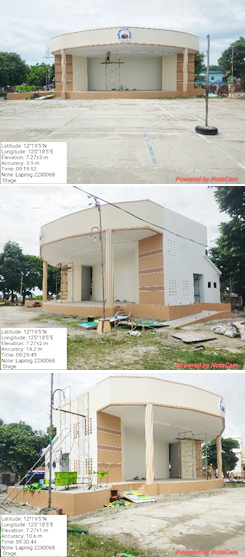
NSSDEO, Brgy. Burabud, Laoang, N. Samar– Lapinignons in Barangay Lapinig Del Norte can now celebrate significant events through the effort of the Department of Public Works and Highways–Northern Samar Second District Engineering Office (DPWH-NSSDEO), headed by OIC-District Engineer Charlito S. Carlobos and OIC-Assistant District Engineer Atty. Arthur Eric L. Sabong, completion of the project, Construction of a Multi-Purpose Building (Sports Coliseum) in Barangay Lapinig Del Norte, Lapinig, Northern Samar.
The aforementioned project was funded under the General Appropriations Act (GAA) of 2022 with a contract amount of P 9,750,742.79 intended for the complete construction of the Sports Coliseum’s Stage including the removal of the existing stage, reinforced concrete works, and finishing works (Masonry, Fabricated material installations, Painting, Metal Structure Framing, and Roofing) which was undertaken by JUPA Construction.
In order to guarantee the construction method and adherence to the quality standards of the Department, the NSSDEO top management assigned technical personnel to supervise and monitor the project. Thus, Project Engineer Bryan M. Fortes, for the supervision to assure accuracy, proper resources, and quality of project from start to finish, assisted by Resident Engineer Ryan S. Vestra. Whereas, Materials Engineer Justino E. Serafin, Jr. laid his expertise to identify and recommend appropriate materials intended for the project.
This sports coliseum stage is now a venue to cater various to events of Brgy. Lapinig Del Norte. Furthermore, the project will be a means to attract the community’s attention and maximize the positive effect since it also has electrical system for convenient access to sound and lighting. (ZYRA JOY J. CHING, PIO STAFF)