
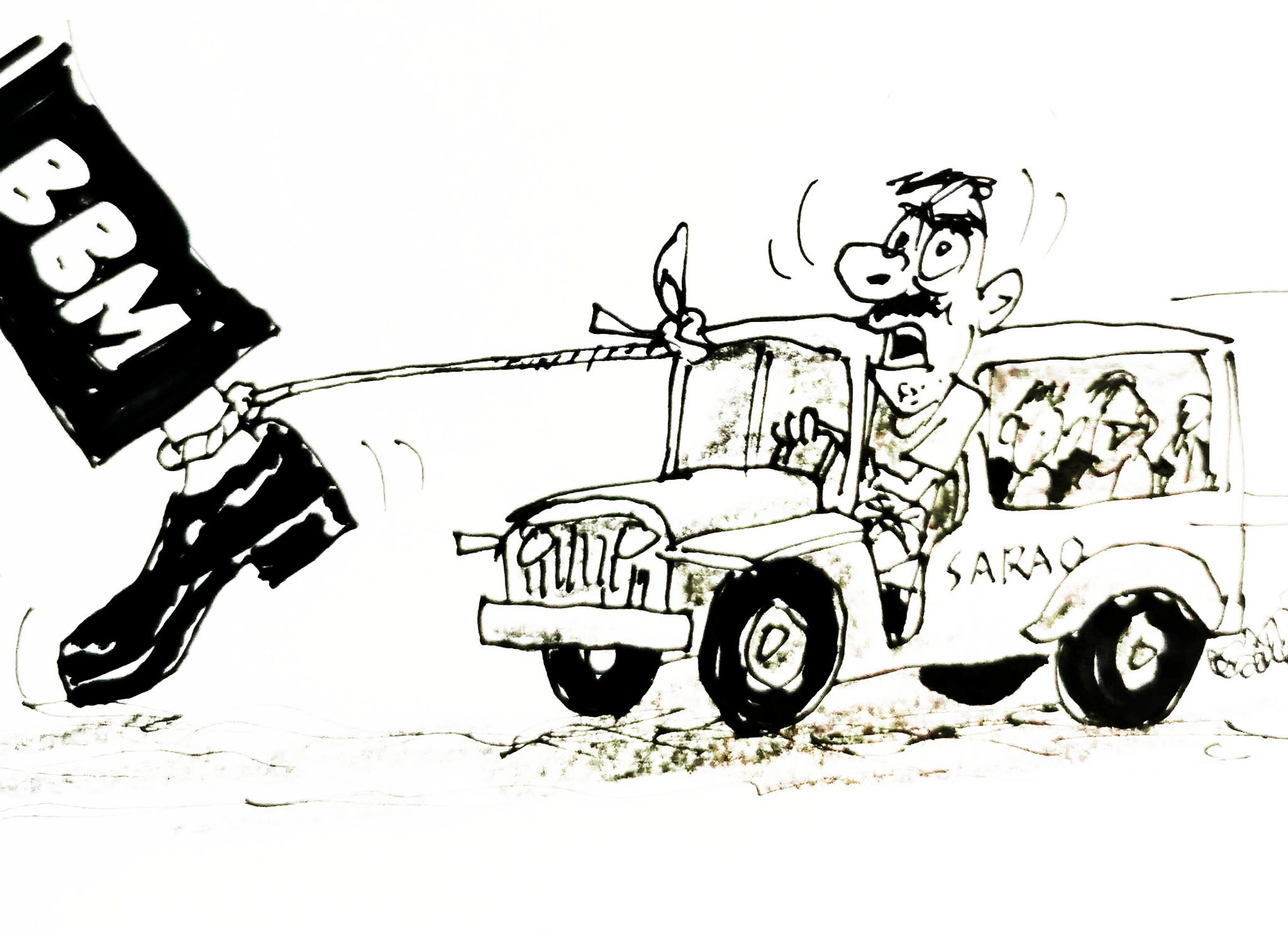
Jeepney operators and drivers particularly in Metro Manila are clamoring to the president that their vehicles be not phased out and replaced by modern ‘jeepneys’ but be allowed to continue, and be supported so they won’t lose their means of livelihood.
Members of this sector are banking on the President’s campaign promise that he will help them out with their kind of transport industry to augment their income and improve their lives through legal means. This time, though, their traditional, worn-out vehicles are at risk of being phased out for good, to give way to modern transport vehicles that, according to these people, they cannot afford to buy.
The president must be ‘torn between two lovers’ in this issue. Much as he would like to help the transport sector, he also is advocating for the modernization of public transport to make it environmentally friendly and safe for the commuters’ health. It can be noted that these old jeepneys have been contributing much to the air pollution of Metro Manila with their dark, sticky fumes that force into the people’s nostrils in the midst of traffic jams.
If the president will give in to the demands of the jeepney drivers and operators, that would mean our public utility vehicles would remain backward, ancient, and injurious to health and the environment, not to mention the ugliness that some of these vehicles are showing with their rotten and dilapidated makeup. If he pursues transport modernization, passenger vehicles would be decent-looking, protective of commuters with their air-conditioned and closed cabins, and health as well as environment-friendly. That’s advantageous to a greater number of citizens that the president ought to serve.
It’s a clash of wills—the transport players looking only into their own welfare, and the president running after the welfare of the majority of people and the nation in general. Our country also needs to progress and develop, not just remain in the past, making use of ancient and barriotic means.




Mental problem
Common knowledge can tell modern-day gadgets could augment one’s social status since they symbolize hi-tech lifeways; their absence causes one to be “outdated”. Users of gadgets excel in exploring digital information. This is because computerized gadgets facilitate searches for any information and the sharing of the same. The convenient strategy in searching for information helps users improve their search and methods of sharing information. Depending on “the level of ownership and usage”, gadgets can be utilized in a “more sophisticated and dynamic manner”.
Indeed, electronic software like tablets, iPads, and smartphones can perform amazing functions in various ways such as storing data, taking pictures or recording videos, sharing information, document writing, internet surfing, and many more. The various applications of these technological devices enable users to communicate, socialize, and do many other activities. But while these gadgets prove useful for personal ends, social interactions, and entertainment, they have disadvantages for younger users who have developed some kind of dependence upon them, as though they can’t live life without them. Not only that, but these youngsters spend much of their time each day on gadgets, wasting it thus instead of using time wisely and productively.
Many of our children and young people have become gadget addicts as evidenced by their dependence on, and inability to part from, these items. Their prolonged and frequent use of gadgets, especially for emotional support, are signs of gadget addiction. This inability to regulate and use the gadgets moderately causes a behavioral problem, resulting in a stunted and abnormal lifestyle. Such gadget addiction further makes a person compulsive, obsessed, and unable to manage daily activities and live a normal life. The worst part is that, when the functions of daily life are affected, that means there is an emotional disturbance and disorientation—this, in short, is a mental problem.
Aside from their inability to control, conceal, and limit gadget use, gadget addicts also show symptoms of depression, anxiety, and stress. Gadget users who attempt to regulate and reduce usage frequency eventually suffer from mental problems, and their failure to control the excessive use of gadgets causes them to experience the symptoms of anger, tiredness, restlessness, and extreme emotions, especially if they fail to surf the Internet. And the culprits causing this serious gadget addiction are the increasing number of social communication apps like WeChat, WhatsApp, Telegram, and soc-med applications such as Facebook, Twitter, and Instagram, as well as online and digital games.
The prevalent gadget use will for sure heighten addiction and dependency on the part of our kids, thus affecting their lifestyle and future. Although studies show that gadgets are extremely useful when utilized properly and productively, using them otherwise is harmful to our youths unless some antidotes and alternatives are introduced. Some such alternatives to gadgets have been recommended by experts, but not much is done to reintroduce indigenous toys as items that could divert their attention from addictive gadgetry, hence this article.