ORMOC CITY– Police authorities are still conducting their probe on the discovery of a dead body found in Silago, Southern Leyte.
The still unidentified man, estimated to be 40 to 50 years old with a height of 5’7, was found floating along the seawaters in Barangay Hingatungan, Silago town at about 6:20 am on Wednesday(Oct.11).
When it was found, the body of the man was already bloated and showed burned skin, the police said.
Initial investigation conducted by the local police disclosed that a resident of the village, Yully Tayum, 38, found the dead body floating at the sea in the barangay.
But the police said that while observing the dead body they noticed that it was covered with bruises and hematoma in the different parts of his body while his feet were wrapped with a white sack, tied with a nylon rope which is connected to a sinker.
The police said that the victim was wearing a white t-shirt and gray printed long sleeves with collar, black pants with black garrison belt, a white towel was inside its left pocket and was wearing a silver watch. (ROBERT DEJON)
The Israel-Hamas war has had a profound impact on global oil prices, affecting both supply and demand factors in the international oil market. The net effect depends on the specific dynamics of the conflict, market sentiment, and the overall geopolitical landscape. As a result, careful analysis and monitoring of oil prices in the context of the Israel-Hamas war is crucial for understanding its complex impact on the global oil market.
First, it has raised concerns regarding oil supply disruptions in the Middle East. The region is a vital oil-producing area, with major countries like Saudi Arabia, Iraq, Iran, and Kuwait being key players in global oil production. Any escalation of conflict in the region, particularly in Israel, can potentially disrupt oil production and transportation routes. Investors and traders react to such uncertainties by bidding up oil prices, as the perceived risk of supply shortages increases. The fear of supply disruptions due to the Israel-Hamas war puts upward pressure on oil prices in the global market.
This war also affects oil prices by influencing geopolitical tensions. The conflict amplifies regional instability and increases the risk of broader confrontations between other countries in the Middle East. Oil markets are highly sensitive to geopolitical events, as they can directly impact oil-producing countries or trigger speculative moves in the markets. Heightened geopolitical tensions raise concerns about potential supply chain disruptions or even military conflicts in oil-rich countries, leading to a speculative rise in oil prices. As oil prices are determined by market sentiment, the mere perception of increased risks can cause price volatility.
As conflicts escalate, economic activities may be impacted, leading to a decrease in oil demand. The destruction of infrastructure, disruptions in transportation systems, and the imposition of sanctions or embargoes can hinder economic growth, reducing the need for oil. Decreased oil demand can result in a downward pressure on prices. However, this effect may be somewhat mitigated by the geopolitical tensions caused by the war, which can push some countries to increase their strategic oil reserves, thus temporarily boosting demand and supporting oil prices.
It’s up to the oil regulatory bodies in every country if they cushion this impact or not because failure to do so will certainly result in a crisis, to the disadvantage of the business sector for the most part. In our country, this impact will surely be felt, in all sectors of society. Remember, oil price hikes likewise result in price increases of almost all commodities.
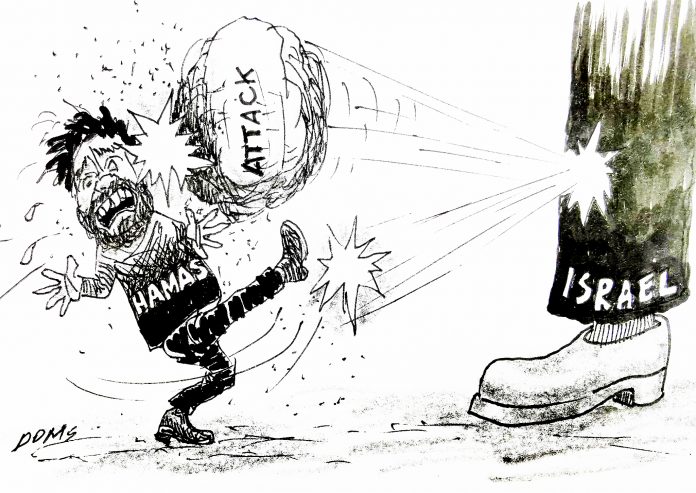
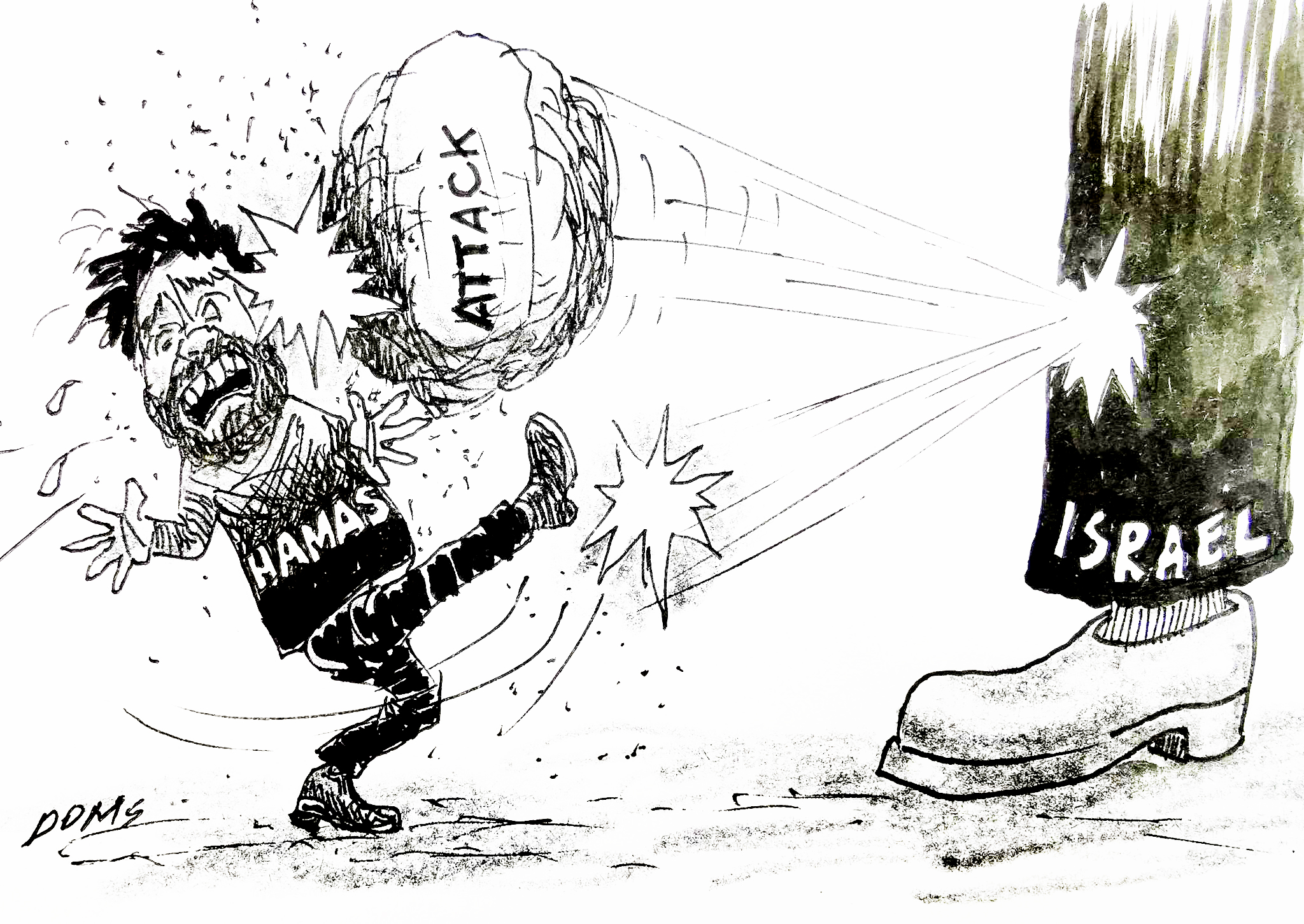
The pursuit of vengeance has often been seen as a means to address acts of barbaric savagery. We have yet to learn the unpredictable nature of seeking revenge in response to such acts. While vengeance may initially appear to serve as a just response, it often leads to a vicious cycle of violence with unintended consequences. We now see a classic example of that in the Middle East, between Israel and Hamas.
What constitutes barbaric savagery? Well, this represents acts that go beyond the boundaries of societal norms, characterized by extreme violence, cruelty, or inhumanity. Such acts elicit strong emotional responses, making it seemingly justifiable for victims or societies affected to seek revenge.
The allure of vengeance lies in its potential to restore justice or provide a sense of retribution to those who have suffered. It serves as an outlet for individuals or communities to express their anger and desire for compensation. However, as human emotions cloud rational judgment, embracing vengeance can often lead to unintended consequences that perpetuate the cycle of violence, rather than resolving it.
Engaging in acts of vengeance can initiate a cycle of retaliation, where violence begets more violence, ultimately spiraling out of control. History is replete with examples, such as blood feuds or historical conflicts, where seeking revenge against barbaric savagery results in long-lasting enmity, intergenerational violence, and even the destruction of entire societies. Revenge seldom leads to resolution; rather, it perpetuates an unpredictable cycle of violence.
The pursuit of vengeance against barbaric savagery often leads to the dehumanization of individuals or groups involved. Society risks descending into barbarism by responding to savagery with further savagery. The lines between the victims and perpetrators blur, leaving no distinction between right and wrong. Ultimately, this pursuit undermines the very values that form the foundation of a civilized society.
Instead of vengeance, a more productive alternative lies in the pursuit of justice. Justice, in its true form, seeks to address the underlying causes of barbaric savagery by addressing systemic issues and providing avenues for reconciliation. By prioritizing justice over revenge, societies can aim to break the cycle of violence, restore trust, and establish long-term peace.
In the face of barbaric savagery, the unpredictable nature of vengeance becomes apparent. While the instinctual desire for revenge is understandable, it is important to recognize the potential consequences that accompany it. Rather than perpetuating violence, seeking alternative paths toward justice is paramount. By addressing the root causes, embracing reconciliation, and promoting understanding, societies can hope to break free from the vicious cycle of violence and move towards a more peaceful and harmonious existence.
The Department of Agriculture (DA) has recently released the guidelines of its National Livestock Program’s (NLP) specific for the project grants submitted to avail of the Livestock Economic Enterprise Development (LEED) Program. The guidelines is intended “to level up the production of small-hold farmers.”
The LEED Program intends to strengthen the contribution of the livestock and poultry sub-sectors in increasing the income of small-hold farmers through the distribution of livestock and poultry modules as grant according to the DA-LEED). The same program will provide technical assistance to the small-hold farmers in elevating their production to an enterprise level by value adding and amplifying production.” Under the LEED Program, DA has committed the following:
1) Allotted P2 million to produce chicken meat and eggs by providing 500 heads of hens and 100 roosters, animal-housing, incubator with hatcher and starting feeds and biologics;
2) Provided P1.875 million to produce duck, meat and eggs. The package covers 500 heads of hens and 100 drakes, animal housing, incubator with hatcher and starting feeds and biologics;
3) Allocated P1.5 million for beef cattle, covering 20 heads of animal stocks, forage chopper and silage bags and biologics to produce meat or
4) Allotted P1.5 million package for carabao meat or fatteners. The package includes 20 heads of animal stocks, forage chopper and silage bags and biologics;
5) Provided P2.5 million package for goat or sheep, which will cover 25 does/ewes and two bucks/rams, animal housing, forage chopper and biologics;
6) Provides P1 million package for rabbit including 200 heads, animal housing or cages and feeds and biologics.
Program funds will come from the general appropriations of the DA-regional field offices (RFOs) in partnership with eligible and qualified farmers cooperatives and associations (FCAs) and local government units (LGUs). A memorandum of agreement (MOA) a 1-year effectivity will be signed by the FCAs and LGUs to delineate their respective roles and responsibilities. Signatories in the MOA shall see to it that their roles and duties and responsibilities are complied with, funds are properly, and project is completed as agreed.
MY COMMENT:
The DA-LEED Program under the umbrella National Livestock Program (NLP) is seen to have dual effects: provide livelihood/family revenue and a response to food security. Very critical is the strict adherence to the tenets of the MOA signed by the FCAs and the LGUs – taking the lesson of an earlier failed DA program on animal dispersal!
ooo000ooo NEXT TOPIC : “WB approves $176 Million to enhance fisheries output” SHARE S & T THOUGHTS through E-Mail: drpacjr@yahoo.com.
Taxpayers’ money is wasted in awareness campaigns of the government programs and projects. Where before only politicians in the national, provincial and city levels are brandishing their thick faces on tarpaulin signs, the practice had been adopted by politicians in the barangay level as well. The idea of giving information about what their government is doing on billboards and streamers scattered all over is costing so much from the public coffers. We are bombarded of the many things that government is purportedly but people seldom feel anything of such programs and projects. If there are, only those close to the powers that be are able to receive the benefits as the identification and distribution is highly politicized.
The law that requires the placement of billboards on every project is intended to inform about the cost and nature of the project so that the people can oversee its implementation. It is supposed to banner the cost, specifications and the timeframe for its completion. Unfortunately, the information is trivialized for they are buried in small letters under the bold names and shameless faces of the government officials who claim the project as their own. These government officials had developed the temerity to claim credit on the project as if it is being implemented using their money. The billboard of their shameless faces cost much out of the dilapidated funds that are mere remnants of percentage cutters.
Aside from projects that are used for advertisement of shameless government officials, programs are likewise used in similar manner. We also see larger than life-size images of cabinet secretaries that carry slogans of government programs. Most of these portraits are of cabinet men who are eyeing national elective office in the forthcoming national elections. The awareness campaign is funded by taxpayers’ money. They are getting mileage not just on billboards but in media advertisements as well. The budget for these advertisements is too high a burden for the taxpayers. But the practice continues even if elections are still too far. These public officials are eager to establish name recall among the people.
What is appalling is the reality that most of these programs and projects do not create the intended impact on the people. The banners and streamers merely awaken public awareness and nothing more. People get information from media about programs and projects but they do not get the beneficial effects of what they get aware of. The practice will go on beyond the barangay elections as politicians in the municipal, city, province and national levels until the national elections for people to remember the politicians with thick faces. comments to alellema@yahoo.com
TACLOBAN CITY – At least three houses at the “Saad nga Balay” project in San Jose de Buan, Samar are now completed which will serve as permanent shelters for members of the New People’s Army (NPA) who have surrendered to the government.
The construction of the housing units is being done by a team composed of personnel from the engineering construction battalion of the Philippine Army and former rebels who were earlier trained by the Technical Education Skills Development Authority (TESDA) in carpentry.
The team is targeting to finish 17 houses which will be turned over to the homeless 17 former rebels who were earlier identified as the beneficiaries of the housing assistance from the government.
The provincial government of Samar through Governor Sharee Ann Tan allocated P2.5 million while the local government unit of San Jose de Buan through Mayor Joaquin Elizalde contributed P1.5 million to fund the construction of the housing units.
From the original plan of using concrete and “sawali” to construct the houses, the design was changed into concrete and “hardi flex” to make it more durable and sturdy.
The housing project is located in a 3.4-hectare area subjected to a gratuitous special use permit (GSUP) with the Department of Environment and Natural Resources (DENR).
Each unit is constructed on at 100-square-meter lot and has two bedrooms, a kitchen, and a living room.
B/Gen Lenart Lelina, 801st brigade commander said that it was not yet discussed if the completed three housing units would be turned over right away or wait for the completion of other housing units.
Lelina added that aside from the housing units, there is also a farm for the livelihood component of the assistance and a training center.
The Army official further said that although they have no timeline to finish all 17 housing units, they are hoping to complete them by December of this year.
Lelina added that they are looking forward to expanding or replicating the project to other municipalities under their jurisdiction like in Palapag town in Northern Samar province and Matuguinao town in Samar province. (ROEL T. AMAZONA)