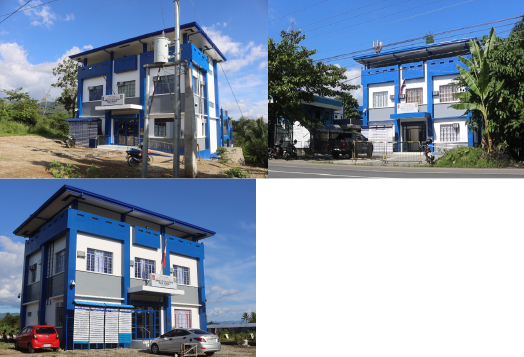
ORMOC CITY – The Department of Public Works and Highways (DPWH) Leyte 4th District Engineering Office (DEO) builds three (3) police stations in Brgy. Dolores, Ipil, and Linao, Ormoc City with a total allocation of Php 29,399,993.67.
Each of these buildings include a 96 sq.m. ground floor area, 96 sq.m. second floor area, 117 sq.m. roof deck area, and a 149.76 sq.m. roof area. Moreover, each floor is equipped with comfort rooms, network cabling to support communication and information-sharing, a CCTV system for enhanced security monitoring, air-conditioning units, and fire extinguishers.
These new facilities are expected to provide improved working conditions thus enabling the dedicated law enforcement officers to carry out their duties effectively and efficiently. From maintaining law and order to providing a swift response to emergencies, they play a significant role in the safety of the respective barangays they serve as well as the surrounding areas of Ormoc City. (PR)
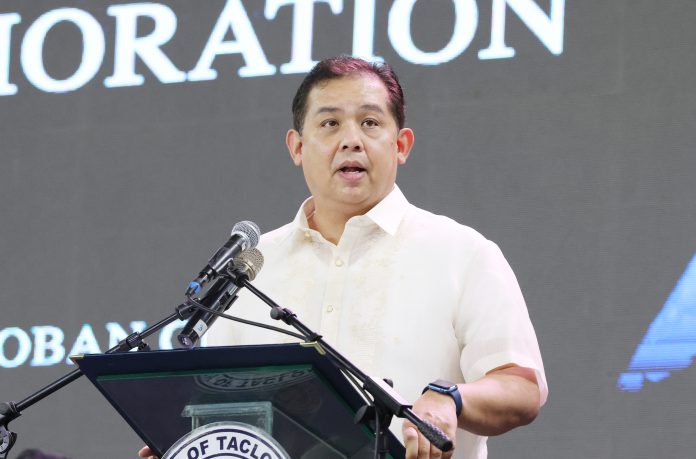
Leyte congressman and House Speaker Martin Romualdez attends the inauguration of the provincial capitol building of Eastern Samar.(Photo Courtesy)
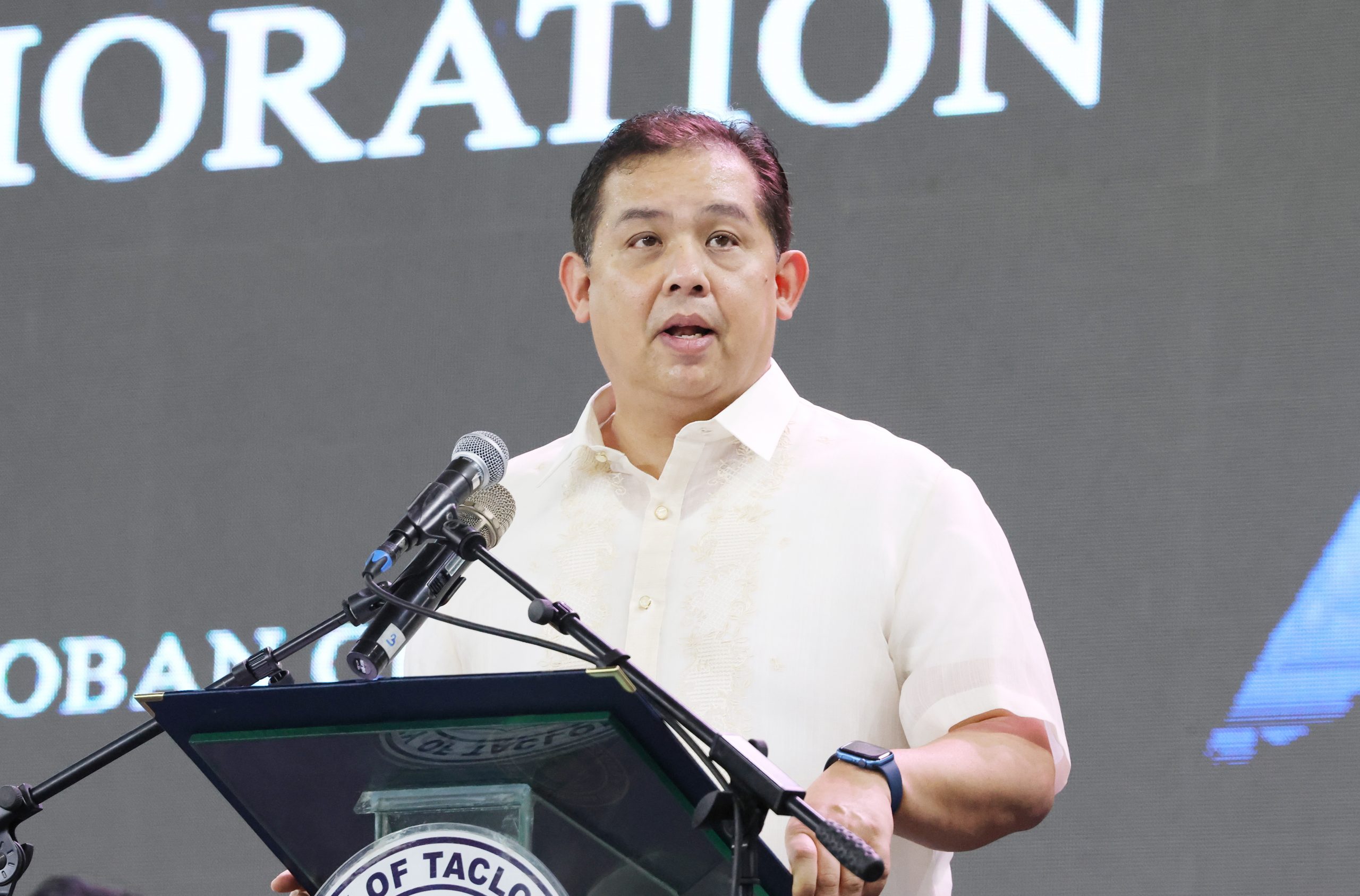
Leyte congressman and House Speaker Martin Romualdez attends the inauguration of the provincial capitol building of Eastern Samar.(Photo Courtesy)
TACLOBAN CITY – The provincial government of Eastern Samar celebrated its 58th founding anniversary on Thursday (Nov.9) and inaugurated its new provincial capitol building with House Speaker Ferdinand Martin Romualdez as the guest.
The construction of the new provincial capitol building started last July 2020.
Romualdez noted that his presence at the 58th founding anniversary was a breath of fresh air for him since most of the time of his visit to the province happened after a calamity hit the province with the 55-year-old capitol building used as storage of relief goods.
“This building is more than a physical structure. It represents our commitment in making government service more accessible particularly to our most vulnerable community,” Speaker Romualdez said in his message.
Moreover, Speaker Romualdez informed those in attendance of the measures that the Lower House took to help college students on a bill creating two satellite campuses of Eastern Samar State University (ESSU) in the towns of Arteche and Balangiga.
These bills are House Bill 2347 which seeks to establish an ESSU satellite campus in Balangiga and HB 5726 converting the ESSU satellite campus in Arteche into a regular campus.
The House has already approved HB 2347 and is already transmitted to the Senate while HB 5726 is undergoing committee deliberations in the lower chamber.
“It is an acknowledgment that the quest for knowledge knows no bounds and that the doors of education must be opened wider to embrace all those who seek it,” Romualdez said.
Aside from the two bills, the Speaker added that they also filed a bill in Congress, HB 5731, that seeks to establish a Land Transportation Office extension in Dolores town to lessen the long queue of driver’s license applicants in Borongan City and bring government services closer to the people.
“This bill is more than just a legislative measure but this is a testament that your government is committed to serving you better,” he added.
Romualdez was joined by Governor Ben Evardone, Undersecretary Terence Calatrava, 4Ps party-list Rep. Marcelino Libanan and Rep. Maria Fe Abunda along with members of the provincial board headed by Vice Gov. Maricar Sison-Goteesan, and mayors of the province. (ROEL T. AMAZONA)
ORMOC CITY-A newly-born infant was found lifeless in a construction site in a diversion road past 1 pm located in Barangay Looc, Almeria, Biliran.
Town police chief, Capt. Teofilo Gervacio III, described the infant as a baby girl who was found by local residents beside a black bag believed to be where the infant was placed and abandoned.
Case investigator Police Staff Sergeant Reynate Palconit, in an interview, said that Leonardo Gomez appeared at their station and reported that his son found a stray dog with a carcass in the mouth his son believed to be an infant.
Palconit added that they immediately responded to the area and found the lifeless infant covered with a leaf of a giant taro. The residents in the area believed that the infant must be delivered in another place and was only left in the area.
The newly-born infant was turned over by the police to the local office of the Department of Social Welfare and Development which immediately buried the infant in a local cemetery. (ROBERT DEJON)
ORMOC CITY– A land dispute between siblings resulted in the shooting of the younger brother inside his residence but accidentally hurt two visitors in the victim’s house in Barangay Agrufacion, Sta. Margarita, Samar at about 8 pm on Monday (Nov.6).
Police identified the victims as Joel Calagos, 41; Angelo Cailo, 21; and Kevin Gorgonia Casulig, 18 while the suspect was identified as Juwel Calagos, 40, who is at-large.
Initial investigation conducted by local police disclosed that while the victims were in their residence watching television, the suspect arrived and confronted his elder brother regarding their land dispute.
A heated argument ensued between the two siblings when the suspect suddenly drew a firearm locally known as “bardog” and shot his elder brother hitting his right and left legs while the two other victims were accidentally hit by the metallic pellets hitting their right leg, left arm, and waist.
After which, the suspect fled on foot towards the mountainous area of the said place bringing along with him the firearm used in the incident.
The victims were subsequently rushed to Calbayog District Hospital for immediate medical attention. (ROBERT DEJON)
TACLOBAN CITY– Eastern Samar Governor Ben Evardone has personally asked President Marcos to help local government units to gain access to funds under the People’s Survival Fund to help them address concerns on climate change.
Evardone made his appeal during a gathering attended by governors and mayors from Eastern Visayas during the ‘Handa Pilipinas’ Visayas Leg held at the Summit Hotel, this city on Wednesday (Nov. 8), coinciding the 10th anniversary of the onslaught of Super Typhoon ‘Yolanda’ in the region.
“I appealed to President Marcos in the presence of Speaker Martin Romualdez and Special Assistant to the President Anton Lagdameo to help LGUs access the multibillion-peso People’s Survival Fund for disaster preparedness, mitigation, and rehabilitation,” the governor said in an interview.
According to the governor, the People’s Survival Fund as contained under Republic Act 10174 was institutionalized in 2012 which includes a long-term finance stream to enable the government, including the local government units, to effectively address the problem of climate change.
It also mandates for local government units have access to funds to augment their resources for implementing climate change-related projects or programs.
The governor also appealed to the President to ‘relax’ the stringent requirements so the LGU could gain access to the Fund.
“I explained to the President that there is a need to relax the requirements so LGUs can readily access to the fund and the President vowed to look into it why the LGUs can’t access to that fund,” Evardone said.
“(And) since it speaks of people’s survival, access to that fund to help communities in disaster-prone areas should be easy,” the Eastern Samar governor said.
For the local government units to gain access to the fund, estimated to be at P1 billion per year, the requesting LGU must submit a letter of intent, accomplished project proposal template, climate risk and vulnerability assessments, climate change adaptation and disaster risk reduction-enhanced comprehensive land use or development plans and local climate change action plan, among others.
Evardone said that they have complied with the requirements and submitted them to the Climate Change Commission early this year but did not receive any response.
“Our province was able to comply with all the requirements last April but unfortunately no word from the Climate Change Commission,” he said.
Meantime, in his speech, the President said that the Handa Pilipinas Visayas Leg was launched to showcase the different disaster risk reduction and management initiatives of the government.
“The government remains committed to advancing our country’s disaster resilience, and of course, we must recognize the role of the Department of Science and Technology in this undertaking,” he said.
According to the President, the DOST has been instrumental in developing cutting-edge technologies for disaster risk prevention, mitigation, preparedness, response, and recovery.
“I am confident that the technologies featured in this event such as the mobile command post, the triaging trailer tent, the collapsible toilet bowl, upgraded emergency disinfection system, fire blanket, unsinkable porta boat and water ambulance, amongst others—will be of great help during relief and rescue operations,” he said.
“Kaya’t kailangan ipagpatuloy natin ang pag-develop. Hindi na ‘yung teknolohiya kung hindi ang pagpababa ng presyo ng ating mga produkto at pagparami para maging available sa lahat ng ating mga LGU para naman magamit pantulong sa tao kapag may pangangailangan,” the President added. (JOEY A. GABIETA)
TACLOBAN CITY – The World Food Programme (WFP) and the United States Agency for International Development (USAID) donated equipment to the regional office of the Department of Social Welfare and Development (DSWD) to boost the disaster response in Eastern Visayas.
The equipment donated to the DSWD includes a reach truck, rice milling machine, automatic box sealing machine, portable vacuum sealing machine, retractable roller conveyor, hydraulic hand pallet trucks, plastic pallet bins, high volume low-speed ceiling fan, and a generator set as part of the 10th anniversary of Super Typhoon ‘Yolanda’(international name: Haiyan).
A communication system from the Department of Information and Communication Technology (DICT) was also included as part of the WFP partnership with DSWD.
The ceremonial handover event, held at the Regional Resource Operation Center of the DSWD in Palo town on Wednesday(Nov.8), was attended by Undersecretary for National Household Targeting System and Pantawid Pamilyang Pilipino Program (4Ps) Vilma Cabrera, DSWD Undersecretary for Disaster Response and Management Group Diane Rose Cajipe, DSWD-8 Regional Director Grace Subong, Leyte Governor Carlos Jericho Petilla, Palo Mayor Remedios Petilla, WFP-Philippine Country Director, ad-interim, Dipayan Bhattacharyya, and USAID Mission Director for the Philippines and Mongolia Ryan Washburn.
The donation of the WFP is in response to the department’s request for support in upgrading its warehouse capacity, and to ensure that the regional warehouse will continuously be able to supply the requirements of the region during times of disaster, calamities, and emergencies.
The equipment will be utilized by the DSWD Eastern Visayas in its warehouse operations to enhance its stockpiling capacity and improve production and repacking, ensuring a longer shelf life of rice and other relief goods, particularly those that will be delivered and prepositioned in the different satellite and warehouses of the local government units.
Gov. Petilla, in his message, emphasized the importance of distributing resources before disaster strikes to ensure that local government units and national government agencies can respond immediately after calamities.
“It’s not centralization but actually distribution. In every disaster, distributed resources are actually crucial,” he stressed.
This was supported by Usec. Cabrera, who said that among the lessons they have learned during Yolanda, was to distribute preparation activities in disaster response, particularly on food and non-food stocks.
“Preparation for stockpiling should not be done in one location but should be scattered in all areas, particularly in areas that will not be directly affected so that it will be easy to distribute during a humanitarian response,” the DSWD official said.
During the turn-over, the WFP also highlighted the ongoing collaboration with the DICT that showcased innovative emergency telecommunications solutions to emphasize the critical role of connectivity during emergencies through the Government Emergency Communications System – Mobile Operations Vehicle for Emergencies (GECS-MOVE).
They also featured the newly constructed mini-MOVE, a project supported by USAID.
This collaboration is a first not only in the Philippines but also in the world, according to the WFP.
Bhattacharyya said that this is one of the innovations that they made in terms of disaster response.
“WFP is very grateful for this collaboration. Together, we are making a difference before and after disaster strikes,” he said. (ROEL T. AMAZONA)