ORMOC CITY– One of Biliran’s most wanted persons was arrested in Culaba town on Wednesday (Dec.6).
The accused, only identified as ‘Cello”, was arrested by virtue of a warrant of arrest dated November 21, 2023, and issued by Judge Constantino Esber, executive judge of RTC Branch 37 based Naval, Biliran, for the crime of rape at about 2:45 pm.
The court held no bail for the temporary liberty of the accused.
The accused, who was apprised of his constitutional rights through the Miranda doctrine, is now detained at the Culaba municipal police station. (ROBERT DEJON)
ORMOC CITY– A woman was found dead inside her house in Naval, Biliran on Monday (Dec.4) with her attending physician ruling out any foul play.
The local police identified the dead woman as ‘Jazmine’ who was lying face down inside her house in Barangay P.I.Garcia at about 7:30 am.
The police said that a lodger of the victim reported to the local police revealing that she noticed the victim was already lying face down, and appeared to be lifeless.
The victim was last seen by her neighbors in the afternoon of Sunday December 3 outside her house.
According to Dr. Ralph Bueno, municipal health officer, conducted a post-mortem examination at the scene and according to him, the estimated time of death was around 7 am on Sunday (Dec.3) and concluded that the cause of her death was cerebrovascular accident, or stroke.” (ROBERT DEJON)
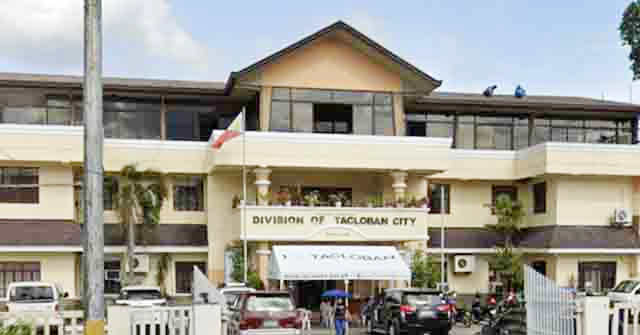
The Department of Education in Tacloban City is conducting tutorial classes to more than 5,000 students both in the elementary and secondary levels who hardly could read and in the process, address this learning gap.
Blame to 2-year closure of schools due to COVID-19
The Department of Education in Tacloban City is conducting tutorial classes to more than 5,000 students both in the elementary and secondary levels who hardly could read and in the process, address this learning gap.
TACLOBAN CITY– About 5,209 students both in the elementary and secondary levels were identified to be ‘non-readers’ and ‘struggling learners’ by the schools division here.
And this big number of non-readers and struggling students is alarming, reason they have devised the needed intervention to at least address the ‘gap,’ Nilo Eder, the information officer of the Tacloban city schools division, said on Wednesday (Nov.6).
Based on their assessment, 79 students were identified to be non-readers or those who cannot read at all while 5,288 were classified as struggling learners or can but read but with difficulty.
Eder, however, did not say how many of the 5,288 students are in the elementary and secondary levels.
“We are conducting reading and numeracy assessments, like pre-assessments and post-assessments. This is how we identify the level of proficiency of our learners. The assessments led us in identifying the learning gaps. Correspondingly, we implement interventions to address learning gaps,” Eder said.
The intervention mostly involved a tutorial method for these students at the school level and another post-assessments are being done to determine the improvement of these students, he added.
The students identified as non-readers or struggling were from the 56 public schools in the city, both in the elementary and secondary levels.
“So far, there are significant improvements noted. However, there are still learners who need help. So we continue with our initiatives,” Eder said.
A Grade 1 teacher in one of the central schools in the city, said that out of her 25 students, almost half of them were having difficulty in reading.
“Teaching these learners is a struggle on my part as I have to give them special time and attention. So what I did was I asked my co-teacher to handle my learners who could now read as I give focus to these learners,” the teacher, who declined to be named, said.
And since she made these interventions, she is seeing some improvements in these non-reader learners, the teacher said.
Eder said that the pandemic due to coronavirus disease (COVID-19) that hit the country was the primary reason why this problem cropped up.
“It is a fact that the pandemic has really affected the quality of education. Thus, these learning gaps. It will take years to recover,” he said.
“Of course, we are not happy about it. We acknowledge that there is a problem to be addressed with urgency. And we are getting positive results with our initiatives. We are very optimistic we will be able to achieve the desired improvements we wish for our learners,” Eder added.
Meantime, Eder said that they are happy that the Latter-day Saint (LDS) Charities for providing some school-based tutorial materials to the 56 schools where there are non-readers and struggling students.
“We are confident that these materials will significantly contribute to the division’s ongoing efforts in addressing learning gaps exacerbated by the two-year closure of schools due to the COVID-19 pandemic,” Eder said.
Among the donated items by the LDS Charities were tutorial cards, whiteboards, pencils, notebooks, tubs, flash drives, worksheets, handbooks, and laminating films. (JOEY A. GABIETA)
ORMOC CITY – The Department of Public Works and Highways (DPWH) Leyte 4th District Engineering Office (DEO) makes significant impact with the ongoing Construction of Manlilinao-San Sebastian Road, Ormoc City and Matag-ob, Leyte, which has an appropriation of Php 96,353,817.11 and a net length of 3.20 lane km or 1.60 km.
According to Manlilinao Barangay Captain Allan Villarmino, the road concreting addresses the long-standing challenges faced by residents, particularly vegetable and rice farmers, and coconut planters in the barangay. “Dako kaayo ni nila nga tabang kay maka-sud naman ang sakyanan ug mamamalit diha sa maong area (This is a great help to them since vehicles and buyers are now able to traverse the area),” he shared.
Local farmer Larilyn Matilac echoed this sentiment, adding that her children used to arrive at school covered in mud due to the poor road condition. She stated, “Dako jud kaayo mi ug pasalamat kay ang ako mga estudyante dili na maglisod ug once naa mi i-deliver sa Ormoc, dili na mi mag-lisod sa biyahe. Dako jud kaayo ug diperensya kaniadto ug karon.
We are very grateful that my student children no longer experience difficulty and once we have products to deliver to Ormoc, we don’t have any difficulties in the trip anymore. There is a very big difference between then and now.” (PR)
Retired Lt. Col. Ma. Bella Rentuaya, former information officer of the regional Philippine National Police headquarters formally retired from service in a ceremony held on December 1. (LIZBETH ANN A. ABELLA)
Retired Lt. Col. Ma. Bella Rentuaya, former information officer of the regional Philippine National Police headquarters formally retired from service in a ceremony held on December 1. (LIZBETH ANN A. ABELLA)
TACLOBAN CITY– The long-time regional information officer of the Police Regional Office 8, Lt. Col. Ma. Bella Rentuaya, has retired from the police organization after more than two decades in service.
Rentuaya formally ended her career as a police officer in a simple and subdued retirement ceremony on December 1 held at the regional headquarters of the Philippine National Police (PNP) in Palo, Leyte.
Rentuaya served as the regional information officer of the PRO-8 for eight years until her retirement. She was replaced, in an officer-in-charge capacity, by Major Marjorie Manuta.
She entered PNP in 1999 as Police Officer 1 and held various posts with the post as the regional information officer of the PRO-8 as he last assignment.
In her speech during the ceremony, Rentuaya described her 24-year journey as a police personnel as full of challenges and accomplishments.
“In my 24 years, two months and 15 days to be exact (in [police service), I have a lot of blessings to thank God for…to name a few, God has been good to me ever since because God blessed me with excellent staff wherever am assigned she said,” she said.
Rentuaya narrated that in her stint as the information officer of the PRO-8, she was ‘lucky’ to have the ‘best bosses’ who gave their full backing of the initiatives she undertook.
“I also became an instrument of blessing for the PRO-8 personnel because Damayang Otso was launched for PNP and NUP personnel with serious illnesses which to date we have 14 beneficiaries,” she said.
And in the course of her police officer, Rentuaya received some awards and recognitions.
Among these awards she reaped include the 2008 Governor Rogelio J. Espina Galing Mo Awardee as the most outstanding police commissioned officer in Biliran province; chief of police of the best municipal police station in PRO 8, 2008 (municipal level in 2007 and 2008); Sangyaw Awardee of the city government of Tacloban as most outstanding police commissioned officer in Tacloban City in 2010; and in 2007, one of the ten outstanding policewomen in the Philippines.
Rentuaya is a native of Palo, Leyte, and the youngest in a family of two siblings of Bernardino and Lilia Duque.
She is married to Senior Fire Officer III Juan Rentuaya Jr. and a proud mother of two smart and loving children, Beah Marie, a graduating student of Ateneo De Manila University, and John Rey, a freshman at Leyte Normal University. (LIZBETH ANN A. ABELLA)
The bustling and vibrant holiday season of Christmas in 2023 is poised to embrace an era of unprecedented busyness and excitement. From the bustling malls adorned with twinkling lights to the constant juggling of work obligations and social engagements, this year’s Christmas time promises to be filled with exhilarating moments and challenges alike.
Economically, the Christmas season of 2023 will witness a surge in consumer spending, thereby fueling a bustling environment. The increased availability of online shopping combined with the recovery from the pandemic-induced economic downturn will contribute markedly to the surge in spending. Retailers will orchestrate elaborate marketing campaigns to entice consumers into their shops, leading to crowded malls and bustling streets. This economic fervor will create a sense of urgency and necessitate efficient time management, as individuals strive to secure the perfect gifts for their loved ones.
The pressure to engage in gift-giving during the Christmas season has always been a cornerstone of this festive period. This pressure is anticipated to intensify, pushing individuals to explore unique and thoughtful options. The working sector will be particularly challenged by their dual roles as workers and potential gift-givers. Balancing work commitments with the search for meaningful gifts will require careful planning, research, and budgeting. The quest to find the perfect gifts will not only engage their intellectual capabilities but will also test their organizational skills.
Amidst the hustle and bustle, the emphasis on experiences as opposed to material possessions will continue to be an emerging trend during Christmas time in 2023. Society’s shift towards valuing experiences over physical objects is evident in the increasing popularity of travel, events, and immersive activities. We will need to navigate the demand for experiential gifting while maintaining our responsibilities. The challenge lies in creating memorable experiences that align with our budgets and conform to the societal expectation of lavishness during the festive season.
Again, the busy Christmas time of 2023 will certainly pose multiple challenges and opportunities. We should be prepared to navigate this busy period strategically, with an intricate understanding of the economic implications, the pressure of gift-giving, and the pursuit of experiential joy.