ORMOC CITY– Death came for a 15-year-old student who fell from a mango tree after his foot struck a livewire while climbing at about 3 pm on Friday (Dec.1) in Barangay San Lorenzo, Kawayan, and Biliran.
Police identified the victim as Adrian, 15, a Grade 9.
A 6-year old girl who witnessed the incident said that she together with the victim and several neighbors climbed the mango tree in front of their house.
She said that after a few minutes, they noticed that the victim slowly slipped from the mango tree and fell to the ground head first.
She added that they immediately called for help from their relatives and observed that the victim had burn marks on his left hand and right foot.
Initial investigation conducted by responding police disclosed that there was a live electric wire running through the branches of the mango tree adding that some residents had noticed sparks from the wire a few weeks ago, but it was not reported.
The victim who was brought to the rural health unit was declared dead on arrival.
After Borongan City, it would be the turn of Bicol to stage the national surfing summit next year. Leading the turnover was Eastern Visayas Tourism Regional Director Karina Rosa Tiopes to her Bicol counterpart, Herbie Aguas.(DOT EASTERN VISAYAS)
Need government backing to reach its potential
After Borongan City, it would be the turn of Bicol to stage the national surfing summit next year. Leading the turnover was Eastern Visayas Tourism Regional Director Karina Rosa Tiopes to her Bicol counterpart, Herbie Aguas.(DOT EASTERN VISAYAS)
BORONGAN CITY– The Philippines is the next big destination for surfing, according to the panelists during the two-day 2nd National Surf Summit held in this Eastern Samar capital.
However, they stressed that more things need to be done for the country to earn the title for it to become a global surfing market which has an estimated $3 billion worth of income.
Foremost of this is the support from the government that is very vital, especially in promoting and marketing like holding national and international surfing competitions.
Globally, it is estimated that there are more than 60 million surfers from different parts of the world, majority of which are from European countries, the United States, Brazil, Australia, and Asian countries like Indonesia, China, Japan, the Philippines, and some parts of the Middle East.
Indonesian surfing icon Rizal Tandjung, who was one of the panelists on the discussion about global trends and opportunities in surfing tourism held here on Saturday (Dec.2), said that government support is very important for the industry since it brings in tourist traffic.
Aside from government support, Tandjung added that accessibility is also important particularly airline flights that allow domestic and foreign tourists to reach the destination easier.
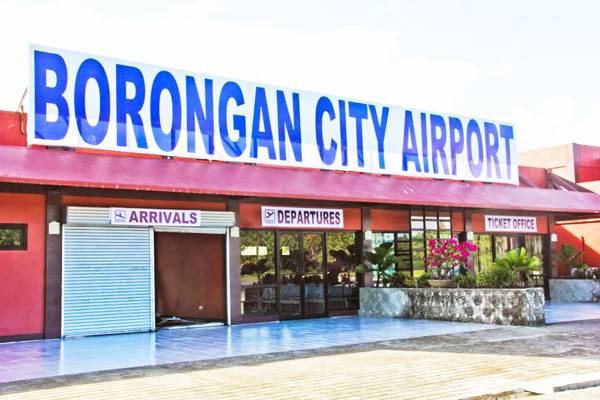
“Access is important. Opening an airport is a start or the beginning of becoming big in the surfing industry,” he said, citing the opening of Philippine Airline flights in Borongan City Airport that allows passengers going to Eastern Samar to have faster travel reaching their destination from Manila and Cebu easier.
But aside from promoting, marketing, and developing surfing destinations, patronizing the local surfboard industry is also important to generate more income and provide more jobs to communities, according to another surf summit panelist Filipino-American Ian Zamora who owns a surfboard making business in the US.
“It’s never been easy to bring surfboard or materials here, so with the help of the government hopefully we could work on changing some import-exports law that could help us all out,” he said.
The two-day National Surfing Summit held in this city was hosted by the regional office of the Department of Tourism (DOT). (ROEL T. AMAZONA)
Authorities in the country have been preparing us for a ‘big one’, or a massive, devastating earthquake that could strike us at any moment. But instead of just one, a series of major earthquakes have been hitting us in a row, almost every week. These seismic events are characterized by their high magnitude, causing widespread destruction and loss of life.
Indeed, major earthquakes have been hitting the Philippines recently. The country lies in the Pacific Ring of Fire, an area prone to seismic activity. Rapid urbanization and inadequate infrastructure contribute to the vulnerability of our archipelago. Consequently, we should prepare for the consequences of these earthquakes and propose measures to mitigate their impact. We should brace not just for a big one, but for a series of big ones, it seems.
The causes of earthquakes in the Philippines can be attributed to its geographical location along the tectonic boundaries. The Philippine Sea Plate and the Eurasian Plate converge. This convergence leads to seismic activities as the plates collide, resulting in significant earthquakes. The underlying geology of the country makes it prone to intense ground shaking and potential tsunamis. We should then recognize the geological processes causing earthquakes in the region and the vulnerabilities of densely populated areas.
The impacts of these major earthquakes can be severe, as witnessed in recent events. Most notably, the series of earthquakes that struck Mindanao caused many casualties and extensive damage to infrastructure. With numerous buildings and infrastructure systems not designed to withstand such intense shaking, the vulnerability of densely populated areas exacerbates the consequences. Moreover, the destruction of critical facilities such as hospitals, schools, and water distribution systems further hampers recovery efforts.
To mitigate the impact of earthquakes on the Philippines, several measures should be considered. Firstly, there is a need for improved urban planning and stricter building codes. Enforcing seismic design standards while considering local geological conditions is vital to ensure the construction of resilient infrastructure. Additionally, investing in early warning systems can provide crucial seconds to minutes of advance notice, enabling people to take cover or evacuate. Developing public awareness campaigns and conducting earthquake drills are equally important to educate communities and enhance preparedness.
Christ’s second coming has fascinated believers for centuries, especially now when biblical prophecies indicating his return are being fulfilled in detail. There are various, significant signs stipulated in the Scriptures that could guide us in figuring out this event.
The foremost indication of Christ’s imminent return lies in the fulfillment of biblical prophecies. Numerous Old and New Testament prophecies foretold the various occurrences leading up to his second coming. Gradual, but steady, fulfillment of these ancient prophecies helps create a narrative that corresponds with current world events. Scholars argue that as more prophecies continue to be fulfilled, it heightens the probability of the second coming drawing nearer.
Throughout history, global conflicts and political instability have prevailed. However, the intensified frequency and magnitude of such conflicts in recent times align with biblical descriptions of the end times. Escalating tensions between nations, the prevalence of terrorism, and ethnic conflicts portray a world in unrest, echoing the prophecies mentioned in the Bible. Hence, the escalating political and social unrest serves as a compelling sign of Christ’s imminent return.
Another sign indicating the approaching return of Christ is the increase in natural disasters and environmental crises. The Bible warns of cataclysmic events like earthquakes, famines, and pestilences in the days leading up to His second coming. Coinciding with climate change and the rise in catastrophic occurrences, these events align with biblical descriptions, further validating the possibility of Christ’s imminent return within our lifetime.
Advancements in technology have transformed our world, resulting in unprecedented global connectivity. The Bible prophesied that during the end times, knowledge would increase and the Gospel would be preached to all nations. The advent of the internet, social media, and satellite technology enables the spread of the Gospel worldwide, potentially fulfilling this prophecy. The explosive growth of these technological advancements signals a significant shift in humanity, paving the way for Christ’s imminent return.
The re-establishment of the State of Israel in 1948 represents a monumental event with profound biblical and prophetic implications. Scriptures from both the Old and New Testaments speak of the restoration of Israel as a crucial sign indicating the nearing return of Christ. The reclamation of the land and the regathering of the Jewish people serve as tangible evidence of God’s faithfulness and the fulfillment of prophecy, underscoring the significance of these events concerning Christ’s imminent return.
The signs pointing towards the second coming of Christ encompass various interrelated aspects. Prophetic fulfillment, global conflicts, natural disasters, technological advancements, and the restoration of Israel collectively contribute to the growing pool of evidence supporting this belief. Nevertheless, interpretations of these signs may differ among scholars and believers, leading to varying conclusions regarding the timing of Christ’s return. While recognizing the limitations and complexities associated with this topic, the signs we have discussed provide thought-provoking evidence that compels us to prayerfully consider the imminent return of Christ and its implications for our lives.
Entertainment in the upper house of congress is becoming a regular feature as senators bare their calibre in the debates that are more personal to those hogging the spotlight on mainstream media. Most of the subjects that are brought on the senate hall are reactions to various issues that happen in the countryside. We recall for instance the investigations purportedly in aid of legislation. The discussions are without direction and are often halted before any final resolution on any issue is reached. In most instances, the discussions are diverted to senseless talks that delve on personal concerns.
People witness senators on national television and live streaming on social media defending themselves and their colleagues from the investigation being pursued by the International Criminal Court (ICC). While there is a move from the lower house suggesting that the magical president restore the country’s membership with the ICC, there are those who are questioning such move. Self-preservation is the clear motive on the part of the war on drugs chief implementer and now senator Ronald “Bato” M. dela Rosa who has vowed to serve and protect, not the people but his president who is now private citizen Rodrigo Roa Duterte.
There too is senator Christopher Lawrence “Bong” Go, another loyal servant who won a senate seat but has acted more as a private close-in secretary and spokesperson of the former president. He it was who failed to grab the opportunity to disprove former senator Antonio F. Trillanes IV on his allegations that the former is involved in the drug trade. People would recall that former senator Antonio F. Trillanes IV challenged senator Bong Go to show his back during a senate investigation on the war on drugs as it allegedly bear a tattoo of the Hong Kong Triad. That could have proven the allegations of former senator Antonio F. Trillanes IV false or true and cleared the issue once and for all.
Not to be outdone is most popularly voted senator Robinhood Ferdinand C. Padilla, well known as the bad boy of Philippine cinema for portraying anti-hero gangster roles in movies. He has showed his politician side as a neophyte senator by acting as if he knows the constitution and laws more than the lawyers in the senate and lawyers invited as resource persons, including the experts attending senate hearings. He bared his true self when he engaged in debates regarding the role of the Philippine Coast Guard and whether coast guards are civilian or military in nature. He was unconvinced with the explanation of the coast guard officials and expressed disbelief in a manner unexpectedly unbecoming of a senator.
Taxpayers must bear the cost of such highest paid pupils using the august halls of congress as their classroom. Until when shall people bear theatrical antics that are so costly. comments to alellema@yahoo.com
ONLY in Christ, of course, can we find true justice and peace. Outside of him, forget it. We can only have, at best, some appearance of justice and peace, but not the real ones. In time, the consequences of the counterfeit justice and peace will surely be exposed.
We are reminded of this truth of our Christian faith in the readings of the Mass of Tuesday of the First Week of Advent where we are told that “a rod out of the root of Jesse, and a flower shall rise up out of his root. And the spirit of the Lord shall rest upon him: the spirit of wisdom, and of understanding, the spirit of counsel, and of fortitude, the spirit of knowledge, and of godliness.” (Is 11,1-2)
And in the responsorial psalm of that day, these beautiful words are said, which describe the effects of how the spirit of God will have on this rod out of the root of Jesse: “Justice shall flourish in his time, and fullness of peace for ever.” (Ps 72,7)
We should just try our best that we base our search for true justice and peace on Christ, the personification of the “rod out of the root of Jesse” that was foretold in the Book of Isaiah. We have to be wary of our strong tendency to rely mainly on our own estimation of things, on our ideologies and philosophies, in our search for justice and peace.
As we can see now, especially in the so-called developed countries that have all but abandoned God and religion in general, and are simply depending on their own ideologies, there is clearly a quagmire of acrimony and finger-pointing.
Even the commonest of common sense is contradicted as when some people claim that they have a right to abort, or kill, a baby at birth. Politics is not anymore a pursuit for the common good, with God as the ultimate common good, but rather a brazen conspiracy to acquire power and to keep it as long as possible. Of course, it would just be a matter of time before violence, and even war, would erupt.
We need to make a shout-out for the need to return to God if we want to have true justice and peace. With him, as taught and shown by Christ in the Holy Spirit, and as promoted consistently by the Church, we are sure to find justice and peace in spite of our unavoidable differences and conflicts. With him, we can still hold on to the power of love that knows how to keep the unity in the truth among ourselves despite our differences and conflicts.
Obviously, to be able to return to God, we need a lot of faith. We just cannot depend on our reasoning and estimation of things. Thus, in the gospel of the day, Christ told his disciples how lucky they were because they knew Christ. “Blessed are the eyes that see what you see,” he said. “For I say to you, many prophets and kings desired to see what you see, but did not see it, and to hear what you hear, but did not hear it.” (Lk 10,23-24)
We should always make Christ as the beginning and end of all our efforts to find true justice and peace in this world!