24.9 C
Tacloban City
January 17, 2026 - Saturday | 12:21 AM
Home Blog Page 1078

PNOC pushes Phils to fast-track re program

0
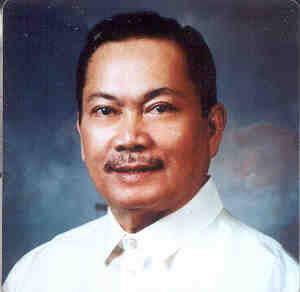
DR. PACIENTE CORDERO

There is no doubt that RE or Renewable Energy is one of millennials’ most heard-of buzzwords. Many factors are attributed to its popularity, but Science, specifically research and development (R & D), gets the credit. It may sound bias considering that the columnist’s academic make-up is founded on science.

Objectively, it is the reality of the time – Climate Change, dictates that in order for mankind to be able to roam in Planet Earth longer, it has to change mindset, castaway dependence on coal-generated power/energy in favor of RE, instead. Science has never cease from searching, discovering environment friendly energy sources. Thus, the advent of Wind generated power, and even energy from ocean or tide-generated power as leading renewable energy providers, are slowly gaining popularity in the Philippines and globally.
The Philippine National oil Corporation (PNOC), through its Renewables Corporation (PNOC-RC), commitment to hasten the implementation of the country’s RE development and program implementation, is a positive, laudable action in anticipation for the government’s plan to digitalize all transactions.

Moreso, is to meet the country’s energy needs as it opens its economy to more foreign investments, and invite them to explore, develop, and utilize the Philippines renewable resources that include solar, wind, biomass, ocean or tidal energy.

Noteworthy of mention was last year’s (2022) inclusion of the Philippines in the world’s top 40 most attractive renewable energy investment and deployment opportunity markets. Also, the Philippines landed number 27 among four Southeast Asian markets that made in the recent Ernst & Young Renewable Energy Attractiveness Index.

The PNOC-RC leads in the country’s march to renewable energy development aimed at increasing its share in the power mix from the current 22 percent to 35 percent by 2030 and further to 50 percent by 2040. The state-run PNOC-RC has ongoing RE projects that include waste-to-energy, hydropower, and floating solar PV developments.

MY COMMENT:
My science orientation have made me an advocate to fast-tracking the development of RE in the Philippines. I look at this advocacy on switching RE for the economy to shore up from the quagmire that was the 2 years plus of the pandemia. Likewise, is honoring the protocols set on during the 2015 Paris climate change Forum. Therefore, projects at developing the country’s rich RE resources, it is fair to say, should be given a bigger slice of the annual appropriation/budget pie.
ooo000ooo
NEXT TOPIC : “Carbonated soft-drink makers support sugar importation”
SHARE S & T THOUGHTS through E-mail: drpacjr@yahoo.com.

We own no names

0
DOMS PAGLIAWAN

Filipinos are among the funniest people on earth as explained, in part, by their names. Because while other peoples from other countries bear the names that are native to their race, Filipinos only have borrowed names, not just from one country but from two or more.
Most commonly, their names are borrowed from two languages, namely: English and Spanish. In one person’s name, two languages usually serve as their sources. The first name is English; the last name is Spanish. Of course, some names are purely Spanish (both first and last names), while others have pure English names, particularly the kids of English-speaking natives.

Somehow, colonization could explain this. For nearly four hundred years, the Philippines was colonized by Spain. And since there was a time when the Spanish authorities had required the Filipinos to use Spanish names, their family names, or last names, became Spanish names. The Filipinos borrowed these names without returning them. Seriously, they assumed the Spanish surnames—family names, last names, and surnames are the same, by the way.

But right after the Spaniards left for good, another breed of colonizers set foot on these islands and occupied the archipelago—the Americans. It was then that Filipinos got exposed to another culture, another language. This paved the way for British and American names to become popular among Filipinos, or to make it to people’s full names. Instead of the name Berting, one’s name became George. Instead of Dukoy, the name became Arthur.
That’s for the first names because when the Americans came, Filipinos already had family names, which are mostly Spanish. Such names include Reyes, Perez, de la Cruz, Marquez, and many more. New generations of Filipinos then are bearing names that are half English and half Spanish. Samples of those names could be Albert Martinez, Arthur Delgado, Robert Cruz, Jane Colasito, Emerald Dequito, etc. Aren’t these unique? Yes, indeed.

First names or given names may even come as double or triple names, just like John Michael, or Rose Anne Joy. But then again, the family names are still Spanish—John Michael Parado, and Rose Anne Joy Fabillar. Still a combination of two languages and racial names.
That makes most of the modern-day Filipino names inconsistent. If both the first name and last name are Spanish or English, then there is consistency. But with the combination of the two, they become inconsistent. Perhaps, that’s our way of representing those colonizers in our names. That’s how we exhibit our colonial mentality, too. Thinking that by associating ourselves with these people, we elevate our status in society before the eyes of the world.
Unknown to us, it also implies our loss of identity. We no longer have originality. We have lost ourselves behind the shadow of other dominant races, cultures, and names. We lost our faces or traded them for something else. Name-wise, we are neither Spanish nor English; we aren’t Filipinos, either. We are nobody, with no names of our own.

Monitor your kids

0

Right now, there is a post circulating on social media about Leyte having the highest number of hand, foot, and mouth disease (HFM) cases reported accordingly by the Department of Health (DOH). This could be a false alarm, but true or not, the department should clarify that matter to the public.

Hand, foot, and mouth disease is a common viral infection causing painful red blisters in the mouth, throat, hands, and feet. It is contagious and easily spreads through contact with unwashed hands, saliva, feces, mucus from the nose, and fluid from the blisters, with kids under seven being the most at risk. The soles of the feet and the palms of the hands usually have a rash or blisters.

There is no question that this disease has been spotted in certain communities in our region, especially in places where children are close to one another such as schools, camps, and other places. But if it is true that Leyte has the most cases, then people here should be extra careful in guarding their children against the disease, more so that aside from the blisters, the infected also suffer from fever, likely dehydration, and difficulty swallowing.
Since this disease causes fever, muscle pains, or other flu-like symptoms, people might mistake it for COVID-19 as we are still experiencing the pandemic. That’s why people should be well aware of the symptoms that this infection causes. It’s all the more alarming since the kids who are severely affected by it eventually have difficulty eating and drinking, besides being irritable, with belly pain, vomiting, or even diarrhea.

Again, these symptoms are rather scary to just ignore, especially since this disease doesn’t have a cure or vaccine to prevent it. Home care is just needed until the symptoms are gone. But in the case of complications, hospitalization must be required, hence the need to closely monitor the affected.

Man, reported missing, found dead in Samar town

0

ORMOC CITY– A lifeless body of a fisherman reported missing was found dead after it was washed ashore about 5:25 pm Saturday (March 11) at a shoreline in Barangay Cambatutay Nuevo, Tarangan, Samar.

Town police chief Capt. Nieto Rarugal identified the victim as Alberto Asis, 63, married, and a resident of Brgy. Balugo, Tarangan.

Capt. Rarugal, in an interview, disclosed that the victim was last seen at around 5 am on the same day at the shoreline of Brgy. Bahay by his nephew, Jose Pilapil, who was then swimming going to Brgy. Cambatutay Nuevo where he used to catch fish.

However, the victim was seen dead in the said place by Lolito Galla, a resident of the village.

Capt. Rarugal disclosed that he immediately requested personnel from the Samar Provincial Forensic Unit to conduct their findings at the victim’s cadaver who reported that the man was drowned and there was no foul play involved.
(ROBERT DEJON)

Cases of rape in EV saw a decline last year compared to 2121, police says

0

TACLOBAN CITY– Cases of rape across the region saw a ‘significant decrease’ last year compared to 2021.

Citing a report from the Women and Children Protection Desk (WCPD), the police regional headquarter said that 341 rape cases were logged in 2022, which is lower than in 2021 or a drop of 19.76% or 425 in actual incidents.

“The decrease of 84 incidents was made possible through the combined efforts of Police Regional Office 8 and other counterparts advocating for women’s protection against various forms of violence,” said Brigadier General Rommel Francisco Marbil, police regional director, in a statement.

“We cannot do this alone. We need the support and full cooperation of the public, especially in reporting such violence. I encourage women and children to be well informed and to assert their rights, as we are one with them in our fight for a VAWC-free community,” he stressed.

Despite the decline in rape incidents, the region’s WCPD, headed by Major Analiza Armeza, continuously provides “constant information drive through conferences, lectures, seminars, and training on special laws that protect women and children, including the conduct of house-to-house visits.”

Meanwhile, Marbil has ordered all the line units to “double their efforts” in preventing all types of abuses and cases of violence against women and their children (VAWC) in their areas. (RONALD O. REYES)

EDC turns over mobile water filtration system to Ormoc City

0
A mobile water treatment facility was turned over by the officials of the Energy Development Corp. to the city officials of Ormoc led by Mayor Lucy Torres Gomez Monday (March 13) to help ensure a steady drinking water supply even during a disaster to the residents of the city. Among the EDC officials present were assistant vice president and corporate relations and communications head, lawyer Allan Barcena; Estanislao Pialago Jr., Leyte Geothermal facilities head; and Erwin Magallanes, Leyte’s Corporate Relations team head. (EDC Photo)

ORMOC CITY– Despite its rich and abundance of fresh drinking water, the Energy Development Corporation (EDC) saw the need for this city to have a continuous service for clean and safe service water, particularly during calamities by providing a facility that is useful in the water conversion.

A water filtration system worth P5.4 million that has the capacity to process 3,000 liters of water in an hour was handed over to the city to help produce good drinking water in times of calamities.

The EDC, the country’s geothermal leader, turned over a mobile water filtration facility to the Ormoc city government accepted by its officials led by Mayor Lucy Torres-Gomez on Monday (March 13).

Turning over the facility was led by EDC’s assistant vice president and corporate relations and communications head, lawyer Allan Barcena; Estanislao Pialago Jr., Leyte Geothermal facilities head; and Erwin Magallanes, Leyte’s Corporate Relations team head.

The National Resilience Council Executive Director Silvestre Barrameda and a representative from the EDC’s technology partner Power 4 All also joined in the turn over.
“Mobile filtration system can purify water from any source. It is disaster equipment prepositioned to become more pro-active to respond to disasters. We hope this will serve to affected barangays, can go around and can produce sufficient clean and safe drinking water, along with other uses of water to serve 500 people. We hope this will be useful to the city,” Barcena said during the turnover of the facility.

For his part, Magallanes said that the facility will surely benefit the people of Ormoc whenever a disaster strikes which often results in a scarcity of drinking water supply.
“In most cases, communities suffer from water shortage when disasters hit their areas. This is why it is crucial for Ormoc City to have this water filtration system in their city not only for all its residents but also for EDC employees and our geothermal facilities that rely on safe and clean water,” he said.

Mayor Gomez expressed thanks to the EDC for always being responsive to the needs of the city for a long time.

It is projected to be of use among far-flung villages whose drinking water sources are not stable and may be affected by the calamities.

The project is part of EDC’s commitment to support Ormoc City’s climate resilience program that is installed as part of the city’s pilot Resilience Center.

For this program, EDC has tapped Power 4 All to install the mobile water treatment plant that has the capacity to treat ground water from rivers, lakes, and wells to produce clean and safe drinking water.

The process has passed the strictest health standards, even in times of natural disasters like typhoons and earthquakes when there is shortage of clean drinking water.

Power 4 All provides operation and maintenance support for at least a year starting from the date of the water filtration system’s commissioning and trains Ormoc City’s City Disaster Risk Reduction Management Office on its operation.
(ELVIE ROMAN ROA)

Recent Posts

DALMACIO C. GRAFIL
PUBLISHER

ALMA GRAFIL
EDITOR-IN-CHIEF

ROMEO CEBREROS
OFFICE IN-CHARGE

OFFICE
BRGY. SONGCO, BORONGAN CITY

CONTACT NUMBERS
(055) 261 – 3319 | 0955 251 1533 | 0917 771 0320 | 0915 897 7439 | 0921 511 0010

DALMACIO C. GRAFIL
PUBLISHER

RICKY J. BAUTISTA
EDITOR

ALMA GRAFIL
BUS. MANAGER

OFFICE
RIZAL AVENUE, CATBALOGAN
(INFRONT OF FIRE DEPARTMENT, NEAR CITY HALL)

CONTACT NUMBERS
0917 771 0320 | 0915 897 7439 | 0921 511 0010

EMAIL
lsdaily2@yahoo.com

WEBSITE
www.issuu.com/samarweeklyexpress