TACLOBAN CITY– A two-year-old child was seriously mauled following a dog attack in Barangay Timbangan, Calbiga, Samar, on Saturday afternoon (March 9).
The attack was so fierce that it completely tore the child’s ears and a chunk of flesh in other parts of the body.
Police said the victim was found with bite wounds by the barangay tanods at around 4:30 pm Saturday near the farmland owned by a certain Ron.
The child was immediately brought to Calbiga Rural Health Unit for medical treatment and subsequently referred to Eastern Visayas Medical Center, this city, for further treatment, according to the information released by the Police Regional Office-Eastern Visayas (PRO-8).
Initial investigation showed the victim was left under the temporary custody of their grandparents, as the mother of the victim was instructed by her grandparents to buy goods.
“However, the victim left her grandparents’ house and went to the farmland of Ron where she was bitten by four unleashed dogs,” the police report added.
Authorities said the owner of the dogs was contacted and agreed to pay and settle all the medical expenses for the medication of the child. (RONALD O. REYES)
TACLOBAN CITY-The Department of Health (DOH) and the Tingog party-list turned over 22 ambulance units to various local government units in Eastern Visayas on March 6.
The distribution was graced by Usec. Gloria Balboa, Regional Director Exuperia Sabalberino, mayors of the recipients’ local governments as well as representatives from the Tingog party-list, municipal health officers, and public health nurses.
Among the recipients of the ambulance were Caibiran in Biliran province, the towns of Maydolong, San Julian, and Oras in Eastern Samar province; and San Roque and Bobon in Northern Samar province.
The city of Tacloban, and towns of Burauen, Dagami, La Paz, Macarthur, Calubian, Isabel, and San Miguel in Leyte province; Tarangan, Paranas, Sta. Rita and Matuguinao, all in Samar; and the city of Maasin, and towns of Anahawan, Liloan, and Malitbog in Southern Leyte.
The ambulances are funded under the Health Facility Enhancement Program of the health agency which aims to provide access to better health services for residents in the region.
Caibiran Mayor Rhodessa Delante-Revita, whose town is the only recipient from the province of Biliran, was thankful to the help of the DOH and to the Tingog party-list for their commitment to the delivery of better health services to the community.
Isabel Mayor Edgardo Cordeňo was also thankful to the health agency adding that their new ambulance will greatly help their town in disaster response preparedness and ensure safe delivery and readiness during an emergency.
Maasin City Mayor Nacional Mercado was also grateful to the DOH, including to the Tingog party-list and House Speaker Martin Romualdez, saying it will be helpful in assisting the needs of the patients since it is complete with medical equipment necessary to save lives while transporting a patient to a health facility. (ROEL T. AMAZONA)
TACLOBAN CITY-A habal-habal (improvised motorcycle) driver was gunned down by four unidentified suspects in Gandara town, Samar on Sunday (March 10) by a group of armed men.
Police identified the victim as alias Labramonte, married, and a resident of Barangay Maboligon, Matuguinao, Samar.
The victim was driving his motorcycle bound for Matuguinao when upon reaching Barangay San Jose, Gandara at around 12:10 a.m., the suspects onboard two motorcycles appeared and shot the victim.
The multiple gunshot wounds in the different parts of his body resulted in the victim’s death, according to the police.
Calbayog City Forensic Unit recovered six empty fired cartridge cases of caliber .45 at the crime scene.
Elements of Gandara Municipal Police Station have coordinated with nearby stations and intelligence operatives for the possible identity and arrest of the suspects. (RONALD O.REYES)
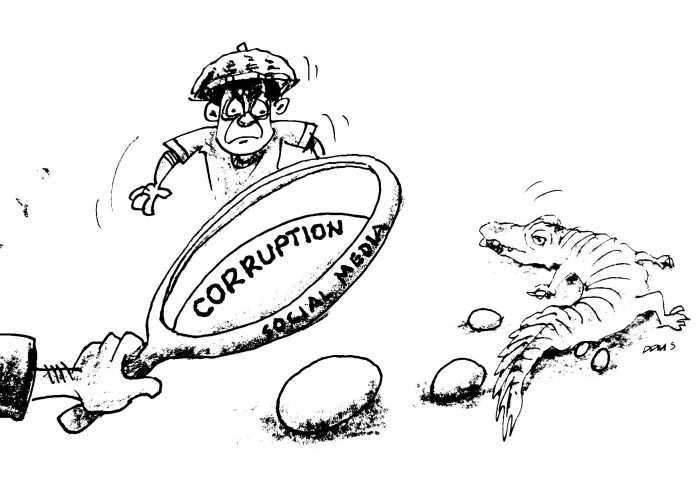
Nowadays, social media has become an integral part of our society, influencing almost every aspect of our lives. Of the many roles that it plays, it can expose corruption and anomalies in various institutions, proving itself to be a powerful tool in holding individuals and organizations accountable for their unethical actions.
For one, it can facilitate quick and widespread dissemination of information. With just a few clicks, a piece of information can reach millions of people within seconds. This rapid spread of information has been instrumental in bringing to light various scandals and wrongdoings that might have otherwise remained hidden. For example, whistleblower accounts on social media platforms have led to the exposure of corrupt practices in government agencies and multinational corporations.
Social media provides a platform for individuals to share their personal experiences and stories of corruption. This grassroots approach to exposing wrongdoing has been particularly effective in bringing attention to issues that might have otherwise been ignored by mainstream media. With ordinary citizens becoming citizen journalists, social media has empowered communities to take collective action against corruption and anomalies in their midst.
Furthermore, social media has helped in creating a culture of transparency and accountability. Public figures and organizations are now under constant scrutiny on social media, which has significantly reduced the likelihood of getting away with corrupt practices. The fear of public backlash and damage to reputation has forced many individuals and organizations to reconsider their unethical actions and adopt more ethical practices.
Social media’s ability to quickly disseminate information, empower individuals to share their stories, and hold public figures accountable has made it a powerful force for transparency and accountability. As we continue to rely on social media for information and communication, we encourage its potential to shed light on corruption and ensure that those responsible are held accountable.
I don’t know about you, but I’ve always been a big fan of water. It’s versatile, it’s refreshing, and it makes up about 70% of me – which is a good thing, considering my undeniable charm. But lately, water has been playing hard to get to many of us. It’s like the popular kid at school who suddenly decides to skip class, leaving all of us parched and longing.
Now, I’m not one to panic, but when the water taps started coughing up air instead of water, I did have a moment of existential crisis. I mean, how was I supposed to water my plastic plants? They may not need actual water, but they deserve to feel included.
And let’s not get started on the showers. The water pressure has been so low that I’ve had to resort to the ‘bucket and dipper’ method, making my showers feel like a low-budget water park ride. I’ve developed muscles I didn’t know existed from heaving buckets of water over my head. Who would have thought the water crisis would turn my bathroom into a makeshift gym?
Then there’s the issue of hydration. They say, “Drink at least eight glasses of water a day.” But they didn’t tell us what to do when there was barely enough water to fill one glass. I guess we’re all on an involuntary water diet. On the bright side, I’ve never appreciated the taste of water more. Each sip feels like winning the lottery.
But let’s not forget the elephants in the room – or rather, the dishes in the sink. They’ve started forming a mountain range, reaching new heights every day. If this continues, I might have to hire a professional climber to conquer Mount Dirty Dishes. You know, I’m not used to eating on unwashed plates, what about you? (Just kidding)
Picture this: you wake up to the sound of your stomach growling and your throat as dry as the Sahara. You stumble to the kitchen, half-asleep, only to find the faucet coughing up a feeble dribble of water reminiscent of a parched cactus. Cue the dramatic music – it’s the start of another day in the water-deprived Wild West.
As you scramble to ration your precious drops, you start to appreciate the little things in life – like the refreshing sensation of a cold shower or the simple joy of flushing the toilet without performing a rain dance. You find yourself eyeing your houseplants with envy, wondering if they’re secretly mocking your water woes with their lush greenery.
In all seriousness, though, the water crisis many of us are experiencing is no laughing matter. It’s a pressing issue that needs immediate attention and action. But while we wait for solutions, let’s just resort to finding humor in the situation. After all, they say laughter is the best medicine. And in times like these, it might just be the best way to stay afloat.
So, as we journey through this watery wilderness together, let’s remember to keep our spirits buoyant and our sense of humor intact. After all, laughter may not quench our thirst, but it sure beats crying into an empty glass. Cheers to surviving the great thirst – may your cups runneth over with laughter and your faucets flow freely once more!
Bitterness is the taste of the sad news that one of the country’s sugar mills is halting operations due to huge losses. The decision of the company to stop its operation was too abrupt that those affected where caught in shock. Such closure would affect not just the sugar industry but the workers who are bound to lose their jobs and the income that supports the need of their respective family. That the closure came at a time when school days are still far from closure this current semester is untimely. It will result in many families falling deeper into the economic poverty threshold.
What makes the situation bitter is the reason cited by the company for its decision to cease operations which is the huge financial losses caused by the continued sugar importation. The ill effect is the drop of sugar prices due to unfair competition caused by the cheaper imported sugar. Bringing prices of locally produced sugar below the price of imported ones would really result in loses. Without any coping mechanisms in place, sugar manufacturers will be forced to absorb such losses.
But the adverse effect of such closure would be on the workers who will be suddenly jobless. The impact would be so drastic that the family of the workers would loss the source of income for their basic needs. The prospect of finding a new job is very nil as the workers would need to learn new knowledge and skills that other companies would require.
At a time when the worker had spent their prime years on a job in line with sugar production, it would be tough to learn on a new job.
What is revolting to the public mind is the reason of the closure of that sugar mill which is reportedly the huge losses it suffered due to the continued importation of sugar. All the while, people thought that there is a regulatory agency for the sugar industry that would protect the local sugar manufacturers. With an effective regulatory agency, the production of sugar by local manufacturers should not suffer losses in its operations.
It could be recalled that the sugar supply became an issue as prices skyrocketed beyond the normal selling prices in the market. There was a reported lack of supply from local producers and the stop gap solution was sugar importation. The issue prompted a senate investigation in aid of legislation. It was discovered during the hearings that the issuance of the order to import sugar was tainted with irregularity.
Nothing clear happened out of that senate probe. People would expect an update as the issue would be brought to the headlines due to the closure of one sugar mill that was reportedly caused by the continued government policy on sugar importation. The affected workers may soon bring their grievances to the proper forum. Meanwhile, people may suffer price increase of sugar’s bitterness. comments to alellema@yahoo.com