ORMOC CITY– It was first to be a road accident but was later discovered to be involving a shooting incident.
Thus said Police Captain Realthur Tabernero, police chief of Palompon, Leyte, referring to an incident that took place along a national road in Barangay San Juan last Saturday (March 23) at about 2:50 am.
The victim, identified as Cipriano Ochea,31, a cook at a local eatery, was found blooded beside a road whose motorcycle was said to have hit a mango tree.
However upon investigation, it was discovered that the victim had a gunshot wound in the head and other parts of his body.
Members of a forensic unit of the Ormoc city police found two empty shells of an undetermined firearm on the crime scene.
Tabernero said that they are now conducting a thorough investigation over the motive and the identity of the suspects in the killing of the victim who has no known enemy in his area of work.
The victim’s cadaver was brought to a local funeral parlor for post mortem examination. (ROBERT DEJON)
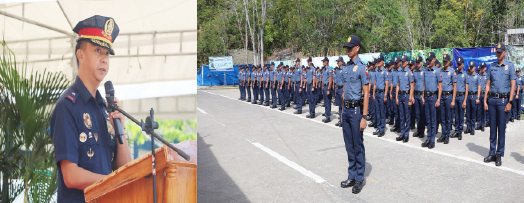
MAINTAIN PEACE AND SECURITY. About 300 cops were deployed across the region to help secure the public as the nation observes the Holy Week. Likewise, these cops are also to secure tourist destinations, B/Gen. Reynaldo Pawid, police regional director, said. (PNP-8)
They are also to secure tourist spots in EV
MAINTAIN PEACE AND SECURITY. About 300 cops were deployed across the region to help secure the public as the nation observes the Holy Week. Likewise, these cops are also to secure tourist destinations, B/Gen. Reynaldo Pawid, police regional director, said. (PNP-8)
TACLOBAN CITY– About 296 policemen have been deployed across the region in observance of the Holy Week and for the coming summer season.
No less than the police regional director, B/Gen. Reynaldo Pawid, led in the deployment of these police officers on Thursday (March 22) to their respective assignments.
According to Pawid, these cops would be deployed to different churches all over the region for the Lenten season and for the coming summer, to different tourist spots, terminal hubs, and other places of convergence.
These police officers are to enhance local forces’ presence and visibility in patrol operations, which are crucial in the maintenance of peace and order in communities, the police regional director emphasized.
Likewise, he reminded the troops to be self-aware while performing their duties in public and to exercise personal safety.
“I hope that you have inculcated in your mind all the standard operating procedures and guidance to be able to perform your duty. Just do your job and do it properly,” he said during the simple deployment ceremony also attended by his deputy for operations, Col. Salvador Alacyang, Fr. Michael Kirby Lauron, and Pastor Douglas Macalalag. (LIZBETH ANN A. ABELLA)
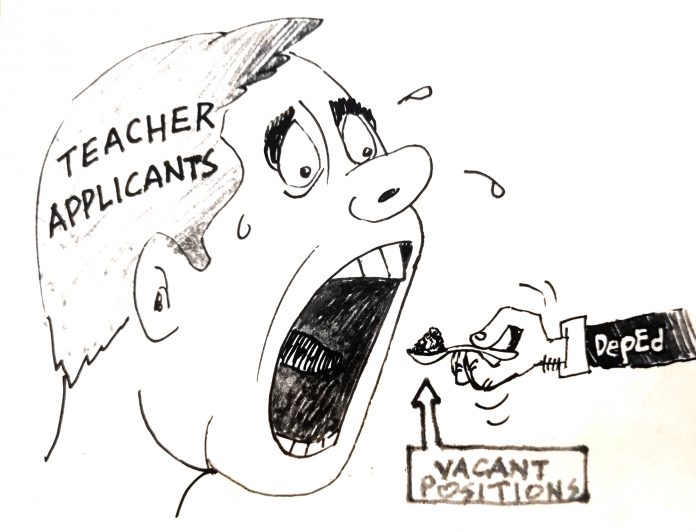
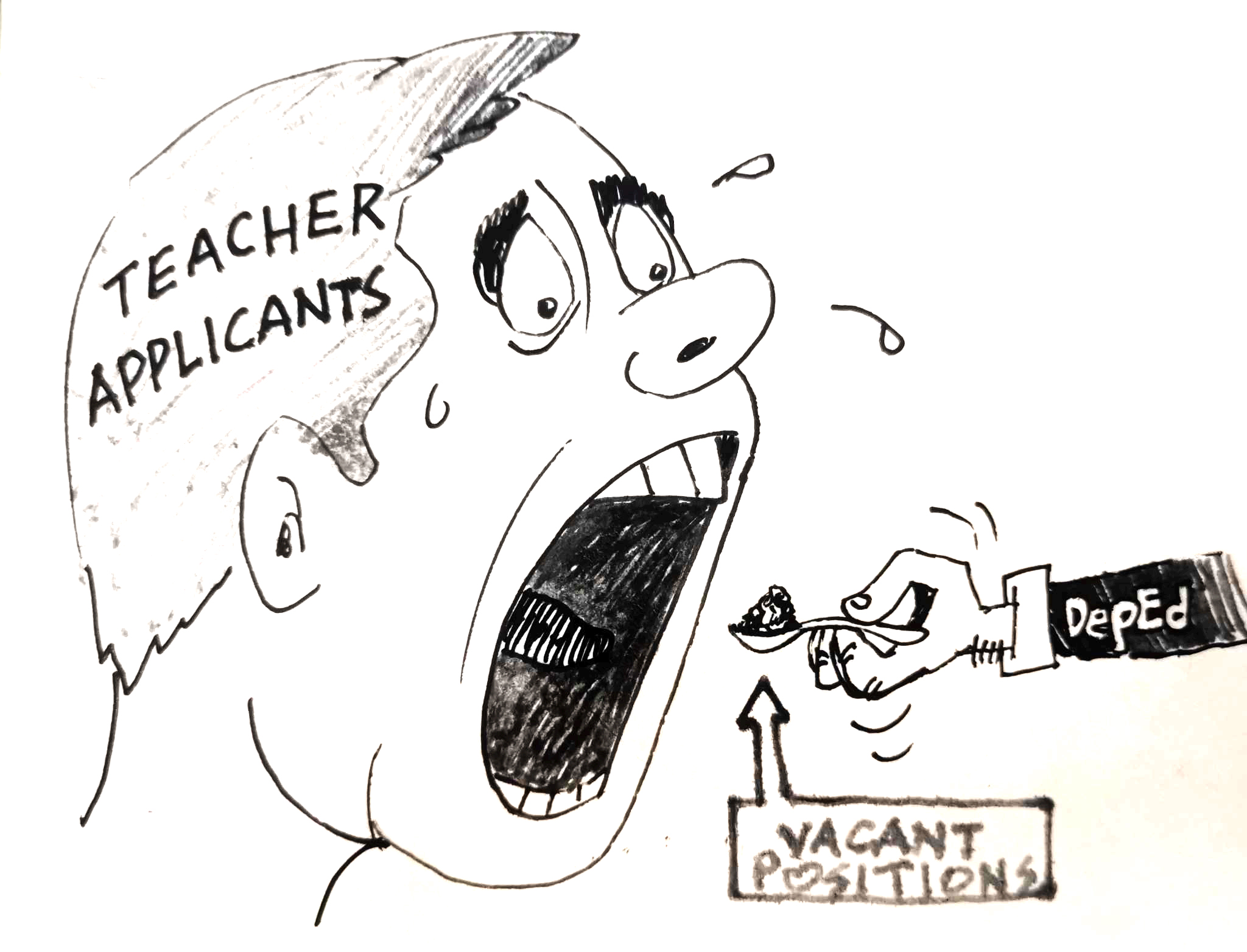
Just a few weeks from now and hundreds, thousands of education graduates will again troop upstage to receive their diplomas, marking the end of their academic, undergraduate struggles. Soon, they will join the teacher applicants seeking employment in the department. But it’s a huge number they will be joining in, because of every few vacant slots in DepEd, thousands of applicants are waiting to grab them.
The scarcity of teaching vacancies within the Department of Education (DepEd) has become a pressing issue, as the number of applicants far outweighs the available positions. With thousands of highly qualified individuals vying for a limited number of teaching slots, the competition has become fierce, leaving many aspiring educators facing the harsh reality of unemployment. This trend not only reflects the oversaturation of the teaching profession but also sheds light on the broader challenges within the education sector, such as budget constraints and the lack of resources.
One of the primary factors contributing to the limited number of teaching vacancies in DepEd is the high demand for quality education in the Philippines. As the country continues to prioritize the improvement of its educational system, the need for competent and dedicated teachers has never been greater. This has led to an influx of applicants from various academic backgrounds, all hoping to secure a stable and rewarding career in education. However, the limited budget allocated for hiring new teachers has made it increasingly difficult for DepEd to accommodate the growing number of applicants.
Moreover, the stringent requirements and qualifications set by DepEd for teaching positions further narrow the pool of eligible candidates, making it even more challenging for aspiring teachers to land a job. With the increasing competition and the emphasis on specialization and professional development, many qualified individuals are left out in the cold, despite their fervent desire to impart knowledge and contribute to the country’s educational system. This highlights the need for a more inclusive and accessible hiring process that considers the diverse talents and experiences of all applicants.
This scarcity of teaching vacancies in DepEd poses a significant challenge for both aspiring educators and the education sector as a whole. While the demand for quality education continues to rise, the limited number of available positions and the rigorous selection process have made it increasingly difficult for teachers to secure employment. DepEd should adopt hiring measures that can accommodate the growing number of qualified individuals seeking to make a difference in the field of education.
The realm of tertiary education in the country is plagued with an unprecedented problem that threatens the very foundation of academic excellence and intellectual growth. It stems from a systemic failure long before students set foot on college campuses–from the elementary and high school classrooms, under the shadow of that controversial policy: “No one left behind.” While the intention behind this policy might have been noble, its implementation gave birth to a generation of students who are ill-equipped for the rigors of higher education.
It’s an alarming reality that many students entering tertiary institutions in the Philippines lack fundamental literacy and comprehension skills. This deficiency is not a result of their shortcomings but rather a flawed educational approach that prioritizes quantity over quality. DepEd’s “no one left behind” mantra, while aiming to promote inclusivity, has inadvertently set students up for failure by advancing them through the ranks regardless of their academic readiness.
As these inadequately prepared students enter tertiary education, they grapple with coursework and materials beyond their comprehension. Professors are left to pick up the pieces, attempting to bridge the chasm between what students should know and what they understand. The burden falls not only on educators but also on the integrity of the entire tertiary education system, which is forced to adapt to accommodate the deficiencies inherited from earlier stages of schooling.
Moreover, the repercussions of DepEd’s policy extend far beyond the confines of academia. In a knowledge-based economy where competitiveness is paramount, a workforce lacking in foundational skills poses a significant threat to national progress and development. The inability to read, comprehend, and analyze critically hampers innovation, stifles productivity, and perpetuates a cycle of mediocrity that undermines the country’s potential for growth.
In essence, DepEd’s “no one left behind” policy, while well-intentioned, has become a hindrance to the very educational advancement it seeks to promote. By neglecting to address the root causes of academic underperformance and instead opting for a superficial solution of mass promotion, the education system has failed both its students and the nation at large. If left unaddressed, this crisis will continue to reverberate through generations, perpetuating a cycle of educational inadequacy and hindering the country’s ability to compete on a global scale.
To mitigate this crisis, urgent reforms are needed at both the policy and implementation levels. DepEd must reassess its approach to student advancement, prioritizing quality education over arbitrary metrics of inclusivity. Additionally, investment in teacher training and support is needed to ensure that educators have the tools and resources necessary to address the diverse needs of their students effectively. Furthermore, collaboration between DepEd and tertiary institutions is essential to bridge the gap between secondary and higher education. This includes the development of remedial programs and support structures to help incoming students acquire the skills they need to succeed academically.
The future of tertiary education in the Philippines hinges on the ability of policymakers, educators, and stakeholders to confront the realities of academic underpreparedness head-on. By dismantling the flawed paradigm of “no one left behind” and embracing a more effective approach to educational advancement, the Philippines can pave the way for a brighter and more prosperous future for generations to come.
CLEMELLE L. MONTALLANA,DM, CESE
ASSOCIATE PROFESSOR III
CLEMELLE L. MONTALLANA,DM, CESE ASSOCIATE PROFESSOR III
The Private Jets, the flock of Caucasian women singers and the begging pastorals, plus the most expensive lawyers money can buy, could not stop nor delay the downfall of the man. It may never put Humpty Dumpty together again.
Jesus’ teachings are timeless and profound. His lessons are still transforming and inspiring lives. Let us examine a few of His impactful sayings:
“I am the life, the truth, and the path. “Let your light shine before others, that they may see your good deeds and glorify your Father in heaven.” (Matthew 5:16) Our actions should reflect God’s love.
“Seek first his kingdom and his righteousness, and all these things will be given to you as well.” (Matthew 6:33) Jesus emphasizes that He is the path to God and eternal life.
In the other hand , here is a short dossier of the man who claims that he is God’s own appointed son .
Here is what the web has to say about Pastor Apollo Carreon Quiboloy:
1. Sex Trafficking Allegations:
o FBI Investigation: In 2015, the FBI began investigating Quiboloy for human trafficking in Hawaii. The agency eventually indicted him in November 2021 for “conspiracy to engage in sex trafficking by force, fraud, and coercion, and sex trafficking of children.”
o Accusations: Quiboloy allegedly exploited women and minors within his organization, the Kingdom of Jesus Christ (KOJC). These individuals were manipulated into believing that salvation was tied to their dedication to him, including sexual acts.
o Indictment Details: The indictment alleges that Quiboloy trafficked “pastorals” (privileged women who served as his personal assistants) and forced them into sexual encounters with him. Some of these women had traveled with him to the U.S.
o U.S. Treasury Sanctions: In December 2022, the U.S. Treasury Department imposed sanctions on Quiboloy, freezing his U.S. assets. These sanctions are a precursor to potential legal proceedings.
2. Previous Investigations:
o Gun Parts and Cash: In 2018, authorities detained Quiboloy in Hawaii after discovering undeclared cash and gun parts inside his private jet. This incident prompted the FBI to intensify its investigation into human trafficking allegations against him.
o Dismissed Cases: In 2020, Davao prosecutors dismissed rape and human trafficking cases against Quiboloy.
3. Defiance and Denial:
o Quiboloy has consistently denied the accusations, dismissing them as politically motivated and bogus.
o His legal counsel claims that the accusations are meant to discredit him and his church.
4. Ongoing Legal Situation:
o Despite being on the FBI’s most-wanted list for sex trafficking, Quiboloy has not faced trial yet. His influence as a media and religious figure in the Philippines may delay any legal proceedings.
o The allegations against him continue to raise serious concerns about human rights abuses and exploitation within his organization.
Yesterday, the Philippine Senate was able to issue an arrest order for the continued defiance of Pastor Apollo Carreon Quiboloy in not attending the Senate Hearing as led by the Senate Committee on Children and Women as Chaired by Senator Risa Hontiveros. Despite the days of the prayer rallies in support of the beleaguered persona in Quiboloy, still the tides had been steadily rising against him.
The “Appointed Son of God “ is perhaps thinking he may not be any more protected by his politician friends nor the angels of the real God.
In all, he is cut to size, looming a little bit smaller than he was, even in the most rabid supporters in his kingdom and in the halls of the Senate. Indeed, this narrative contrast the self-sacrifice of our Lord Jesus Christ and the self-serving appointed son of God is clear. The Private Jets, flock of Caucasian women singers and the begging pastorals, plus the most expensive lawyers money can buy, could not stop nor delay the downfall of the man. It will never put Humpty Dumpty together again.
Let us reflect on the hubris of Quiboloy and the humility of our Lord Jesus Christ as a study of contrast. Lent allows us the solitude and the chance. Lent tells us that death is sweeter than the sweet life. That power and material possessions can never give nor would it result to salvation.
One popularly transgressed law but is not wittingly considered as so is the express admonition to honor ones father and mother. Many people sin either my omitting to honor or in most cases committing dishonor to ones parents. Human frailty is a common excuse for those who unwittingly disregard respecting their parents. In the course of daily interaction, people tend to forget, albeit unintentionally, according respect to their parents.
While we keep in our consciousness our obligation to honor our parents, we tend at times to follow our own will and volition and without ill intent, fall prey transgressing the divine admonition. While there are no direct imposable sanctions for violating God’s commandment, such sin breaks our connection with God and unknowingly we fall out of His grace.
Many disputes in the family are rooted in the utter failure to observe the fourth commandment. Children asserting their freedom and independence to set the course of their lives often fall into despising the admonitions of their parents or at times choosing to go on a head-on collision course. Options for harmonizing relations and accepting compromises for common positions and directions are often abhorred.
The tendency is shut doors for alternative solutions that would eventually eliminate strains in existing close relationships among members of the family. The strains does not only occur between parents and children but among siblings as well, both being cases transgression to the same commandment. It is so because even if the rift is among siblings, it still is so in contempt of parental love and authority that ought to be honored and respected.
On a different plain, we sometimes see transgressions as motivated by ill will owing to the way parents treated their children. We have witnessed a lot of stories where children purposely fail to give honor and respect primarily because of their parents’ doing or undoing. There is that well accepted adage that requires people to give respect in order to be respected. Reciprocity is the rule the adage posits for people to be guided and to follow. It demands the giving of respect as a precondition to receiving the same respect in return.
This is why many children who feel hurt and live with ill-will, rancor and misgivings from their parents thinks not obliged to give respect and honor. But the premise is clearly misplaced because the commandment is unconditional and is expressly demanding without reciprocation. It may perhaps be unfair but we still ought to follow God’s will and trust in His infinite divine wisdom.
The commandment is boundless that in a sense it extends even when the one to be accorded the honor and respect may have joined our Maker in the great beyond. We still keep intact the respect and honor due our fathers and mothers no matter what. Such is in obedience to the commandment that demands honor for parents not because of who or what they are but simply because of their being parents. We set aside everything we think or feel wrong and allow love, honor and respect to prevail according to God’s will. comments to alellema@yahoo.com