ORMOC CITY-A man, classified as a high-value target on the drug list of the police and the Philippine Drug Enforcement Agency(PDEA) was arrested on March 20 in Isabel, Leyte in a buy-bust operation.
The suspect was identified as Rosalito Cabalud, 40, who was arrested in a sting operation in their village of Bilwag at about 6:15 pm.
Recovered from his possession was a sachet containing a white crystalline substance suspected to be shabu procured by an agent in the amount of P500.
During the conduct of a body search in the presence of a barangay official and a representative from the local media, the searching agent recovered seven more sachets containing the same white crystalline substances suspected to be shabu estimated to weigh .016 grams with an estimated street value of P4,000.
No statement was issued by the suspect to the media covering the operation.
The suspect was informed of the nature of his arrest and was apprised of his constitutional rights through a language that he understood.
Charges of violations of sections 5 (selling illegal drugs and 11 (possession of illegal drugs) were filed by PDEA at the Provincial Prosecutors Office in Ormoc City against the arrested suspect who is temporarily detained at the locked-up cell of Isabel municipal police station.(ROBERT DEJON)
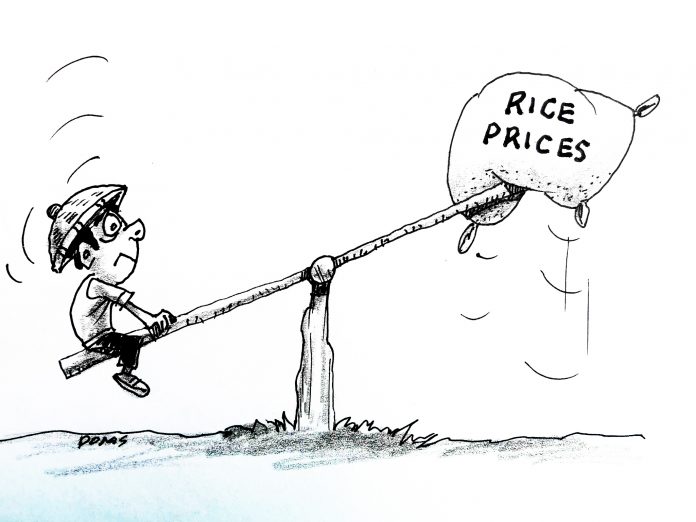
Contrary to the campaign promise of then-presidential candidate, Ferdinand “Bongbogn” Marcos Jr. that he would bring down the price of rice, the same has instead sky-rocketed in recent days, impacting the lives of Filipinos especially those who belong to the have-nots who, unfortunately, comprise the bigger portion of society.
With rice as the staple food in the Philippines, it is no surprise that the average Filipino who consumes several kilograms of rice per year would suffer adverse effects with the recent increases in rice prices. It is an important diet for the Filipino population, thus, there must be major effects on the various sectors particularly the poor.
One such effect is the impact on household budgets. As rice comprises a significant portion of the average Filipino’s diet, any price increase can directly affect households’ purchasing power. This can lead to a decrease in overall food consumption, as families may be forced to cut back on other essentials to afford rice. This, in turn, can negatively affect nutrition and health outcomes for vulnerable populations.
The increase in rice prices can also have ripple effects on the economy as a whole. With a large portion of the population dependent on rice as a staple food, any significant increase in its price can lead to inflationary pressures. This can result in higher prices for other goods and services, leading to decreased consumer spending and economic growth.
Additionally, higher rice prices can also impact the livelihoods of farmers, as they may face increased input costs without corresponding increases in their income.
Policymakers must address these issues through targeted interventions, such as subsidies for rice farmers or price stabilization mechanisms. The government can help mitigate the negative impacts of rice price increases and promote the well-being of its citizens by ensuring that rice remains affordable for all segments of society.
I did it again last night. Yes, my fist is still sore. As always, it brings me into trouble every time it occurs. Last night, I just dreamed of a notorious bystander who had provoked me into a fight. In the struggle, I punched his face real hard, only to find out I hit the wall beside me, suddenly rousing me from sleep. I had it again.
Sleepwalking, also known as somnambulism, is a phenomenon that occurs when an individual performs complex behaviors while still asleep. This abnormality can present many dangers to those who experience it, as well as those around them. Potential risks and consequences are associated with it, hence the need to understand and manage this condition.
One of the most significant dangers of sleepwalking is the risk of injury to the sleepwalker, as has happened to me many times already. During a sleepwalking episode, individuals may engage in hazardous behaviors such as walking around their home, climbing stairs, or even driving a car. Injuries can occur when the sleepwalker trips or falls, or engages in hazardous activities without being fully conscious of their actions. These injuries can range from minor cuts and bruises to more serious consequences such as broken bones or head trauma.
Sleepwalking can also pose a danger to others who may be in the vicinity. Sleepwalkers may unknowingly harm or startle anyone who attempts to intervene or wake them up during an episode. Additionally, sleepwalking can lead to dangerous situations if a sleepwalker unknowingly leaves their home and wanders into unfamiliar or unsafe areas. These scenarios can put not only the sleepwalker at risk but also those who may come into contact with them while they are sleepwalking. So far, I have not been to this extent.
Another danger of sleepwalking is the impact it can have on the individual’s overall health and well-being. Chronic sleepwalking can disrupt the individual’s sleep patterns, leading to feelings of fatigue, irritability, and difficulty concentrating during the day. In severe cases, sleepwalking can also be a symptom of an underlying sleep disorder or other medical condition that may require treatment.
In addition to physical and emotional risks, sleepwalking can also have legal consequences. I think I have been into this, as alleged by a complainant. If a sleepwalker engages in dangerous behaviors while sleepwalking, they may be held liable for any damages or injuries that occur as a result of their actions. This can lead to legal issues and financial repercussions for both the sleepwalker and those who may be affected by their behavior.
It is necessary for individuals like me who experience sleepwalking to seek medical attention and treatment to help manage and reduce the risks associated with this condition. Treatment options may include lifestyle modifications, such as establishing a consistent sleep schedule and creating a safe sleeping environment, as well as medication or therapy to address any underlying causes of sleepwalking.
The dangers of sleepwalking should not be taken lightly. I for one can attest to this. This abnormality can pose physical, emotional, and legal risks, indeed. It is essential to ensure the safety and well-being of those affected by this abnormality. One needs to seek medical attention and implement strategies to reduce the risks to better manage this condition and minimize the potential dangers it poses.
CLEMELLE L. MONTALLANA,DM, CESE
ASSOCIATE PROFESSOR III
CLEMELLE L. MONTALLANA,DM, CESE ASSOCIATE PROFESSOR III
It may be a late rejoinder for Women’s Month, but it is a thing of beauty and yes, worthy of emulation.
Alex Eala’s, Filipina, Young Tennis Player, her journey exemplifies resilience, determination, and the power of representation. As she continues to make strides, she inspires not only tennis enthusiasts but also an entire nation.
Lost in the negative headlines hugging the limelight of today is the remarkable achievement of one young Filipina. Alex Eala, the Tennis Phenom. Linking up with French bet Estelle Cascino, the Filipina French duo pulled off a stunning 7-5, 7-6(4) upset of the No. 1 seed pair of Maia Lumsden from Great Britain and another local ace Jessika Ponchet to win the W75 Croissy-Beaubourg in France.
The Win for Eala is remarkable because a few days before Eala was eliminated in the Round of 16 in the same Tournament . yet she bounced back and won the Doubles Championship.
This proved resilience and grit from the young lady, and it inspires tennis players worldwide and the Filipinas in particular.
As a personal fan of Alex, we have these Group Chat that talks, prays, and rallies the young lady as she embarked on the Tennis duels which shows a strong winning form, yet it can also be laced with defeats and euphoria sometimes closely spaced with each other. The roller-coaster feeling is also felt by us fanboys.
The most remarkable thing about Alex Eala is her resolve and skill as Tennis Star . The sport is not that popular in the country and to play competitively in this not so popular sport is to find Tennis Courts ,with specialized equipment like Racquet and Tennis Balls.
However, Alex is persistent, and she had been just that, strong willed and even though defeat visits her reality and mind, victory like this comes as a possibility. That is why it is all the more admirable.
Alex Eala is a Word Class Filipina and worthy of our admiration!
ST. PETER said these words to the house of Israel who realized that they had crucified the very Son of God, the Messiah whom they had expected for so long. He proceeded to advise them to do some penance. (cfr. Acts 2,36-41).
These words can also be applied to us now. We cannot deny that we somehow fit the description of being a perverse generation, what with all the worldly addictions and afflictions we are into.
We should now try our best to extricate ourselves from this sad condition by truly making that effort to make God the number 1 priority of our life. Is God really the one who attracts us most? Is everything we think, say or do has God as the beginning and end?
Yes, we have to learn how to seek God with our utmost effort, echoing this sentiment of David when he got lost in the wilderness: “O God, you are my God. I earnestly seek you. My soul thirsts for you. My flesh faints for you, as in a dry and weary land where there is no water.” (Ps 63,1)
We have to reassure ourselves that such effort will always be rewarded a hundredfold by God himself who cannot be outdone in generosity. Remember Christ’s words: “Everyone who has left houses or brothers or sisters or father or wife or children or field for my sake will receive a hundred times as much and will inherit eternal life.” (Mt 19,29).
We have to learn how to seek and find God in all things, big and small, and in all occasions and situations, good and bad. If we have to use the divine logic, we should first learn to seek and find God in the little things of each day before we can find him in the big things, and in the very ordinary, routine things before we can see him especially in the most trying moments of our life.
Let us always remember that everything can and should be related to God, especially those instances when we are most vulnerable, weak and miserable. It goes without saying that the good times we have should be moments of thanking God, especially when we experience big successes and victories which, if not related to God, can intoxicate and spoil us.
As St. Josemaria Escriva once said: “There is something holy, something divine hidden in the most ordinary situations, and it is up to each of you to discover it.” God is everywhere. To capture this reality, we need to learn how to be a contemplative even right in the middle of the world.
We should learn to detect the presence of God in everything and to take part in his abiding providence over us. He always invites us to cooperate with him in governing his creation.
He even invites us to “subdue the earth and have dominion over it.” (Gen 1,26-28) He invites us to complete his work of creation with him. As knowing and free collaborators, we are “God’s fellow workers.” (1 Cor 3,9)
So, there’s always basis to find and work with God if we look for him actively. We need to live in God’s presence since in the first place our life is supposed to be a life with God. We are meant for it. We are actually equipped and enabled for it also. And obviously there is an objective basis for this.
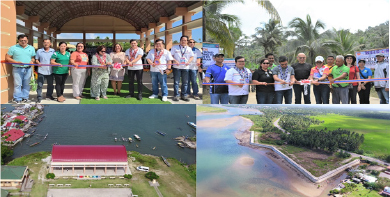
NSSDEO, Brgy. Burabud, Laoang, N.Samar– To continuously deliver quality and excellent service to the people of the Second District of Northern Samar, the Department of Public Works and Highways(DPWH) Northern Samar Second District Engineering Office (NSSDEO) spearheaded by District Engineer Charlito S. Carlobos and Assistant District Engineer Atty. Arthur Eric L. Sabong, in collaboration with other agencies, held the inauguration and ribbon-cutting ceremony of the completed high-impact projects for three consecutive days.
The three-day inauguration ceremony started from March 13 to March 15, 2024 hosted by DPWH-NSSDEO.
Inaugurated projects are the construction of the Las Navas flood control and drainage system, and Las Navas river basin, Las Navas; construction of the Catubig flood control and drainage system, Catubig river basin, Catubig; construction of multi-purpose facility (covered court) in Barangay Lapinig Del Norte, Lapinig; construction of roads, Brgy. Cabariwan to Brgy. Monbon, Palapag; construction of sea wall (phase I) along Bantayan Bay, San Roque; road concreting in Sitio Patong to Brgy. Lawaan to Brgy. Ginagdanan, San Roque; construction of road, Brgy. Catigbian to Brgy. Palmera, Laoang; and the construction of Yabyaban-Gibatangan Road, Laoang.
Inauguration commenced with a ribbon-cutting ceremony led by Congressman Harris Christopher M. Ongchuan, Governor Edwin Marino C. Ongchuan, and DPWH-NSSDEO Assistant District Engineer Atty. Arthur Eric L. Sabong together with municipal mayors and local officials and DPWH-NSSDEO staff and employees.
ADE Sabong started a short program with a brief description of the projects and followed by the message of Rep.Christopher Ongchuan, Gov. Edwin Marino Ongchuan, and the response of the mayors regarding the benefits of the project.
Others in attendance were DPWH-NSSDEO Section Chiefs, project engineers, and DPWH staff and employees.
The inauguration of the high-impact completed projects connotes the collaboration between national government and local government units in attaining national development objectives by constructing resilient infrastructures and facilities to firmly withstand in times of natural calamities which greatly benefited the people. (RONEL L. GALUPO, PIO ALTERNATE/PR)