TACLOBAN CITY – Aspiring doctors in Eastern Visayas will soon have more opportunities to pursue medical education closer to home after the Commission on Higher Education (CHED) approved the opening of Doctor of Medicine programs in three state universities across Leyte, Eastern Samar, and Northern Samar beginning Academic Year 2026-2027.
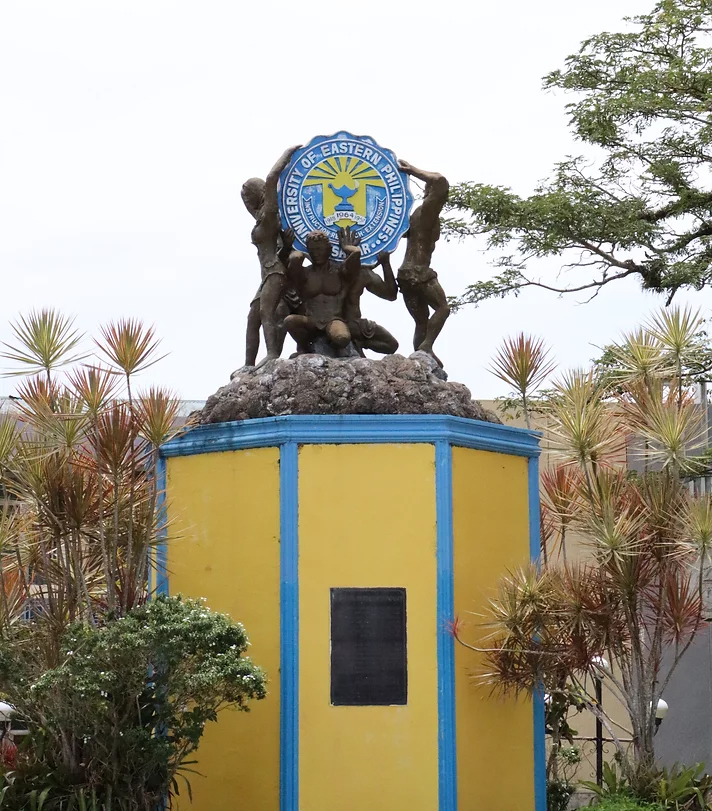
The approval allows Visayas State University (VSU) in Baybay City, Eastern Samar State University (ESSU) in Borongan City, and the University of Eastern Philippines (UEP) in Catarman to offer the first and second-year levels of their Doctor of Medicine programs, significantly expanding the region’s capacity to train future physicians.
The three institutions are among only five state universities and colleges nationwide granted authority by CHED to open medicine programs following a comprehensive evaluation conducted by the agency’s Office of Programs and Standards Development and the Technical Panel for Medicine.
Also receiving approval were Benguet State University in the Cordillera Administrative Region and the Cotabato State University-Cotabato Regional Medical Center School of Medicine in Region XII.
According to CHED, the universities met all requirements under CHED Memorandum Order No. 18, Series of 2016, which sets the policies, standards, and guidelines for Doctor of Medicine programs in the country.
The expansion forms part of the national government’s efforts to address the country’s physician shortage and improve healthcare access, particularly in underserved and geographically isolated areas.
The Philippines currently has only 7.92 physicians for every 10,000 population, below the minimum ratio of 10 physicians per 10,000 people recommended by the World Health Organization.
The initiative also supports President Ferdinand Marcos Jr.’s directive to expand medical and nursing education programs and advances the objectives of the Doktor Para sa Bayan Act, which aims to make medical education more accessible while encouraging graduates to serve in areas with limited healthcare services.
The CHED approval marks a major milestone for Eastern Visayas, which until now had only two institutions offering medical education—the privately operated Doña Remedios Trinidad Romualdez Educational Foundation, Inc. College of Medicine in Tacloban City and the UP Manila School of Health Sciences in Palo, Leyte.
With the establishment of medical schools in Samar and Leyte, students from the region will no longer need to leave Eastern Visayas to pursue medical studies, reducing costs and increasing opportunities for local residents to enter the medical profession.
Eastern Samar Representative Christopher Sheen Gonzales welcomed the approval of the ESSU College of Medicine, describing it as an investment in the province’s future healthcare workforce.
“We take pride in this important step toward providing more accessible and affordable opportunities for young people from Eastern Samar who dream of becoming doctors,” Gonzales said.
“This is not merely a proposal for a new college. It is an investment in the future of our healthcare system—developing more doctors who come from Eastern Samar, who care about Eastern Samar, and who are committed to serving Eastern Samar,” he added.
Gonzales, together with 4Ps Party-list Representative Marcelino Libanan, authored the measure creating the College of Medicine at ESSU.
The lawmaker said the institution is expected to help produce more healthcare professionals, address physician shortages, and strengthen healthcare delivery in underserved communities across Eastern Samar and neighboring provinces.
Meanwhile, VSU announced that it is prepared to welcome its pioneering batch of medical students after successfully completing CHED’s rigorous evaluation process and receiving approval to offer the first two years of its Doctor of Medicine program.
The latest approvals also bring the national government closer to its goal of establishing at least one state university offering medicine in every region of the country. CHED said all regions now have a state-run medical school program except the newly created Negros Island Region, which has been identified as the next priority area.
(JOEY A. GABIETA)