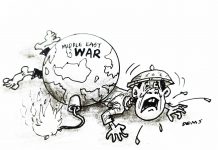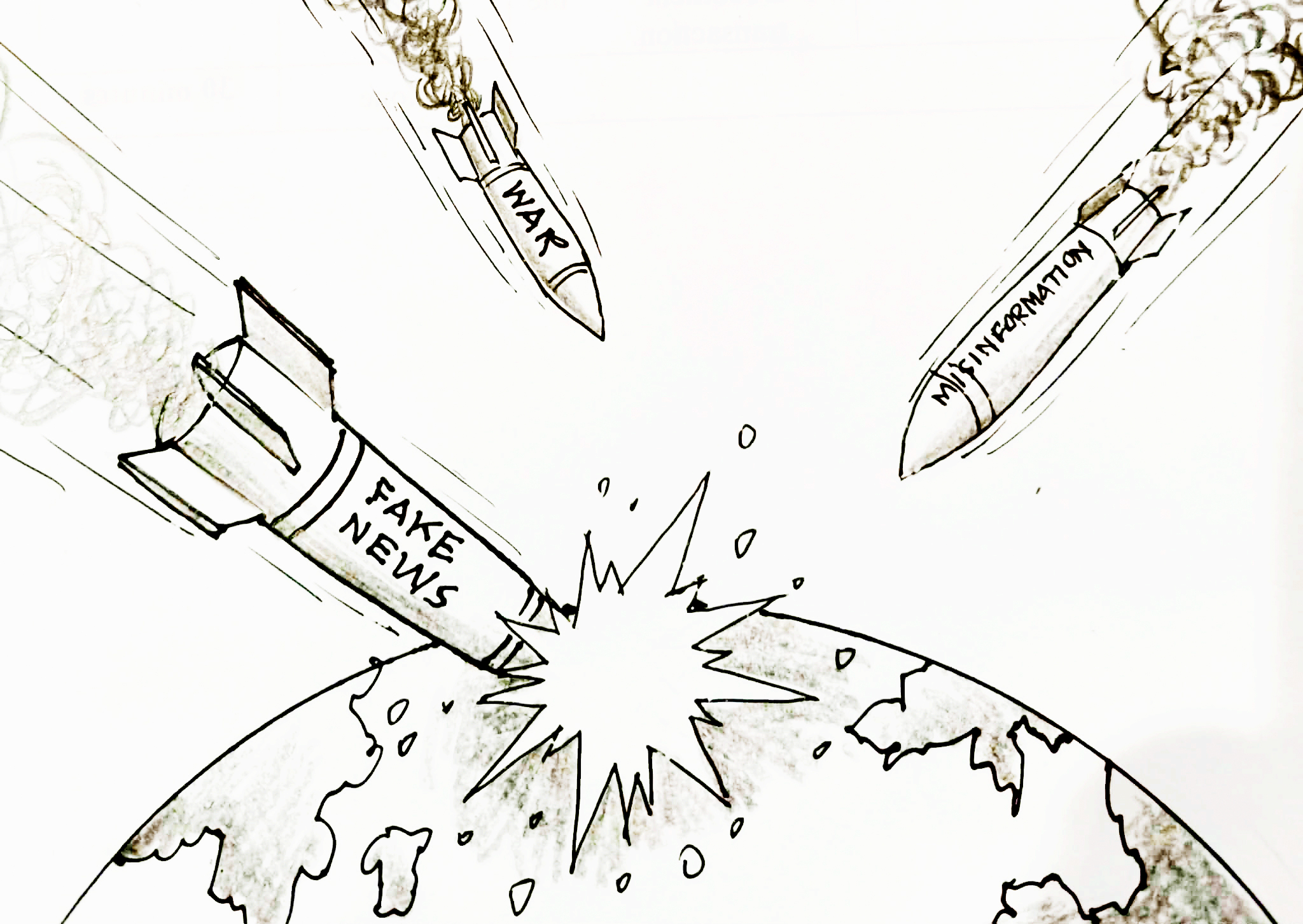
The war unfolding today is not only fought with missiles and fighter jets; it is also fought with lies spreading at the speed of a click. The rampant circulation of fake news, manipulated images, and fabricated videos has left the public’s understanding of the conflict in confusion. This dangerous distortion of reality must be confronted with urgency and discipline.
The problem begins with the overwhelming flood of information pouring through social media platforms. Within minutes of any major event on the battlefield, hundreds of posts appear claiming to show “real-time” footage of explosions, troop movements, or civilian casualties. Many of these materials are either taken from unrelated past conflicts, digitally altered, or entirely generated by artificial intelligence. Yet they have been shared thousands of times before anyone has verified their authenticity. In such an environment, the line between truth and fabrication becomes dangerously blurred.
Artificial intelligence has intensified this crisis. Software can now produce highly convincing photographs and videos that appear indistinguishable from genuine documentation. A single fabricated image showing a destroyed city block or a supposed military atrocity can provoke outrage across the globe before fact-checkers can even begin their work. In wartime, such misinformation does more than confuse the public; it becomes a weapon of propaganda, capable of inflaming anger, spreading panic, and shaping political attitudes based on falsehoods.
Another troubling aspect is the willingness of many social media users to believe and share information without scrutiny. Emotional reactions often replace careful judgment, especially when posts appear to confirm political loyalties or ideological positions. In the rush to repost dramatic content, verification is treated as an unnecessary delay. This behavior multiplies the reach of misinformation and allows fabricated narratives to travel faster than responsible reporting.
The spread of false information during war demands a firm response from governments, media institutions, technology companies, and the public. Social media platforms must strengthen systems to identify manipulated content, while journalists must maintain strict verification standards before publishing battlefield claims. Most importantly, citizens must resist the impulse to share sensational material without checking its source. Truth is the first casualty of war only when societies allow deception to circulate without restraint.