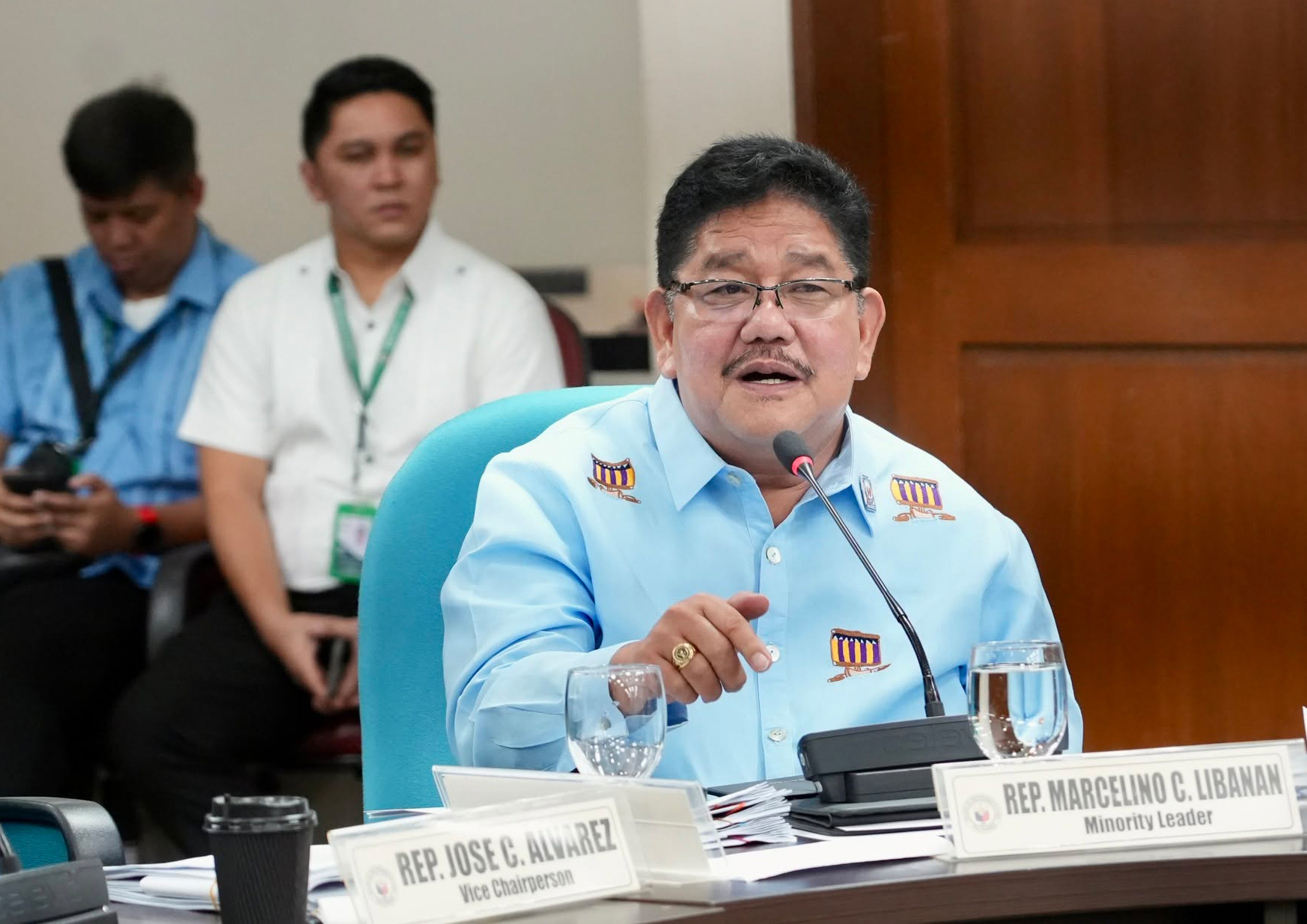
TACLOBAN CITY — House Minority Leader Marcelino “Nonoy” Libanan has sought a congressional inquiry into the government’s efforts to combat schistosomiasis, citing the continued spread of the disease in dozens of provinces despite years of prevention and control programs.
Libanan, together with Eastern Samar Rep. Christopher Sheen Gonzales, filed House Resolution No. 1059 urging the House Committee on Health to investigate, in aid of legislation, the implementation and effectiveness of the Department of Health’s Schistosomiasis Control and Elimination Program (SCEP).
The resolution seeks to determine why schistosomiasis, commonly known as “snail fever,” remains endemic in several rural communities across the Visayas and Mindanao, where it continues to affect farmers, fisherfolk, and their families.
“Schistosomiasis is one of those diseases that has remained neglected largely because it disproportionately strikes the poorest and most vulnerable Filipinos—subsistence farmers, fisherfolk, and their children,” Libanan, a representative of the 4Ps Party-list, said in a statement.
“For many families living in endemic areas, exposure to infested freshwater is an unavoidable part of daily life and livelihood. Yet despite years of government interventions, the disease continues to persist in many communities,” he added.
According to the resolution, schistosomiasis remains a major public health concern in at least 28 provinces, particularly in rural and agricultural areas of the Visayas and Mindanao, including parts of Eastern Visayas, Caraga, and Northern Mindanao.
The disease is caused by the parasite Schistosoma japonicum, which is transmitted through contact with freshwater contaminated by infected snails. It can cause chronic abdominal pain, diarrhea, liver enlargement, anemia, stunted growth among children, reduced physical capacity, and severe organ damage in advanced cases.
Libanan, who holds a degree in medical technology, stressed the need to identify policy and implementation gaps that may be hampering efforts to eliminate the disease.
“We have to identify the policy and implementation gaps that allow this preventable disease to persist. Every year that schistosomiasis remains endemic, it exacts a heavy toll on the health, productivity, and economic well-being of affected families,” he said.
The DOH’s Schistosomiasis Control and Elimination Program employs a multi-pronged strategy that includes annual mass drug administration, snail control measures, disease surveillance, sanitation initiatives, and public health education campaigns.
However, Libanan noted that ongoing transmission in endemic communities points to continuing challenges related to program coverage, treatment compliance, environmental management, and coordination among government agencies.
The resolution also underscores the complexity of eliminating schistosomiasis because the parasite infects not only humans but also animals such as carabaos, cattle, and dogs, which can serve as disease reservoirs and contribute to continued transmission.
Under the resolution, the House Committee on Health is encouraged to explore recommendations that may include increased funding, expanded mass drug administration campaigns, improved water and sanitation infrastructure, stronger inter-agency coordination, veterinary interventions targeting animal reservoirs, and sustained community education efforts.
“The continued presence of schistosomiasis is not only a public health issue; it is also a rural development and anti-poverty issue. The government must ensure that vulnerable communities are no longer left behind in the fight against this debilitating disease,” Libanan said.
(LIZBETH ANN A. ABELLA)