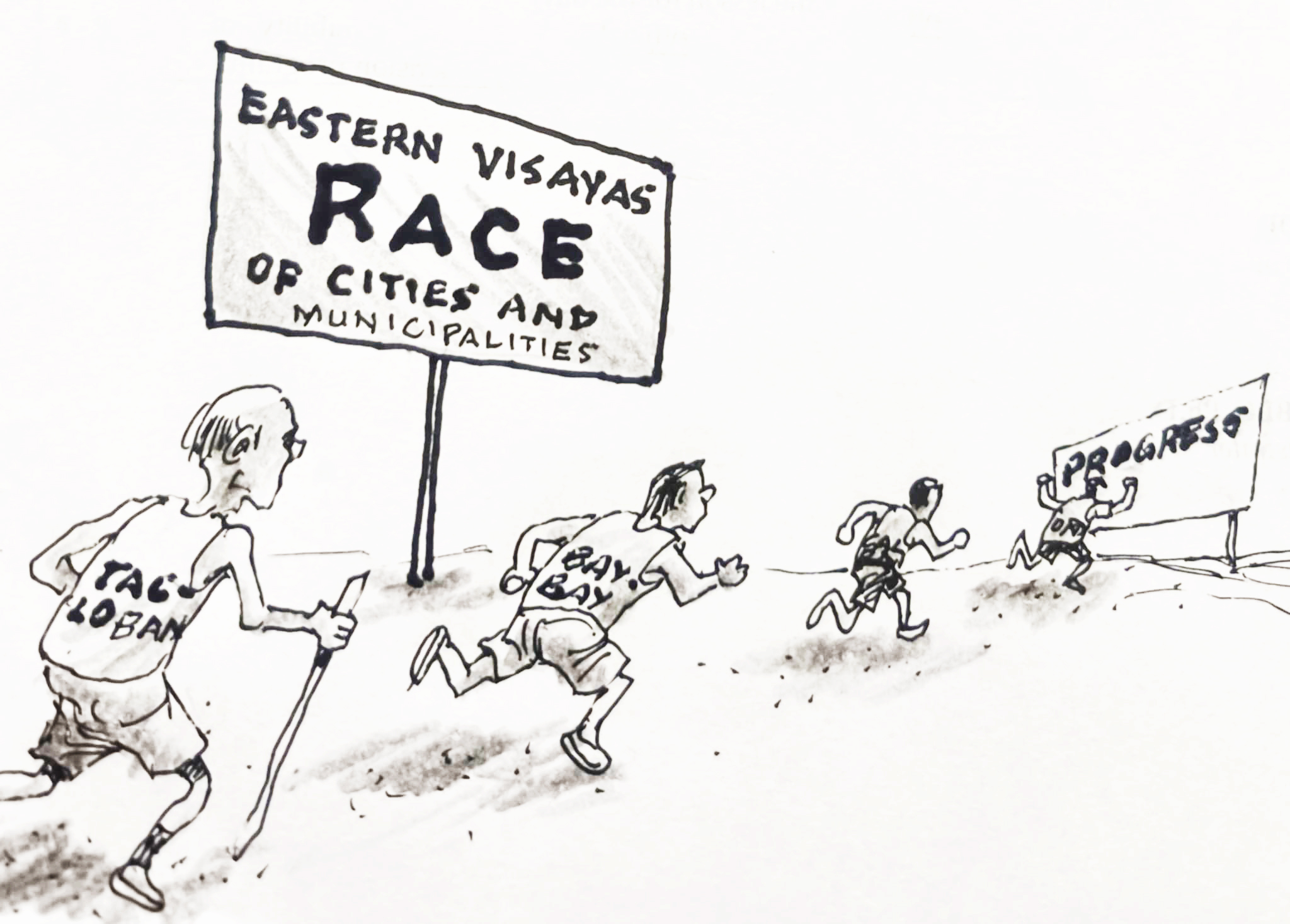
Tacloban’s steady lag behind its neighboring cities in economic development, cleanliness, and order is a troubling paradox for a highly urbanized city. Its apparent advantage is due solely to its regional offices. However, this is a symptom of a more serious problem that cannot be ignored anymore.
Some cities in Eastern Visayas, aside from Tacloban, have been successful in developing a leaner, more disciplined population despite having fewer historical advantages. Tacloban, meanwhile, seems stuck in complacency, content to serve as a venue for regional offices rather than as a real city with a clear vision for economic development. It is a place where commerce is slow, public areas are poorly managed, and activity seems busy but moves nowhere.
The problem is not that Tacloban lacks resources. It has a strategic location, an airport, a seaport, schools, hospitals, and a centuries-long head start as a center. However, it lacks a strong, consistent governance model that treats rules as obligations rather than suggestions. Its failure to effectively manage zoning, traffic, sanitation, and business regulations has created a disorder that has become the norm.
Leadership decisions have similarly prioritized short-term visibility instead of long-term structure. Projects come and go, while basic services are less prioritized. Cleanliness programs come and go, only to be forgotten. Economic programs are launched with less implementation effort. In the absence of discipline and order, benefits become opportunities squandered, while neighboring cities progress quietly.
A renewed resolve rooted in discipline, order, and accountability is needed. City management should be treated as work, not as performance, with rules and consequences that apply without exception. Economic growth is achieved only when order is well-established, rules are followed, and leadership is willing to make decisions, even unpopular ones. Tacloban needs no more excuses; what it needs is the resolve to act like the city it claims to be.