July bills surge
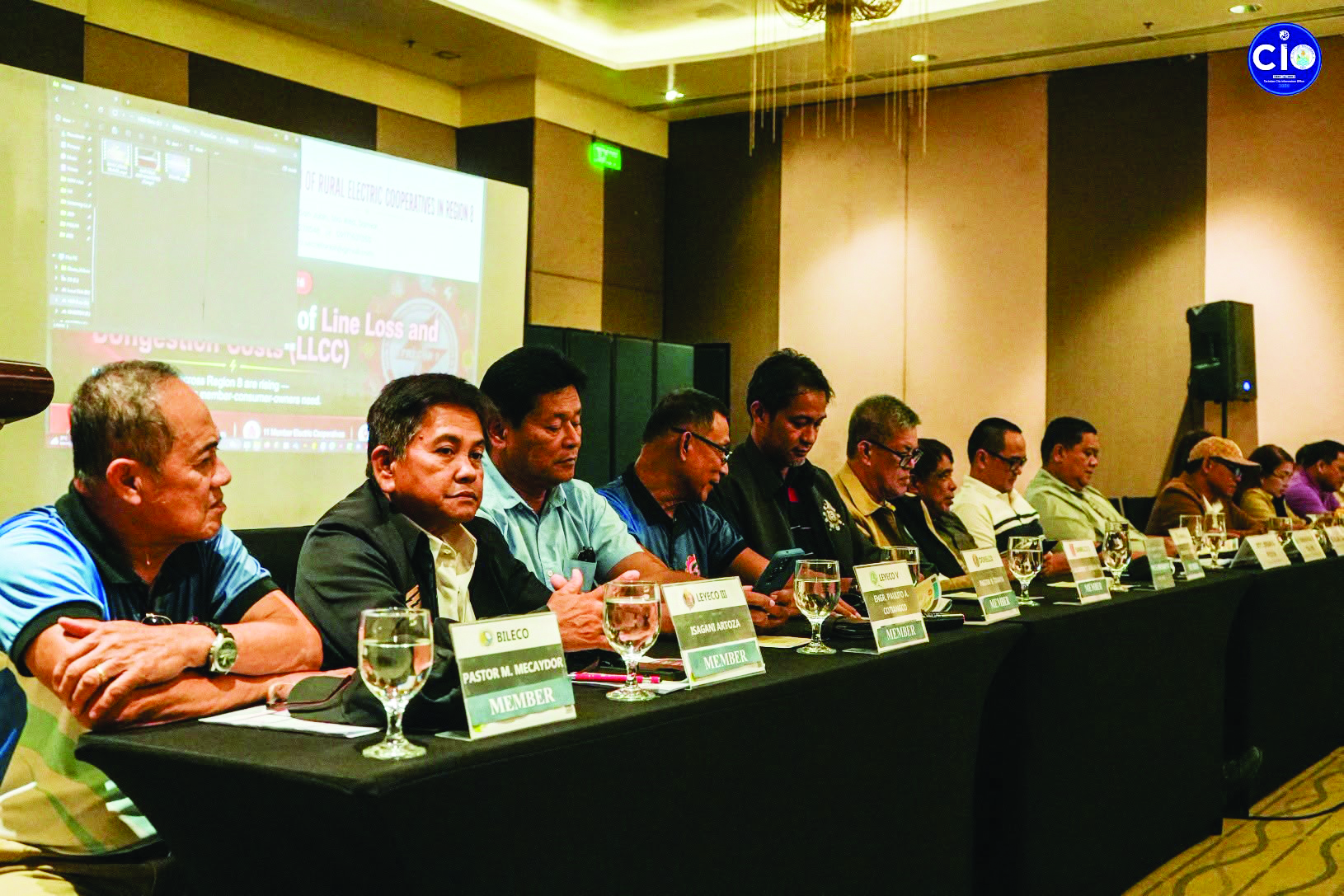
TACLOBAN CITY — More than 1.1 million electricity consumers across Eastern Visayas are paying significantly higher power bills this July after the region’s 11 electric cooperatives were assessed a record P572.9 million in line loss and congestion costs (LLCC), prompting cooperative officials to seek regulatory intervention and question the computation of the charges.
The Federation of Rural Electric Cooperatives in Region 8 (FRECOR-8) said the July LLCC more than doubled the P276.5 million charged in June, making it the highest amount ever imposed on Eastern Visayas electric cooperatives by the National Grid Corporation of the Philippines (NGCP) and power suppliers.
Because LLCC is a pass-through charge under existing power industry regulations, electric cooperatives are required to collect the amount from consumers and remit it to power sector players without earning any profit from the increase.
FRECOR-8 said the average LLCC this month reached P4.03 per kilowatt-hour (kWh), although the actual amount varies by distribution utility, with some cooperatives billed as high as P5.99 per kWh.
The increase has translated into substantially higher electricity rates across the region.
Based on the federation’s estimates, a household consuming 51 kWh a month will pay about P205 more this billing cycle. Consumers using 150 kWh will see their bills increase by roughly P604, while those consuming 300 kWh—including many small businesses—could pay an additional P1,208.
Among the region’s 11 electric cooperatives, Leyte II Electric Cooperative (Leyeco II), which serves Tacloban City and the municipalities of Palo and Babatngon, posted the lowest residential rate at P13.25 per kWh, up from P11.48 in June. Biliran Electric Cooperative (Bileco), which supplies power to Biliran province, recorded the highest rate at P24.18 per kWh, a sharp increase from P15.11 last month.
FRECOR-8 said the sharp increase was driven largely by transmission-related costs rather than the operating expenses of the electric cooperatives.
Line loss charges, reflected under the system loss component of the monthly electricity bill, cover electricity lost during transmission and distribution due to technical and other allowable losses.
Congestion costs are embedded in the generation charge—the largest component of a power bill—and arise when transmission constraints force the dispatch of more expensive electricity to meet demand.
“When generation charges increase, consumers really feel the impact because it hits their pockets hard,” said Engr. Janet Notarte, corporate planning department manager of Leyte IV Electric Cooperative (Leyeco IV).
In response to the unprecedented increase, FRECOR-8 President and Leyeco II General Manager Engr. Fernan Paul Tan said the federation has appealed to the Energy Regulatory Commission (ERC) to review the computation of line loss and congestion costs and temporarily suspend their collection while the methodology is being evaluated.
“Even if these are pass-through charges, we want the ERC to explain the formula used in computing the LLCC. This has become a heavy burden on our member-consumers,” Tan said.
The federation is also urging the ERC to expedite the implementation of the amended Net Settlement Surplus (NSS) Rules, which would allow excess collections in the wholesale electricity market to be refunded to consumers more quickly.
In addition, FRECOR-8 is calling for an audit of previous LLCC collections to determine whether consumers were overcharged and, if warranted, to facilitate refunds.
To prevent similar rate shocks in the future, the federation proposed limiting LLCC adjustments to a maximum of P1 per kWh per billing cycle.
It is likewise exploring other legal and policy measures, including filing petitions before the ERC, seeking temporary relief from the value-added tax on electricity through Congress, and requesting the Philippine Competition Commission to investigate whether simultaneous power plant outages contributed to the spike in electricity prices.
The record charges come at a time when many households are already grappling with rising costs of basic commodities, raising concerns over the additional financial burden on families and businesses across Eastern Visayas.
JOEY A. GABIETA, LIZBETH ANN A. ABELLA