
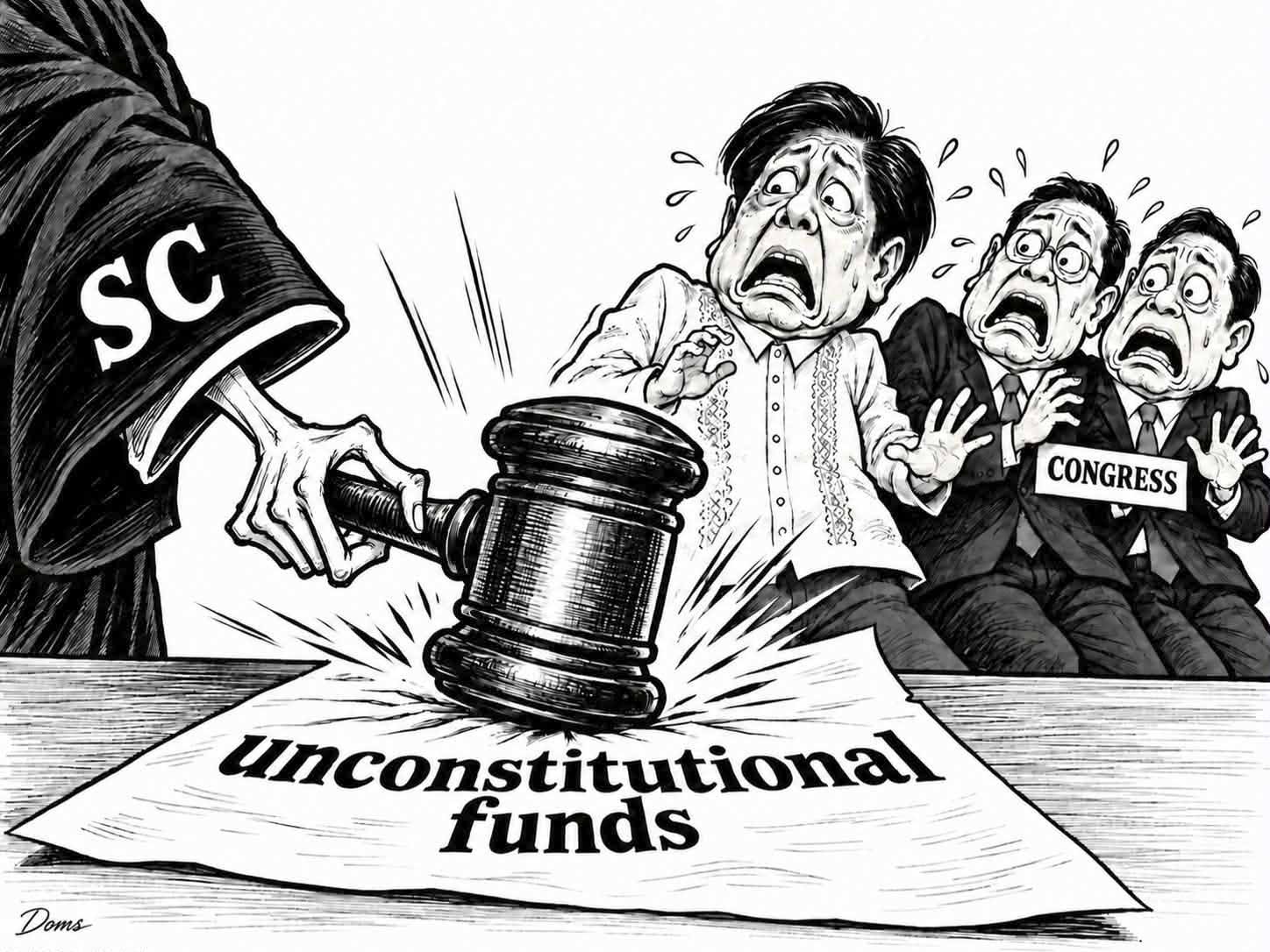
The Supreme Court’s ruling on unconstitutional budget measures demands accountability from Malacañang and Congress. Violations involving public funds deserve a firm and sustained public response. Political excuses cannot settle this issue.
Supreme Court’s findings give that demand a concrete basis. Its official statement identified unconstitutional congressional increases affecting the 2024 and 2025 budgets and invalidated specific provisions governing unprogrammed appropriations in the 2026 budget. It also found that bicameral conference committee changes lacked supporting records and explanations. These findings expose failures in a process that should account for every peso entrusted to government. The Court further made clear that protection for irreversible programs benefiting people in good faith does not automatically shield the officials responsible from possible liability. Investigators must establish individual responsibility through records and evidence, and the proper tribunals must determine the consequences.
Malacañang’s announced move to seek reconsideration must face equally close scrutiny. The Palace maintains that the administration followed existing laws and established budget procedures, but established practice cannot excuse a constitutional violation. Seeking reconsideration is a legal remedy; it does not by itself establish panic, guilt, or fear of imprisonment. The administration must nevertheless answer the substance of the ruling and explain why the disputed spending mechanisms should survive judicial review. The public deserves a legal argument supported by the Constitution, accompanied by a clear accounting of the funds involved.
Scrutiny must also remain disciplined. Maternity leave does not establish evasion, conflicting statements require examination against documents, and allegations of fabricated complaints against witnesses require independent investigation. Preserve and act promptly on any evidence of intimidation, and hold witnesses accountable for the truthfulness of their testimony. The same standard should govern allegations involving farm-to-market roads: inspect the projects, compare contracts with actual work, identify those who approved payments, and pursue substantiated offenses. Public anger becomes useful when it produces evidence that can withstand examination.
The urgent, required move is to keep these failures out of the 2027 budget. Budget officials have publicly committed to stronger safeguards and compliance with the Court’s ruling; Congress must turn those promises into enforceable provisions. Every amendment should identify its author, purpose, amount, funding source, and intended beneficiaries, with supporting documents available before approval. Bicameral deliberations must leave a complete public record, and questionable projects must undergo independent inspection. Citizens should sustain their vigilance, while oversight bodies pursue accountability now: constitutional discipline must govern the spending of public money under the present administration and every administration that follows.