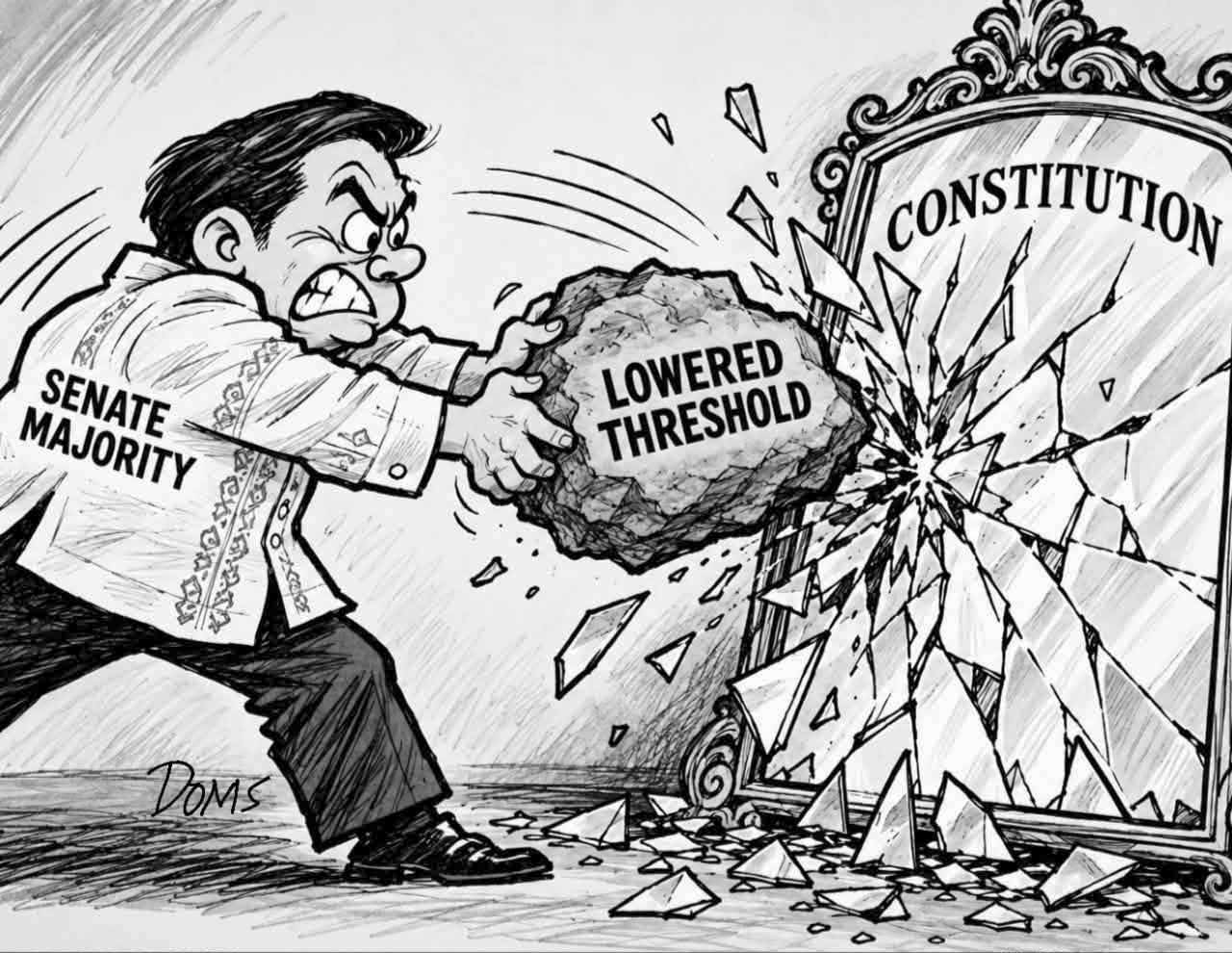
The Senate impeachment court’s decision to lower the votes needed to convict Vice President Sara Duterte is alarming. The constitutional threshold must not be adjusted to suit the political circumstances of one trial. Lawmakers who serve as judges owe the public a decision governed by law, free of partisan interest.
The Constitution requires the concurrence of two-thirds of all the Members of the Senate for conviction. Yet the impeachment court has decided to count only senators able to participate when it calculates that fraction. With four of the 24 senators currently unable to take part, the required votes fall from 16 to 14. That change deserves the strictest scrutiny: a senator’s inability to vote does not, by itself, settle whether that senator has ceased to be a member.
Those who supported the ruling argue that the two-thirds requirement remains and that unavailable senators should not prevent the court from reaching a verdict. Their concern warrants an answer, but so does the constitutional choice of the words “all the Members.” If membership can be narrowed during a trial because some senators cannot participate, the public is entitled to a clear legal explanation of where that authority comes from and what prevents the same reasoning from being used whenever the votes are inconvenient.
Duterte must answer the charges against her, and senator-judges must decide them on the evidence. But a conviction that leads to disqualification would also remove her from the choices available to voters in 2028. She could return to private life; citizens who wanted to vote for her would lose that option. This is why even those who oppose her should insist on a process whose rules can withstand examination.
Power may secure a vote, but it cannot make a doubtful interpretation command public confidence. The Senate should publish a full justification for its ruling and allow the constitutional question to be tested through available legal remedies. Whatever verdict follows must rest on proved charges and a defensible reading of the Constitution. The people deserve both accountability and the assurance that lawmakers have not changed the measure of conviction to decide who may appear on their ballot.