PADRE BURGOS, Southern Leyte — With its vibrant coral gardens, rich marine biodiversity, and uncrowded dive sites, Southern Leyte is steadily carving a name for itself as one of the country’s emerging diving destinations — and tourism leaders want the world to see more of what lies beneath the waters of Sogod Bay.
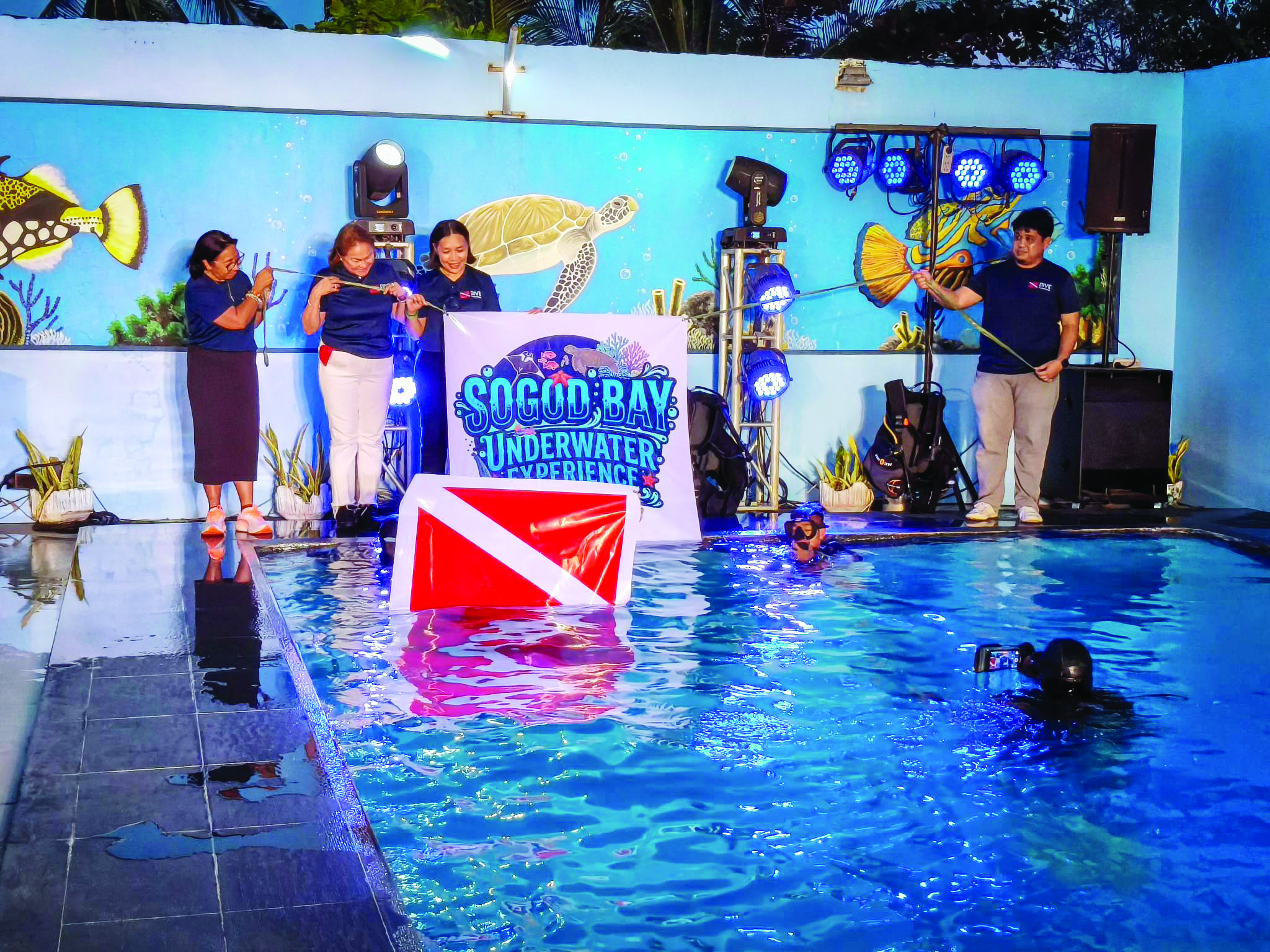
Tourism stakeholders, divers, environmental advocates, and local officials gathered in Padre Burgos for the four-day “Sogod Bay Underwater Experience” from May 20 to 23, 2026, an initiative led by the Department of Tourism (DOT) regional office aimed at promoting sustainable dive tourism in Eastern Visayas.
For DOT Regional Director Karina Rosa Tiopes, the future of the region’s diving industry depends not only on promotion, but on cooperation among stakeholders committed to protecting the marine environment while creating opportunities for local communities.
“We cannot promote or responsibly develop tourism if there is no cooperation and unity among stakeholders,” Tiopes said during the event’s opening program.
The gathering brought together diving stakeholders from Southern Leyte led by provincial officials and the local government of Padre Burgos headed by Mayor Maria Fe Crispina Poblete.
Representatives from Daram, Borongan City, and the provincial government of Eastern Samar — areas also exploring dive tourism opportunities — also joined the event, along with members of the Association of Leyte Tour Operators, the academe, and officials from the Philippine Commission on Sports Scuba Diving.
Regional directors of the DOT from Regions 5, 6, 10, and 11 attended the activity together with dive shop operators from their respective regions, further boosting efforts to position Southern Leyte in the country’s growing dive tourism market.
Throughout the four-day activity, participants engaged in dive conversations focused on the current state of the diving industry and the role of various sectors in sustaining marine tourism.
The event also featured actual dives in the famed Napantao Dive Site in Padre Burgos and the waters surrounding Limasawa Island, as well as coral planting activities aimed at promoting marine conservation.
Southern Leyte 2nd District Representative Christopherson Yap acknowledged the province’s growing tourism industry but said more infrastructure investments are needed, particularly in accommodations and tourism facilities, to support the increasing number of visitors.
“There is still a lot of work to be done in advancing sustainable tourism initiatives in Eastern Visayas, especially in Southern Leyte,” Yap said.
Vice Governor Rosa Emilia Mercado emphasized that the event goes beyond showcasing dive destinations, describing it as an example of how sustainable tourism, community-led conservation, and forward-looking governance can work together.
“We are unlocking opportunities for our local communities, supporting our operators, and creating sustainable livelihoods for our coastal communities,” Mercado said.
Southern Leyte has become increasingly attractive to divers because of its relatively low tourist density compared to more commercialized dive destinations in the country. Often described by divers as one of the Philippines’ “best-kept scuba diving secrets,” the province offers pristine coral walls, world-class muck diving, and ethical whale shark encounters.
Its dive sites, scattered across Sogod Bay and Panaon Island, are part of one of the country’s key marine biodiversity areas within the Coral Triangle — considered the global center of marine biodiversity.
The area hosts more than 20 dive sites spread across 713 square kilometers of marine waters and is home to around 400 coral species, making it one of Eastern Visayas’ most ecologically significant marine tourism destinations.
(ROEL T. AMAZONA)