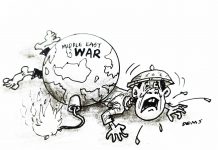
The impeachment complaint against Sara Duterte did not occur in a vacuum; it occurred at a time when prices are rising, people are getting anxious, and the world is getting restless because of war. It is at such a juncture that the spectacle of impeachment feels not only misplaced but even offensive.
It is impossible for me to look away from the timing of this impeachment complaint. While people are growing increasingly anxious about how to stretch their resources as prices continue to rise with every tremor in the Middle East, the country’s stage is occupied by a high-stakes confrontation that feels more like a power play than reform.
The idea that this is purely an anti-corruption move would have been more believable had the same fervor been applied to the most glaring and longstanding cases of large-scale plunder. What we are witnessing is more akin to a selective hunt that is loud, visible, and politically expedient.
There is something deeply troubling about how corruption is being waved as a banner at this particular juncture. If this were a genuine movement, it would not hesitate to pursue even cases involving billions of pesos lost to public funds, even if they point to some of the most powerful people in government. Yet these cases somehow die a silent death under the rubric of technicalities, delay, or even complete silence. It is impossible not to sense a pattern.
Meanwhile, the rest of the country grapples with the aftereffects of decisions made far beyond its shores. Oil prices rise, transportation fares increase, and the prices of basic commodities quietly rise. Sellers in public markets raise prices with trepidation, knowing that each increase digs deeper into already-depleted pockets. People calculate in their minds and find they’re coming up short. In this kind of environment, the government is expected to be omnipresent, stable, and focused. But it feels like it’s elsewhere.
What makes this situation harder to stomach is the juxtaposition. On one side, there is the sense of urgency—real, immediate, and felt in every household budget. On the other hand, there is the sense of theater—long-winded processes, statements, and strategic alliances that seem to lack urgency. The chasm between these two realities is growing by the day, and in this chasm, people’s disillusionment is growing.
I find it hard not to see this as a priority problem. Leadership, at its heart, is about deciding what to prioritize when, in fact, everything is a priority. To prioritize political self-preservation and self-interest over economic security and people’s welfare is not just a miscalculation; it is a dereliction of duty. It is a signal, intended or not, that power is being safeguarded more than people are being cared for.
There is a cost to this, however, which cannot be measured in pesos and cents. When people begin to suspect that the fight against graft is being used as a means rather than an end, they begin to doubt. And when people doubt, even the most sincere efforts are viewed with suspicion. The end result is people becoming cynical, less willing to believe, less willing to hope, and more willing to opt out.
The future does not need grand declarations. What it needs is a change of focus, away from selective pursuits and towards consistent, impartial accountability. What it needs is for those with power to confront not just their rivals but also the deeper, more entrenched challenges that have been draining public resources for a long time now. What it does need, above all, is a focus on what needs to return: the reality of the people who demand little more than a life of stability, fairness, and a government that remembers whom it is supposed to serve.