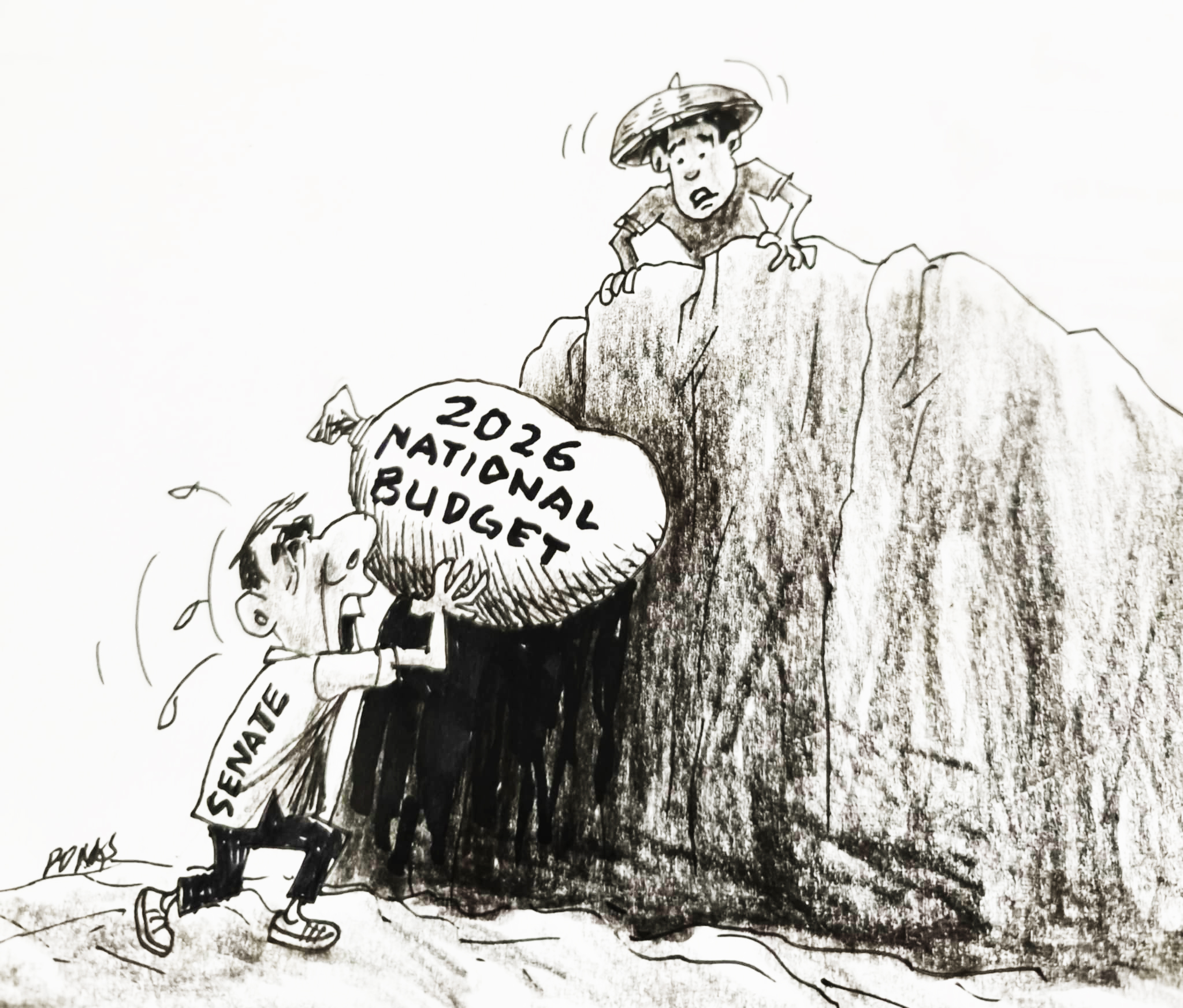
The President’s plea for the Senate to fast-track the 2026 national budget exposes the precarious situation created by delays in Congress. Reenacting the 2025 budget is clearly untenable, and the call for urgency deserves serious attention.
A reenacted budget would freeze government action in a year that demands new programs, updated priorities, and a response to changing economic pressures. Operating under outdated allocations restricts the release of funds for fresh initiatives, disrupts development targets, and reduces the government’s ability to adjust to emerging national needs. It also weakens long-planned expansions in health, education, agriculture, infrastructure, and social protection—sectors that cannot function effectively with last year’s figures.
The delay in budget deliberations is not a minor administrative hiccup but a systemic failure that throttles the operations of agencies relying on timely appropriations. The closer the fiscal year approaches its end, the tighter the legislative timetable becomes, making thoughtful review difficult. What should have been a routine constitutional process now risks turning into a rushed, error-prone exercise, or worse, a forced reenactment that hampers governance and slows economic momentum.
The Senate, along with its counterparts in the House, must recognize that budget inaction carries nationwide consequences. Schools cannot hire personnel, hospitals cannot procure equipment, and local governments cannot implement development projects when new appropriations are missing. The very credibility of government suffers when lawmakers allow politics, feuds, or complacency to stall the nation’s lifeblood document. The national budget is not a bargaining chip; it is a mandate to serve the public with precision and foresight.
The most straightforward way forward is for Congress to prioritize deliberations with discipline and efficiency, cutting out nonessential political theatrics and focusing solely on passing a responsive national budget before the year ends. Only a timely, well-examined budget can ensure that governance proceeds without disruption and that public services remain steady in a period already burdened by economic uncertainty.