
TACLOBAN CITY — A traditional corn variety known for its reported resistance to drought and pest attacks is being promoted by the Department of Agriculture (DA) as a potential alternative for farmers facing increasingly unpredictable weather conditions in Eastern Visayas.
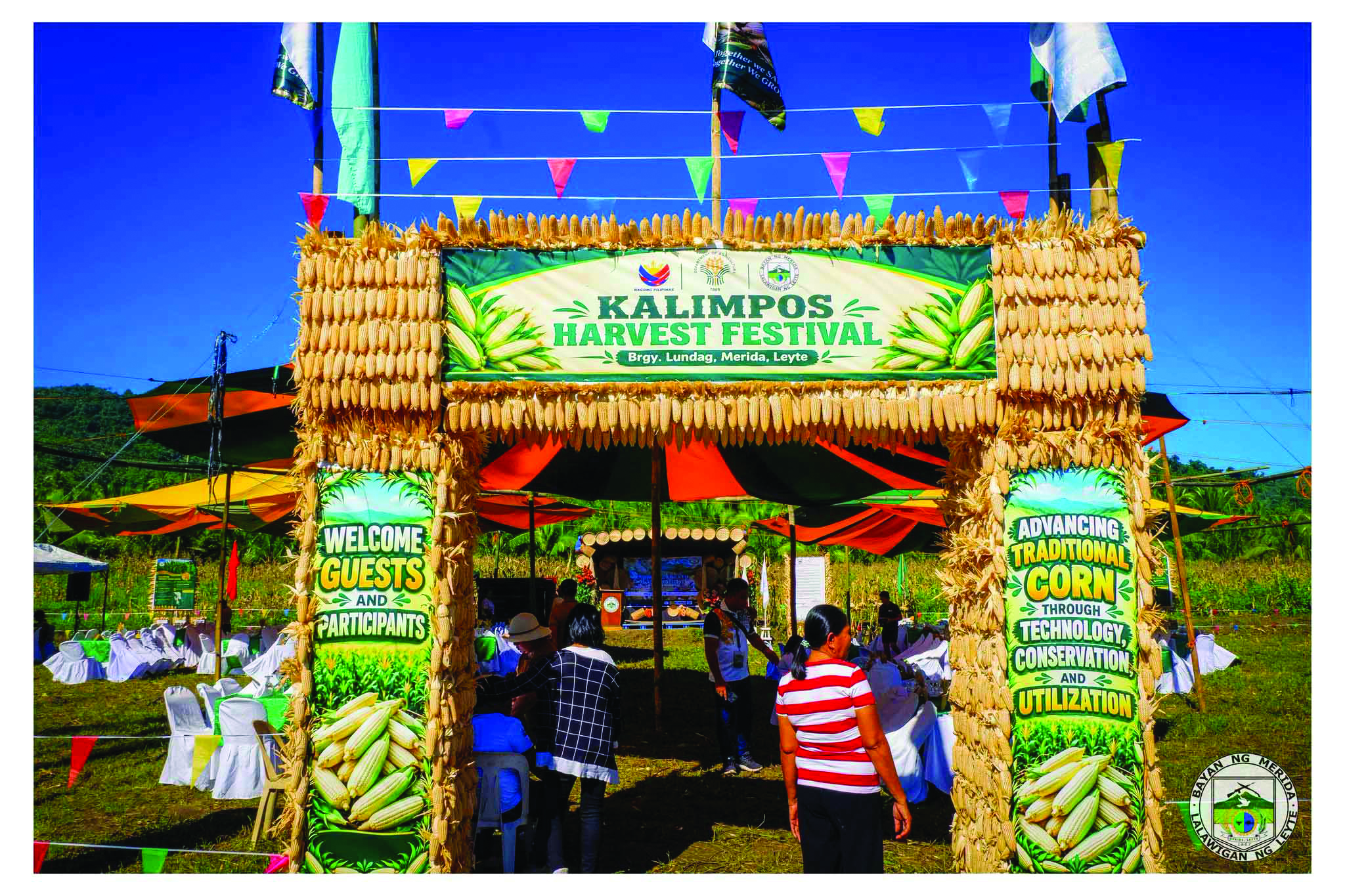
The DA Regional Field Office 8, through its Abuyog Experiment Station (AES), showcased the performance of the Kalimpos corn variety during a Farmers’ Field Day and Harvest Festival held on Oct. 28–29 in Barangay Lundag, Merida, Leyte.
The activity featured the initial results of a three-hectare pilot project involving 11 corn farmers, aimed at conserving and improving the quality of the traditional variety through purification and wider utilization.
Carrying the theme “Binhi nga karaan, ani sa kauswagan,” the initiative seeks to preserve Kalimpos corn’s desirable characteristics while exploring its potential to strengthen climate-resilient agricultural production.
The variety is known for its reported ability to withstand drought and pest attacks and has an estimated shelling recovery of about 80 percent.
Under the prevailing field conditions, the pilot area recorded an average fresh grain yield of three metric tons per hectare, equivalent to a computed dry grain yield of 2.25 metric tons per hectare.
Mona Liza Ruiz, an AES researcher, said preserving traditional corn varieties is important in developing more resilient farming systems amid climate change and increasing pest threats.
She encouraged farmers to consider planting Kalimpos corn, citing its potential to withstand adverse conditions and contribute to more sustainable corn production.
The initiative has also gained the support of the Merida local government under Mayor Rolando Villasencio, which passed a resolution encouraging the conservation and utilization of traditional corn varieties in the municipality.
Villasencio said the local government is prepared to support agricultural initiatives that could benefit corn farmers and encourage the wider adoption of Kalimpos corn.
The harvest festival also allowed farmers and other stakeholders to observe the variety’s performance under actual field conditions and exchange experiences on its cultivation.
Among the participating farmers was 72-year-old Artemio Sagaldia, who planted Kalimpos corn for the first time. Despite heavy rains and pest attacks during the growing period, he said the crop recovered and showed promising results, making him optimistic about his harvest.
The project aims to preserve the variety’s desirable traits, produce quality planting materials, and make Kalimpos corn more accessible to other farming communities.
Through its partnership with the Merida local government, DA- 8 hopes to strengthen the conservation of local agricultural resources and explore the potential of traditional corn varieties in helping farmers adapt to changing climate conditions.
(ROEL T. AMAZONA)