
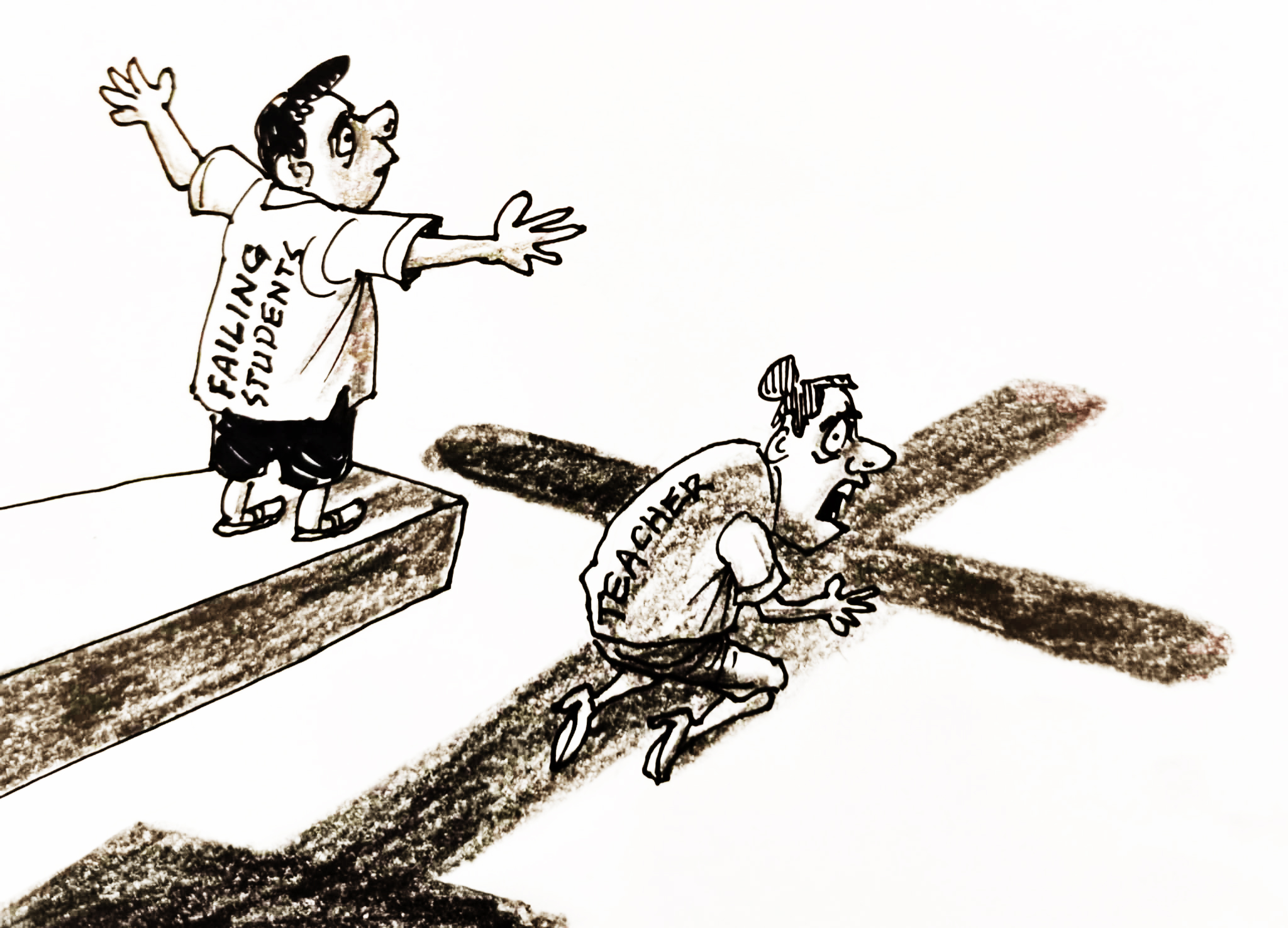
The Department of Education’s no-one-left-behind policy is often praised as learner-centered and compassionate, but in practice, it has become unfair to teachers and harmful to education quality. What is presented as protection for students has turned into a system that rewards neglect and punishes accountability.
Under this policy, when a student consistently performs poorly due to a lack of effort, the burden of failure is almost entirely shifted to the teacher. To give a failing mark, teachers are required to complete layers of documentation, remediation plans, home visits, and reports, many of which are difficult or unrealistic given class sizes, workloads, and limited resources. The process consumes time and energy far beyond what is reasonable, making it appear that the teacher, not the student, is at fault for academic neglect.
Faced with these demands, many teachers choose the path of least resistance: they pass students who have clearly not mastered basic competencies. This is not done out of laziness, but out of survival within an unforgiving system that penalizes honesty and diligence. As these students move up the grade levels, the same practice continues until the learning gap becomes too large to hide, yet too entrenched to correct.
The consequences surface most clearly at the tertiary level, where colleges encounter students who struggle to read, write, or reason at the expected level. This reflects poorly on the entire education system and weakens the nation’s human capital competitiveness. Worse, it cultivates a culture of irresponsibility among learners, teaching them that effort is optional and consequences are negotiable.
There should be a balance between compassion and responsibility by restoring academic standards and protecting teachers who enforce them in good faith. Clear, realistic policies should support remediation without turning it into punishment for educators, while students must be taught early that actions have results. The system can genuinely serve learners without sacrificing truth, discipline, and educational integrity.