(BFAR-Eastern Visayas)
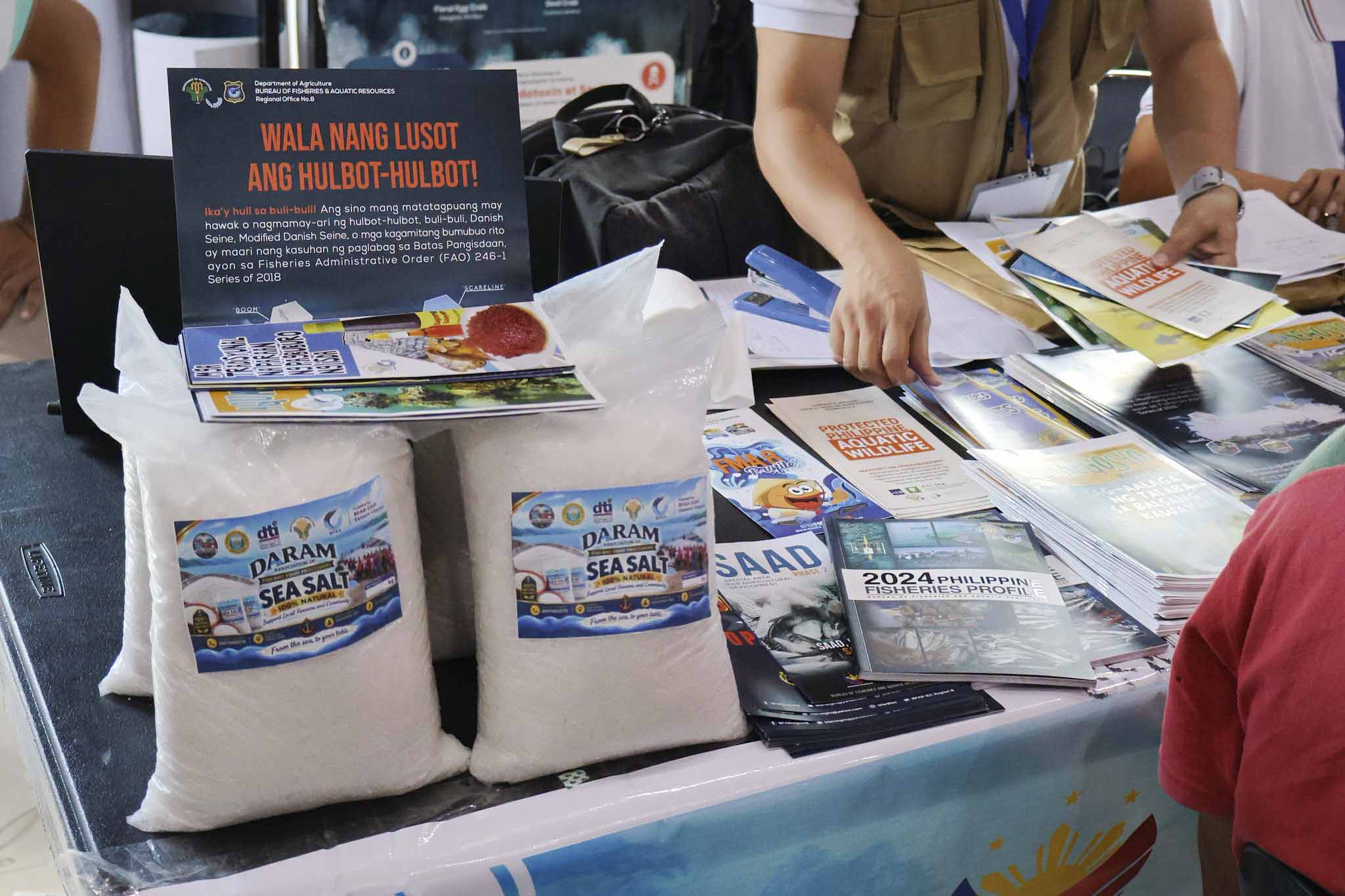
TACLOBAN CITY – Fisherfolk in Daram, Samar are turning to solar-powered salt production as an additional source of income, with government assistance providing equipment and training to help them develop the new livelihood activity.
The Daram Association of Fish and Squid Processors and the Barangay Ubo Dried Fish Vendors Association received equipment, materials and production inputs through the Development of the Salt Industry Project (DSIP) of the Bureau of Fisheries and Aquatic Resources (BFAR).
Gilda Dosal Añez, president of the Daram Association of Fish and Squid Processors, said salt production has good potential as a livelihood because it requires relatively little capital and can be managed by women.
“The potential of salt production as a livelihood is high because it does not require a large capital investment and can be easily managed, particularly by women,” Añez said.
The Daram association, composed of 16 fisherfolk members, and the Barangay Ubo association, with 25 members, each received a solar salt production module using a low linear density polyethylene (LLDPE) liner and frame worth P100,000.
The groups also received a generator, submersible pump and high-density polyethylene drums, as well as capability-building activities to help them operate and manage the technology.
Their initial production yielded 180 kilograms of salt, which the associations used for their fish-drying activities.
The initial output showed how salt production could complement their existing livelihood activities while reducing their need to purchase salt for fish processing.
The associations plan to increase production by adding more liner setups and eventually shifting to mass production. They also intend to produce iodized, food-grade salt and explore other value-adding opportunities for their products.
They also plan to replicate the technology in other barangays interested in adopting the solar salt production system.
BFAR-8, through the DSIP, is set to provide additional P300,000 worth of collapsible salt production setups to associations in Daram to further increase their production capacity and the availability of locally produced salt.
The intervention is expected to provide fisherfolk with an additional livelihood and income source while contributing to the development of the local salt industry.
In Eastern Visayas, the DSIP has identified 230 individuals from 13 associations and one cooperative to receive various salt production interventions.
The program covers Daram Island in Samar; San Roque in Northern Samar; Maasin and Hinunangan in Southern Leyte; Baybay City in Leyte; Guiuan and Arteche in Eastern Samar; and Naval and Maripipi in Biliran.
( ROEL T. AMAZONA)