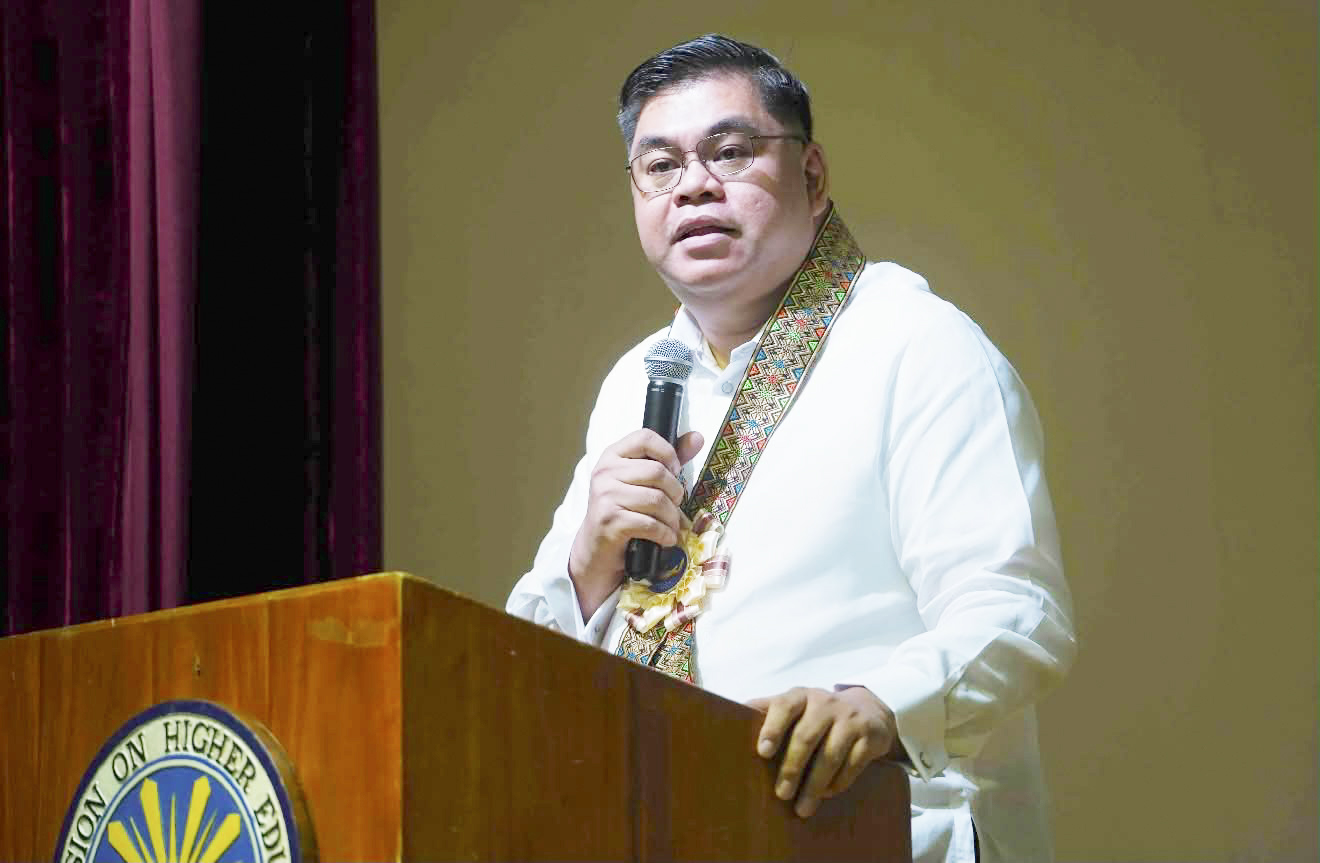
TACLOBAN CITY — State universities and colleges must take a more active role in addressing the country’s learning crisis before its effects reach their classrooms, House Committee on Higher and Technical Education Chairperson and Tingog party-list Rep. Jude Acidre said.
Acidre issued the call during the “Strategic Alignment on the Role of SUCs and AACCUP in National Learning Recovery” held at the Commission on Higher Education Auditorium, citing data that showed a significant number of Filipino learners are failing to acquire basic reading and other competencies.
Department of Education data showed that 48.76 percent of learners were not reading at grade level by Grade 3, Acidre said.
He also cited findings of the Second Congressional Commission on Education (EDCOM II) showing what it described as a “proficiency collapse,” with about 30 percent of Grade 3 learners meeting proficiency standards but less than 1 percent reaching the same level by Grade 12.
“The nine-year-old who cannot read today will be sitting in one of your classrooms in eight years. She is not a basic education problem that will stay inside basic education. She is your incoming freshman,” Acidre said.
He urged SUCs to look beyond conventional measures of institutional performance, such as the number of academic programs, graduates and research outputs, and assess whether their programs are contributing to improved learning outcomes and stronger communities.
Acidre also underscored the importance of quality assurance and accreditation, saying these processes should translate into better education and measurable institutional improvement rather than simply compliance with requirements.
Teacher education, he said, is another area requiring urgent attention.
(LIZBETH ANN A. ABELLA)