TACLOBAN CITY — The Philippine Coconut Authority (PCA) is targeting the planting of 128,000 hybrid coconut seedlings across Eastern Visayas over a three-month period as part of a massive replanting drive aimed at replacing aging and unproductive trees.
The planting campaign, which began in July and will run until September, is being carried out under the PCA’s Simultaneous Massive Coconut Planting Program, with coconut farmers and government agencies participating in activities across the region.
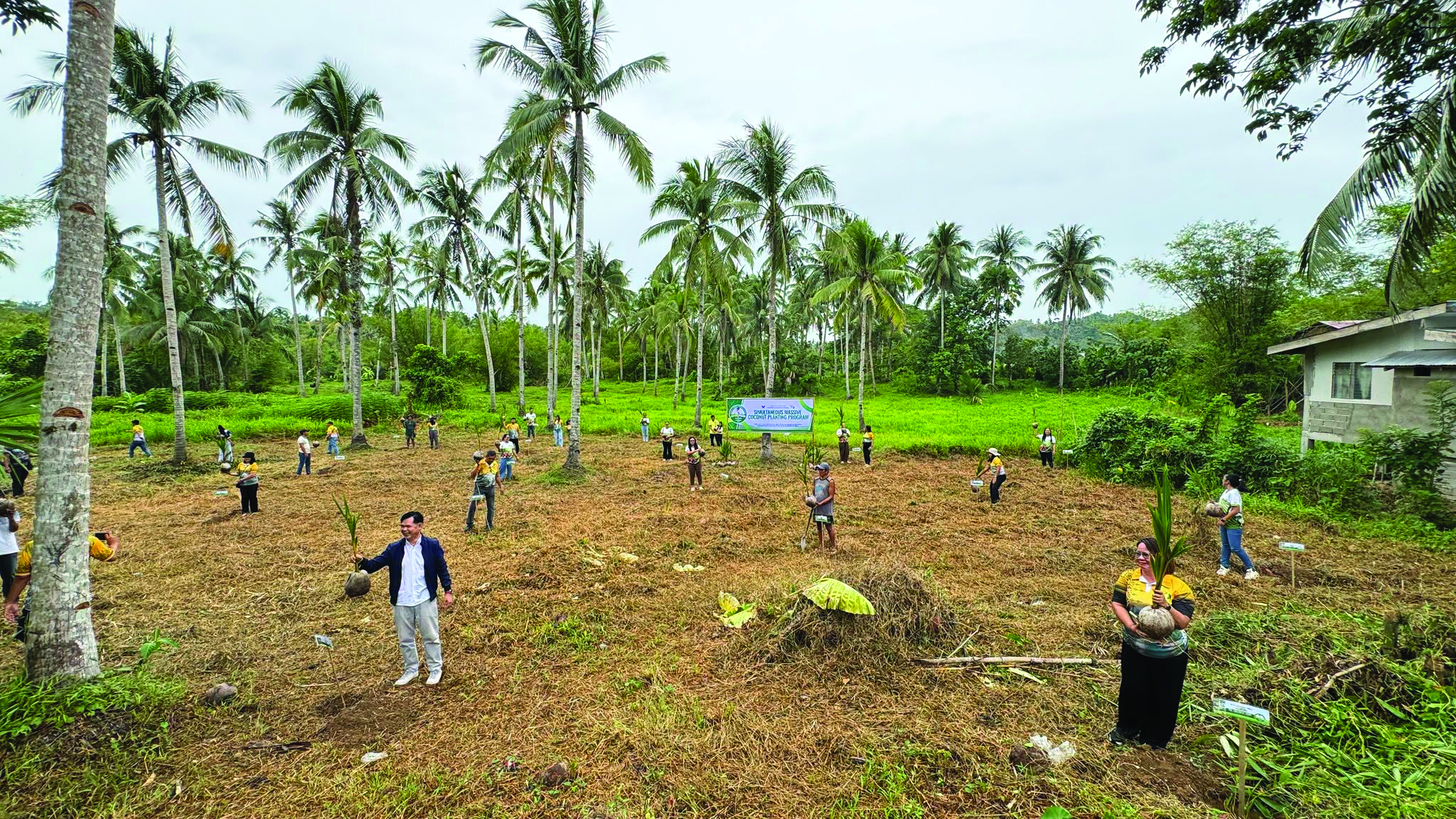
In Leyte, the PCA led the planting of 286 hybrid coconut seedlings in Barangay Buri, Burauen, where representatives of various government agencies, farmer organizations and academic institutions joined the activity.
Among those who participated were personnel from the Philippine Navy, Philippine Army, Philippine Air Force, Philippine National Police and Bureau of Fire Protection, as well as students of the Eastern Visayas State University-Burauen Campus and officials and personnel from the provincial and local governments.
The PCA said thousands of coconut seedlings were planted in different parts of Eastern Visayas during the simultaneous planting activity.
Nationwide, the agency and its partner organizations are targeting more than seven million coconut seedlings as part of the massive replanting program.
The initiative is also being implemented through the Participatory Coconut Planting Project (PCPP), an incentive-based program that encourages farmers and communities to take part in the planting and replanting of coconut trees.
Endalicia Quilloy, business manager of the Barangay Esperanza Organic Farmers Agriculture Cooperative in Burauen, said the government’s assistance has helped farmers cope with the high cost of farm inputs.
“The assistance is a big help to us because we are given free fertilizer and coconut seedlings, especially now that there is the Participatory Coconut Planting Project,” Quilloy said.
Quilloy said her farm’s coconut production declined after a destructive typhoon hit the area last year.
“Before the destructive typhoon last year, we used to harvest 6,000 nuts every quarter. The number dropped to only 3,000 this year. With the replanting, we are positive of seeing full recovery in two years,” she said.
She has planted nearly 300 coconut trees on her 2.6-hectare farm.
While waiting for the newly planted coconut trees to become productive, Quilloy said her family is also growing root crops and bananas between the coconut trees to provide additional income.
She said continued government support remains important for coconut farmers, particularly because of the rising cost of fertilizers and other farm inputs.
(ROEL T. AMAZONA)