ORMOC CITY — Police are investigating the discovery of an unidentified body found inside a sack along the provincial highway in Barangay Liberty, Palompon, Leyte, on Wednesday afternoon, July 1, in what authorities suspect may be a case of homicide.
Palompon Officer-in-Charge of Police, Cpt. Rushty Alvarado, said the body was discovered at around 12:50 p.m. by village councilor Eden Rodrigo while she and several companions were conducting a routine inspection of the village’s waterline.
According to Alvarado, village chairman Gilbert Toledo reported the incident to the Palompon Municipal Police Station at around 1:15 p.m., prompting responding officers to proceed to the area to verify the report and secure the scene.
Police found the decomposing body inside a white rice sack bearing the handwritten markings, “BOO: F7, HUWAG TULARAN, DU30.”
Personnel from the Ormoc Forensic Unit processed the crime scene and estimated that the victim had been dead for about three to five days based on the advanced stage of decomposition and the presence of maggots.
Authorities said the victim was wearing a T-shirt and jersey shorts and had a tribal tattoo on the chest. No visible stab or gunshot wounds were found during the initial examination.
Crime scene investigators also recovered a small transparent plastic sachet containing a white crystalline substance suspected to be shabu from the right pocket of the victim’s jersey shorts.
Police have requested the Municipal Health Officer of the Palompon Rural Health Unit to conduct a post-mortem examination to determine the victim’s exact cause of death.
Authorities are continuing efforts to identify the victim and determine the circumstances surrounding the killing. The case remains under investigation.
ORMOC CITY — A 48-year-old tuba gatherer was declared dead after he reportedly fell from a coconut tree while collecting coconut sap in Sitio Bukid, Barangay Calingcaguing, Barugo, Leyte, on Sunday afternoon, June 28.
Police identified the victim only by the alias “Nico,” a resident of said town, Barugo.
According to the Barugo Municipal Police Station, officers responded at around 3 p.m. after receiving a report from a concerned citizen about a lifeless body found on the private property of Praxidio Bagares Llosa in Sitio Bukid.
Upon arriving at the scene, responding officers confirmed the report and found the victim lying lifeless at the foot of a coconut tree.
Initial investigation revealed that the victim accidentally fell while gathering tuba after the dried coconut frond he was holding reportedly broke off, causing him to lose his grip and plunge to the ground. His body was later found leaning against the trunk of the tree.
The victim was transported by rescue personnel to the Barugo Municipal Infirmary, where the attending physician declared him dead on arrival.
Police said further investigation showed that the victim had left home at around 6 a.m. to gather tuba before planning to buy groceries at the market in Carigara, Leyte. When he failed to return home as expected, his live-in partner went to the area where he regularly harvested coconut sap and discovered him already lifeless.
The landowner told investigators that the victim was the only person authorized to gather tuba on the property and that no other individuals had entered the area that day.
Authorities said no signs of foul play were observed at the scene. The victim’s remains were later released to his family.
EXTENDING A HELPING HAND. Tacloban City Councilor Ferdinand Martin “Marty” Romualdez Jr. distributes relief goods to families displaced by a fire in Purok 5, Barangay 92, Apitong, Tacloban City on Wednesday, July 1. The assistance, which included rice, canned goods, hygiene kits, blankets, pails, and tarpaulins, was part of efforts to help affected residents recover from the disaster.
(Photo Courtesy)
EXTENDING A HELPING HAND. Tacloban City Councilor Ferdinand Martin “Marty” Romualdez Jr. distributes relief goods to families displaced by a fire in Purok 5, Barangay 92, Apitong, Tacloban City on Wednesday, July 1. The assistance, which included rice, canned goods, hygiene kits, blankets, pails, and tarpaulins, was part of efforts to help affected residents recover from the disaster. (Photo Courtesy)
TACLOBAN CITY — City Councilor Ferdinand Martin “Marty” Romualdez Jr. on Wednesday, July 1, extended immediate relief assistance to families displaced by a fire that razed several houses in Purok 5, Barangay 92, Apitong, assuring victims of continued support as they recover from the disaster.
Romualdez personally visited the affected community to check on the condition of the fire victims and distribute emergency relief goods aimed at helping families meet their immediate needs.
The relief packs included sacks of rice, assorted canned goods, hygiene kits, blankets, pails, and tarpaulins.
He said the assistance is part of his office’s ongoing commitment to provide immediate support to Tacloban residents affected by emergencies and calamities.
“Our priority is to ensure that families affected by this tragedy receive immediate assistance as they begin rebuilding their lives,” Romualdez said.
He assured residents that his office remains ready to extend further assistance and coordinate with concerned agencies to address their other urgent needs.
“In times of hardship, it is important that every Taclobanon feels they are not alone. We will continue to work together to help every affected family recover,” he added.
Romualdez also urged the community to show solidarity and compassion by helping families displaced by the fire, saying collective action and community support are essential in helping victims recover from disasters.
The fire left several families homeless, forcing them to seek temporary shelter while assessing the damage to their homes and belongings.
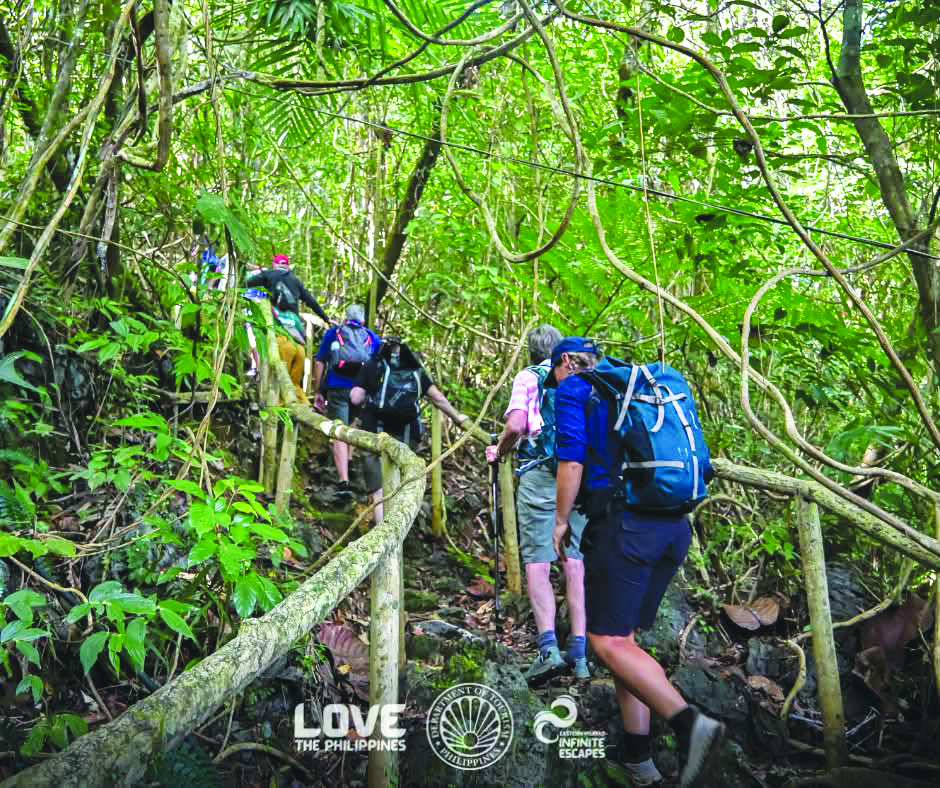
SAMAR’S GLOBAL APPEAL. International tourists aboard the expedition cruise ship Heritage Adventurer explore the Municipality of Paranas, Samar, during a shore excursion on July 3, 2026. The visitors experienced the province’s eco-tourism attractions, bird-watching trails, local cuisine, and community-based tourism initiatives, highlighting Samar’s growing reputation as an emerging destination for international expedition cruises. (DEPARTMENT OF TOURISM-EASTERN VISAYAS)
SAMAR’S GLOBAL APPEAL. International tourists aboard the expedition cruise ship Heritage Adventurer explore the Municipality of Paranas, Samar, during a shore excursion on July 3, 2026. The visitors experienced the province’s eco-tourism attractions, bird-watching trails, local cuisine, and community-based tourism initiatives, highlighting Samar’s growing reputation as an emerging destination for international expedition cruises. (DEPARTMENT OF TOURISM-EASTERN VISAYAS)
TACLOBAN CITY – Samar welcomed another wave of international visitors on Friday, July 3, as the expedition cruise ship Heritage Adventurer returned to the province, bringing 110 foreign tourists for a day-long immersion into the island’s world-class eco-tourism destinations, local cuisine, and community-based tourism experiences.
The Heritage Adventurer made its second visit to Samar, carrying 110 guests from Australia, New Zealand, Europe, and the United States, along with 14 expedition team members, underscoring the province’s growing appeal as an international expedition cruise destination.
Hosted by the Municipality of Paranas, the visitors embarked on a carefully curated shore excursion that highlighted Samar’s rich biodiversity, natural attractions, and cultural heritage.
The itinerary featured eco-trail bird watching, a visit to the Arboretum, and a culinary experience through the Secret Kitchens of Samar wellness stop at the Torpedo Boat Ride Visitor Center, where guests sampled local delicacies while learning about Samar’s culinary traditions.
The excursion offered international travelers a firsthand experience of the province’s pristine forests, unique wildlife, and community-based tourism initiatives, while showcasing the warmth and hospitality of the Samarnon people.
Local tourism officials said the return of the Heritage Adventurer signals growing confidence among international expedition cruise operators in Samar’s ability to provide safe, sustainable, and high-quality tourism experiences.
The successful port call was made possible through the coordinated efforts of local government units, tourism stakeholders, national government agencies, and host communities that worked together to ensure a memorable visit for the international guests.
The Heritage Adventurer first called on Samar in June 2025, marking the province’s entry into the international expedition cruise circuit. Its return this year reflects Samar’s sustained efforts to position itself as one of the country’s emerging cruise tourism destinations through the promotion of sustainable tourism, environmental conservation, and authentic cultural experiences.
Provincial tourism stakeholders expect the repeat visit to generate greater international exposure for Samar, stimulate the local economy, and create more livelihood opportunities for communities engaged in eco-tourism, food tourism, transportation, and other tourism-related enterprises.
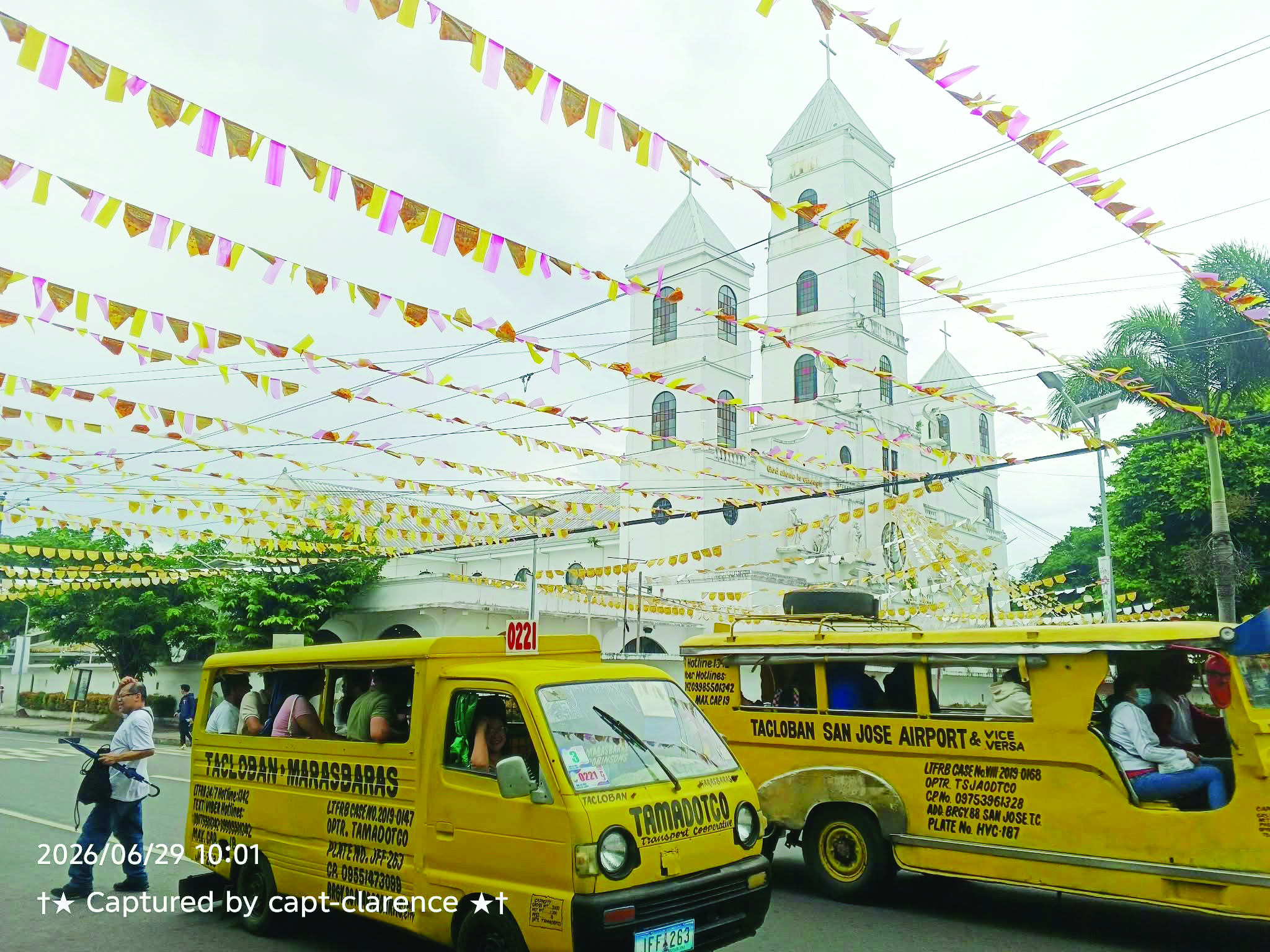
Faith Amid Grief. This year’s annual fiesta of Tacloban City is marked with grief following the shooting incident at San Jose National High School that killed three students, among them is 15-year-old Chris Lorenz Fabian, whose burial coincides with the city’s fiesta celebration on June 30, deepening the community’s mourning as it honors its patron, the Holy Child Jesus. (Joey A. Gabieta)
Faith Amid Grief. This year’s annual fiesta of Tacloban City is marked with grief following the shooting incident at San Jose National High School that killed three students, among them is 15-year-old Chris Lorenz Fabian, whose burial coincides with the city’s fiesta celebration on June 30, deepening the community’s mourning as it honors its patron, the Holy Child Jesus. (Joey A. Gabieta)
Amid grief following mass shooting incident
TACLOBAN CITY – This year’s 137th Feast of Señor Sto. Niño will carry a deeper meaning for the people of Tacloban as thousands of devotees gather on June 30 to pray not only in thanksgiving but also for healing and peace following the tragic mass shooting at San Jose National High School that claimed the lives of three students and injured 20 others.
The annual celebration at the Archdiocesan Shrine of Sto. Niño comes just days after one of the city’s deadliest acts of violence in recent years, transforming the traditional fiesta into an occasion of communal mourning, reflection, and renewed faith. Church leaders hope the devotion to the Holy Child Jesus, long regarded as a source of hope and protection, will bring comfort to grieving families and a sense of unity to the community.
Carrying the theme, “Mystical Body of Christ: A Church in Synodal Journey,” this year’s celebration invites the faithful to walk together in faith, healing, and solidarity amid life’s trials.
The feast was preceded by a nine-day novena that began on June 20, drawing pilgrims and devotees from across Eastern Visayas to the shrine for prayer, thanksgiving, and reflection.
The celebration reaches its peak on June 30 with the Pontifical Feast Day Mass at 9:30 a.m., to be presided over by Archbishop John Du, archbishop of Palo, followed by the Solemn High Mass at 6 p.m., to be celebrated by Rev. Msgr. Benedicto Catilogo, parish priest of St. Arnold Janssen Parish in Tacloban City.
The Vigil Mass on June 29 was presided over by Bishop Oscar Jaime Florencio, bishop of the Military Ordinariate of the Philippines, as devotees prepared spiritually for the city’s patronal feast.
Rev. Fr. Kelvin Apurillo, assistant parish priest of the Archdiocesan Shrine of Sto. Niño, said the synodal theme reminds the faithful that the Church journeys together through both moments of joy and times of suffering, always anchored in faith and hope in Christ.
For more than a century, devotion to Señor Sto. Niño has remained at the heart of Tacloban’s religious identity.
The image of the Holy Child Jesus has been revered as the city’s patron since the late 19th century, when local Catholics entrusted the community to His protection during times of hardship, calamities, epidemics, and war.
The annual fiesta, first celebrated in 1889, has since become one of Eastern Visayas’ oldest and most enduring religious traditions, attracting thousands of devotees each year.
Throughout the decades, Tacloban has repeatedly turned to Señor Sto. Niño in moments of adversity.
Following the devastation brought by Super Typhoon ‘Yolanda’ in 2013, many survivors gathered at the shrine to seek strength and hope amid the ruins.
This year, that same devotion takes on renewed significance as the city mourns the young lives lost in the San Jose National High School shooting and prays for the recovery of those injured.
Church officials said the feast is not only a celebration of faith but also a reminder that healing is possible when communities come together in prayer, compassion, and solidarity.
They encouraged devotees to offer special prayers for the victims, their families, and the entire Tacloban community as the city continues to recover from the tragedy.
As thousands converge at the Archdiocesan Shrine of Sto. Niño on Tuesday, organizers hope this year’s celebration will become a testament to Tacloban’s resilience—a community choosing faith over fear and hope over despair as it honors its beloved patron.
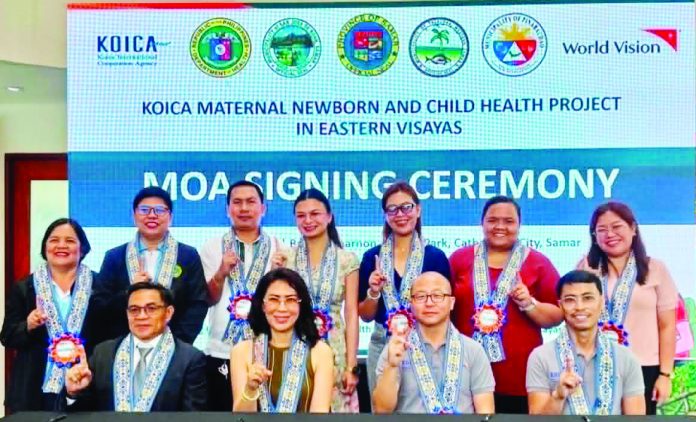
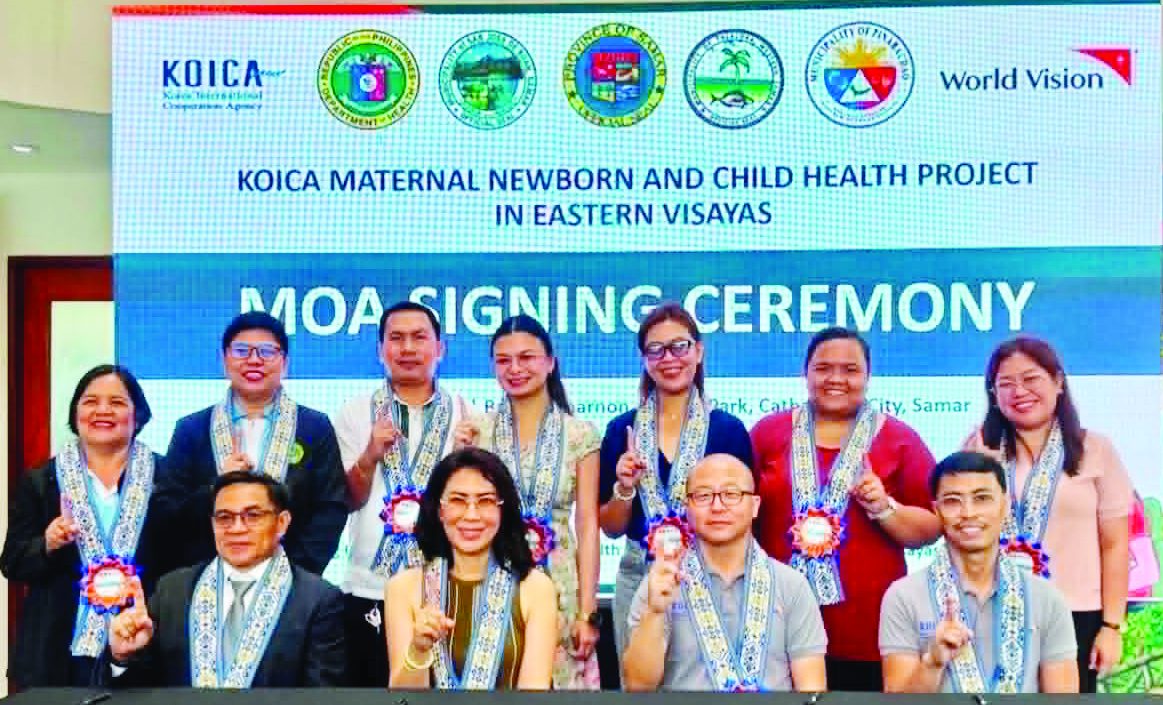
AGREEMENT. Officials of the Korea International Cooperation Agency (KOICA) through its project director Jihwan Jeon and the provincial Government of Samar led by Gov. Sharee Ann Tan, together with representatives from World Vision through its project manager Romil Jeffrey Juson, and partner municipalities, exchange documents during the signing of the memorandum of agreement for the ₱100-million Phase 2 Maternal, Newborn and Child Health (MNCH) Project held in Catbalogan City on June 23. (CONTRIBUTED PHOTO)
AGREEMENT. Officials of the Korea International Cooperation Agency (KOICA) through its project director Jihwan Jeon and the provincial Government of Samar led by Gov. Sharee Ann Tan, together with representatives from World Vision through its project manager Romil Jeffrey Juson, and partner municipalities, exchange documents during the signing of the memorandum of agreement for the ₱100-million Phase 2 Maternal, Newborn and Child Health (MNCH) Project held in Catbalogan City on June 23. (CONTRIBUTED PHOTO)
CATBALOGAN CITY — A renewed international partnership aimed at saving the lives of mothers and newborns has been formalized in Samar, as the Korea International Cooperation Agency (KOICA) and the provincial government of Samar signed a memorandum of agreement (MOA) for the expansion of a major health program targeting maternal and child mortality.
The MOA signing, held on June 23 in Catbalogan City, marked the rollout of Phase 2 of the Maternal, Newborn and Child Health (MNCH) Project, a five-year initiative implemented by KOICA in partnership with World Vision and local government units.
The event was witnessed by representatives from the pilot municipalities of Pinabacdao, Talalora, and San Jose de Buan, alongside provincial and health officials.
Pinabacdao Mayor Viannery Mabag welcomed her municipality’s inclusion in the second phase, citing rising concerns over teenage pregnancies.
“As of latest data, we have recorded 45 teenage mothers and it’s very alarming. Being a mother is already challenging, how much more as a teenage mother,” Mabag said, noting the heightened risks faced by young mothers, including maternal complications and possible mortality.
Despite the challenges, Mabag expressed optimism that the expanded program would help strengthen local interventions and improve reproductive health awareness among adolescents.
KOICA MNCH Project Director Jihwan Jeon said the continuation of the program reflects the success of its first phase in Eastern Visayas.
“The government of South Korea, through KOICA, selected Eastern Visayas to help address its high level of maternal death and teenage pregnancy,” Jeon said, adding that the region remains an “important partner” in improving health outcomes.
He added that Phase 2 will run for five years, underscoring long-term commitment to strengthening local health systems.
Samar Governor Sharee Ann Tan welcomed the initiative, saying the project aligns with the province’s health priorities. She also assured full government support for its implementation.
“Rest assured that the fund for this project will be utilized accordingly,” the governor said.
The Phase 2 MNCH Project, valued at about P100 million, will run from 2026 to 2030. It expands earlier interventions to further improve maternal and child health outcomes, strengthen health literacy, and upgrade referral systems across the province.
Key components include capacity building for barangay health workers and medical personnel, improvement of health facilities, provision of medical supplies and vitamins, and strengthening of emergency referral and disaster response systems.
It also focuses on maternal health education for pregnant and lactating women, alongside improved local health financing mechanisms.
The program is implemented in close coordination with the Department of Health and various local government units in Samar.
Also present during the ceremony were provincial officials and representatives from World Vision, led by project manager Romil Jeffrey Juson.