29.2 C
Tacloban City
September 23, 2026 - Wednesday | 12:07 PM
Home Blog Page 959

DSWD, Samar provincial govt enters agreement to improve literacy among students

0
LITERACY IMPROVEMENT. Social Welfare Sec. Rex Gatchalian was joined by Samar Gov. Sharee Ann Tan and her brother, Rep. Reynolds Michael Tan in the launching of the “Tara, Basa Tutoring Program’ aim to improve the literacy among students in the province. (SAMAR PROVINCIAL INFORMATION OFFICE)

‘Tara Basa Tutoring Program’
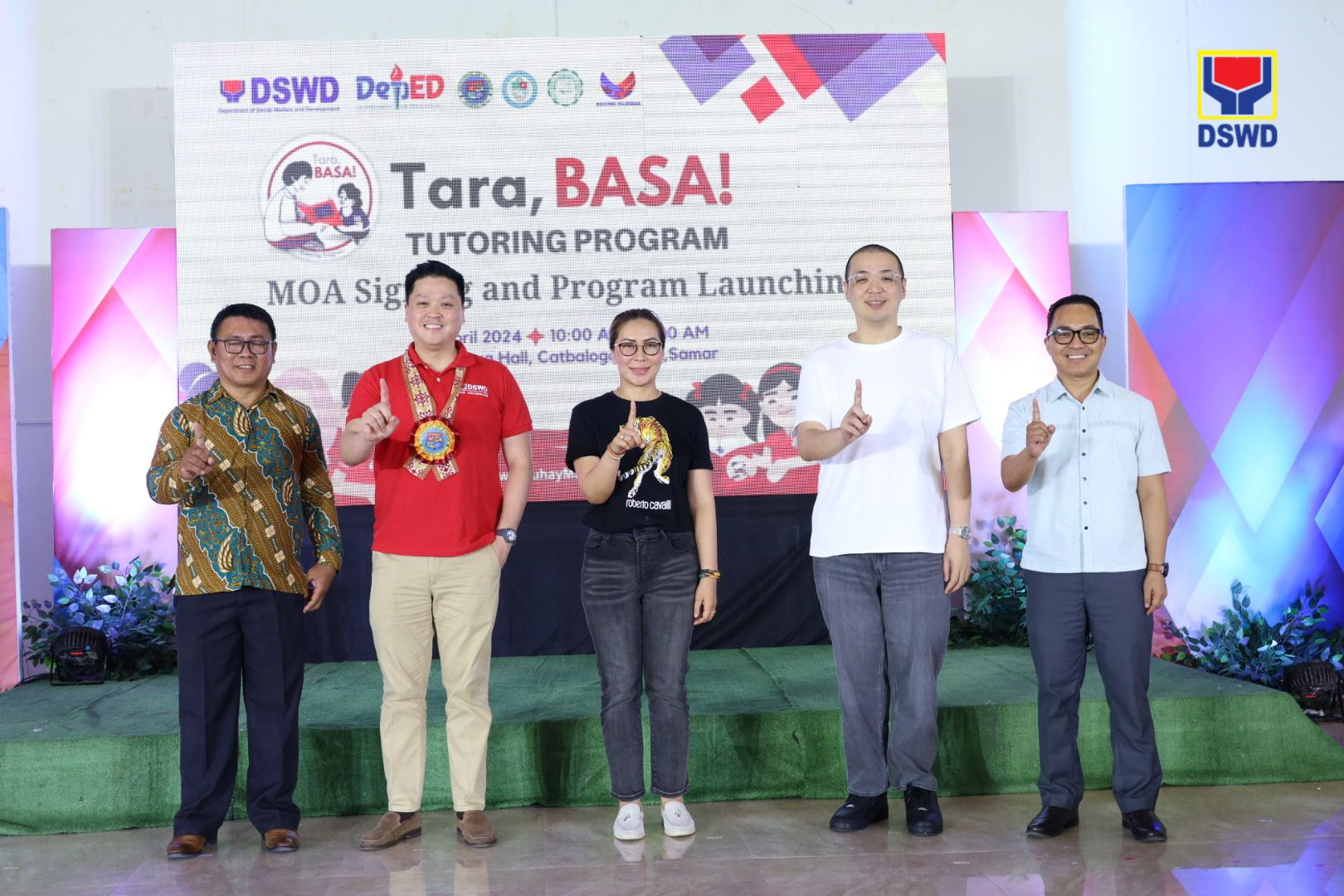
LITERACY IMPROVEMENT. Social Welfare Sec. Rex Gatchalian was joined by Samar Gov. Sharee Ann Tan and her brother, Rep. Reynolds Michael Tan in the launching of the “Tara, Basa Tutoring Program’ aim to improve the literacy among students in the province.
(SAMAR PROVINCIAL INFORMATION OFFICE)

TACLOBAN CITY – The Department of Social Welfare and Development (DSWD) and the provincial government of Samar entered a memorandum of agreement for the implementation of the ‘Tara, Basa Tutoring Program’ in the province.

The agreement was signed by DSWD Secretary Rex Gatchalian and Governor Sharee Ann Tan on Friday (April 19).

Also present during the occasion were Rep. Reynolds Michael Tan(2nd district) and Samar State University (SSU) president Redentor Palencia; and Northwest Samar State University (NSSU) president Benjamin Pecayo, represented by its university vice president for academic affairs, Ramil Catamora, among others.

The agreement is part of the ongoing expansion of DSWD’s reformatted educational assistance in more areas across different regions.

“We believe we need to end illiteracy (in the country),” Gatchalian said in his speech prior to the MOA signing attended by 24 mayors in Samar, and beneficiaries of the program.

The Tara, Basa Tutoring Program of the DSWD targets to eradicate learning poverty in the country at the same time helps college students by giving them financial assistance for joining as tutors.

College students who will participate as tutors will be paid P415 per day for 20 days duration of the program.

At least 400 students from the SSSU and NwSSU were selected to tutor 2,000 elementary students who are struggling to read.

They will be joined by 40 youth development workers throughout the duration of the program.

To make the program sustainable parents will have to join the ‘Nanay-Tatay Parenting Program’ or teaching program where they will be trained as first teachers at home.
They will receive P235 a day for attending the teaching session.

Gov. Tan, in her message, expressed her gratefulness to the DSWD for implementing the program in her province.

She also urges the mayors of Samar to support the program once it is cascaded to their respective localities.

Aside from Samar, the same program is also being implemented in San Jose Del Monte City, Malolos City, Bulacan Province, Cebu City, Marawi City, Taraka in Lanao Del Sur, Quezon province, and National Capital Region (NCR).
(ROEL T. AMAZONA)

Ex-teacher found dead with gunshot wound

0

KANANGA, Leyte– The dead body of a former teacher was found in Sitio Mahayahay of Barangay Libongao, this town, at about 11:45 pm last Saturday (April 20).

The victim was identified as Ruel Petogo Brase, 42, married, and a resident of Brgy. Poblacion here.

He was suspected to be a victim of salvaging.

The local police said that they responded to information coming from a telephone call from a concerned citizen who reported the discovery of a dead body in the said place.

The local police immediately responded to the area to verify the information.

Upon arrival in the area, they found the dead body at the side of the road and was hogtied with a gunshot wound in the head.

Brase was a former school teacher who lost his license after living his post without proper permission for a long time.

The former teacher was said to be engaging in the illegal drug trade, according to the police.

He was arrested last Feb. 28, 2023 by local police operatives due to drug possession.

The local police are conducting a thorough investigation on the identity of the suspect and the motive for the killing. (ROBERT DEJON)

Construction of a multi-purpose building for IBP-Leyte reaches 15% completion

0

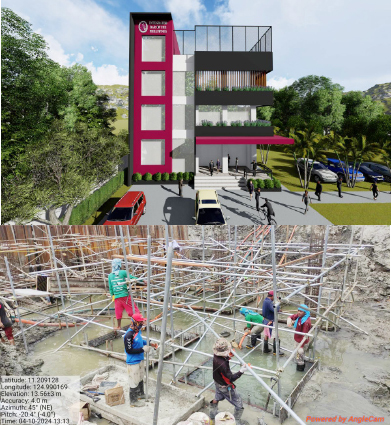
TACLOBAN CITY– The construction of a multi-purpose building for the Integrated Bar of the Philippines (IBP)-Leyte Chapter, located in this city, has reached a milestone, with completion currently standing at 15%.

This significant progress marks a step forward in the development of the P100-million project, which is funded under the General Appropriations Act 2023.

The project encompasses the construction of a three-story multi-purpose building, complete with a roof deck, designed to serve the needs of the IBP Leyte Chapter.

The building is set to feature a spacious lounge area on the ground floor, conference and training rooms on the second floor, as well as quarters and other amenities. Notably, the building will be equipped with an elevator for accessibility purposes.

Scheduled to be completed within 240 calendar days, the project commenced with a Groundbreaking Ceremony on March 3, 2023.

During the ceremony, representatives from the Tacloban City District Engineering Office (TCDEO), the IBP Leyte Chapter, and Tingog Sinirangan collaborated to bury the building plan, marking the official start of construction.

In light of these developments, OIC District Engineer Rebecca G. Yuse issued a statement expressing optimism about the project’s progress.

“We are pleased to announce that the construction of the multi-purpose building for the IBP Leyte Chapter is advancing according to schedule,” stated Engineer Yuse. (PR)

Confiscate and destroy

0

From time to time, we hear of voluminous illegal drugs being confiscated by drug agents, sometimes amounting to billions in worth. We usually rejoice because those prohibited drugs were caught before their likely distribution to would-be victims. Shockingly, we never hear of those dangerous items anymore; the next thing we know is that they have been secretly kept and sold to the market.

This issue of confiscated drugs from drug traders poses a chronic challenge for drug authorities worldwide. While seizures of illicit substances are a crucial part of combating the drug trade, what happens to these confiscated drugs afterward is equally important. All too often, these drugs find their way back into circulation, recycled and resold by unscrupulous individuals looking to profit from addiction and suffering.

The recycling and reselling of confiscated drugs perpetuate a cycle of harm that devastates individuals and communities. When these drugs re-enter the market, they threaten public health and safety, fueling addiction, crime, and violence. Moreover, the lack of accountability in handling confiscated drugs undermines the efforts of law enforcement agencies to disrupt and dismantle drug trafficking networks.

To address this issue effectively, drug authorities must prioritize the safe and permanent disposal of confiscated drugs. Destroying these substances ensures that they cannot be repurposed for illicit use, safeguarding individuals from the physical and psychological harm associated with drug abuse. Furthermore, it sends a clear message that there is zero tolerance for the exploitation of vulnerable individuals through the illicit drug trade.

Destroying confiscated drugs helps to break the cycle of addiction and reduce the demand for illicit substances. Remove these drugs from circulation; let the authorities disrupt the supply chain and make it harder for drug traffickers to operate. This approach not only protects individuals from the dangers of drug abuse but also contributes to the broader effort to create healthier and safer communities.

Socmed’s failure

0
DOMS PAGLIAWAN

Social media platforms have become an integral part of modern life, offering connection, entertainment, and information at our fingertips. However, their failure to effectively combat online scammers is a glaring flaw that puts innocent people at risk. Despite their vast resources and sophisticated algorithms, mainstream social media platforms have fallen short in protecting users from falling prey to scams.

Admittedly, I for one have been victimized by scammers online, more so that I am quite backward when it comes to computer technology. The sheer volume of users and content on platforms like Facebook, Instagram, and Twitter makes it difficult to police every interaction. Scammers exploit this vastness to create fake profiles, posts, and ads that blend seamlessly into the sea of legitimate content. As a result, even vigilant users can easily be deceived by fraudulent schemes.

The algorithms designed to target advertisements and recommend content often inadvertently amplify the reach of scam-related posts. These algorithms prioritize engagement and click-through rates, incentivizing sensational or misleading content that scammers exploit to lure in victims. Thus, instead of thwarting scams, the very mechanisms that drive user engagement inadvertently facilitate their proliferation.

Sadly, social media platforms’ reactive approach to addressing scams is inadequate. They rely heavily on user reports to identify and remove fraudulent content, which means scams can linger undetected until someone flags them. By then, countless users may have already fallen victim, suffering financial losses or even personal harm. For instance, those that advertise fake products on Facebook easily fatten their pockets before numerous buyers are able to detect they have been fooled.

The anonymity afforded by social media makes it easy for scammers to operate with impunity. They can hide behind fake profiles and fictitious personas, making it hard for authorities to track them down and hold them accountable. This lack of accountability emboldens scammers to continue their exploitative activities without fear of consequences.
Not only that, but the lack of comprehensive regulation and oversight further aggravates the problem. While social media platforms have implemented some measures to combat scams, their efforts are often reactive and piecemeal. Without consistent and enforceable regulations, scammers can adapt their tactics to circumvent whatever safeguards are in place, staying one step ahead of authorities and platform administrators.

Unfortunately, the global nature of social media means that scams can transcend geographical boundaries with ease. Scammers can target users from across the world, making it difficult for law enforcement agencies to coordinate efforts and effectively combat these crimes. This lack of coordination allows scammers to exploit jurisdictional loopholes and evade prosecution.

Furthermore, the psychological manipulation employed by scammers preys on human vulnerability and trust. They often use persuasive tactics and emotional appeals to deceive their victims, exploiting their goodwill and desire for connection. Social media platforms, with their emphasis on creating connections and community, inadvertently provide fertile ground for such manipulative tactics to flourish.

Socmed’s failure to effectively combat online scammers is a perennial problem with damaging consequences. It undermines users’ trust in these platforms and exposes them to financial and emotional harm. Platform administrators, regulators, and law enforcement agencies should implement punitive measures and hold perpetrators accountable so they can create a safer online environment for all users.

Preparation for life, beyond the classrooms

0
CLEMELLE L. MONTALLANA,DM, CESE ASSOCIATE PROFESSOR III
CLEMELLE L. MONTALLANA,DM, CESE
ASSOCIATE PROFESSOR III

Education is about molding well-rounded people who are eager to take on a variety of tasks and make valuable contributions to society, not just prepared ones. In order to promote holistic development and better prepare kids for life after school, we examine the critical role that community engagement plays in this opinion piece.

Students are more motivated to learn the material when they can make connections between what they are learning in the classroom and their daily lives. They’re learning how to function in the social environment they call home, not just how to pass an exam. By giving theoretical ideas real-world applications, community engagement enables students to make connections, grasp the wider picture, and soar to new heights while lifting their community along with them.

By tackling real-world challenges, students learn how to think critically, analyze situations, and develop innovative solutions that bring their communities together rather than pushing them apart. This type of learning goes beyond numbers and formulas; it encourages students to understand how these problems impact those around them. We’re teaching them to weigh pros and cons that can’t always be quantified, fostering dynamic and strategic thinking1.

Exposing students to diverse groups within their community equips them with skills essential for their future careers. Interacting with people who have different lifestyles or perspectives sheds light on areas we weren’t well aware of. Learning to communicate effectively, adapt to needs, and work collaboratively are attributes highly valued in the workforce. Community engagement bridges the gap between academics and the real world, ensuring students are well-prepared for their future endeavors1.

Our classrooms are social ecosystems, and when we recognize this, we can create learning environments that ripple through the school and into our larger communities. Various strategies, from small group exercises to special projects, foster community between peers. It’s not just about gathering facts; it’s about weaving creativity, critical thinking, communication, and time management skills into their educational adventure1.

Community engagement isn’t an isolated activity; it’s a ripple effect that extends beyond the school walls. When educators, parents, and community members collaborate, students thrive. They become active citizens who understand their role in society, appreciate diversity, and contribute meaningfully. So let’s embrace community-focused education, where facts and content serve as stepping stones toward a brighter, more interconnected future.

Recent Posts

DALMACIO C. GRAFIL
PUBLISHER

ALMA GRAFIL
EDITOR-IN-CHIEF

ROMEO CEBREROS
OFFICE IN-CHARGE

OFFICE
BRGY. SONGCO, BORONGAN CITY

CONTACT NUMBERS
(055) 261 – 3319 | 0955 251 1533 | 0917 771 0320 | 0915 897 7439 | 0921 511 0010

DALMACIO C. GRAFIL
PUBLISHER

RICKY J. BAUTISTA
EDITOR

ALMA GRAFIL
BUS. MANAGER

OFFICE
RIZAL AVENUE, CATBALOGAN
(INFRONT OF FIRE DEPARTMENT, NEAR CITY HALL)

CONTACT NUMBERS
0917 771 0320 | 0915 897 7439 | 0921 511 0010

EMAIL
lsdaily2@yahoo.com

WEBSITE
www.issuu.com/samarweeklyexpress