22.7 C
Tacloban City
April 09, 2026 - Thursday | 2:24 AM
Home Blog Page 839

Neckties

0
AL ELLEMA
AL ELLEMA

Unless school uniforms for students are designed with neckties nearing the school initials and logo for identity purposes, the one special moment that students are able to wear a necktie, especially males, is during graduation exercises. Thereafter, the lucky graduate who finds a job, especially office work, may continue to wear necktie as part of office uniform.

But seldom are neckties used by workers in the field or in manufacturing warehouses that require perspiring activities in hot places. The necktie is only appropriate in air-conditioned workplaces workers are not exposed to physical activities that will induce perspiration and cause body discomfort at work. With limited skills for office work, the person is constrained any kind of decent job that could somehow assuage poverty and provide food for the family
For those who are not able to finish schooling due to various reasons, chief of them poverty, the chance to see, much more wear a necktie may just be a dream. With the competitive world of work nowadays, those who do not have a college degree are bound to take odd jobs that usually require manual labor. Even the skilled worker could hardly find a job that would place the worker inside an office that is more comfortable.

On a different stroke of fate, there are those who fell to a gruesome fate of misfortune who fail to finish schooling and not able to feel how it is to wear a necktie. The misfortunes had been tragic where young people resort to aborting their life due to circumstances believed to be caused by mental stress, at times desperation and hopelessness.

The incidents had been hogging the breaking news stories on mainstream media as the victims were reportedly young students who fell into hopelessness due to various reasons, some of which are school related. The pressure of schooling that entails so many requirements that are sometimes beyond the financial capacity of the student or the family, assuming there is a family supporting the needs of the student, may cause suicidal tendencies on the part of a student to end it all. There too are cases of persons without any gainful employment of any economic activity to support ones needs and the family that depends for support.

All these incidents are alarming and need responsive action from government as well as the community where such persons in depression or mentally challenged sojourn. The situation calls for immediate action from the government agencies whose mandates are in line with these problems. The need to act is now if there is serious concern to save people from desperation and hopelessness to be found later as a lifeless cold body hanging on a rope necktie.
comments to alellema@yahoo.com

God’s mercy is stronger than our sinfulness

0
FR. ROY CIMAGALA
FR. ROY CIMAGALA

THE readings of the Mass for Tuesday of the 3rd Week of Lent, (Daniel 3,25.34-43; Mt 18,21-35) which this year falls on March 5, remind us that we are all sinners, but God’s mercy is always available if we only do our part of repentance and conversion. Also, the gospel, in particular, highlights the point that in our relation among ourselves, we should be as merciful with each other as God is with us.

With respect to our unavoidable sinfulness, we should avoid over-reacting. What we should immediately do is to go to God, asking for forgiveness, promising some amendment and reparation for our sins, and when able, to go to confession.

We should avoid staying too long keeping some guilt-feelings and sadness in our heart. These conditions are not good for us. They are harmful, and worse, they can be like wedges that make more openings for temptations to come to us. We should get rid of these feelings as soon as possible.

The ideal condition is always for us be at peace with God and with everybody else. We have to ooze with our faith-based confidence. The moment we feel some disturbance in our heart, we should act quickly to seek relief through God’s mercy. Remember St. Paul saying, “Where sin abounded, grace did more abound.” (Rom 5,20) He is slow to anger and quick to forgive.

God is always a father to us. He will always understand us and do everything to help us. Before him, we are like little children who cannot avoid making a mess around. Let’s remember that we have to contend not only with our own weaknesses, but also with powerful evil spiritual enemies.

Let’s just strengthen our sense of divine filiation, that is, that we are all children of an infinitely good and merciful father who will do everything to bring us back to him. His justice is never without mercy.

Whenever we feel the sting of our weaknesses and sinfulness, together with their antecedents and consequences, their causes and effects, let’s never forget to consider also God’s mercy that is always given to us, and, in fact, given to us abundantly.

Acknowledging our faults and sinfulness does us a lot of good. It deepens our humility, very crucial in our life for without it, practically no other virtue develops in us. It keeps us simple and prevents us from falling into complications, since we would then have no need to come up with a web of excuses, rationalizations and other unnecessary self-defense mechanisms.

Acknowledging our faults and sinfulness leads us to have a working spirit of penance that purifies us and makes up for them. It puts us in the proper condition for further spiritual growth. It gives us greater intimacy with God and closer relationship with others. We would become more objective and fair in our views and outlook, since acknowledging our own faults, defects and sinfulness would make us more understanding towards others.

We have to learn to be quick to say sorry to God and to run to him once we feel the sting of our weaknesses and defects, and especially when we fall. We should end our day with an examination of conscience that concludes with that word so endearing to God: Sorry.

Given this fact of life about ourselves, we should also be merciful with one another, willing to bear the burden of the others, just as Christ did for all of us on the cross. This is actually how we become more and more Christ-like which is the ideal goal of our life.

Violence in the Leyte Third Congressional District: A Grim Reality

0
CLEMELLE L. MONTALLANA,DM, CESE ASSOCIATE PROFESSOR III
CLEMELLE L. MONTALLANA,DM, CESE
ASSOCIATE PROFESSOR III

The Leyte Third Congressional District has been gripped by a wave of violence, leaving its communities shattered and hearts heavy. The recent killings of village officials have cast a dark shadow over this once serene region. In this essay, we delve into the tragic events, their impact, and the urgent need for change.

On February 24, 2024, the tranquility of the Leyte Third Congressional District was shattered by a series of brutal killings. Five village officials lost their lives in a hail of bullets, leaving families devastated and communities in shock1. Among the victims was Barangay Daja Diot chairman Elizalde Tabon, who was gunned down inside their barangay hall2. The violence didn’t discriminate—it struck down councilman Paolo Al Mendero as well. In my stay of 8 years in the locality I was a witness to many killings and the sight is more grim than the news that it peddles. Recently , the frenzy of the deaths are more prevalent than at any time.

These killings have far-reaching consequences. Families are left grieving, grappling with the sudden loss of loved ones. The sense of security that once enveloped these neighborhoods has been replaced by fear and uncertainty. Residents now look over their shoulders, wondering who might be next. Trust in local governance has eroded, and the very fabric of community life is torn.

In the wake of these tragedies, authorities have taken swift action. The Leyte police provincial office (PPO) established 24-hour checkpoints, intensifying patrols throughout the district1. The Philippine Army has also joined forces with the police, bolstering anti-criminality operations3. Their presence aims to reassure residents and deter further violence.

To address this crisis, we must look beyond immediate security measures. Root causes must be examined—the socio-economic factors, political tensions, and historical context that contribute to violence. Community engagement, education, and mental health support are essential components of a holistic approach.

The Leyte Third Congressional District stands at a crossroads. It can succumb to fear and division or rise above adversity. Let us honor the memory of those lost by working together—local leaders, law enforcement, and citizens—to build a safer, more resilient community. Only then can we hope to break free from the cycle of violence and restore hope to this beautiful corner of Leyte.

Note: This essay is a reflection of the tragic events reported in the news and does not aim to sensationalize or exploit the pain of those affected. Our thoughts are with the victims’ families.

Over 1,100 families in Laoang town avails ‘Kauswagan Caravan’

0
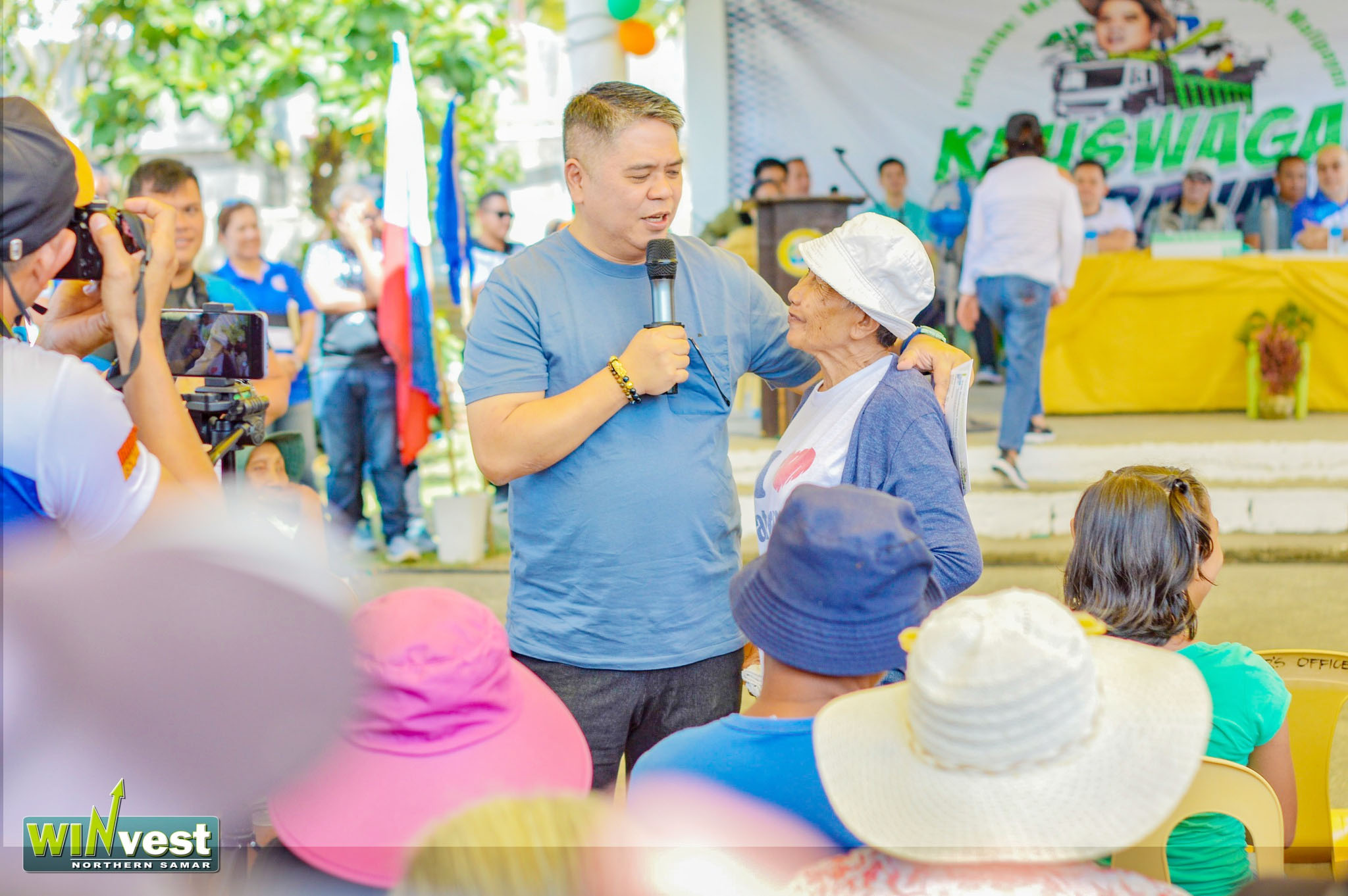
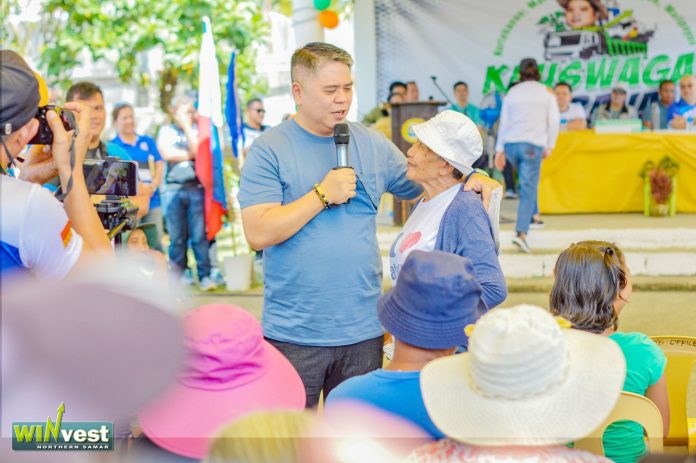
KAUSAWAGAN CARAVAN. Northern Samar Gov. Edwin Ongchuan brings his Kauswagan Caravan to Laoang town, benefitting more than 1,200 locals on various programs and services offered by the provincial government. (THE PROVINCIAL NORTHERN SAMAR INFORMATION OFFICE)

In Northern Samar

KAUSAWAGAN CARAVAN. Northern Samar Gov. Edwin Ongchuan brings his Kauswagan Caravan to Laoang town, benefitting more than 1,200 locals on various programs and services offered by the provincial government.
(THE PROVINCIAL NORTHERN SAMAR INFORMATION OFFICE)

TACLOBAN CITY – Some 1, 122 families from seven villages in Laoang town, Northern Samar received services from various offices of the provincial government under its ‘Kauswagan Caravan’.

These families were residents of barangays Catigbian, Yabyaban, Cabagngan, Palmera, Gibatangan, Cabulaloan and Sibunot, all located along the Bayog Valley.

Governor Edwin Ongchuan led the delivery of services of the provincial government in collaboration with different national government agencies, non-government organizations, the local government unit of Laoang, and private sector groups.

Services benefited by the residents during the caravan held last Saturday(March 2) included free medical check-ups and medicines, dental services, circumcision, vaccination, deworming of animals and other veterinary services, haircut, food packs and pails, toys and candies, school supplies, blankets, vegetable seeds, farm tools and other agricultural inputs, slippers, ice cream and biscuits.

The governor also led in the turn-over of the newly-completed worth P3.4 million 2-classroom school building in Catigbian National High School funded by the provincial government.

Also during the caravan, the governor announced that two bridges for the town are expected to be bid this year funded by the national government worth P7 billion.

These two bridges are the Talisay -Laoang Bridge (Laoang Bridge 2) and the Calomotan -Pangpang Bridge (Laoang Bridge 3) covered under the Samar Pacific Coastal Road (SPCR) 2 Project that will connect the coastal communities to the mainland and contribute to the economic growth of the province.
(ROEL T. AMAZONA)

Remote Northern Samar town opens new health facility to address maternal and child deaths

0
Joan Silvestre will deliver her sixth baby at a health facility. All her past five deliveries were made at their home in the remote village of Geparayan de Turag, about three hours of trekking from the municipal center of Silvino Lubos, Northern Samar (JOEY A. GABIETA)

Funded by World Vision and KOICA

BY: JOEY A. GABIETA

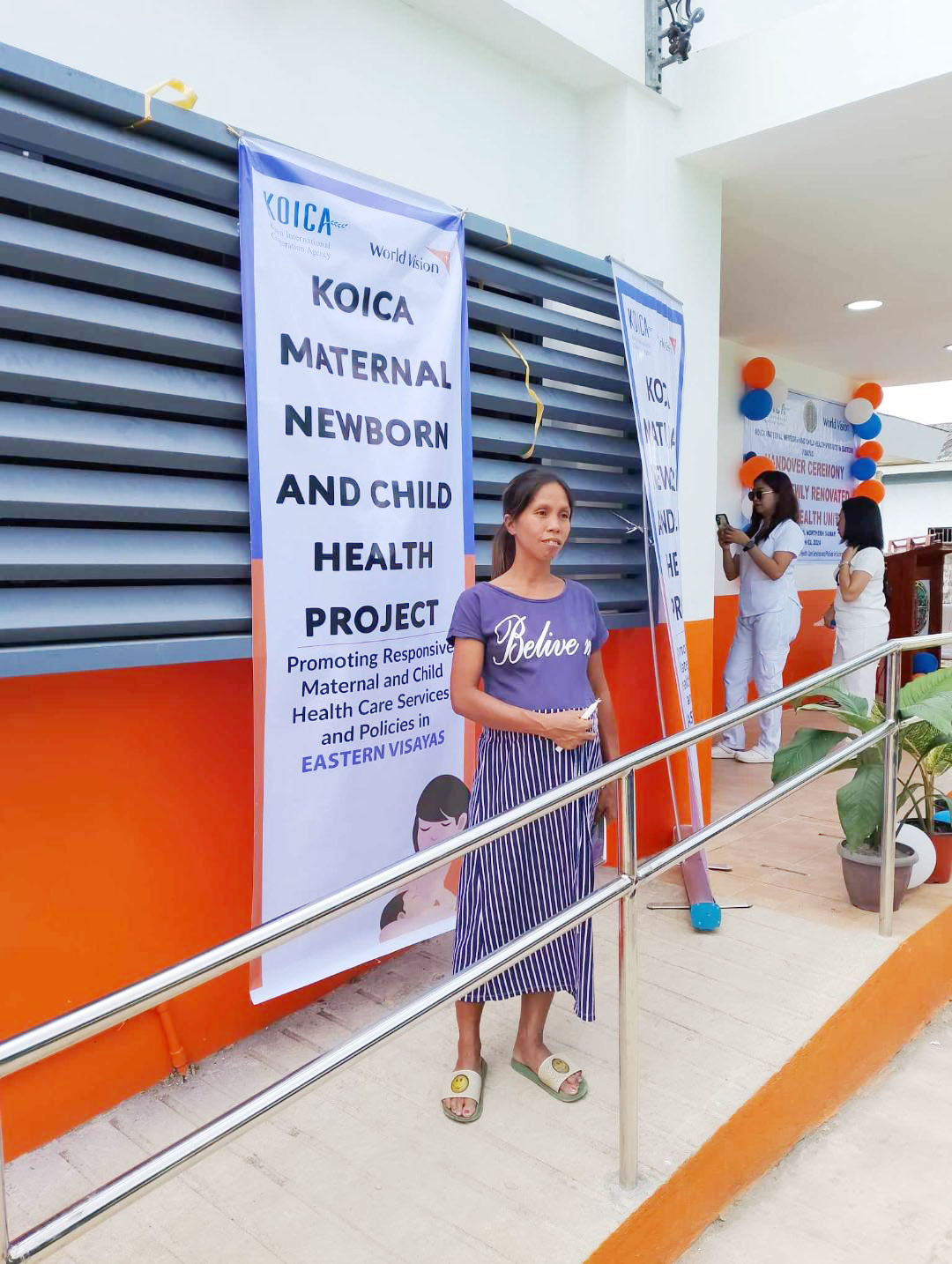
SILVINO LUBOS, Northern Samar – Joan Silvestre, a 33-year-old mother, is preparing to give birth to her sixth child next month, but this time, she will do so in the newly-rehabilitated health center of Silvino Lubos.

Joan Silvestre will deliver her sixth baby at a health facility. All her past five deliveries were made at their home in the remote village of Geparayan de Turag, about three hours of trekking from the municipal center of Silvino Lubos, Northern Samar (JOEY A. GABIETA)

In a town where instances of maternal and infant mortality are alarmingly common, the inauguration of the health center brings hope for safer deliveries.

Silvestre, who previously opted for home deliveries due to the remoteness of her village, expressed her happiness and anticipation for a safe delivery at the new health center.
“Our village is very remote. We have to trek for at least three hours just to reach the poblacion. And if the weather is bad, we have to travel by boat for almost an hour,” she explained.

The one-story facility, funded by World Vision Philippines and the Korea International Cooperation Agency (KOICA) at a cost of P8.27 million, was formally inaugurated on Saturday (March 2) with health officials from the region and province in attendance.

Dr. Ma. Aurora Vicencio, the provincial health officer, emphasized that the newly rehabilitated health center represents more than just a building; it is a beacon of hope for addressing maternal and childcare issues in the municipality, which is home to over 16,000 residents.

Despite the challenges posed by remote villages like Geparayan de Turag, where Silvestre resides, the health center offers a safer alternative to home deliveries facilitated by local midwives or ‘hilots’.

Dr. Joan Siervo, the municipal health officer, highlighted the risks associated with home deliveries, including the lack of immediate vaccination for newborns and monitoring for potential complications.

“Newborn babies require immediate vaccination, which they don’t receive if delivered by a ‘hilot.’ Both the babies and their mothers need to be monitored for potential complications like bleeding,” she explained.

To encourage pregnant mothers from remote villages to utilize the facility, the local government has established a halfway house where expectant mothers and their partners can stay a week before delivery, with free food supply provided.

In addition to infrastructure improvements, local ordinances have been passed to regulate traditional birthing practices and promote safer deliveries. However, enforcement remains a challenge due to the town’s dispersed barangays.

Mothers who could complete prenatal checkups are also to receive P8,000 from the municipal government as an incentive.

World Vision Philippines, in collaboration with the Philippine government and local health authorities, aims to address gaps in maternal and childcare delivery.

Bonifacio Calapan, the operations director, emphasized the importance of prioritizing the health of pregnant women for the well-being of future generations.

“They are the future of our nation. We must prioritize the health of pregnant women because the health of the child and the nation begins with them,” he stressed.

Jihwan Jeon, the project director of World Vision Philippines, echoed Calapan’s sentiment, emphasizing their collaboration with the Philippine government, local government, and the Department of Health to address gaps in maternal and child care delivery.

“Our goal is to ensure that no one is left behind in terms of healthcare,” he added.

Mayor Leo Jarito expressed gratitude for the renovation of the health facility, which now operates as a mini-hospital equipped to provide medical services and facilitate safe deliveries for pregnant mothers.

With modern facilities and round-the-clock staffing, the health center aims to encourage more mothers to utilize its services, ultimately reducing maternal and infant mortality rates in the region.

DPWH to build a four-classroom school building in Jaro, Leyte

0
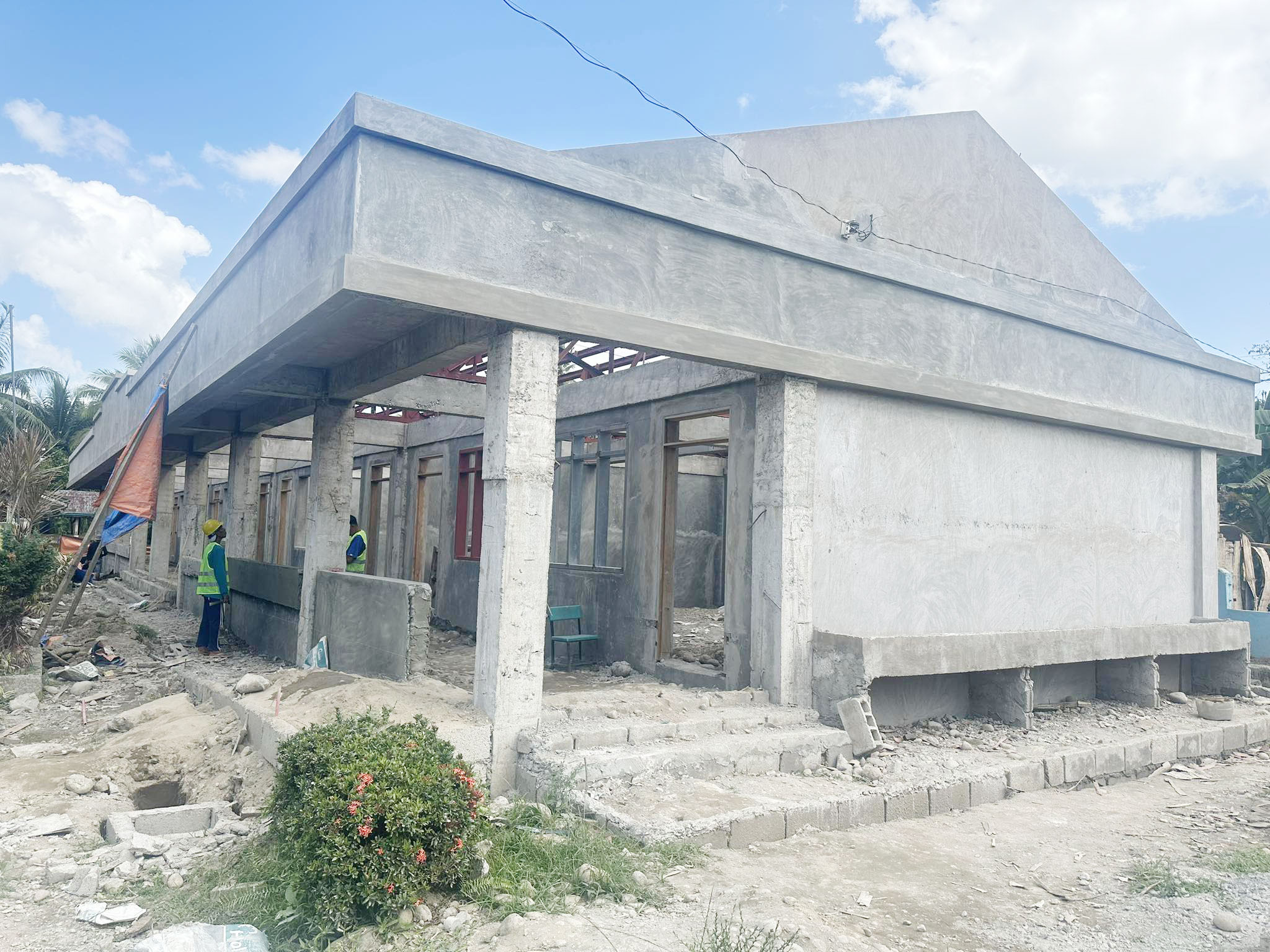
The Leyte 2nd District Engineering District Office completed the construction of the P11.99 million worth four-classroom building in Buenavista Elementary School in Jaro, Leyte. (L2DEO)

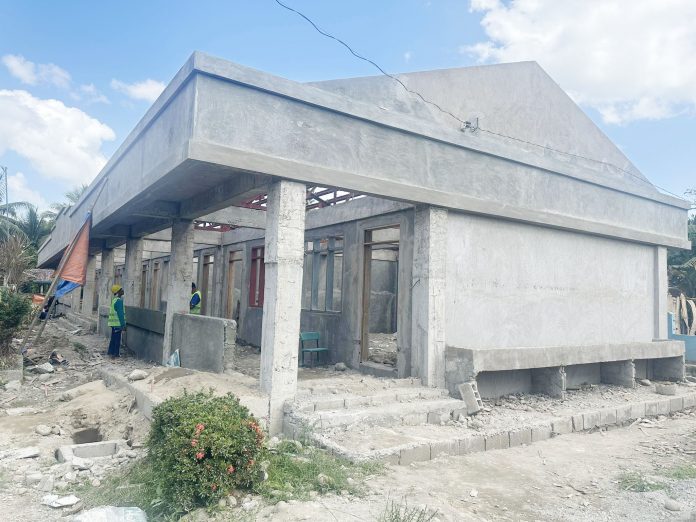
TACLOBAN CITY– The Department of Public Works and Highways (DPWH), Leyte 2nd District Engineering Office (L2DEO), is currently building a one-story, 4-classroom school building in Buenavista Elementary School in the town of Jaro, Leyte.

According to District Engineer Leo Edward Oppura, each classroom will measure 7-meter by 9-meter with provisions of comfort rooms, a wash hand area, new blackboards, electric fans, lighting fixtures, and a ramp for people with disabilities.

DPWH and the Department of Education (DepEd) partnership aim to address the nationwide classroom shortage in high-priority schools nationwide, which remains a major problem for the basic education sector.

Christina Arante, Kindergarten 1 (K1) teacher, stated that, currently, they have 103 pupils enrolled from K1 to Grade 6.

“Once the new school building is completed, classrooms from K1 to Grade 6 will be moved to the new infrastructure, thus providing a reliable facility for the teachers and pupils for a conducive place to teach and learn as well as beneficial to their physical and emotional health,” she said.

The project has a total project cost of P 11.99 million under 2023 DepEd-Basic Education Facilities Fund and is expected to be completed by April 2024 with 58.37% reported work accomplishment.
(LIZBETH ANN A. ABELLA)

Recent Posts

DALMACIO C. GRAFIL
PUBLISHER

ALMA GRAFIL
EDITOR-IN-CHIEF

ROMEO CEBREROS
OFFICE IN-CHARGE

OFFICE
BRGY. SONGCO, BORONGAN CITY

CONTACT NUMBERS
(055) 261 – 3319 | 0955 251 1533 | 0917 771 0320 | 0915 897 7439 | 0921 511 0010

DALMACIO C. GRAFIL
PUBLISHER

RICKY J. BAUTISTA
EDITOR

ALMA GRAFIL
BUS. MANAGER

OFFICE
RIZAL AVENUE, CATBALOGAN
(INFRONT OF FIRE DEPARTMENT, NEAR CITY HALL)

CONTACT NUMBERS
0917 771 0320 | 0915 897 7439 | 0921 511 0010

EMAIL
lsdaily2@yahoo.com

WEBSITE
www.issuu.com/samarweeklyexpress