27.1 C
Tacloban City
April 09, 2026 - Thursday | 8:45 AM
Home Blog Page 835

A blasting start

0
DOMS PAGLIAWAN

Who would have thought that a college as young as 5 years in existence and fresh from turning out its first batch of graduates would make it to the top-performing schools in the country in terms of passing a national board examination? And who would have imagined that it would land second in the regional ranking with 30 or more examinees?

It is very unlikely, yet Burauen Community College (BCC), a five-year-old college in the heart of Leyte province, made it after the outcome of the recently conducted 2024 Licensure Examination for Criminologists was officially announced. Offering BS Criminology as one of its flagship programs, the college just turned out its pioneering graduates who, recently, took the said examination and yielded such impressive results.

The implications of this young college’s achievement are awesome. It ranked 22nd at the national level, among colleges and universities with 50 or more test takers—that’s out of more or less 223 schools with similar examinees. At the regional level ranking, BCC ranked 2nd out of 15 schools with 30 or more examinees, besting other schools that have had years and decades of operation. It’s indeed remarkable! Almost making it to the top.

This young institution of learning traces itself to a humble beginning. But it started as a vision—the vision of a vibrant, flourishing community college that courageously but tactfully takes on the menacing challenges of the times. Conceived by the visionary leader, Hon. Mayor Juanito E. Renomeron, this vision spread like wildfire and immediately saw the light of day on February 12, 2018, through Municipal Order No. 2018-024.

Recognized on January 29, 2019, as a local community college per Certificate of Authority 039-2019 issued by the Commission on Higher Education (CHED), BCC started with 5 classrooms, offering BS Criminology, BS Accountancy, and BS Management Accounting with the first college president, the late Dr. Jay P. Cabrera. Back then, 546 students comprised the first batch for the first academic year. With the advent of the pandemic in 2020, BCC resorted to blended learning and modality. The following year, two (2) degree programs were added, namely: BS Public Administration and BS Industrial Security Management.

From its old location in LGU Burauen Compound, BCC transferred in 2022 to its present location in Burauen Sports Complex, with its first two buildings—the Criminology and Administration Buildings. With the passing of the first College President, Atty. Absalon G. Apostol took over as the second albeit OIC College President. Two more equally grandiose buildings and a multi-purpose one proudly emerged, besting the looks of other colleges/universities elsewhere. Just last year, Dr. Jett C. Quebec, another visionary leader, was appointed as the new College Administrator, who plans to add two (2) more degree programs and four (4) vocational courses.

With BCC’s rise to greatness, and with the impressive results exhibited by its first board examinees, we can only attribute all these to the untiring efforts of the men and women behind this initial success. Foremost credits go to the good Mayor and his Office, then to the SB members, LGU departments, the BCC Management, Faculty and Staff, the students, and the entire BCC community. Also worth commending are the cooperating and partner government agencies such as the CHED RO 8, PRC 8, PSA, and others.

Congratulations then to the successful examinees with their parents, the LGU Burauen and its people, the BCC Management and Community, and the Criminology Department consisting of its dean and energetic faculty whose direct supervision and guidance partly made this initial salvo of success possible! Keep up the great job! Mabuhay!

The fear of being replaced

0
CLEMELLE L. MONTALLANA,DM, CESE ASSOCIATE PROFESSOR III
CLEMELLE L. MONTALLANA,DM, CESE
ASSOCIATE PROFESSOR III

The Great Replacement Theory has garnered attention in both the United States and the Philippines, albeit with distinct contexts. Let’s delve into the details:

The Great Replacement Theory is a far-right conspiracy theory that has gained traction among certain segments of the U.S. population, particularly those whose demographics are predominantly white.

According to this theory, left-leaning domestic or international elites (sometimes alleged to be under the influence of Jewish co-conspirators) are intentionally orchestrating the replacement of white citizens with nonwhite immigrants (such as Black, Hispanic, Asian, or Arab individuals).

Advocates of this theory argue that the increasing presence of nonwhite immigrants, coupled with their higher birth rates compared to whites, will eventually lead to nonwhite majorities in the country. These new majorities, as the theory posits, will then gain control over national institutions, dilute or erode distinctive cultures, and ultimately eliminate the white population.

The theory gained wider attention in the early 21st century with the publication of Le Grand Remplacement (2011) by French writer and activist Renaud Camus, who specifically focused on Muslim immigrants in France as agents of replacement1.

In the Philippines, the context is different, but there are parallels.

While the Great Replacement Theory itself may not be explicitly discussed, concerns about political survival and demographic shifts exist.

The fear of being replaced is not uncommon in Philippine politics. It arises from various factors, including:

 Demographic Changes: The Philippines has experienced population growth, urbanization, and migration. These shifts impact political dynamics, representation, and power structures.

 Electoral Competition: Political leaders often fear losing their positions due to electoral challenges. The fear of being replaced by opponents drives their actions and policies.

 Ethnic and Regional Identities: The Philippines is a diverse nation with various ethnic and regional identities. Politicians may exploit these divisions to secure their own survival.

 Changing Political Landscape: As new generations emerge, political preferences evolve. Incumbents worry about staying relevant and retaining their support base.
While the difference is big , the similarity is also alarming and striking. The probability of being replaced and the possibility of being defeated on an election driven by notion and feelings that may or may not be prevalent is indeed very likely. As Frank Sinatra would say riding high in April shot-down in May.

So it is common to have our politicians jockey up their position and create probable shifts in the leadership landscape. It allows the incumbent to sustain its gain otherwise the inaction may create his or her downfall.

Will we witness a Great Replacement or a Great Retention?
Reason to rejoice in Lent

0
FR. ROY CIMAGALA
FR. ROY CIMAGALA

THE 4th Sunday of Lent is usually dubbed as “Laetare Sunday” for the simple reason that its Entrance Antiphon starts with this passage from the Book of Isaiah (66,10), “Rejoice, Jerusalem! Be glad for her, you who love her; rejoice with her, you who mourned for her, and you will find contentment at her consoling breast.”

Indeed, we have every reason to rejoice even in this season of Lent, marked as it is by calls to penance, fasting and abstinence, because in the end we are assured of victory over sin and death itself due to the redemptive work of Christ.

We should not lose sight of this truth of faith and neither should we lose our Christian confidence even as we cannot avoid going through the rigors of all the penitential acts encouraged of us these days.

In fact, only in this way would we be most generous in joining Christ in his suffering, convinced that it is through this suffering that we can also partake of his victory over sin and death which should give us a great joy, since it can only mean total liberation from what is not proper for us. It is through this suffering that we recover our true dignity as children of God, sharers of his divine life and nature.

We have to learn to capture the intimate link between suffering and joy by meditating deeply on the passion, death and resurrection of our Lord. If we would finally understand the reason why Christ had to suffer and die, then we would know why our suffering and eventual death, if we go through them with Christ, would give us great joy.

Not only would we lose our fear for any suffering in our life, but also would we look forward to any suffering that can come our way. That’s because we would be convinced that precisely our suffering and death with and in Christ would constitute as our supreme act of love, a love that is a vital participation of the love of Christ for us. It’s this kind of love, the only true love, that would give us true and everlasting joy.

Somehow this piece of divine wisdom which, if considered only by our human estimation of things, would appear to us to be unacceptable, is played out in the gospel of the day. (cfr. Jn 3,14-21) There, we are assured that “God so loved the world that he gave his only Son, so that everyone who believes in him might not perish but might have eternal life.”

We have to understand then that only with Christ can we find joy in suffering. We need to process this truth of our faith thoroughly, always asking for God’s grace and training all our powers and faculties to adapt to this reality. That’s why Christ told us clearly that if we want to follow him, we simply have to deny ourselves, carry the cross and follow him. There’s no other formula, given our wounded human condition.

Our reaction to any form of suffering in this life should therefore be theological and ascetical. It should be guided and inspired by faith. It should not just be physical or a natural affair. It should reflect the spiritual and supernatural realities to which we are all subject.

Everyday let us find ways of deepening our understanding and appreciation of this truth of our faith, and also of acquiring the capacity to live it as fully as possible, until we can truly say that we are finding joy in our suffering.

Firefighting

0
AL ELLEMA
AL ELLEMA

The fire that hit congested residential communities exposed the challenges in firefighting capability of the fire bureau. So much is lacking in terms of firefighting equipment and the skills of those manning fire stations in many local government units. Apart from the regular firefighters, there appears a need for trained officials in every barangay.

The public thinks that there are enough equipment in every fire station. There too is a need to maintain those fire equipment to ensure that such are functioning in times of fire. Above all, the fire stations must have access to water supply in every locality to ensure that firefighting will not be hampered. In localities where there are no water systems, other sources like water bodies such as streams and rivers must be identified as part of the firefighting plan.

We do not know if government can provide the additional equipment for our local fire stations. Should there be funds for such equipment, it would require enough firefighters to handle such firefighting equipment. That would be additional budget for government to shoulder just to ensure public safety. With the current financial crisis the government is suffering from, there is not much to expect in this regard.

But more than the lack of firefighting equipment, there are inherent problems in the locality that make firefighting tough. Many communities, especially in urban areas, are crowded and the houses congested with narrow alleys serving as access for the ingress and egress of people.

There is apparent lack of proper zoning in such areas to allow good access as houses are built too close to each other. The passage problem is just taken ordinary during normal times but under a state of calamity such as huge fire, the passage becomes a problem for the entrance of firefighters to the burning houses.

The situation was aggravated during summer when the season is dry and windy day. The wind was much a factor in the quick spread of fire. It would be so much for the firefighters fighting the wind as well. Fire is indeed a hazard that government officials could have foreseen to happen in their respective communities so that proper action could be taken to mitigate possible damage.

Government officials should have taken drastic measures to mitigate damage in the event that fire hits the localities. Unfortunately, nothing was done to prevent or even lessen the hazard and the resulting damage. It is lamentable that only when fire accidents occur that government and the people in communities realize the need to prepare for firefighting.
comments to alellema@yahoo.com

P107-M road widening project now substantially completed

0

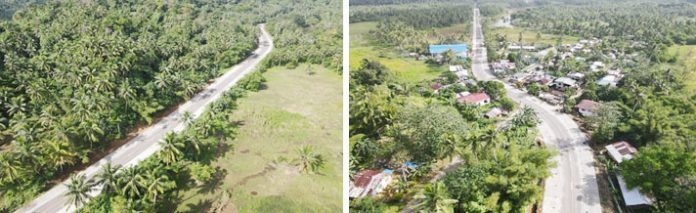
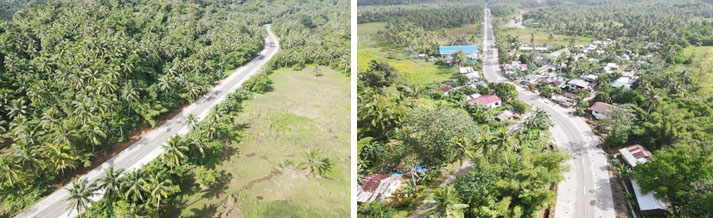
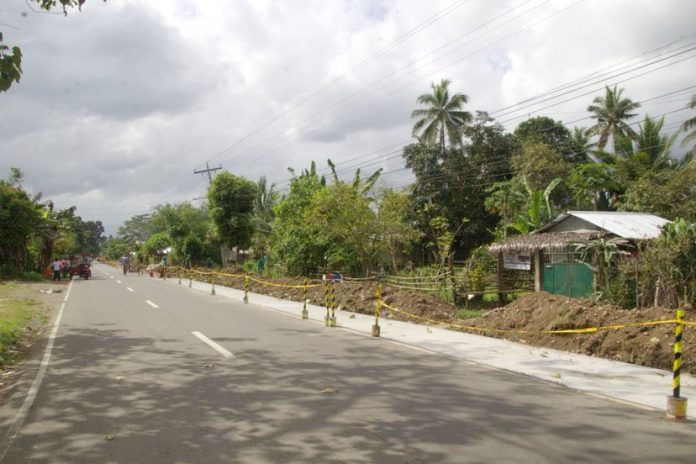
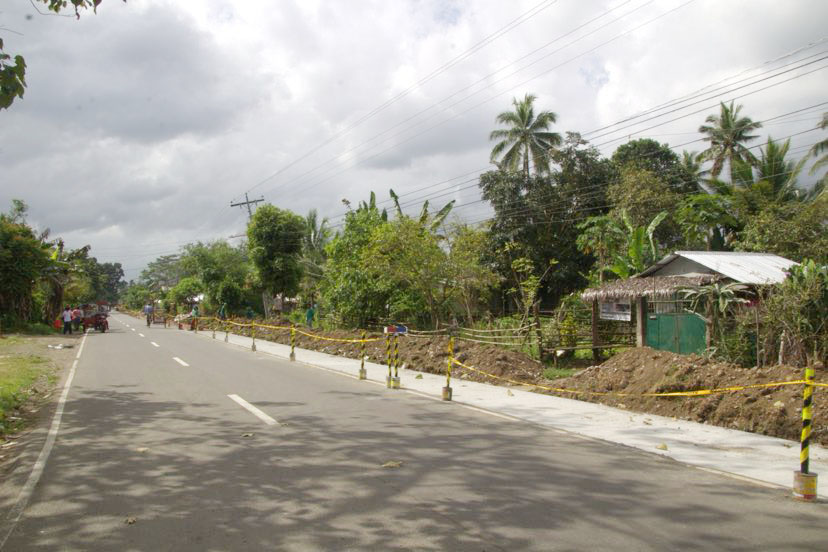
CATARMAN, Northern Samar– The Department of Public Works and Highways (DPWH) Northern Samar First District Engineering Office has achieved a significant milestone with substantial completion of the road widening project along sections of the Catarman-Calbayog Road.

This project, prioritizing road safety and traffic efficiency, has been expedited for the benefit of the local community.

The road widening spans 2.352 kilometers which includes the construction of reinforced concrete revetments resting on a 9-meter U-type steel sheet pile foundation, covering a distance of 217 meters.

Additionally, a reinforced concrete revetment with a 1-meter cut-off wall extending 40 meters, and a reinforced concrete canal measuring 708.41 meters in length have been included.

Salvacion Berwico, a resident of Barangay Somoge, shared her experiences expressing safety concerns, especially for children.

“Ako po Si Salvacion Berwico, taga Brgy. Somoge, sixty-one (61) taong gulang. ang experience ko noong makitid pa ang daan, maayos naman siya pero makitid. Walang madaanan ng maayos ang mga bata. Delikado kasi madaming sasakyan, at an mga bata minsan nadidisgrasya. Sa ngayon naman, maayos kasi malawak na ang daanan. Malawak na, ang mga sasakyan hindi na magbabangaan dito sa amin.”

District Engineer Alvin A. Ignacio emphasized the importance of the road widening project for the safety of the traveling public, stating “Ensuring the safety of all road users has been a primary goal of this project. With the widened road, we aim to reduce congestion, minimize accidents, and provide a smoother travel experience for everyone. Moreover, this project has significantly reduced travel time, allowing commuters to reach their destinations faster and easier.”

The completion of this project marks a significant milestone in improving road infrastructure and ensuring the safety of all road users.
(ANALIZA A. PABIA, PIO ALTERNATE/PR)

DPWH’s Leyte 2nd DEO implements off-carriageway improvement project in Jaro town

0
The Department of Public Work and Highways is working on the improvement of an offcarriage way in Jaro, Leyte to the tune of P5.85 million covering 6.10 meters. (L2DEO)

TACLOBAN CITY – The Department of Public Works and Highways (DPWH), through the Leyte Second District Engineering Office (L2DEO), is currently undertaking an off-carriageway improvement project along the existing 6.10-meter-wide road in Jaro, Leyte town. The objective is to enhance road capacity and ensure the safety of motorists navigating narrow roads.

District Engineer Leo Edward Oppura disclosed that the off-carriageway improvement project covers a total of 792 lane meters. This involves adding 2.0 meters width on both edges of the existing pavement, utilizing 20-millimeter-thick Portland concrete cement pavement (PCCP), along the Barangay Macopa via Jaro Poblacion road within the Palo-Carigara-Ormoc road section.

“In addition to widening the road, the project includes the application of asphalt overlay and reflectorized pavement markings, with a total construction budget of P5.85 million,” Oppura stated.

Upon completion, the project aims to facilitate faster and more convenient travel for motorists using the road network.

Furthermore, it will ensure the safety and comfort of local residents of Jaro and other road users by providing an improved and accessible road infrastructure. The expanded carriageway will also enhance vehicle capacity and provide safe zones for pedestrians.
The project is funded under the DPWH-CY 2024 General Appropriations Act.

Construction commenced on February 19, 2024, with an anticipated completion date set on or before April 2, 2024.
(LIZBETH ANN A. ABELLA)

Recent Posts

DALMACIO C. GRAFIL
PUBLISHER

ALMA GRAFIL
EDITOR-IN-CHIEF

ROMEO CEBREROS
OFFICE IN-CHARGE

OFFICE
BRGY. SONGCO, BORONGAN CITY

CONTACT NUMBERS
(055) 261 – 3319 | 0955 251 1533 | 0917 771 0320 | 0915 897 7439 | 0921 511 0010

DALMACIO C. GRAFIL
PUBLISHER

RICKY J. BAUTISTA
EDITOR

ALMA GRAFIL
BUS. MANAGER

OFFICE
RIZAL AVENUE, CATBALOGAN
(INFRONT OF FIRE DEPARTMENT, NEAR CITY HALL)

CONTACT NUMBERS
0917 771 0320 | 0915 897 7439 | 0921 511 0010

EMAIL
lsdaily2@yahoo.com

WEBSITE
www.issuu.com/samarweeklyexpress