28.6 C
Tacloban City
September 29, 2026 - Tuesday | 4:31 PM
Home Blog Page 802

Authorities intensify drug syndicate monitoring after major drug seizure in Northern Samar

0
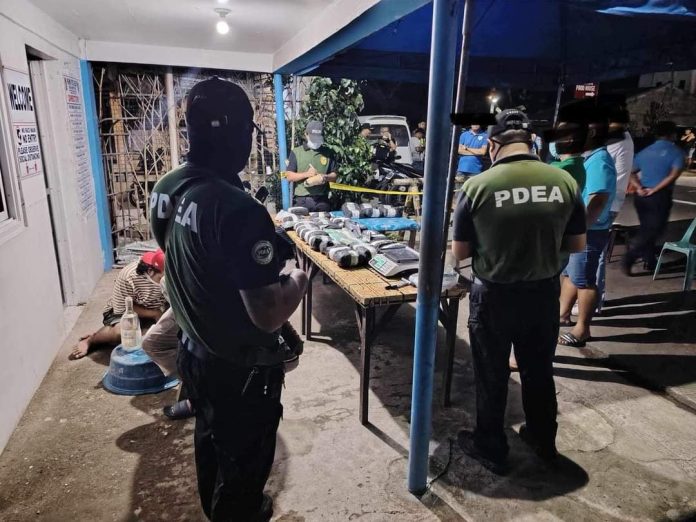
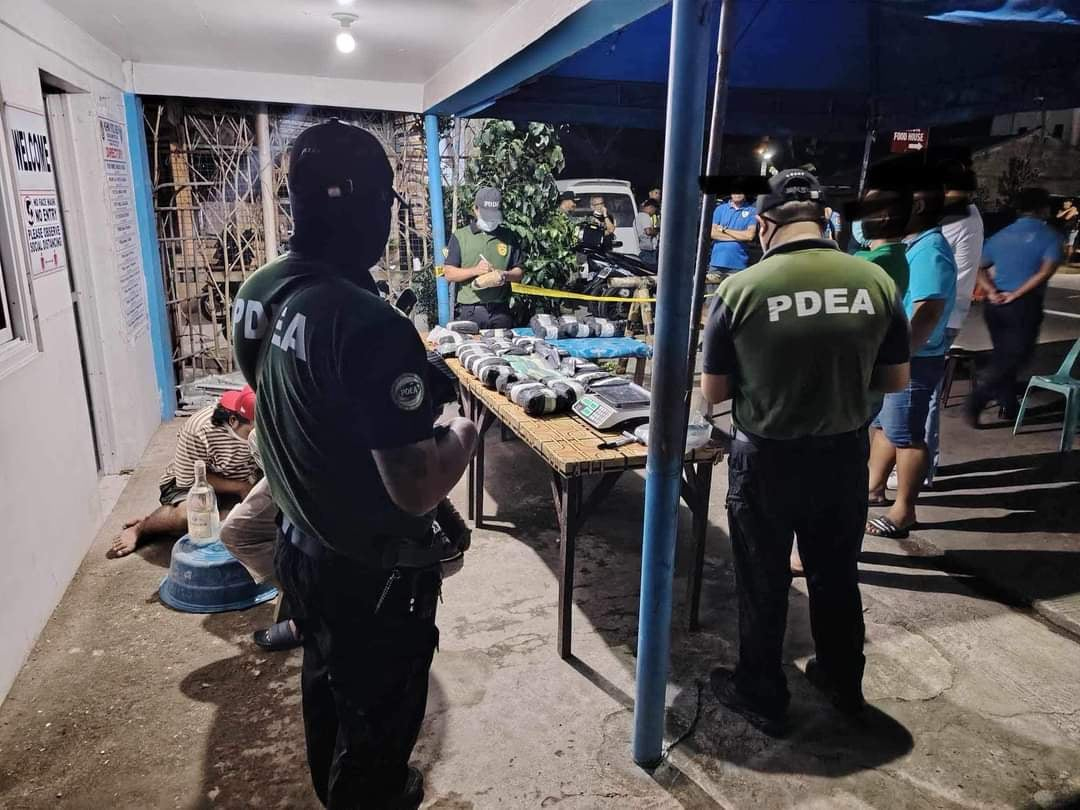
INTENSIFIED ANTI-DRUG MONITORING. The Philippine Drug Enforcement Agency(PDEA) said that it will be ramping up its surveillance for a possible drug syndicate operating in the region amid the confiscation of illegal drugs in Allen, Northern Samar. (PDEA PHOTO)

TACLOBAN CITY– The Philippine Drug Enforcement Agency (PDEA) and other law enforcement authorities in Eastern Visayas are ramping up surveillance of individuals previously involved in drug trafficking.

This follows concerns over the possible operations of a significant drug syndicate in the region.

The heightened vigilance comes after two major drug hauls in September, in which a joint operation led to the seizure of suspected shabu worth approximately P277.5 million.

The operation, conducted by the Northern Samar Highway Patrol Group (HPG), Allen Northern Samar Police, PDEA Northern Samar, Philippine Coast Guard, and the Philippine Maritime Law Enforcement team, took place in Barangay Jubasan, Allen, Northern Samar.
In an interview, PDEA Eastern Visayas Assistant Regional Director Alex Tablate confirmed that an investigation has been launched to trace the source of the illegal drugs.

“We are conducting backtracking and investigating the suspects who were arrested,” Tablate said.

He added that part of this process involves checking potential routes used for drug transport, such as the Mindanao-Lipata area and Lilo-an port.

Based on initial findings, the illegal drugs seized in Northern Samar were reportedly destined for Mindanao, not Eastern Visayas.

For years, Luzon-to-Mindanao has been a known trade route for illicit goods. However, Tablate noted that it now appears the drugs may have originated from Mindanao itself, signaling a shift in the operation’s logistics.

Although Tablate refrained from naming specific individuals, he disclosed that authorities are closely monitoring people with past connections to drug syndicates.

“It’s too early to link their names, as the investigation is still ongoing, but we are not ruling out their involvement. There could also be new players from other areas,” Tablate added.

Meanwhile, Northern Samar Governor Edwin Ongchuan, chair of the Provincial Peace and Order Council, has ordered the intensification of efforts to monitor illegal activities throughout the province.

Law enforcement agencies have stepped up their operations by establishing checkpoints, conducting regular patrols at ports and terminals, and expanding surveillance to prevent the spread of illegal drugs across Northern Samar and the entire region.

Authorities are also collaborating with community leaders and local businesses to gather information on suspicious activities and individuals. This coordinated effort aims to strengthen the fight against drug trafficking in Eastern Visayas.
(JAZMIN BONIFACIO)

DAR honors top partner institutions

0
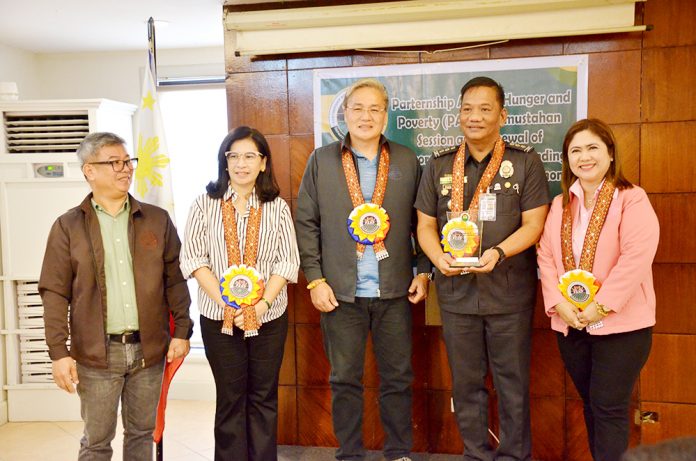
The Bureau of Jail Management and Penology (BJMP) was recognized by the Department of Agrarian Reform (DAR) as among the top institutional buyers of products of agrarian reform beneficiaries organizations (ARBOs) in Eastern Visayas under the Partnership Against Hunger and Poverty (PAHP) project in 2023. (JOSE ALSMITH L. SORIA)

TACLOBAN CITY – The Department of Agrarian Reform (DAR) recognized key government institutions in Eastern Visayas for their outstanding contributions to the Partnership Against Hunger and Poverty (PAHP) project through the procurement of agricultural products from agrarian reform beneficiaries organizations (ARBOs) in 2023.

Rowena Niña Taduran, DAR Undersecretary for Support Services, said during the “PAHP Kumustahan Session” on September 3 this year held at Hotel Alejandro, “You had greatly contributed in every milestone of the project as this ensures a sustained and increased gains for our ARBs (agrarian reform beneficiaries).”

Taduran, assisted by Atty. Robert Anthony Yu, DAR Eastern Visayas regional director, handed plaques of recognition to these institutional buyers as a gesture of gratitude during the said occasion.

Regional Director Grace Subong received the award for the Department of Social Welfare and Development (DSWD) which registered with the highest purchases reaching P4.7 million for their supplementary feeding program.

Dr. Catalino Dotollo Jr. accepted the award for the National Nutrition Council (NNC) which ranked second with purchases reaching P2.7 million for the food requirements of their “Tutuk Kainan Dietary Supplementation Program.”

For the Department of Health (DOH), which ranked third with purchases reaching P2.4 million for the food requirements of patients of their attached medical centers, the award was received by Dr. Noel Arteche.

Other notable recipients include the Eastern Visayas Medical Center and the Bureau of Jail Management and Penology who also purchase from the ARBOs for the daily food requirements of patients and persons deprived of liberty, respectively.

Meanwhile, ARBOs who generated the highest sales through the PAHP project last year were likewise recognized. The top three ARBOs were the MAALSADA-FISCO from Alangalang, Leyte; the Almeria Seafarers Multi-Purpose Cooperative of Almeria, Biliran; and the FEA-ARCO in Salcedo, Eastern Samar.
(KARL JONES O. NIEGO, DAR-8/PR)

ASea travels suspended in Southern Leyte; 1 killed in a weather-related incident

0

Due to Habagat

TACLOBAN CITY—The Coast Guard in Southern Leyte has canceled sea voyages across the province on Monday, Sept.16, starting at 5 a.m., due to inclement weather spawned by the southwest monsoon or Habagat while one was killed and three others were injured due to the weather-related incident.

In an advisory, the Coast Guard stationed in Maasin City, the provincial capital, announced that sea vessels weighing less than 250 gross tons were prohibited from sailing because of “rough to very rough” sea conditions.

Authorities said sea travel will resume once weather conditions improve.

Meanwhile, in the town of Pintuyan, Southern Leyte, one person was killed and three others injured after being electrocuted on Saturday afternoon (Sept. 14).

The victims were riding motorcycles through Barangay Bulawan at around 3 pm when strong winds, caused by the bad weather, knocked down coconut trees, causing electric wires to sag.

According to local police, the victims disembarked from their motorcycles to clear the fallen trees and wires from the road.

Unfortunately, as they attempted to handle the electric wires, they were electrocuted.

One victim, identified only as “Ben,” suffered severe injuries and died from electrocution.
The three other victims are currently recovering at Pintuyan District Hospital.

The bad weather has also resulted for the local government of Naval in Biliran to suspend some of its activities related to its annual fiesta celebration.
(JOEY A. GABIETA)

Defeated purpose

0

Road widening projects in urban areas are often touted as a solution to traffic congestion and overcrowding on major thoroughfares. However, in many cases, the very purpose of these projects is swiftly defeated, as newly expanded roads become de facto parking areas for private vehicles. Tacloban City, for example, presents a glaring case of this phenomenon.

Despite efforts to improve the flow of traffic, the reality is that these widened roads often serve as little more than extensions of private driveways, particularly in neighborhoods where residents have no other space to park their cars. As a result, the expected benefits for motorists are lost, and the city is left grappling with the same problems it set out to solve. This leads to the exact opposite of what the project was supposed to accomplish: instead of easing traffic, the roads are choked with stationary cars, narrowing the lanes and making navigation even more difficult than before.

In theory, road widening is intended to create more space for vehicles to travel freely, reducing traffic bottlenecks and improving overall mobility. In practice, however, these newly widened roads often provide an irresistible convenience for residents living along these thoroughfares. With no strict regulations or enforcement, the added space is quickly appropriated for parking, especially at night when vehicle owners return home.

A drive around the city, especially in the evening, reveals long stretches of expanded roads lined with parked vehicles. During the day, the situation is slightly better, but the evenings see the roads clogged with cars, effectively reducing the width of the road back to its original size—or worse, making it even narrower due to the irregular parking of vehicles.

This not only negates the purpose of the road widening but also creates new hazards for motorists, who must navigate these obstacles at the cost of safety and convenience.
The failure of road widening in cities like Tacloban highlights a deeper problem: urban planning that focuses solely on expanding physical infrastructure without addressing the underlying behavioral and regulatory issues. It is not enough to widen roads if there are no parallel efforts to control how these spaces are used. Strict enforcement of parking regulations, the provision of alternative parking spaces, and a shift towards public transportation must accompany such infrastructure projects. Otherwise, the cycle of ineffective development continues, with taxpayers’ money spent on projects that offer no real, long-term benefits.

Lawmakers, listen up!

0
DOMS PAGLIAWAN

As I look around at the vast stretches of idle farmland in the countryside, I can’t help but feel frustrated at the sheer waste of potential. These lands, which could be teeming with crops and providing for communities, remain barren and unused. It seems to me that land ownership, especially agricultural land, should come with a responsibility to the greater good. It’s not enough to simply own land and let it sit idle. If we are serious about addressing food security and poverty, we need to make it mandatory for landowners to put their farmlands to productive use.

I strongly believe that we should pass laws that penalize landowners who fail to cultivate their agricultural lands. Farmland is a precious resource that, in the right hands, could yield crops that feed the nation. I’ve seen too many cases where landowners simply let their properties lie dormant, either because they’re too lazy or because they see it as a future real estate investment rather than a source of agricultural produce. This kind of mindset is not just irresponsible—it’s harmful to our society as a whole. These lands should be cultivated for the benefit of everyone, not just hoarded for profit.

The way I see it, if a landowner refuses or is unable to make their land productive, then they should be required to give it up to someone who can. I’m not talking about outright land grabs or unfair seizures, but rather a legal mechanism that ensures that fertile land doesn’t go to waste. There are many farmers and agrarian communities out there who are more than willing to cultivate these lands if only they had access. We need to create a system where those who are willing and able to farm can do so, even if it means redistributing unproductive land.

For me, it’s not just about penalizing landowners for their negligence, but also about incentivizing productivity. If a landowner can’t meet certain benchmarks for agricultural output, then they should be allowed to lease or sell their land to someone who can. This way, there’s a clear path toward making sure our agricultural lands are being put to good use. It’s only fair that if someone is unable to contribute to the country’s agricultural needs, they should let go of their hold on that land.

The idea of letting unproductive land sit idle while people go hungry infuriates me. Our country’s food production should be one of our top priorities, and there’s no excuse for landowners to let their fields remain empty. To me, it feels almost criminal for someone to own fertile land and yet do nothing with it. They should be penalized heavily for such negligence, especially when so many hardworking farmers are struggling with land access.

If landowners can’t or won’t make the land yield, then they simply don’t deserve to keep it.
I also believe that by passing laws to enforce agricultural productivity, we would address some of the inequities in land distribution. Many of these idle lands are owned by a wealthy few who have the luxury of sitting on their property without feeling the urgency to cultivate it. Meanwhile, farmers who would love to work the land are forced to labor on small plots or even leave agriculture altogether. By redistributing idle lands to those willing to farm them, we could create a more just and equitable agricultural system.

This isn’t just about food production, either. It’s about creating jobs, boosting local economies, and preserving the rural way of life. If we put these farmlands back into productive use, we would generate employment for countless individuals in rural communities. I believe that this is the kind of progress we need—progress that isn’t just about increasing yields but about lifting people out of poverty and ensuring that our land benefits everyone.

I feel that we have a responsibility to ensure that agricultural lands are put to good use. By making it mandatory for landowners to cultivate their farmlands, and by penalizing those who don’t, we can help address food insecurity, poverty, and inequality. Let’s pass these laws and ensure that our fertile lands serve the people, not the profits of a few.

Quad spectacle (First of two parts)

0
AL ELLEMA
AL ELLEMA

In the continuing congressional investigation on the Philippine Offshore Gaming Operations (POGO) that had proliferated in various localities, mainly in Bamban, Pampanga where the suspended mayor Alice Guo reigned since 2022 to 2024. She was dismissed by the Office of the Ombudsman for grave misconduct. In an order dated 12 August 2024, the Office of the Ombudsman also forfeited the suspended mayor’s retirement benefits and perpetual disqualification from holding public office. It explained that the suspended mayor’s involvement in operations of raided POGO in her area of jurisdiction showed a willful intent on her part to violate the law or disregard established rules.

It found the series of acts to be interconnected, leading to the conclusion that they were committed with ulterior motive. There too is a quo warranto case that government lawyers filed and are pursuing. That case will proceed considering that the dismissed mayor may appeal the dismissal order issued by the Office of the Ombudsman. If the quo warranto petition will succeed, it will make Guo Hua Ping a.k.a. Alice Guo ineligible to run for any elective public office in the future. Meanwhile, the Presidential Anti-Organized Crime Commission (PAOCC) lauded the Office of the Ombudsman for its decision to dismiss mayor Alice Guo.

The election of dismissed mayor Alice Guo had been the subject of an action from the election commission which is seeking the cancellation of her certificate of candidacy as her citizenship had been found dubious. If the action will succeed, the dismissed mayor will face possible administrative and criminal cases. It will also reinforce the order issued by the Office of the Ombudsman dismissing her from office and disqualifying her from holding any elective public office in the future. Such order would result in her ineligibility to hold any appointive position in the government.

Other government officials who were in cahoots with the dismissed mayor Alice Guo were also ordered dismissed for their participation in the offenses that the dismissed mayor was found guilty of. These developments bring gloom on the other government officials who cooperated with the dismissed mayor, mainly those who facilitated in the construction of the buildings that were found to have housed POGO operations.

Indeed, what started as a simple query on the identity of the dismissed mayor opened a proverbial pandora’s box that led to multifarious issues. The illegal entry of foreigners, mostly Chinese who were found to be involved in criminal activities. The quad show is bound to proceed and hog the limelight until the forthcoming elections,
comments to alellema@yahoo.com

Recent Posts

DALMACIO C. GRAFIL
PUBLISHER

ALMA GRAFIL
EDITOR-IN-CHIEF

ROMEO CEBREROS
OFFICE IN-CHARGE

OFFICE
BRGY. SONGCO, BORONGAN CITY

CONTACT NUMBERS
(055) 261 – 3319 | 0955 251 1533 | 0917 771 0320 | 0915 897 7439 | 0921 511 0010

DALMACIO C. GRAFIL
PUBLISHER

RICKY J. BAUTISTA
EDITOR

ALMA GRAFIL
BUS. MANAGER

OFFICE
RIZAL AVENUE, CATBALOGAN
(INFRONT OF FIRE DEPARTMENT, NEAR CITY HALL)

CONTACT NUMBERS
0917 771 0320 | 0915 897 7439 | 0921 511 0010

EMAIL
lsdaily2@yahoo.com

WEBSITE
www.issuu.com/samarweeklyexpress