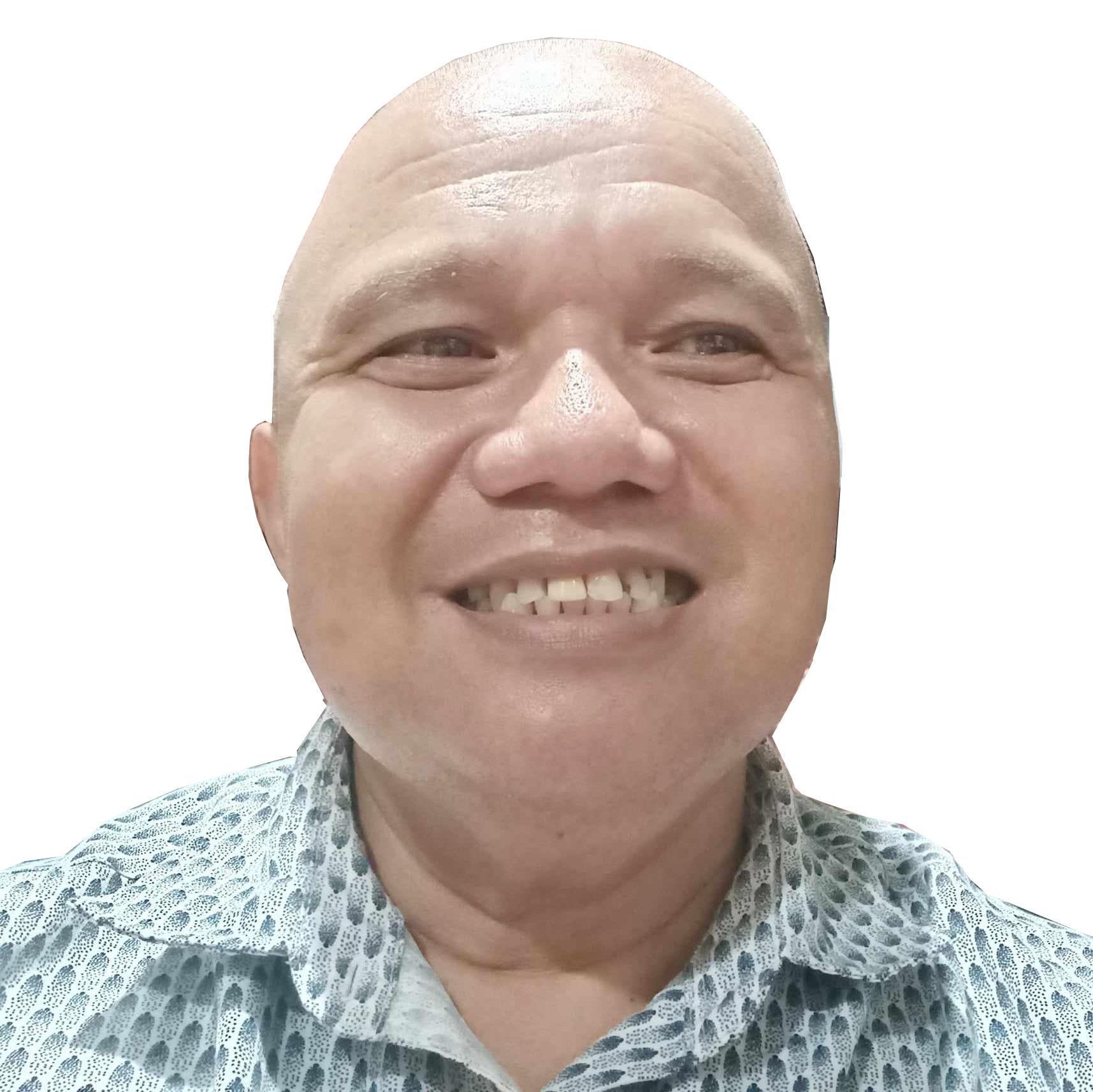
TACLOBAN CITY — The Office of the Ombudsman has indicted Mayor Gina Merilo of Tanauan, Leyte for graft following her hiring of two losing candidates within a prohibited one-year period.
The nine-page decision, signed by Ombudsman Samuel Martires on September 30, was only released on Monday, November 4.
Mayor Merilo faces charges for violating the Anti-Graft and Corrupt Practices Act (RA 3019) after hiring Quintin Octa Jr. and Reynalda Almaden, who both ran unsuccessfully in the 2022 elections, on July 1, 2022.
Octa, her former running mate, was appointed as a project engineer despite being a dentist by profession, while Almaden, a retired individual, was hired as a mobile nurse for the municipality.
The complaint was filed by Tanauan resident Mildred Lopez, who questioned the appointments due to the one-year ban on hiring losing candidates.
Mayor Merilo defended her actions, claiming good faith in the appointments.
She explained that, as a first-term mayor, she had consulted the town’s human resource officer, who, in turn, sought the guidance of the regional Civil Service Commission and Department of Interior and Local Government offices, both of which reportedly supported the appointments.
Merilo further clarified that both positions were not regular plantilla posts but merely job order assignments.
The Ombudsman, however, ruled that Merilo’s actions showed “manifest partiality” in favoring Octa and Almaden by hiring them on a job order basis to bypass the one-year ban.
“Respondent acted with manifest partiality when she hired Octa and Almaden… [with] the furtive design and intent to circumvent the constitutional and statutory provisions prohibiting the hiring of losing candidates one year after the immediate preceding elections,” the anti-graft court said.
The Ombudsman concluded by finding probable cause for the indictment, ordering that the corresponding information be filed in court.
Reached through her staff, Mayor Merilo stated that she has not yet received the Ombudsman’s complaint but intends to respond once she does by consulting her lawyers. (JOEY A. GABIETA)
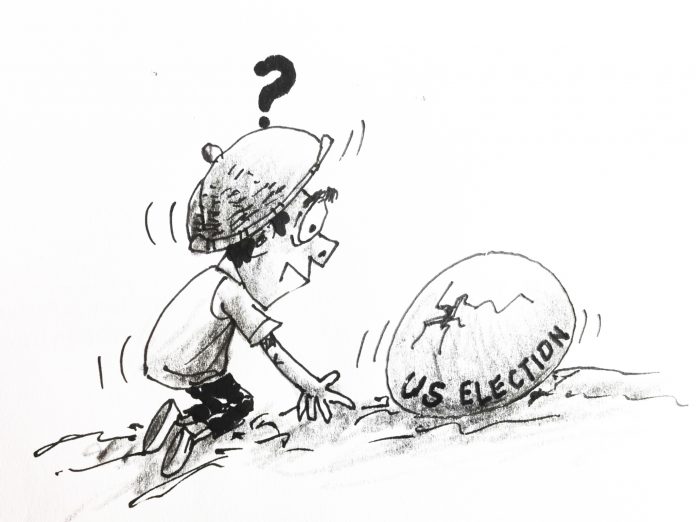
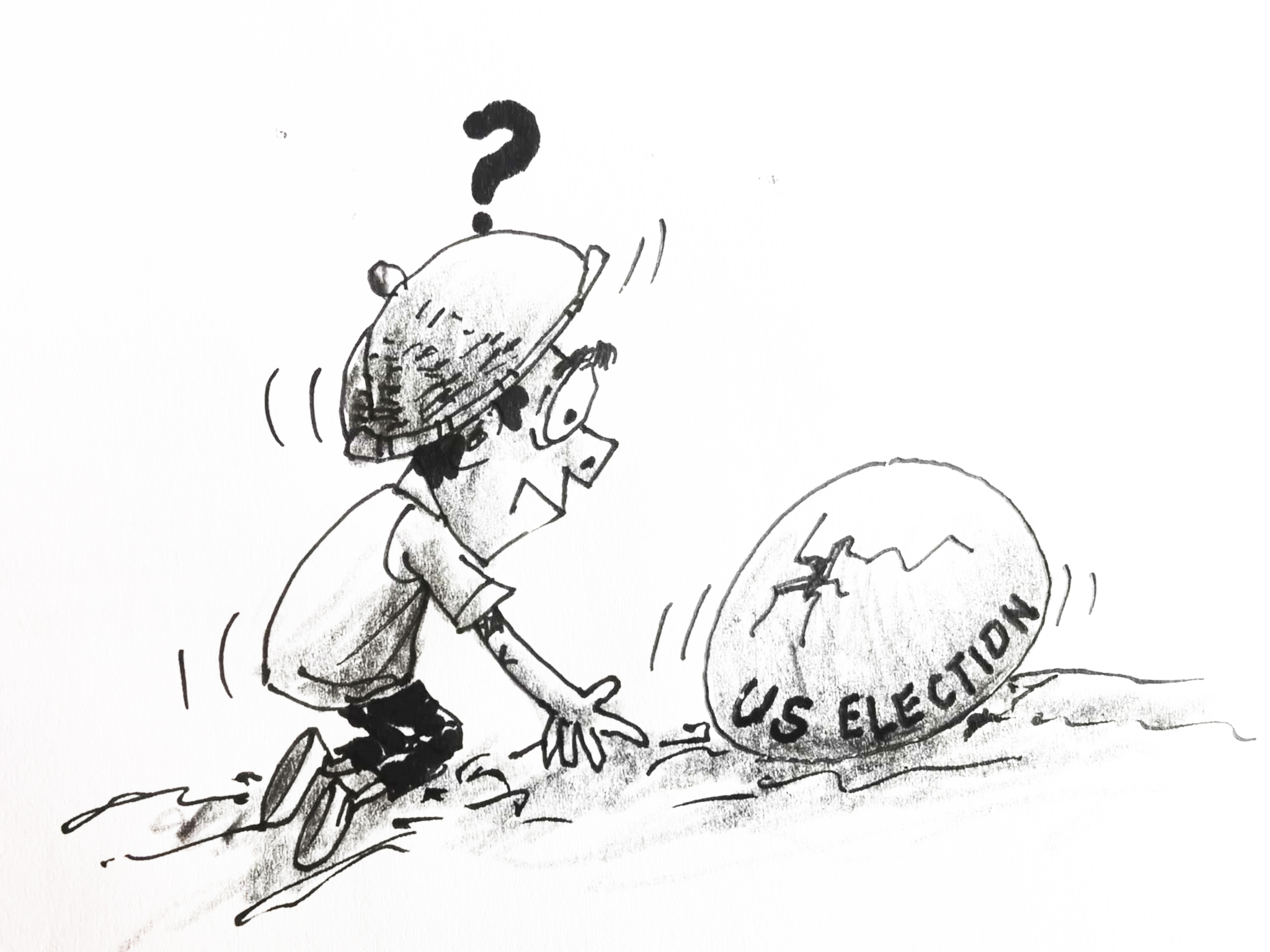
As expected, the outcome of the U.S. presidential election holds significant implications for the Philippines, shaping economic aid, defense agreements, and diplomatic relationships. As allies, the Philippines and the U.S. share strategic interests, but their partnership requires mutual respect and genuine collaboration, which recent policies have often neglected.
Whoever wins, the president-elect’s stance on defense commitments and alliances will directly impact regional security in Southeast Asia, especially amid rising tensions in the South China Sea. With China’s territorial claims intensifying, the Philippines needs a steadfast ally to deter encroachment and uphold maritime laws. A U.S. administration willing to invest in military cooperation, training, and technology transfers would reinforce the Philippines’ position and regional stability.
Likewise, U.S. economic policy significantly influences the Filipino economy, particularly through trade, investment, and foreign aid. Changes in U.S. foreign aid, trade agreements, and policies on outsourcing directly affect Filipinos’ livelihoods, especially as the country relies heavily on remittances and trade. A U.S. government prioritizing fair trade and investment in Southeast Asia could help the Philippines address poverty, boost job creation, and strengthen its local industries.
The U.S. president’s stance on climate action is also critical for our country, one of the most climate-vulnerable nations globally. A leader who supports climate funding and sustainable development in developing countries can help mitigate the effects of natural disasters, protect vulnerable communities, and fund resilience-building programs in the Philippines. This assistance is vital, especially as climate change amplifies the frequency and severity of typhoons and other natural calamities.
Immigration policy in the U.S. remains a pressing issue, as millions of Filipinos live and work in the U.S., sending remittances that fuel the Philippine economy. A compassionate, inclusive immigration policy can provide stability for Filipino families abroad, allowing them to contribute effectively to both the U.S. and Philippine economies. Policies that recognize the contributions of Filipino immigrants would not only strengthen family ties but also benefit both countries’ labor markets and cultural ties.
Our country must strengthen its diplomatic channels and advocate for policies that serve mutual interests. Engaging actively with the U.S. on defense, economic cooperation, climate action, and immigration will be essential to ensure that any changes in the U.S. administration benefit the Philippines and uphold its sovereignty, economic stability, and resilience in the face of ongoing global challenges.
It’s odd, isn’t it? Almost everyone, no matter where they’re from or what they believe in, seems to secretly—or not so secretly—dream about hitting the jackpot. The thought of stumbling upon gold, cracking open a treasure chest, or finding some buried fortune has an almost universal appeal. I can’t help but wonder, though: why are we so hooked on the fantasy of instant riches? The more I think about it, the more I see that this hunger is dangerous—sometimes deadly. It’s like an itch that’s never satisfied, making people risk it all for just a whiff of easy money.
If you dig around in history, you’ll find no shortage of folks who chased wealth down impossible roads. From the Spanish conquistadors on quests for El Dorado to modern-day treasure hunters scouring shipwrecks for sunken gold, people have been obsessed with finding easy wealth for centuries. And these aren’t isolated cases; they’re human instincts written in bold. Take some guy in the 1600s, hacking his way through a jungle, imagining he’ll get back home with mountains of gold. That same dream is alive and kicking today—only now we’ve traded the jungle for the lottery ticket, the crypto gamble, or even a heist movie fantasy. It’s like we can’t resist the allure of the “get rich quick” scheme, even though it’s more likely to leave us penniless than anything else.
What strikes me is how this craving can make a person do things they’d never imagine doing otherwise. If you’ve ever caught yourself fantasizing about a big win, you’ll know how quickly you start thinking of all the things you could do with that money. It’s intoxicating. Now, imagine that daydream morphing into desperation. A man can go from wishing to win to willing to steal in the blink of an eye. There’s a point where the craving turns ruthless. Just look at some of those grisly headlines: a friend betrayed, a family torn apart, all for the love of quick cash. And while it’s easy to judge from the outside, I sometimes wonder—if I were pushed far enough, what would I do for money?
There’s a kind of dark humor in how universal this is. I mean, look at religious stories! There’s usually a warning about greed somewhere. In the Bible, there’s the story of Judas, who sold out Jesus for a handful of silver coins. In mythology, Midas wanted everything he touched to turn to gold, only to learn that it made even his food inedible. It’s like every culture’s warning us: “Watch out—chasing wealth can destroy you.” Yet here we are, still diving headfirst into the very traps our ancestors tried to warn us about.
What gets me is how our cravings are even stronger now. In the old days, the quest for riches meant physically traveling to some distant land or diving to the bottom of the ocean. Today, you don’t even need to leave your house. There’s an endless scroll of glamorous lifestyles on social media, flashy cars, luxurious mansions—all within reach, or so they say. It’s no wonder people feel like everyone else is rich but them. When you feel like you’re the only one missing out, that desire to “catch up” can turn frantic. It’s a sad joke that we’re somehow closer to wealth than ever, but happiness? Still just as out of reach.
I think of the people I’ve known who have been lured by these shiny promises. A cousin who burned through his savings on get-rich-quick schemes. A neighbor who got tangled up in scams, convinced he’d hit the big time if he just stuck with it a little longer. They were both so sure they’d found a shortcut to success, but all they found was disappointment. It’s easy to see the warning signs from a distance, but up close, when it’s your own life and dreams on the line, things get a lot blurrier. And before you know it, you’re neck-deep, chasing something you thought would make you free, only to find you’re trapped.
What’s ironic is that we keep convincing ourselves we’ll be the exception. It’s like a massive game of musical chairs, where everyone is sure they’ll be the last one standing. And when the music stops, and someone loses, they’re baffled, as if it wasn’t obvious all along. The system—whether it’s the lottery, the stock market, or another get-rich scheme—wasn’t designed for everyone to win. Yet we all jump in, grinning like fools, convinced we’ve outsmarted everyone else. But in the end, most of us are left holding nothing.
So where does that leave us? I’m not saying we should give up on dreams or that wanting financial security is bad. But maybe the answer lies in recognizing what’s real and what’s not. The treasure we’re searching for isn’t buried in the ground or a lottery ticket. It’s probably closer than we think, lying somewhere in the relationships, passions, and moments we overlook while chasing after something that’ll never really satisfy. Maybe, just maybe, if we stop reaching for the unreachable, we’ll find we’re already richer than we thought.
One year over a decade after the inundation that submerged and washed away homes, properties, livelihood and people. The memory of that storm surge brought by super typhoon yolanda remains fresh in the minds of the people. How could such a devastation that ruined places to ground zero be forgotten by the people, chiefly those who suffered losses that appeared beyond repair.
Localities along the shoreline that were hit by huge waves had lost count of their dead as they grappled to survive from the relief goods given by local and international donors, including religious organizations and the diocesan social action centers of the Roman Catholic Church. There were Catholic International organizations that coordinated with the dioceses for the relief and rehabilitation of the devastated communities.
In the aftermath of that disaster, local governments that were spared from the path of the super typhoon as well as the national government, pooled their calamity funds in order to help the affected people and communities. The need for food and clean potable drinking water was the immediate concern of response teams that was confronted with the challenge of inaccessible roads as felled trees blocked many parts of the highway. Food supplies coming from Luzon were stranded in the ferry terminals going into the eastern visayas region. The long queues of trucks loaded with food and medicine was disheartening as the affected people waited for help.
Relocation sites were the next priority among donors while temporary shelters, mostly tents and shanties of light materials are being built. The need for construction materials and tools was another problem as local hardware stores were also devastated. Another problem that beset the people was the lack of transportation and the difficulty of procuring fuel for vehicles. In many places, the prices of gasoline skyrocketed as the commodity had to be rationed in order to serve more consumers.
Food became scarce as the nearest markets were also ruined. In some places, people were forced to loot commercial establishments that have stocks for basic needs. The looting went uncontrolled as authorities were busy responding to the urgent needs of the affected population. Aside from food and other basic needs, the need to clear roads from debris and dead bodies were likewise a need that must be addressed. Responders from other places and regions had to bring not just food but heavy equipment as well that could be used in transporting not just food for the living but dead corpse to be buried in mass graves.
Eleven years after the devastation, government had failed to deliver the promised housing units to the needy families that whose houses were washed and ruined beyond repair. The housing units were attended by irregularities, mostly with substandard materials and workmanship. But the housing units were forced to be distributed anyway in order to cover the anomalies that were too obvious to disregard. Many concerned citizens had filed formal complaints against the contractors and government officials involved but nothing has resulted. All irregularities are now submerged in deep murky waters worse than the storm surge brought by yolanda’s that is now a lifetime water reminder. comments to alellema@yahoo.com
DEFINITELY, this is a big challenge for all of us who try to follow by what Christ teaches us. In that gospel episode where he faulted the scribes for being showy of what they were doing and praised a poor widow who put in two small coins into the treasury of the synagogue, Christ is clearly telling us that we should do our good acts in a humble way and that we should try our best to give our all to God and others. (cfr. Mk 12,38-44)
“Amen, I say to you, this poor widow put in more than all the other contributors to the treasury,” he told his disciples. “For they have all contributed from their surplus wealth, but she, from her poverty, has contributed all she had, her whole livelihood.”
This episode somehow reminds us of another of Christ’s sayings: “It is easier for a camel to go through the eye of a needle than for a rich man to enter the kingdom of God.” (Mt 19,24)
It’s definitely a tall order, but that is just how it is when we want to be truly Christian. All we can do is to say, “Amen” and then just try our best to pursue that ideal. What is clear about this matter is that it is actually a call to enter into the will and ways of God which are supernatural. We are being asked to go beyond, but not against, our natural self. This is a call for us to approximate our identification with Christ.
If that pursuit for identification with Christ is strong in us, for sure we will also feel assured that everything would just be ok since Christ himself said: “Everyone who has left houses or brothers or sisters or father or mother or wife or children or fields for my sake will receive a hundred times as much and will inherit eternal life.” (Mt 19,29)
We need to beg God’s grace to be able to meet this Christian standard. We just cannot rely on our human powers to abide by it. It actually is an invitation for us to take a leap to the supernatural world of God where God wants us to be, since we are his image and likeness, meant to share in his very life and nature.
We need to develop a keen sense of generosity and self-giving that is also a result of detachment. Let’s never forget that whatever we have comes from God who wants us to work for the common good. Thus, we hear St. Paul saying, “What do you have that you did not receive?” (1 Cor 4,7)
We have been reminded of this need to cultivate generosity in the gospel. “Take care to guard against all greed, for though one may be rich, one’s life does not consist of possessions,” Christ said. (Lk 12,15)
We are told not to lay up treasures for oneself but rather to be rich toward God, that is, to be generous with God and with everybody else. Avarice, hoarding, simply pursuing our self-interest and personal welfare are actually inhuman, let alone, unchristian.
It’s also good for us to remember that there is such a thing as “universal destination of earthly goods.” That’s an official part of our Christian doctrine. “In the beginning God entrusted the earth and its resources to the common stewardship of mankind to take care of them, master them by labor, and enjoy their fruits. The goods of creation are destined for the whole human race.” (CCC 2402)
Even if there is also such a thing as right to private ownership, that right is always subordinated and is supposed to work for this more fundamental truth about the universal destination of goods.
Taking that leap from employee to entrepreneur isn’t for everyone. It takes courage to embrace the unknown and risk the security of a steady paycheck. But for those who dare, the rewards can be life-changing. Entrepreneurship is fueled by a willingness to take risks and a drive to turn dreams into reality. It requires careful planning, a deep understanding of the market, and a relentless pursuit of success. While the journey is challenging, the potential for personal and financial fulfillment is immense.
1. Believe in your vision: Entrepreneurial success starts with unwavering belief in your vision. Ignore the doubters and trust your gut. Your passion and conviction will fuel your journey, overcoming obstacles and leading you towards your goals.
Confidence is absolutely crucial for achieving entrepreneurial success. It’s the bedrock upon which you build your entire venture. It gives you the energy and motivation to push through challenges, persevere through setbacks, and keep going even when things get tough. It inspires investors, customers, and partners to believe in your vision and support your journey.
Without confidence, it’s difficult to overcome the hurdles of starting and running a business. It’s the fuel that propels you towards your goals.
While it’s important to be realistic and acknowledge your limitations, having confidence in your abilities and your vision is essential for entrepreneurial success.
2. Be passionate: Passion fuels entrepreneurial success. Love your work, and it will drive you through even the toughest challenges. Be kind to yourself, especially during difficult times. Recognize that everyone makes mistakes, and it’s okay to not be perfect.
Acknowledge and celebrate even small victories. This reinforces your confidence and motivates you to keep going.
3. Create a solid plan: Without a plan, it’s challenging to achieve your goals. Having a clear and concise roadmap for your business is critical for long-term success. Define goals, research market, create value proposition, strategize, set milestones, allocate resources, monitor progress, adapt as needed, and seek feedback for a solid and successful plan.
To ensure your goals are achievable and realistic, break them into smaller steps, research the market, consider available resources, set SMART goals, involve your team in the process, and maintain flexibility to adapt. This approach ensures that your goals are challenging yet attainable, guiding you towards success.
4. Focus on a niche: Concentrate on a specific market segment to tailor products/services, stand out, and build a loyal customer base efficiently. 5. Assess the competition: Research your competition to find out what they are doing and how you can differentiate your business from theirs. Study the gaps in the market that you can fill.
6. Embrace failure: Every successful entrepreneur has failed at one point or another. Failure is not a defeat but an opportunity to learn lessons and make adjustments. Analyzing mistakes, adapting strategies, seeking support, and fostering a growth mindset are key. View failure as a learning opportunity, a stepping stone to growth, resilience, and eventual success in entrepreneurship and personal development.
7. Network and collaborate: Networking and collaborating with like-minded individuals help you learn from others and get your name out there. Collaborations can result in improved products, more significant project scopes, new opportunities, and greater success.
Maintain professional relationships by staying connected through regular communication, utilizing social media for engagement, and following up after meetings. Offer help, share knowledge, and be a reliable resource. Build trust through transparency, reciprocity, and reliability, fostering a positive and supportive attitude in interactions.
In this time and age, we should not merely rely on convenience. Struggles are there to help us differentiate what life could be if we take up the challenge. Even if you think that you are incapable of becoming a successful entrepreneur, try to do a little research on how those big brands started. Be inspired on how they pushed their limits and came stronger than they have ever realized.
————–
If you have any questions or would like to share your thoughts on the column, feel free to send an email to jca.bblueprint@gmail.com. Looking forward to connecting with you!