TACLOBAN CITY – For the first time, the city government of Borongan will co-present the 10th Philippine Kiteboarding Tour, set to take place from November 29 to December 1.
The event is part of the city government’s commitment to promoting adventure and water sports, with local officials believing Borongan has the potential to become the ultimate hub for extreme fun and adventure.
In line with the hosting, Mayor Jose Ivan Dayan Agda and Philippine Kiteboarding Association (PKA) president Jay Ortiz signed a memorandum of agreement on Friday, November 15.
Prior to the agreement, the city’s sports committee held a meeting to discuss key considerations, with committee head and SK Federation president Jimuel Adona, information officer and tourism office officer-in-charge Rupert Ambil, and Councilors Victor Franco and Frich Uy in attendance.
The competition will feature four divisions: freestyle, where competitors showcase tricks, spins, and flips; hangtime, in which participants will compete to stay airborne the longest; the twin-tip race; and the foil race.
Borongan will host the first leg of the competition, with other legs taking place on Cagbalete Island in Quezon province, Boracay Island, and another venue to be announced. (ROEL T. AMAZONA)
TACLOBAN CITY-About nine former rebels in Eastern Samar were granted financial assistance through the government’s anti-insurgency initiative during a distribution ceremony held at the 78th Infantry Battalion camp in Borongan City.
Of these, five former rebels received a collective sum of P325,000 under the Enhanced Comprehensive Local Integration Program (E-CLIP) facilitated by the Department of the Interior and Local Government (DILG). E-CLIP aims to support the legal, economic, social, and psychological reintegration of former rebels into mainstream society.
Each of these beneficiaries, who surrendered to the 78th IB between 2021 and 2022, was provided P65,000 — comprising P15,000 in immediate assistance and P50,000 for livelihood support.
DILG-Eastern Samar Provincial Director Johannes Dorado and Lieutenant Colonel Joseph Bugaoan personally handed out the aid.
Dorado urged the recipients to encourage others still in armed struggle to surrender, emphasizing the government’s ongoing support to ensure they lead better lives.
As part of a related initiative, the Borongan city government, led by Mayor Jose Ivan Dayan Agda, extended cash assistance through the Local Social Integration Program (LSIP) to three additional former rebels.
Two received P10,000 each, while another was provided P50,000. Mayor Agda reiterated the city’s commitment to assist any New People’s Army members who surrender, regardless of their residence status.
Lt. Col. Bugaoan reaffirmed the military’s dedication to fostering sustained peace and development in Eastern Samar and across the country, expressing gratitude for the continued support of local government units in anti-insurgency efforts.
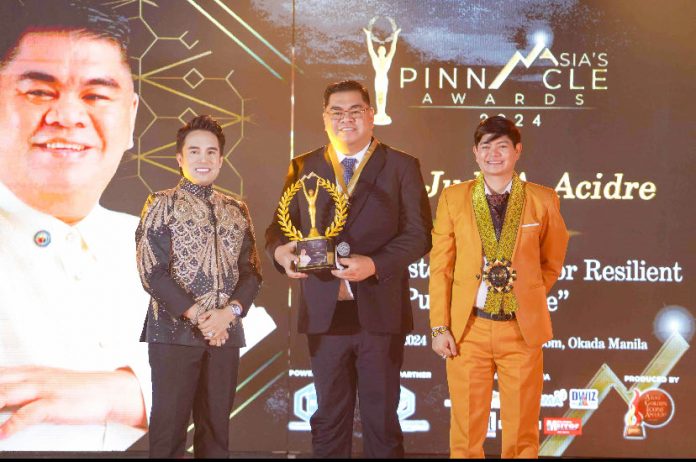
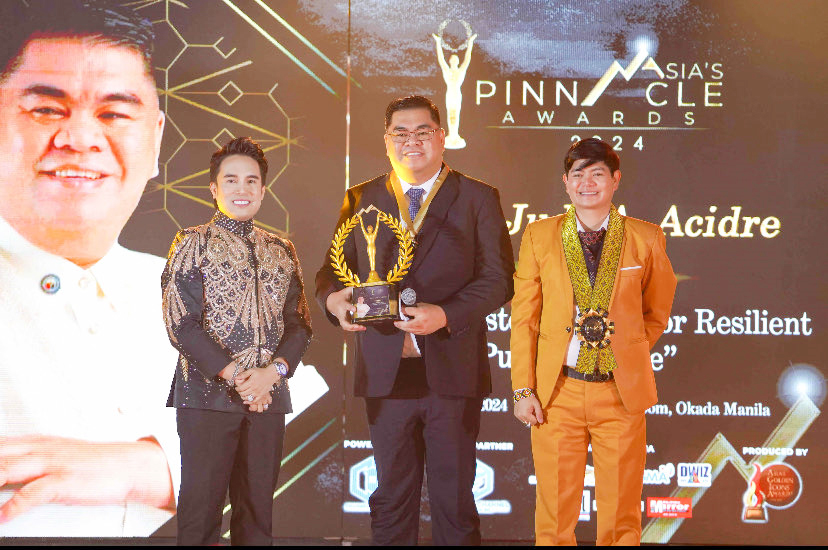
Rep. Jude Acidre of Tingog party-list received the “Asia’s Trusted Leader for Resilient Public Service” award at the 2024 Asia’s Pinnacle Awards held at the Grand Ballroom, Okada Manila. The award, presented by Asia’s Golden Icons Awards and Events Inc., recognizes Acidre’s exceptional dedication to public service and his significant contributions to underserved communities across the Philippines.(LEFT) Dr. Ronnel P. Ybañez, Founder & Chairperson, Asia’s Pinnacle Awards
(RIGHT) USec. Vidal Villanueva III, Deputy Director, TESDA; National Adviser, Asia’s Modern Hero Awards
Rep. Jude Acidre of Tingog party-list received the “Asia’s Trusted Leader for Resilient Public Service” award at the 2024 Asia’s Pinnacle Awards held at the Grand Ballroom, Okada Manila. The award, presented by Asia’s Golden Icons Awards and Events Inc., recognizes Acidre’s exceptional dedication to public service and his significant contributions to underserved communities across the Philippines.(LEFT) Dr. Ronnel P. Ybañez, Founder & Chairperson, Asia’s Pinnacle Awards (RIGHT) USec. Vidal Villanueva III, Deputy Director, TESDA; National Adviser, Asia’s Modern Hero Awards
TACLOBAN CITY-Tingog party-list Representative Jude Acidre was recognized as “Asia’s Trusted Leader for Resilient Public Service” at the 2024 Asia’s Pinnacle Awards held at Okada Manila.
The award underscores Acidre’s commitment to public service and his impactful work with marginalized communities through Tingog Partylist initiatives.
Organized by Asia’s Golden Icons Awards and Events Inc., the awards celebrate leaders across various sectors. Acidre was selected for exemplifying resilience, integrity, and a dedication to uplifting Filipino lives.
Under his leadership, Tingog party-list established Tingog Centers for government service access, the Kalusugan Karavan mobile health program, and disaster relief efforts.
As chair of the House Committee on Overseas Workers Affairs, he has also championed OFW rights and reintegration programs.
Acidre’s recognition highlights his inclusive and compassionate approach to governance, setting a benchmark for public service across Asia. (LIZBETH ANN A. ABELLA)
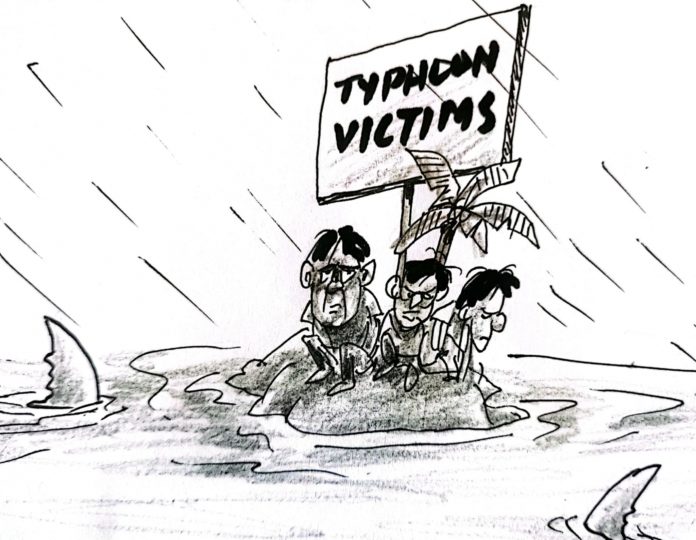
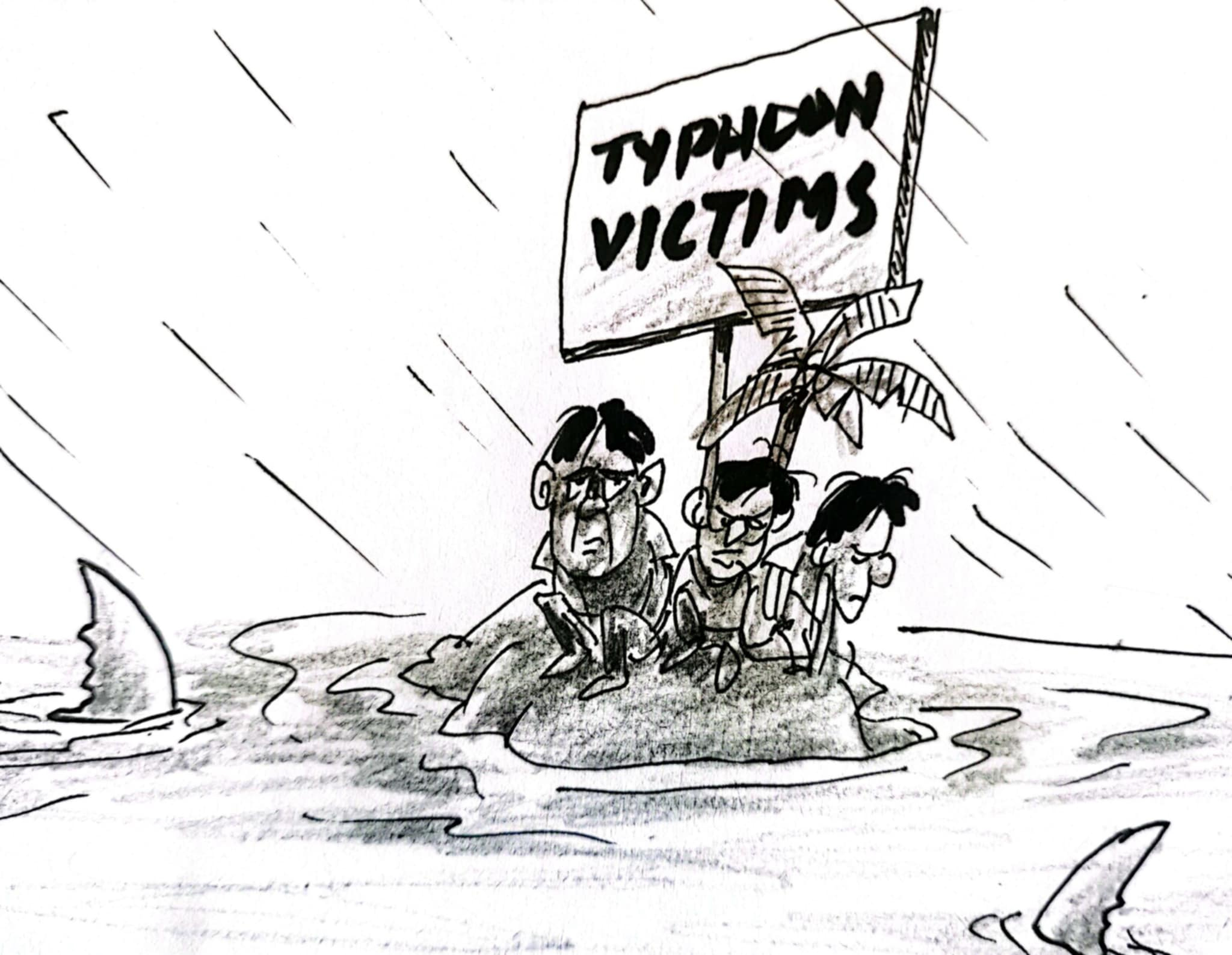
The recent barrage of typhoons left a trail of devastation across the Philippines, exposing the country’s vulnerabilities to extreme weather events. While rehabilitation efforts are underway, the government must take a proactive approach to rebuilding, focusing on long-term solutions rather than just quick fixes. Addressing infrastructure damage requires not only reconstruction but also strengthening systems to prevent similar destruction in the future.
One pressing priority is the rebuilding of roads and bridges, which are essential for connectivity and economic recovery. Many communities remain isolated due to impassable routes, delaying aid and disrupting livelihoods. These structures must not only be repaired but also redesigned to withstand stronger typhoons. Investing in durable materials and engineering techniques suited for the Philippine climate should take precedence over cost-cutting measures that leave infrastructure fragile and short-lived.
Another crucial area is the restoration of power and communication lines, which are lifelines during and after disasters. In many affected areas, electricity and mobile networks remain unreliable weeks after the storms, hampering rescue efforts and slowing recovery. The government should consider underground power lines or stronger pole systems, particularly in typhoon-prone regions. Immediate repairs are necessary, but long-term planning for resilient utilities is vital for ensuring continuity during future calamities.
The government must also prioritize repairing and upgrading public buildings such as schools, hospitals, and evacuation centers. Many of these structures failed to protect residents during the typhoons, revealing glaring deficiencies in their design and maintenance. Strengthening these facilities not only safeguards lives but also ensures that essential services are restored quickly in the aftermath of disasters. The inclusion of climate-resilient designs in public infrastructure is no longer optional but an urgent necessity.
A more systematic and transparent approach to funding rehabilitation projects is required to address the broader issue of disaster recovery. This means auditing how resources are allocated, ensuring that aid reaches the most vulnerable, and promoting community involvement in rebuilding efforts. Recovery cannot hinge on temporary fixes or donor assistance alone; it demands sustainable planning, decisive leadership, and a commitment to building back stronger for future generations.
When I read on Facebook the supposed plan to build bridges linking Luzon, Visayas, and Mindanao, I couldn’t help but feel a mix of curiosity and skepticism. If true, it sounds like a dream come to life—imagine driving seamlessly from one island to another without waiting for a ferry or the mercy of the weather. But let’s not kid ourselves: in a country where potholes multiply faster than campaign posters, can we seriously expect such a monumental undertaking to go off without a hitch? My gut says this is either another round of fake news or a political pipe dream meant to distract us from more pressing issues.
To begin with, let’s talk about technology—or the lack of it. We’ve all seen the footage of those majestic bridges in other countries, their engineering feats standing tall against the forces of nature. But here? I doubt we even have the right tools or know-how to start such a massive project. Do you remember those viral photos of footbridges in Manila collapsing even before the ribbon-cutting ceremony? Now imagine that multiplied by kilometers of open sea. We’re talking about connecting islands prone to typhoons, earthquakes, and even volcanic activity. Unless we plan to make these bridges out of carabao hide and prayers, I don’t see how we can pull it off.
Then there’s the matter of funding. Let’s not sugarcoat this: the Philippines isn’t exactly swimming in cash. With inflation choking our budgets and international debts piling up like laundry in a college dorm, where exactly do we expect to get the funds needed for this project? Sure, the government can talk about loans and public-private partnerships, but let’s be real: we’re already struggling to fund our basic infrastructure. How can we prioritize a vanity project over much-needed hospitals, schools, and roads that won’t swallow half your car during the rainy season?
And don’t even get me started on corruption. If this project ever takes off, you can bet your last peso that shady politicians and contractors will sniff out the budget faster than termites finding fresh wood. They’ll carve out their “standard operating procedures” like vultures on a carcass, leaving us with substandard materials and bridges that might crumble before they even see their first sunrise. Picture this: you’re crossing one of these billion-peso marvels, and it starts to wobble like a drunk man on a tightrope. It’s not just your wallet that will suffer; it’s your life on the line.
Let’s not overlook the environmental impact either. Building these bridges would mean dredging up the ocean floor, destroying marine habitats, and disrupting ecosystems that fishermen depend on. Do we want to trade fresh seafood for steel and concrete monstrosities that might not even stand the test of time? It’s like swapping your Lola’s ancestral recipe for adobo with some fast-food chain’s soggy version—it’s just not worth it.
And here’s the kicker: even if by some miracle this project does materialize, will it be accessible to ordinary Filipinos? Or will toll fees be so exorbitant that only the rich can afford to use it? I can already hear the complaints: “Libre naman ang magluto ng kanin sa kaldero, pero kailangan mong mangutang para makatawid sa tulay.” The whole thing feels more like a luxury than a necessity—a shiny bauble for those who already have too much.
What frustrates me most is that there are so many other ways to improve transportation and boost the economy without resorting to wild schemes. Fix the existing roads and bridges, improve public transportation, and invest in safer, faster ferries. Sure, these aren’t glamorous solutions, but they’re practical and achievable. Why aim for the stars when we haven’t lit a proper lamp in our backyard?
These bridge projects—if real—feel less like a plan and more like a symptom of our government’s chronic short-sightedness. It’s as if they’re trying to build castles in the air while ignoring the cracks in the ground beneath us. Instead of dreaming big but hollow dreams, we should focus on achievable goals that genuinely improve people’s lives. After all, what’s the use of building bridges if they lead to nowhere—or worse if they collapse before anyone can cross?
WE have to be aware of this way of looking and reacting to things in general that is actually ruling the lives of many people, especially the young ones, who do not know yet how to properly handle their emotions, feelings and passions.
As commonly defined and described, emotivism is an ethical theory that says that “it is impossible to determine right from wrong. Instead, any moral statement is simply a reflection of the speaker’s emotions.”
Affectivity which covers the whole range of emotions, feelings, passions and humor of a person constitutes a first approach, sometimes powerful, to the reality in which he lives. Because it is a first source of information, the affective dimension should not be left aside or considered as something accessory. Rather, our affectivity needs to be properly educated.
In this regard, it would be helpful if we assess which desires we want to foster, which ones we are interested in having to govern our life. Of course, for this, we need to consider what God through our faith and piety would show us about how our affectivity should be handled—that is, to discover the ways of aligning our desires according to God’s law and will for us.
Everyone should be made to realize as early as possible that while emotions and feelings are part of our human nature, we should not allow them to be the main guide of our life.
Our emotions and the whole range of our affectivity are more a part of the animal dimension of our being. As such they are blind to the spiritual and supernatural dimension of our life, and thus, they need to be educated accordingly.
Obviously, the guiding principle should be our faith, hope and charity which truly define us as a person and a child of God. In other words, our faith, hope and charity tell us who we really are, what the purpose of our life here on earth is, how our freedom should be sourced and oriented, etc. They provide us the moral principles that should guide the way we use our emotions and passions.
The common problem we have in this regard is that many people are not clear about where we can have the ultimate source of knowledge and wisdom about ourselves. Some rely on some ideologies, fashions and trends. Others just seem to drift to wherever the world currents would take them.
Of course, given our wounded human condition, to educate our emotions and passions properly we need to ask for grace and rely more on the supernatural means without belittling in any way all the human means we can avail of.
We have to pray, offer sacrifices, avail of the sacraments, have devotion to Our Lady and the saints. Then we truly have to study a lot and go through the process of developing virtues.
This is how our emotions and passions help us in achieving an interior freedom in all our actuations. In this way, our emotions and passions get purified and are elevated to the spiritual and supernatural level.
This is also how our emotions and passions would know what is truly important and necessary in life, what brings us to our eternal joy. This is how they avoid getting stranded in our merely bodily and worldly conditions.
It is when our emotions are properly educated, that is, when they are properly integrated to the requirements of our faith, hope and charity, to the will of God, that we can say that we enjoy true interior freedom.