This year marks the nearly 25 years since I graduated from the University of the Philippines Tacloban College master’s in management Program. Notable of the sojourn was the fact that I was part of the 15 Scholars of the Civil Service Commission Local Scholarship. Our professors include the great Erasmus of sorts in Prof. Wilfred Barloso, Prof. Anna Arroyo , Prof. Clem Palima, Prof. Arsenito Culaba, Prof. Amy Exconde and the late Prof. Apolinar Lorenzo.
My classmates include Atty. Rupert Golong, Ms, Maritoni Ramento, the late Mano Chito dela Torre, Sir Jorge Modesto, Mam Martha Adelina Vda de Capales, Mr. Raul Caceres and Dean Teofilo Montallana.
Owing to the almost 25 revolutions around the Sun, I am mentioning them, faculty, and classmates. Further , one dead President from the United States his name was Woodrow Wilson , a life well researched by us the Class of 2001 of UPVTC and all, Public Administration disciples.
Woodrow Wilson, the 28th President of the United States, is often regarded as the Father of Public Administration due to his influential ideas on governance and administration. His most notable dictum regarding public office emphasized the separation of politics and administration, arguing that government should function efficiently and professionally, free from political interference.
One of his famous quotes about public office states: “Every man who takes office in Washington either grows or swells, and when I give a man an office, I watch him carefully to see whether he is swelling or growing.” This reflects his belief that holding public office should be about service and growth, rather than personal gain or corruption
Wilson believed that public administration should be treated as a science, advocating for a merit-based civil service rather than one driven by political patronage. His essay, The Study of Administration (1887), laid the foundation for modern public administration, stressing that government officials should focus on policy implementation rather than political maneuvering.
Wilson had often reminded us that Public Office is a Public Trust, and that Public Officials are mandated to be accountable to the public.
Now Accountability is not the Badil or the Hukip, but proper and trye service. Public Trust is gained by doing what is right, its also upheld by being fair.
Growing” refers to individuals who develop, learn, and improve in office. These officials take on the responsibilities of public service with humility, gaining wisdom, experience, and skills that allow them to contribute meaningfully. Their leadership is marked by positive change and effectiveness.
“Swelling” describes those who become arrogant or self-important upon gaining power. Instead of using their position for public good, they let authority inflate their ego, becoming disconnected from the people they serve. Their leadership may be driven by self-interest rather than service.
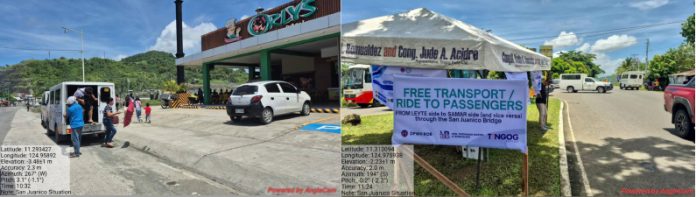
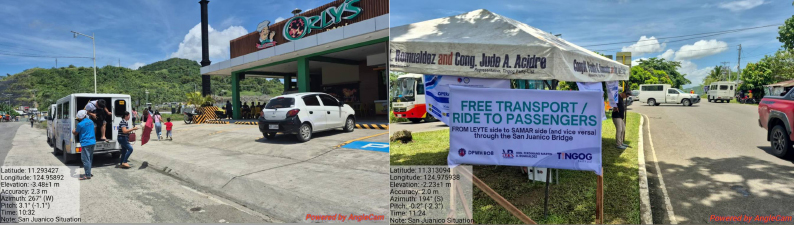
FREE RIDES. With the limitation of vehicles weighing more than three ton to pass the San Juanico Bridge, affected passengers are given free rides courtesy by various government agencies, city government of Tacloban, and Tingog party-list group. (PHOTO COURTESY)
FREE RIDES. With the limitation of vehicles weighing more than three ton to pass the San Juanico Bridge, affected passengers are given free rides courtesy by various government agencies, city government of Tacloban, and Tingog party-list group. (PHOTO COURTESY)
TACLOBAN CITY– In light of the recent travel restrictions imposed on the San Juanico Bridge, the Department of Public Works and Highways (DPWH) in the region has deployed free transportation services to assist affected commuters.
Since May 15, 2025, a total of nine service vehicles have been mobilized by the DPWH-8, with additional support from Tingog party-list, to provide onsite transport across the bridge.
This initiative aims to ease the burden on travelers affected by the temporary bridge weight limits.
Pick-Up/Drop-Off Points: Leyte side (Tacloban City): across Nitro Fuel Station, near Orly’s Inasal Restaurant and Samar side: Rotonda near the DPWH Weighbridge Station.
To further assist the public, the DPWH has also set up temporary passenger amenities at both ends of the bridge, including tents, portable toilets, and water dispensers.
These efforts reflect the agency’s commitment to public service and support during this period of disruption.
WINNER. Leyte Rep. Richard Gomez was officially proclaimed as the duly elected representative of Leyte’s 4th congressional district by the members of the Provincial Board of Canvassers on May 14. (LIZBETH ANN A. ABELLA)
WINNER. Leyte Rep. Richard Gomez was officially proclaimed as the duly elected representative of Leyte’s 4th congressional district by the members of the Provincial Board of Canvassers on May 14. (LIZBETH ANN A. ABELLA)
TACLOBAN CITY – Reelected 4th district Representative Richard Gomez has laid out his legislative and development agenda for his second term in Congress, with a strong focus on peace and order, anti-illegal drugs campaigns, environmental protection, and job-generating projects for Ormoc and the rest of the district.
Speaking after his proclamation on May 14, Gomez identified peace and order as his top priority, noting that a secure environment is essential for progress. He reaffirmed his commitment to supporting national and local efforts against illegal drugs, which he described as a persistent threat to communities.
Gomez also underscored the need to address environmental concerns and to push for projects that will create employment and support local businesses, particularly as the region continues to recover from the economic impacts of the pandemic.
In addition to his core development agenda, the lawmaker called for electoral reforms, advocating for a system that provides equal opportunities to candidates regardless of their financial status.
“There are many capable individuals who want to serve but are unable to run because of the high cost of campaigning,” he said.
Gomez expressed his gratitude to the organizations and supporters who contributed to his re-election, describing the campaign as a lesson in perseverance and public service. He emphasized that delivering concrete results and remaining accessible to constituents are key to gaining the people’s trust.
“I believe that if you work hard and genuinely serve the people, they will see it and support you,” he said.
With a renewed mandate, Gomez vowed to continue working tirelessly to uplift the lives of residents across the 4th district of Leyte which is composed of Ormoc City and six towns.
TACLOBAN CITY – The city government of Ormoc and the Port Management Office of the Philippine Ports Authority (PPA) met on Saturday, May 17, to discuss traffic management strategies in response to the expected influx of heavy vehicles due to the load restrictions at the San Juanico Bridge.
During the meeting, at least three areas outside Ormoc’s city proper were identified as designated truck stops. These sites aim to minimize congestion, especially along the road leading to GGC Port, a private anchorage located in Barangay Punta.
With the anticipated increase in cargo truck arrivals, the local government, through the Ormoc Chamber, is appealing to lot owners to allow their properties to be used as temporary parking areas.
Only trucks with complete documentation and confirmed schedules will be allowed to enter the city proper.
Currently, Ormoc is served by local cargo vessel operator ALD Sea Transport, which runs three vessels between Maguino-o Port in Calbayog City, Samar, and GGC Port in Ormoc. Additionally, SEEN SAM Shipping Inc. has begun operating a temporary sea route between Maguino-o and Ormoc.
To ease the impact of the three-ton load limit on the San Juanico Bridge, the PPA has identified several alternate ports for affected vehicles.
On the Leyte side, these include the ports in Tacloban, Palompon, Calubian, Hilongos, Biliran, and Maasin. On the Samar side, alternate ports include Calbayog, Catbalogan, and Maguino-o.
The San Juanico Bridge, which connects the islands of Samar and Leyte, remains a crucial transport link in Eastern Visayas, and authorities are working to ensure the continued flow of goods despite restrictions.
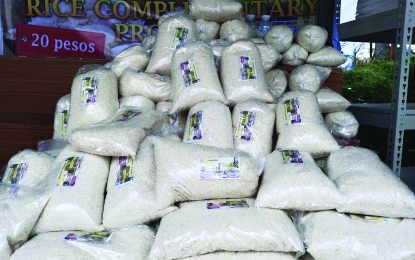
P20/KG OF RICE. The provincial government of Southern Leyte is to sell rice at P20 per kilogram in the next few days, Governor Damian Mercado said. The move is in compliance to the directive of Pres. Marcos to sell rice at P20/kg to the public.
(PHOTO COURTESY)
Town of Basey too
P20/KG OF RICE. The provincial government of Southern Leyte is to sell rice at P20 per kilogram in the next few days, Governor Damian Mercado said. The move is in compliance to the directive of Pres. Marcos to sell rice at P20/kg to the public. (PHOTO COURTESY)
TACLOBAN CITY – Southern Leyte Governor Damian Mercado announced that the province is set to sell rice at P20 per kilogram, in full support of President Ferdinand “Bongbong” Marcos Jr.’s program to make rice more affordable for Filipino families.
Mercado, in a radio interview over Radyo Pilipinas-Sogod on Sunday, May 18, said that the provincial government is initially procuring 30,000 sacks of rice. Purchase orders for the rice acquisition were readied the following day, Monday, as part of the province’s efforts to roll out the program soon.
“We are showing our commitment to the President’s vision of affordable rice by helping shoulder the cost,” Mercado said.
To lower the price from the current average of P33 to just P20 per kilo, the provincial government will subsidize P6.50 per kilo, with an additional P6.50 to be shouldered by Food Terminal Inc. (FTI), bringing the total subsidy to P13 per kilo.
Although the governor did not specify the total budget allocation for the program, he assured that the P20 per kilo rice would be available in public markets across the province “in the days to come.”
Mercado also stressed that the local government is working to ensure the equitable and efficient distribution of rice once the supply arrives.
A similar initiative has been ongoing in Basey, Samar since May 8, where limited quantities of rice are being sold at P20 per kilo to Pantawid Pamilyang Pilipino Program (4Ps) beneficiaries, senior citizens, and persons with disabilities.
According to Municipal Agriculture Officer Jesus Jabines, the rice comes from local farmers who received fertilizers and seeds from the Department of Agriculture (DA). No local government funds were used for the program.
“The price reduction is made possible because farmers agree to sell a portion of their harvest in exchange for the inputs they received,” Jabines said.
Basey is home to over 9,000 rice farmers cultivating more than 4,700 hectares of rice fields, with an average yield of 4.5 metric tons per hectare.
“We want to prove that it is possible to sell rice at P20 per kilo if everyone works together,” Jabines added.
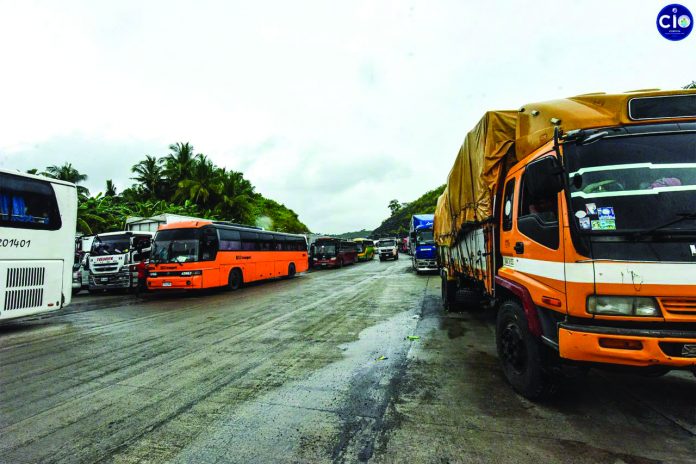
3-TON LIMIT IMPOSED. Vehicles weighing over three tons are now prohibited from crossing the San Juanico Bridge starting Thursday, leading to heavy traffic buildup and forcing passengers to disembark and walk. According to the DPWH, the iconic bridge has sustained major structural defects that require urgent repair. Rehabilitation work is expected to take up to two years.
(TACLOBAN CITY INFORMATION OFFICE)
Business sector raises alarm
3-TON LIMIT IMPOSED. Vehicles weighing over three tons are now prohibited from crossing the San Juanico Bridge starting Thursday, leading to heavy traffic buildup and forcing passengers to disembark and walk. According to the DPWH, the iconic bridge has sustained major structural defects that require urgent repair. Rehabilitation work is expected to take up to two years. (TACLOBAN CITY INFORMATION OFFICE)
TACLOBAN CITY – The Department of Public Works and Highways (DPWH) in Eastern Visayas has imposed a strict temporary weight limit on vehicles crossing the iconic San Juanico Bridge starting Thursday, May 14, as it prepares for major repairs expected to last up to two years.
Only vehicles with a gross weight of less than three metric tons, such as motorcycles and small cars, are allowed to pass. These lighter vehicles are required to travel along the bridge’s centerline to minimize stress on its deteriorating outer girders.
DPWH Assistant Regional Director Engr. Margarita Junia said the restriction was prompted by alarming findings from a structural assessment conducted by a DPWH-hired consultant.
“All 42 spans of the bridge need major repairs. The steel components are corroding, and the bridge no longer meets standard road load capacity,” Junia said in a press briefing on Thursday, May 15.
“A memorandum from Secretary Manuel Bonoan was issued on May 9 directing the immediate implementation of the weight restriction due to the bridge’s significant deterioration,” she added.
Constructed 53 years ago during the administration of President Ferdinand Marcos Sr. as a gift to First Lady Imelda Marcos, the 2.16-kilometer San Juanico Bridge is a vital link between Samar and Leyte islands and a key segment of the Maharlika Highway, connecting Eastern Visayas to the rest of the country.
Hours after the restriction was implemented, long lines of trucks and buses were seen on both sides of the bridge, with many passengers forced to disembark and walk.
To ease the disruption, the DPWH deployed six shuttle vehicles, while Tacloban City Mayor Alfred Romualdez also provided additional transport assistance for stranded passengers.
To address the movement of heavier cargo and perishable goods, barges will begin operating on Saturday. On the Samar side, they will load from Basey and unload at the Tacloban port. Other operational ports include Catbalogan and Calbayog, both in Samar; and Ormoc, Hilongos, Palompon, Calubian, Villaba, all in Leyte; Naval (Biliran), and Maasin City (Southern Leyte).
The bridge rehabilitation will require an estimated P900 million, and DPWH aims to complete the work within 24 months once the needed funding would be downloaded.
Wilson Uy, regional president of the Philippine Chinese Chamber of Commerce and Industry, warned of the serious economic implications of the restriction.
“Restricting heavy trucks from using the bridge will significantly increase transportation costs, which will be passed on to consumers through higher prices of basic goods. Businesses, too, will face operational strain,” Uy said.
He stressed the ripple effect on logistics, supply chains, and regional trade, with truckers forced to take longer and more expensive alternative routes.
“The national government and DPWH must explore engineering solutions or alternative infrastructure support that can ensure the bridge’s integrity without compromising the region’s economy. Let’s protect both lives and livelihoods,” he said.
Uy urged authorities to begin the repair work immediately and efficiently, warning that delays would exacerbate the economic burden on Eastern Visayas.
“The longer the restriction continues without visible rehabilitation, the heavier the toll on commerce and daily life across Region 8 and beyond. We cannot afford a prolonged bottleneck in this vital Visayas corridor,” he concluded.




Swelling vs. Growing: The True Measure of Public Service
This year marks the nearly 25 years since I graduated from the University of the Philippines Tacloban College master’s in management Program. Notable of the sojourn was the fact that I was part of the 15 Scholars of the Civil Service Commission Local Scholarship. Our professors include the great Erasmus of sorts in Prof. Wilfred Barloso, Prof. Anna Arroyo , Prof. Clem Palima, Prof. Arsenito Culaba, Prof. Amy Exconde and the late Prof. Apolinar Lorenzo.
My classmates include Atty. Rupert Golong, Ms, Maritoni Ramento, the late Mano Chito dela Torre, Sir Jorge Modesto, Mam Martha Adelina Vda de Capales, Mr. Raul Caceres and Dean Teofilo Montallana.
Owing to the almost 25 revolutions around the Sun, I am mentioning them, faculty, and classmates. Further , one dead President from the United States his name was Woodrow Wilson , a life well researched by us the Class of 2001 of UPVTC and all, Public Administration disciples.
Woodrow Wilson, the 28th President of the United States, is often regarded as the Father of Public Administration due to his influential ideas on governance and administration. His most notable dictum regarding public office emphasized the separation of politics and administration, arguing that government should function efficiently and professionally, free from political interference.
One of his famous quotes about public office states: “Every man who takes office in Washington either grows or swells, and when I give a man an office, I watch him carefully to see whether he is swelling or growing.” This reflects his belief that holding public office should be about service and growth, rather than personal gain or corruption
Wilson believed that public administration should be treated as a science, advocating for a merit-based civil service rather than one driven by political patronage. His essay, The Study of Administration (1887), laid the foundation for modern public administration, stressing that government officials should focus on policy implementation rather than political maneuvering.
Wilson had often reminded us that Public Office is a Public Trust, and that Public Officials are mandated to be accountable to the public.
Now Accountability is not the Badil or the Hukip, but proper and trye service. Public Trust is gained by doing what is right, its also upheld by being fair.
Growing” refers to individuals who develop, learn, and improve in office. These officials take on the responsibilities of public service with humility, gaining wisdom, experience, and skills that allow them to contribute meaningfully. Their leadership is marked by positive change and effectiveness.
“Swelling” describes those who become arrogant or self-important upon gaining power. Instead of using their position for public good, they let authority inflate their ego, becoming disconnected from the people they serve. Their leadership may be driven by self-interest rather than service.
We must grow and not swell!