30.8 C
Tacloban City
November 17, 2026 - Tuesday | 3:01 PM
Home Blog Page 432

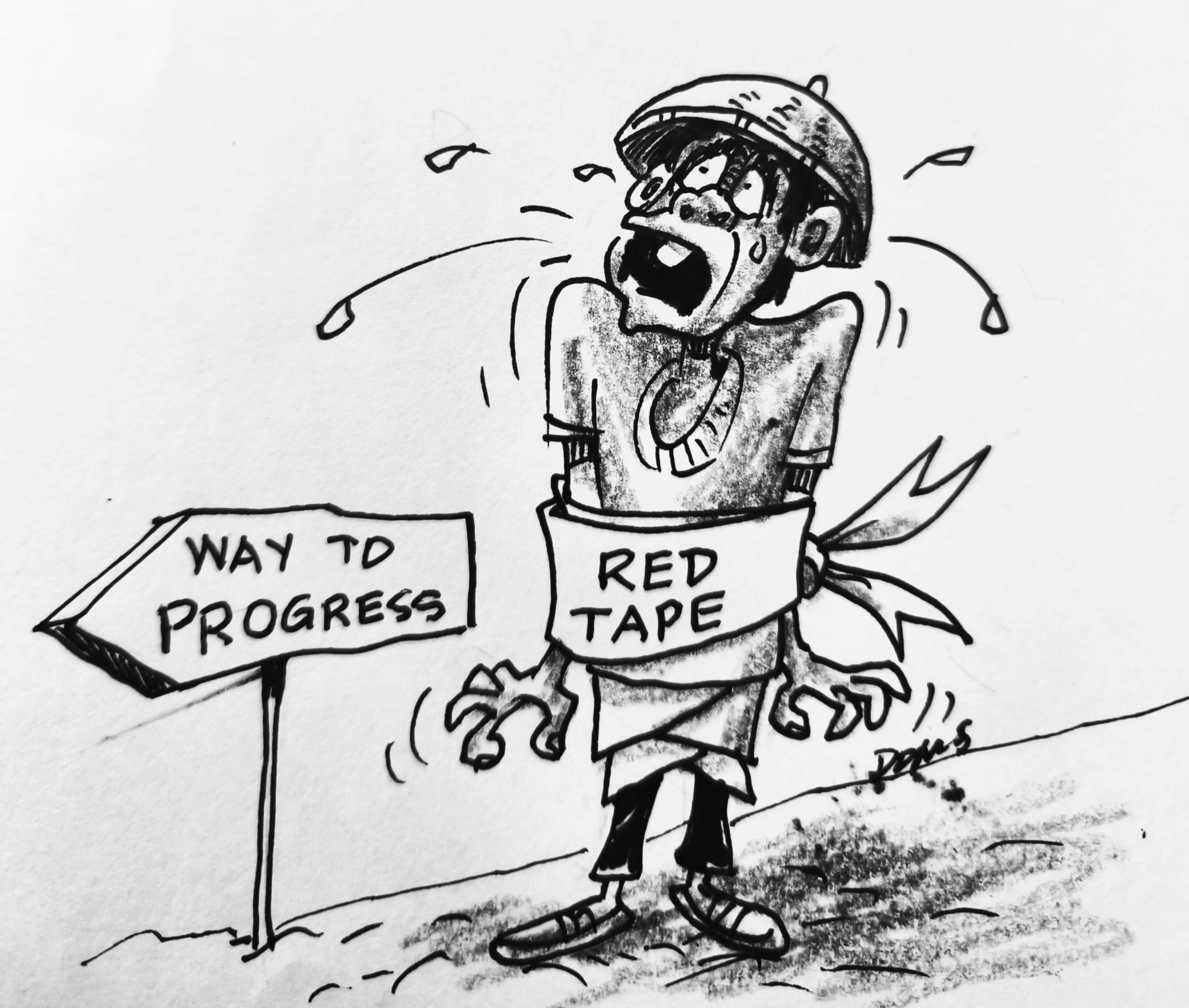
Disgrace behind red tape

0

The excessive red tape that hounds the processes of securing business permits, licenses, and other government clearances in the country is nothing short of a national disgrace. It has become a heavy chain that stifles productivity, discourages investment, and invites corruption to flourish in every corner of bureaucracy. This shameful reality demands urgent correction if the nation is to rise from economic stagnation.

The sheer volume of requirements imposed on applicants reveals a system deliberately designed to complicate rather than assist. From multiple signatures, redundant documents, and endless verifications, the process is often stretched out for weeks, even months.

Instead of streamlining, the bureaucracy has built a labyrinth that ordinary citizens and entrepreneurs must crawl through. Such inefficiency only wastes time and drains resources that could have been put into productive endeavors.

In the middle of these complex procedures, corruption finds fertile ground. When citizens are made to endure interminable delays and unnecessary requirements, many are forced to resort to “under the table” transactions just to move forward. The government itself thus becomes complicit in nurturing a culture of bribery and extortion. The very offices tasked with facilitating public service are reduced to toll gates where every step forward has a hidden price tag.

Foreign investors, seeing this grotesque reality, either hesitate to put their money in or pull out entirely. Their complaints about excessive rules, burdensome costs, and bureaucratic inaction are not exaggerated—they are accurate reflections of the country’s anti-business environment. While other nations compete to attract investment by offering ease of doing business, the Philippines squanders opportunities through outdated systems and officials who thrive on inefficiency. The result is predictable: stagnation, lost jobs, and a crippled business climate.

This cancer of red tape must be excised through sweeping reforms. The system needs radical simplification—reducing requirements to the bare essentials, digitizing processes to minimize human intervention, imposing accountability measures on government offices, and punishing corrupt practices with certainty. With these, public service becomes truly service-oriented, and local and foreign enterprises could thrive under an environment that respects time, values integrity, and promotes growth.

Did we really evolve from the apes?

0

Scientists have long argued that we climbed down from the branches of evolution, but when I see the avarice and plunder happening before my eyes, I cannot help but insist: these robbers did not descend from apes—they crawled up from crocs. That, to me, explains much of the rot gnawing at our society today.

Darwin, for all his brilliance, might have missed a local footnote in his theory of evolution. Perhaps he never walked the muddy riverbanks of the tropics where crocodiles lurk, jaws wide and eyes gleaming with hunger. Here, the predator is not just an animal—it has also become a metaphor for men in fine suits who feed on the weak and fatten themselves with what does not belong to them. The ape may look clumsy and mischievous, but at least it knows family and play. The crocodile knows only appetite, patience, and the cold art of ambush.

When one thinks of an ape, one sees curiosity, community, and even awkward empathy. They groom each other, share food, and sometimes look like they are laughing at their own silliness. But when one thinks of crocodiles, the first images that come to mind are deceit, cold-bloodedness, and unblinking hunger. Tell me, then, which lineage better explains the behavior of politicians who stash public funds in offshore accounts, or contractors who siphon billions from flood projects while the people drown in waist-deep water?

It’s almost insulting to the apes to say we came from them when our so-called leaders behave in ways more fitting of reptiles. Monkeys and chimpanzees never invented pork barrel scams. Gorillas never built ghost schools or bridges that collapse after one rainy season. But crocodiles? They’ve been ambushing, devouring, and surviving unchanged for millions of years. And now, in the Philippines, their spiritual descendants occupy Congress.
The crocodile metaphor has become part of our everyday language, and not without reason. When Filipinos call a corrupt official a “buwaya,” it is not out of ignorance but out of accuracy. A buwaya does not stop feeding until it is too fat to move, and even then, it only rests before devouring again. So too with these plunderers: insatiable, unapologetic, and completely detached from the suffering of the people whose money they devour. The ape would have thrown a banana or two back to the crowd, but the crocodile throws nothing.
Darwin believed in gradual progress, in species refining themselves for survival. But in this land, the crocodilian branch of evolution has mastered regression. We are told that humans are intelligent, rational beings capable of morality and higher thought. Yet when corruption remains unchecked, when the same faces keep getting reelected despite proven theft, one begins to wonder if intelligence is really advancing—or if we are just perfecting the crocodile’s grin.

Still, I must admit, crocodiles possess an honesty that their human counterparts do not. The reptile hunts openly, according to its nature. It never pretends to be a servant of the people, never delivers speeches about “public service” or “national development.” The crocodile makes no promises, and it breaks none. The human version, however, smiles on television, swears by God, and still robs blind. In that sense, the real crocodile deserves more respect than the politician who imitates it.

What, then, is to be done with these crocodile descendants? The answer is not to deny Darwin but to refine him: perhaps humanity carries within it both ape and croc—the mind of one, the appetite of the other. Our task as citizens is to starve the reptile side, to stop feeding it with votes, silence, and tolerance. Until we learn that lesson, the rivers of this nation will always remain infested.

The “good life” can be a sweet poison

0

THAT gospel parable about the rich man and the poor man, Lazarus, reminds us of the danger of the so-called “good life” where due to our status, privileges and other endowments, we tend to live in our own world and can become indifferent and insensitive to the needs of the others. (cfr. Lk 16,19-31)

Let’s be reminded that the privileges, favors and blessings we enjoy in life are meant for us to strengthen our desire to serve and not to be served. But as it is, we should try to avoid them, since they tend only to spoil and corrupt us.

We have to be most wary when we happen to enjoy some privileged positions or status in life because we tend to think that we deserve more entitlements. And not only would we expect them. We may even demand them for us.

This, sad to say, seems to be a common phenomenon these days. It can affect everyone, of course, but it especially affects the young ones who appear to be more privileged than those in the previous generations because of the many new things they are learning and enjoying now. And they feel entitled.

We should banish this temptation as soon as it makes its appearance felt in us. On the contrary, we should follow the example of Christ who, in spite of who he was, just wanted to serve.

We should develop the intense desire to have a special concern for those who have less in life, like the simple and the weak, the sick and disabled, the children and the poor.

This truth of our faith is somehow highlighted in that gospel episode where Christ preached about the need to be like little children to enter the kingdom of heaven, to care and not to despise the little children, and his intent was always to look after the lost sheep, regardless of the cost and effort involved. (cfr. Mt 18,1-5.10.12-14)

If we are truly Christian, we should have true and abiding compassion toward everyone, especially the poor and the needy. But we have to understand that compassion should have a universal coverage. It should not be limited to the sentimental aspects of things, nor simply the relieving of the economic and material needs of people alone.

It should cover the whole range of human needs in their proper order of importance, foremost of which is our need for God. We have to learn to distinguish between the pressing and precious needs of man, and to cope with the tension that sometimes arises in our effort to put these two kinds of human needs together.

When we happen to have the “good life,” we should take the initiative to look for ways of how to get involved more in the lives of others, helping them in any way. Like Christ, our heart should flow always with compassion, quick to notice the needs of others and to respond to them.

It’s an example that we should all try to imitate. One deep desire we should have is that of making as some kind of default mode that attitude of thinking always of the others, wishing them well all the time and doing whatever we can to help.

It’s obviously not easy to do, but we can always try. With God’s grace and with our persistent effort, we can little by little and day by day hack it, such that it becomes second nature to us to think and feel for the others. That’s what compassion is all about.

My PRDP Journey – Then and Now

0

As far as I can recall, it was during the time of then DA-8 OIC-RED U-Nichols Manalo that I first became involved with the Philippine Rural Development Project (PRDP) as InfoACE Head. If memory serves me right, it was in 2017 or 2018.

I didn’t seek the position, but Director Manalo—who was determined to correct what he viewed as “the mistakes of past administrations”—took deliberate and decisive action to achieve positive results at all costs.

Since then, the InfoACE Unit bounced back to life, so to speak. During my term, I was also authorized to hire an Information Writer, Ms. Jennina L. Brosas. Together, we were able to accomplish, with humility, the communication and advocacy needs and targets of PRDP-RPCO 8.

In 2022, however, when I was reassigned as Lead APCO under the supervision of then FOD Chief—now DA-8 RED Andrew Rodolfo T. Orais—my stint with PRDP was understandably cut short.

Early this year, 2025, I was given another chance to be involved with PRDP-RPCO 8—this time as I-REAP Component Head, while also serving as AMAD Chief.

One of the main concerns of I-REAP, as well as other component groups, is to spearhead the mainstreaming of proven PRDP tools, innovations, principles, and strategies into the agency’s regular programs, activities, and projects.

Admittedly, I am still in the adjustment process, doing my best to learn the nitty-gritty of the PRDP system and perspectives—particularly those under I-REAP’s tasks and responsibilities. Yet, re-immersing myself in this work has been an unexpectedly rewarding experience for many reasons.

Perhaps I could do more if I were not multitasking. On the other hand, I consider all this a great challenge as a humble civil servant. I never really mind receiving unpleasant criticism from different fronts; I see it as part of the ingredients of success. It helps me grow—and growth is gold.

At the moment, I am fully convinced things will start to work out for the good, or even better.

Now that I am back working for PRDP, I firmly believe that in conducting initial capability-enhancement activities, especially in mainstreaming priority tools and innovations, the “compare and contrast” approach should be paramount.

By comparing the current operating procedures at DA-RFO 8 with the improved systems and processes developed over the years by PRDP, concerned staff will be able to identify gaps, bottlenecks, and other pain points, and decide how best to integrate good practices into the customary systems of the divisions or operating units of the DA.

I am deeply grateful to DA-8 management under the able leadership of RED and RPCO 8 Project Director Andrew Rodolfo T. Orais, and Deputy Project Director Larry U. Sultan for giving me and the AMAD staff the opportunity to support and play an active role in PRDP I-REAP’s mandated duties and functions. Thanks as well to Ma’am Jenny Lyn Almeria, former DPD, for paving the way for my first opportunity to join the project.

PS: Feeling #blessed to be working with highly competent I-REAP and AMAD staff (you know who you are), as well as other DA colleagues who are at the frontlines of enterprise development in the region

Which side must the people be?

0

Unbeknownst and undiscovered, the people in general are confused, which side must they go in the face of the corruption discoveries and drama?

Personally, I am a bit on a jumbled state because the leaders are supposed to be Champions, men of great integrity, men of wisdom and discipline. Today, we see a slippery slope that seems to unmask them and put every one of their kind, within the radar of suspicion.

As the Assistant District Engineer Bryce Hernandez had once said, all our projects whether buildings, roads and dikes are substandard because of the obligations we are paying, we have to hide the cost of the payoffs within the program of works.

Sadly, Romans 3:23 For all have sinned and fall short of the glory of God, is more apt than espousing innocence unless proven guilty, the trajectory had made it quite clear, all have sinned unless proven innocent!

So who will be the side which the people will take in the face of the doubts , the disgusting discovery we see and hear daily?

Populus iustitiae partem tenere debet” – “The people must hold the side of justice”.
For the sake of the whole country, above the sea of noise crafted by politics, the people must ask the question of what will happen to our children’s future ? Who would best help the next generation? Whose side must we be on?

Populus iustitiae partem tenere debet” – “The people must hold the side of justice”

Reap what you sow: The transformative power of the golden rule

0

The Golden Rule, the simple yet profound principle of treating others as you would like to be treated, transcends cultural and religious boundaries, serving as a cornerstone of ethical behavior and successful human interaction. While seemingly straightforward, its application extends far beyond simple politeness, impacting personal relationships, professional success, and the overall well-being of society. This article explores the multifaceted implications of this timeless principle and its enduring relevance in the modern world.

Building Strong Relationships: Empathy and Understanding

The Golden Rule: a heart of empathy, a soul of understanding. By considering how our actions might affect others, we cultivate a sense of compassion and respect. Before acting, we pause to consider: “How would I feel if someone treated me this way?” This simple act of introspection can prevent misunderstandings, conflicts, and hurt feelings. It fosters a sense of connection and mutual respect, laying the foundation for strong and enduring relationships, both personal and professional.

Enhancing Communication and Collaboration:

Effective communication is crucial in all aspects of life, and the Golden Rule plays a vital role in enhancing this process. When we approach interactions with the intention of treating others with respect and understanding, we create a more open and receptive environment for communication. We listen actively, seeking to understand others’ perspectives before formulating our own responses. This approach fosters collaboration, enabling us to work together more effectively towards common goals. In the workplace, for example, treating colleagues with respect and valuing their contributions can lead to increased productivity and a more positive work environment.

Promoting a Positive Work Environment:

The Golden Rule is not merely a personal philosophy; it’s a vital ingredient for creating a positive and productive work environment. When managers and employees alike treat each other with respect, fairness, and consideration, the workplace becomes a more enjoyable and fulfilling place to be. This leads to increased job satisfaction, reduced stress, lower employee turnover, and ultimately, improved organizational performance. A culture of mutual respect fosters collaboration, creativity, and innovation, leading to greater success for the organization as a whole.

Resolving Conflicts Constructively:

Disagreements and conflicts are inevitable in any relationship, but the way we handle them can significantly impact the outcome. The Golden Rule provides a framework for resolving conflicts constructively. By approaching disagreements with empathy and understanding, seeking common ground, and striving for mutually acceptable solutions, we can transform potential confrontations into opportunities for growth and strengthening relationships. This approach requires patience, active listening, and a willingness to compromise, but the results are often well worth the effort.

Contributing to a More Just and Equitable Society:

The Golden Rule’s impact extends beyond individual relationships, contributing to the creation of a more just and equitable society. Treating others with respect and understanding fosters open communication. This approach creates a receptive environment where ideas are freely shared and collaboration thrives. This principle encourages us to advocate for the rights of others, to challenge injustice, and to work towards a more inclusive and equitable world. It inspires acts of kindness, generosity, and altruism, enriching the lives of both the giver and the receiver.

Challenges and Limitations:

While the Golden Rule is a powerful principle, its application can present challenges. Interpreting “treating others as you would like to be treated” can be subjective, as individuals have different preferences and needs. What one person considers respectful, another might find offensive. Furthermore, the Golden Rule might not always be applicable in situations involving power imbalances or ethical dilemmas. In such cases, a more nuanced approach is needed, considering the specific context and ethical implications of the situation.

Adapting the Golden Rule for Modern Challenges:

In today’s complex and interconnected world, the Golden Rule requires adaptation to address new challenges. The rise of social media and online interactions presents unique ethical considerations, requiring us to be mindful of the impact of our words and actions in the digital sphere. The principle of treating others as you would like to be treated should guide our online behavior, thus, encouraging respectful communication and discouraging cyberbullying and harassment.

A Timeless Principle for a Modern World

The Golden Rule, despite its age, remains a timeless and relevant principle for navigating the complexities of human interaction. By embracing this principle, we can build stronger relationships, create more positive environments, and contribute to a more just and equitable world. While its application may require careful consideration and adaptation to specific contexts, the underlying principle of empathy, respect, and understanding remains a powerful force for good in all aspects of life. It is a guiding light, illuminating the path towards a more harmonious and fulfilling existence for all.
————–
If you have any questions or would like to share your thoughts on the column, feel free to send an email to jca.bblueprint@gmail.com. Looking forward to connecting with you!

Recent Posts

DALMACIO C. GRAFIL
PUBLISHER

ALMA GRAFIL
EDITOR-IN-CHIEF

ROMEO CEBREROS
OFFICE IN-CHARGE

OFFICE
BRGY. SONGCO, BORONGAN CITY

CONTACT NUMBERS
(055) 261 – 3319 | 0955 251 1533 | 0917 771 0320 | 0915 897 7439 | 0921 511 0010

DALMACIO C. GRAFIL
PUBLISHER

RICKY J. BAUTISTA
EDITOR

ALMA GRAFIL
BUS. MANAGER

OFFICE
RIZAL AVENUE, CATBALOGAN
(INFRONT OF FIRE DEPARTMENT, NEAR CITY HALL)

CONTACT NUMBERS
0917 771 0320 | 0915 897 7439 | 0921 511 0010

EMAIL
lsdaily2@yahoo.com

WEBSITE
www.issuu.com/samarweeklyexpress